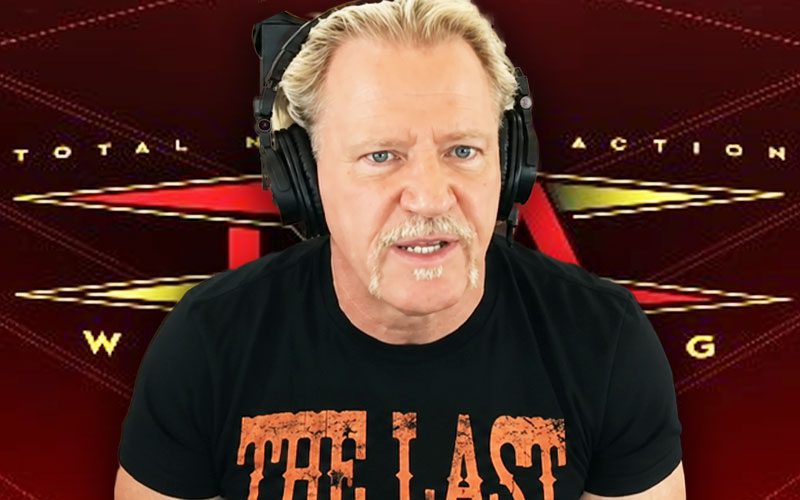
Dixie Carter's silence speaks volumes for the upcoming TNA documentary
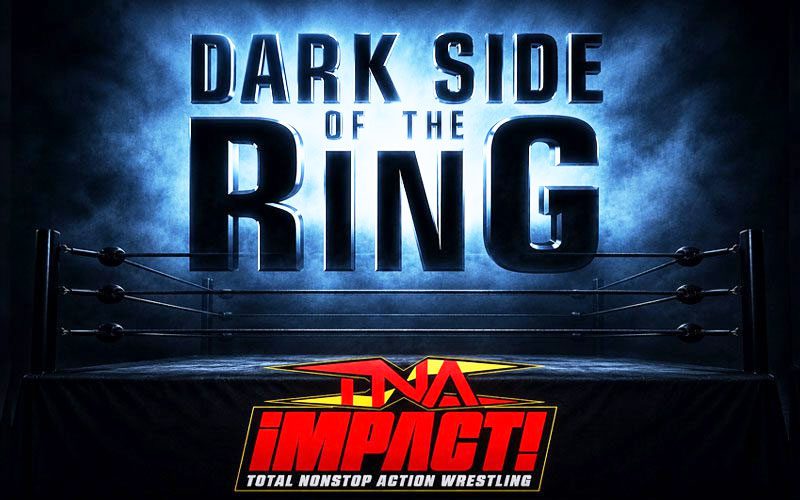
A Three-Part Autopsy
Vice’s Dark Side of the Ring has built an empire on examining the darkest, most tragic corners of professional wrestling. We’ve seen the Montreal Screwjob dissected frame by frame. We’ve endured the heartbreak of the Von Erich family curse.
We’ve looked at the criminal underbelly of the 1980s territory system. But for Season 7, the producers are attempting something entirely different. They are tackling TNA Wrestling. And according to the latest reports, they need three full parts to do it.
This is the best news documentary fans have had in a very long time. TNA is the great survivor of the modern wrestling business. It is a promotion that should have died a dozen different deaths.
It survived the Nashville weekly pay-per-view era. It survived moving to Fox Sports Net with a ticking clock graphic permanently burned into the screen. It survived the catastrophic regime change when Hulk Hogan and Eric Bischoff decided to turn the Impact Zone into a retirement home for former Monday Nitro talent.
But there is already a massive problem with the project. A glaring, Texas-sized hole in the narrative. According to PWInsider, former TNA President Dixie Carter has declined multiple requests to participate in the documentary series. She will not sit down for the cameras. She will not answer for the chaos.
Doing a three-part retrospective on TNA Wrestling without Dixie Carter is an incomplete exercise. She wasn’t just a financial backer; she was the erratic, unpredictable center of gravity for the promotion’s most infamous years. Her refusal to participate is a massive loss to the documentary, even if it makes complete sense from her perspective.
The Jarrett Narrative Goes Unchecked
While Carter is ducking the interview chair, the founder of the company is doing the exact opposite. Jeff Jarrett is reportedly finally opening up about his time running the promotion. This is a double-edged sword for wrestling historians.
Jarrett founded TNA in 2002 alongside his father, Jerry. The initial concept was a bizarre mix of traditional southern grappling, high-flying independent wrestling, and shock TV. They ran weekly pay-per-views out of the Nashville Fairgrounds, bleeding money at an unsustainable rate.
If Panda Energy—the Carter family’s corporate empire—hadn’t stepped in to buy the majority stake, TNA would be a forgotten footnote.
Instead, Jarrett spent years booking himself as the top star. It was a reign that frustrated fans who wanted to see AJ Styles, Samoa Joe, and Christopher Daniels positioned as the true main event. When the Carters took firmer control, Jarrett found himself repeatedly marginalized.
He was sent home, brought back, pushed out again, and eventually left to start the ill-fated Global Force Wrestling project. GFW was essentially a promotion built on promises and a literal gold-selling pyramid scheme.
Because Carter is refusing to speak, Jarrett now has a largely uncontested platform. He can frame his ousters as unfair corporate meddling rather than necessary interventions to stop him from booking himself to win the NWA World Heavyweight Championship with a guitar shot for the fifth time. Jarrett is a master politician. He knows exactly how to spin his tenure.
The documentary producers are going to have to work overtime to fact-check his version of events.
Jarrett's eventual return with Global Force Wrestling was a masterclass in carny promotion. He somehow convinced the Carter family to let him back into the building, merged his nonexistent promotion with theirs, and put his neon green GFW belts on their television. It was a staggering political achievement.
Hearing him talk about this era in the documentary will be fascinating, but without Carter there to explain why she agreed to it, the story is utterly incomplete. Why did she trust the man she had ousted? Was the company in such dire straits that a merger with a promotion lacking a television deal seemed like a lifeline?
Why The Silence Makes Sense
You can’t really blame Carter for turning down the invitations. What possible benefit does she get from sitting in a dark room while producers ask her to explain the Claire Lynch storyline?
How do you defend the decision to bring in Hogan and Bischoff in 2010? That move fundamentally destroyed the identity of the company. They ripped out the six-sided ring, replacing it with a traditional squared circle, alienating the hardcore fans who saw TNA as a genuine alternative to WWE.
How do you justify the disastrous attempt to restart the Monday Night Wars, moving Impact to Monday nights only to get absolutely crushed in the ratings by Raw? They lasted roughly six weeks before retreating to Thursdays.
Then you have the financial nightmares. There were periods in the 2010s where production staff and wrestlers were reportedly dealing with late paychecks. The company was functionally surviving on fumes. Carter was at the helm when they were reportedly relying on Smashing Pumpkins frontman Billy Corgan to fund television tapings out of his own pocket.
Sitting down for Dark Side of the Ring means answering for Victory Road 2011, the infamous night where Jeff Hardy was sent to the ring in no condition to perform against Sting. It means explaining why a roster featuring the most innovative in-ring talent in North America was constantly playing second fiddle to aging stars who couldn't work a ten-minute match anymore.
Let's not forget her transition to an on-screen character. She went from being a behind-the-scenes executive to a television authority figure. It was a massive mistake.
She tried to play a villainous owner, clearly modeled after Vince McMahon, but she lacked the timing and the intimidation factor. The climax of her on-screen run involved her being put through a table by Bully Ray. That moment was designed to pop a rating, but it felt more like a physical manifestation of the fans' frustration with her management.
Will Vice cover the table bump? Probably. Will we get her internal monologue about taking a powerbomb from a man twice her size? No.
The Reality of the Post-Release Hustle
The contrast between the corporate maneuvering of a company like TNA and the gritty, day-to-day reality of the wrestlers themselves is stark. We are seeing a very modern version of that survival instinct play out right now following the most recent wave of WWE talent cuts.
When you lose the backing of a major television product, you have to pivot immediately. Look at the news breaking this week regarding Joe Gacy.
According to WrestleTalk, Gacy is officially moving on from his WWE stint. He has dropped the name, opting to use the ring name Joseph Sawyer on the independent circuit. He is effectively shedding the Stamford intellectual property and starting over.
Gacy’s situation is particularly fascinating because of how heavily he was featured before his exit. He was a central figure in the Wyatt Sicks storyline. WWE invested massive amounts of television time, production value, and lore into that group.
They had vignettes, QR codes, and spooky lighting cues. And then, abruptly, the corporate machine decided to cut costs, and Gacy was out the door.
Now, he’s on the outside looking in. But he’s not doing it alone. The same report noted that a Wyatt Sicks reunion is officially booked for WrestleCon.
This is the relentless cycle of the wrestling industry. You get the massive corporate push, you become a character inside a publicly traded company's universe, and when the budget cuts hit, you are back out on the convention floor, setting up a table and selling 8x10s to fans.
The WrestleCon booking is a shrewd, necessary move. It capitalizes on the immediate heat of their recent television run while entirely bypassing the WWE structure. Gacy—now Sawyer—has to rebuild his identity. The independent scene of 2026 is ruthless.
You cannot survive purely on the fumes of a gimmick you played on cable television three months ago. You have to prove you can still go in the ring, usually in front of four hundred people in an armory instead of fifteen thousand in an arena.
Before his WWE run, Gacy was a stalwart of Combat Zone Wrestling. He was a gritty, intense worker who understood the violent psychology of the independent scene. WWE took that raw intensity and packaged it into a very specific, theatrical box. He became a cult leader, a spooky antagonist, and eventually part of the Wyatt Sicks.
The transition back to the indies as Joseph Sawyer means he has to bridge the gap between the guy who bled in CZW and the guy who cut ominous promos on Monday Night Raw.
Surviving the Business
There is a strange parallel between the history of TNA and the career trajectory of a released wrestler like Joseph Sawyer. Both stories are about refusing to go away quietly.
The X-Division was originally billed as having 'no weight limits, only no limits.' It was a revolutionary concept in 2002. While WWE was pushing massive bodybuilders, TNA gave an open platform to smaller, faster, incredibly innovative athletes.
Guys like Jerry Lynn, Low Ki, and a young phenomenon named AJ Styles defined an entire generation of in-ring style. That legacy alone warrants a documentary. But TNA could never get out of its own way.
Every time the X-Division gained momentum, management would panic and sign another ex-WWE heavyweight to squash the smaller guys. It was a maddening cycle of self-sabotage.
TNA was mocked constantly during its existence. It was called a mudshow. It was criticized for booking swerve after swerve under Vince Russo. But it employed hundreds of people. It gave AJ Styles the platform to become one of the best in the world. It kept the tag team division alive in North America when WWE had largely abandoned the concept.
Vice dedicating three hours to the promotion proves its bizarre, enduring legacy. They gave us the X-Division, Ultimate X matches, and the Motor City Machine Guns. They also gave us the Reverse Battle Royal, where wrestlers started outside the ring and had to fight their way inside, which remains one of the stupidest concepts ever committed to television.
It is a deeply flawed, wildly entertaining history. The documentary will undoubtedly be a massive hit for the network. But as you watch Jeff Jarrett spin his yarns and former writers try to explain away the booking disasters, just remember who isn't in the room.
Dixie Carter holds the real secrets of TNA Wrestling. And she is taking them with her.
WWE Cody Rhodes American Nightmare Claim Your Kingdom T-Shirt
Finish your story with the official tee of the American Nightmare.
More Coverage
TNA is throwing gasoline on the Philadelphia fire
10 hours ago
Wrestling fans deserve better than half-baked docuseries
1 day, 10 hours ago
TNA is loading up the July 23 Impact card to fix their momentum issues
1 day, 14 hours ago
Why TNA is stuck on a treadmill while relying on past glory
1 day, 22 hours ago
Kurt Angle did more for TNA than anyone realized
1 day, 22 hours ago
Cedric Alexander is proving he is the anchor of TNA's X-Division
2 days, 16 hours agoMore Analysis
Dixie Carter skipping Dark Side of the Ring is a fatal mistake
2 months ago
Dixie Carter Ghosting Dark Side of the Ring? Fans Are Split
2 months agoWhy Dark Side of the Ring's TNA premiere is Jeff Jarrett's final reckoning
1 week, 5 days ago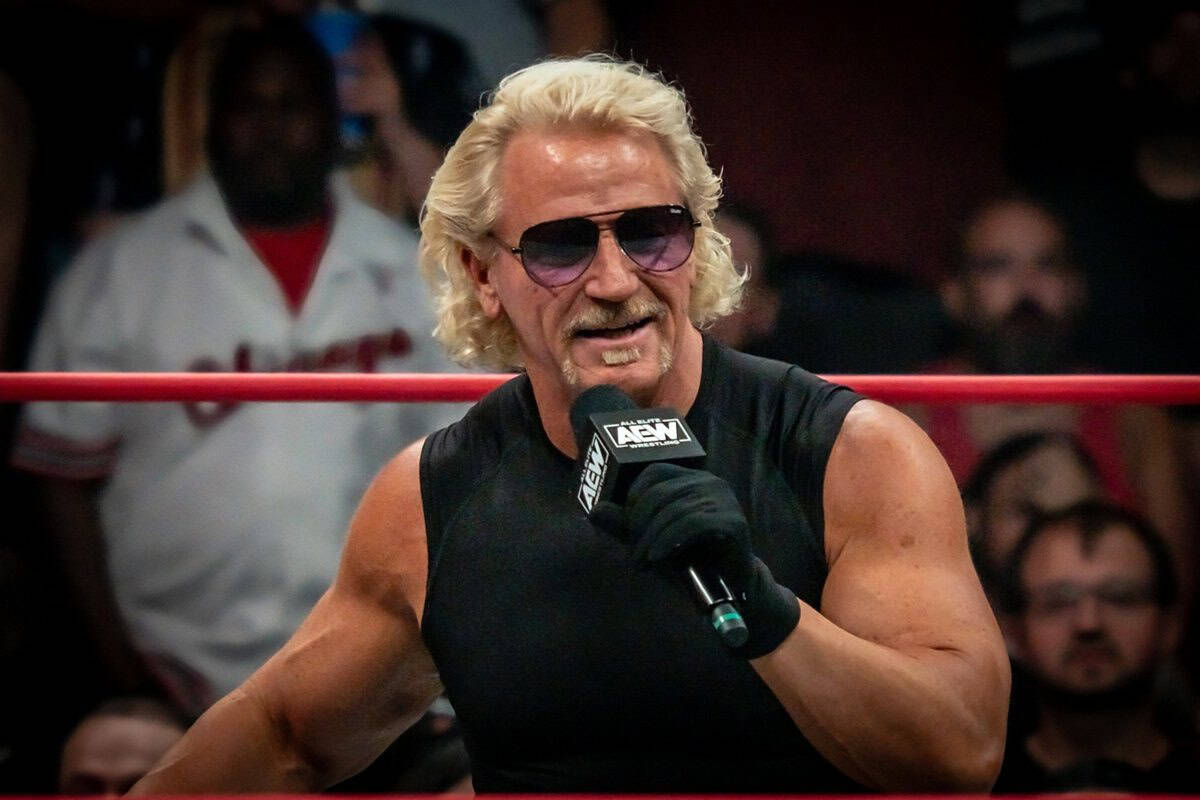
Jeff Jarrett is bracing for TNA history to get dragged into the light
1 week, 5 days ago