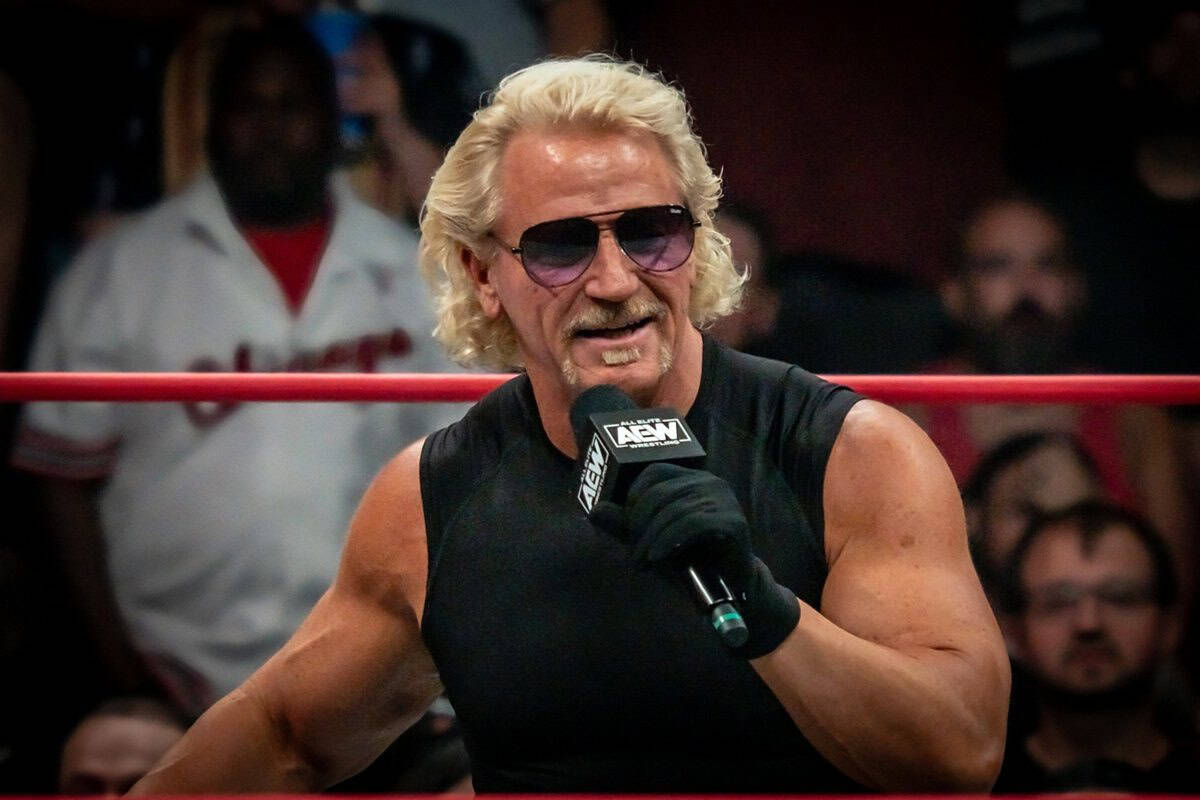
As Jeff Jarrett made the media rounds to promote the premiere of the new season of Dark Side of the Ring, he made no effort to hide his anxiety. The series kicks off on July 7, 2026, with a three-part documentary looking at the rise and fall of TNA Wrestling. It is a story of political warfare, backstage betrayals, and corporate power plays that changed the industry forever.
Jarrett admitted on his podcast that agreeing to the project was a difficult decision. The documentary team spent months researching, and the founder had to face the most painful moments of his life.
“I've got mixed emotions. Oh man, is this a good idea? Do I want to do this?”
The Asylum Years and the Creative Identity Crisis
In June 2002, TNA Wrestling launched with a business model that was doomed from the start. Jeff Jarrett and his father, Jerry Jarrett, bypassed traditional television distribution. They bet the company's survival on weekly, two-hour pay-per-views priced at ten dollars. It was a tactical gamble that ignored basic consumer habits. Fans were expected to spend forty dollars a month on an unproven product featuring rookies and cast-offs.
The buyrates in those early Nashville Asylum days were abysmal. The promotion was burning cash at a rate that threatened to shut the doors within months. In October 2002, the Jarretts were forced to surrender majority control. Panda Energy, a Dallas-based power company owned by the Carter family, bought a seventy-two percent stake. This corporate injection saved TNA, but it set the stage for a decade-long power struggle.
The financial math of TNA never truly aligned. Even during their peak PPV events, such as Genesis 2006 which drew an estimated 60,000 buys, the margins were razor-thin. Production costs for high-definition television and international touring ate into the revenue. TNA was running a major-league operation on a mid-level budget. The structural gap between their ambitions and their bank account was never bridged.
The on-screen product was a battleground between two opposing wrestling philosophies. On one side was Jim Cornette, who advocated for a logical, sports-centric presentation. On the other was Vince Russo, the champion of "crash TV" and shock-value booking. This ideological divide created a disjointed show. Fans would witness a classic, athletic X-Division match followed immediately by a convoluted, over-booked gimmick match.
The X-Division was TNA's greatest tactical asset. AJ Styles, Samoa Joe, and Christopher Daniels defined a high-workrate style that WWE refused to present. The three-way match at Unbreakable 2005 showed what TNA could be when it trusted its athletes. It was a twenty-three minute masterclass in pacing, innovative spots, and clean storytelling. But instead of building the promotion around these workhorses, the booking repeatedly reverted to established veterans.
Jeff Jarrett himself was a major point of contention. As a six-time NWA World Heavyweight Champion in TNA, Jarrett was accused of using his backstage power to keep himself at the top. Critics pointed to his frequent title reigns as evidence of a massive ego. While Jarrett brought name recognition, his constant presence in the main event stifled the growth of younger stars. The booking priority was clear: protect the founder at all costs.
The Dixie Carter Power Struggle and the Hogan Era
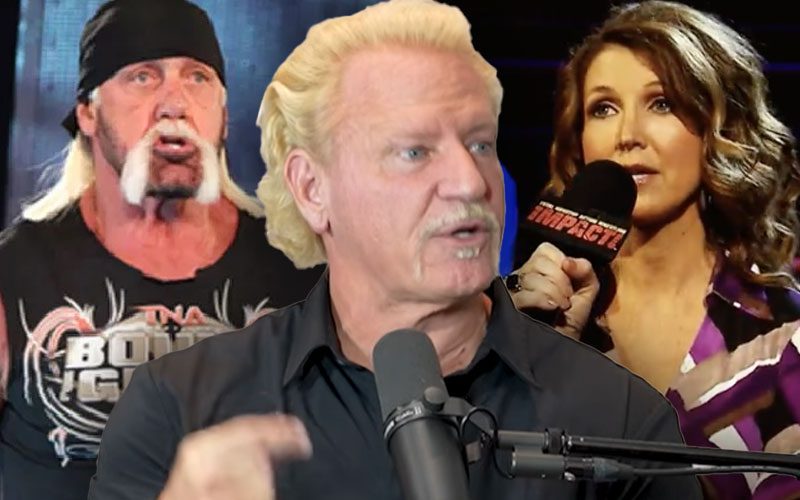
Dixie Carter's role is a primary focus of tonight's premiere. Although the former TNA President declined to participate in the documentary, her presence looms large. Jarrett personally urged Carter to tell her story on camera, but she refused. This absence leaves a critical gap, yet it highlights the insulated nature of her executive tenure.
Jarrett has publicly expressed his biggest professional regret regarding Dixie Carter. He believes he should have intervened to prevent her from becoming an on-screen television character. When Carter stepped in front of the cameras, she destroyed the line between management and talent. She was no longer the impartial executive; she was a performer seeking crowd reactions. This transition made her vulnerable to locker room manipulation and weakened her authority.
That vulnerability was exposed in 2010 when Hulk Hogan and Eric Bischoff were brought in to run the creative direction. They dismantled TNA's unique identity, replacing the six-sided ring with a standard four-sided one. They pushed young stars aside to make room for past-their-prime veterans. The move to Monday nights to compete with WWE Raw resulted in a brief ratings peak, averaging 2.2 million viewers on January 4, 2010. But the stunt was unsustainable, and the company quickly retreated to its Thursday night slot with massive financial losses.
The Personal Feuds and the Rest of Season Seven
The most controversial aspect of the TNA story is the real-life love triangle involving Jeff Jarrett, Karen Angle, and Kurt Angle. Karen's participation in the documentary is vital. She addresses the backstage fallout of her divorce from Kurt and her subsequent relationship with Jeff. This was not just locker room gossip; it was a corporate crisis.
In 2009, when the relationship became known backstage, Dixie Carter suspended Jeff Jarrett. The founder was sent home, and control of the company shifted. When Jarrett returned, the decision was made to exploit the real-life tension for television. The on-screen feud between Kurt Angle and Jeff Jarrett in 2011 was uncomfortable to watch. It featured children, real personal history, and intense promos that blurred every line of decency.
This booking decision was a critical failure. It exposed the locker room's dysfunction to the public and alienated fans who felt the storyline crossed ethical boundaries. Rather than drawing money, it highlighted a promotion that had lost its moral compass. It proved that in TNA, no personal tragedy was off-limits if it could buy a rating point.
While the three-part TNA arc occupies the first half of the month, the rest of Season 7 will shift to other controversial wrestling stories. The production team has secured interviews with several key figures from different eras. The upcoming schedule highlights the diverse focus of this season:
- July 21: The brutal 2005 Samoa Joe vs. Necro Butcher match that redefined indie wrestling.
- August 18: A deep dive into the life of Missy Hyatt, one of wrestling's most notorious valets.
- August 25: The story of Zach Gowen, the one-legged wrestler who beat the odds to reach WWE.
These episodes will continue the show's transition toward character-driven narratives. The focus is less on sensationalism and more on the human cost of the business. This approach has defined the latter seasons of the franchise.
Prediction: The Legacy of the Six Sided Ring
Tonight's double-header will trigger a wave of nostalgia, but it will also expose the systemic failures that doomed TNA. We predict the documentary will draw strong ratings on VICE TV, cementing it as the network's flagship program. However, the lack of Dixie Carter's input will prevent the series from being the definitive account of TNA's demise.
Ultimately, TNA will be remembered as a promotion that had the talent, the money, and the platform to compete, but lacked the discipline to succeed. The documentary will show that the biggest enemy of TNA was never Vince McMahon. It was the people inside its own locker room.