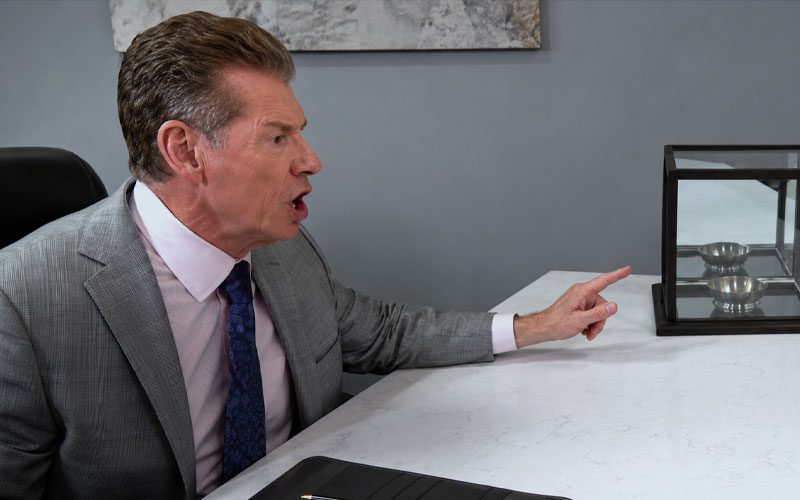
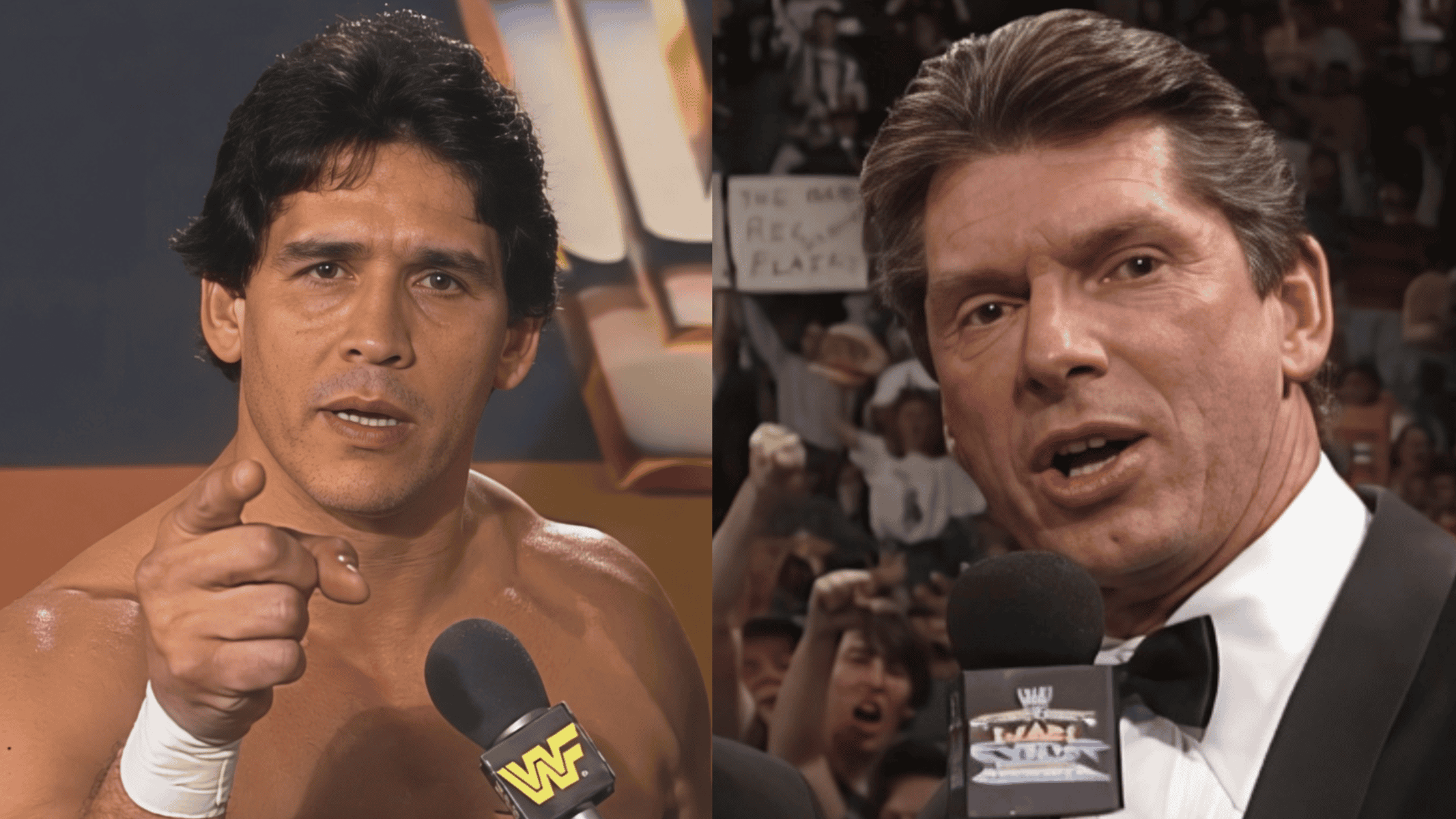
Why Vince McMahon almost put the WWF Title on Tito Santana in 1992
The butterfly effect in the boardroom
Pro wrestling is built on the foundation of the 'what if'. What if Magnum T.A. never crashed his Porsche on a rainy night in Charlotte? What if the Montreal Screwjob never happened, and Bret Hart dropped the belt on his own terms?
What if WCW didn't botch the Starrcade 1997 finish with a fast count that wasn't actually fast? We spend decades arguing these counterfactuals in dive bars and message boards because the industry's history is dictated by the whims of one or two men in a boardroom. The butterfly effect in professional wrestling is brutally real.
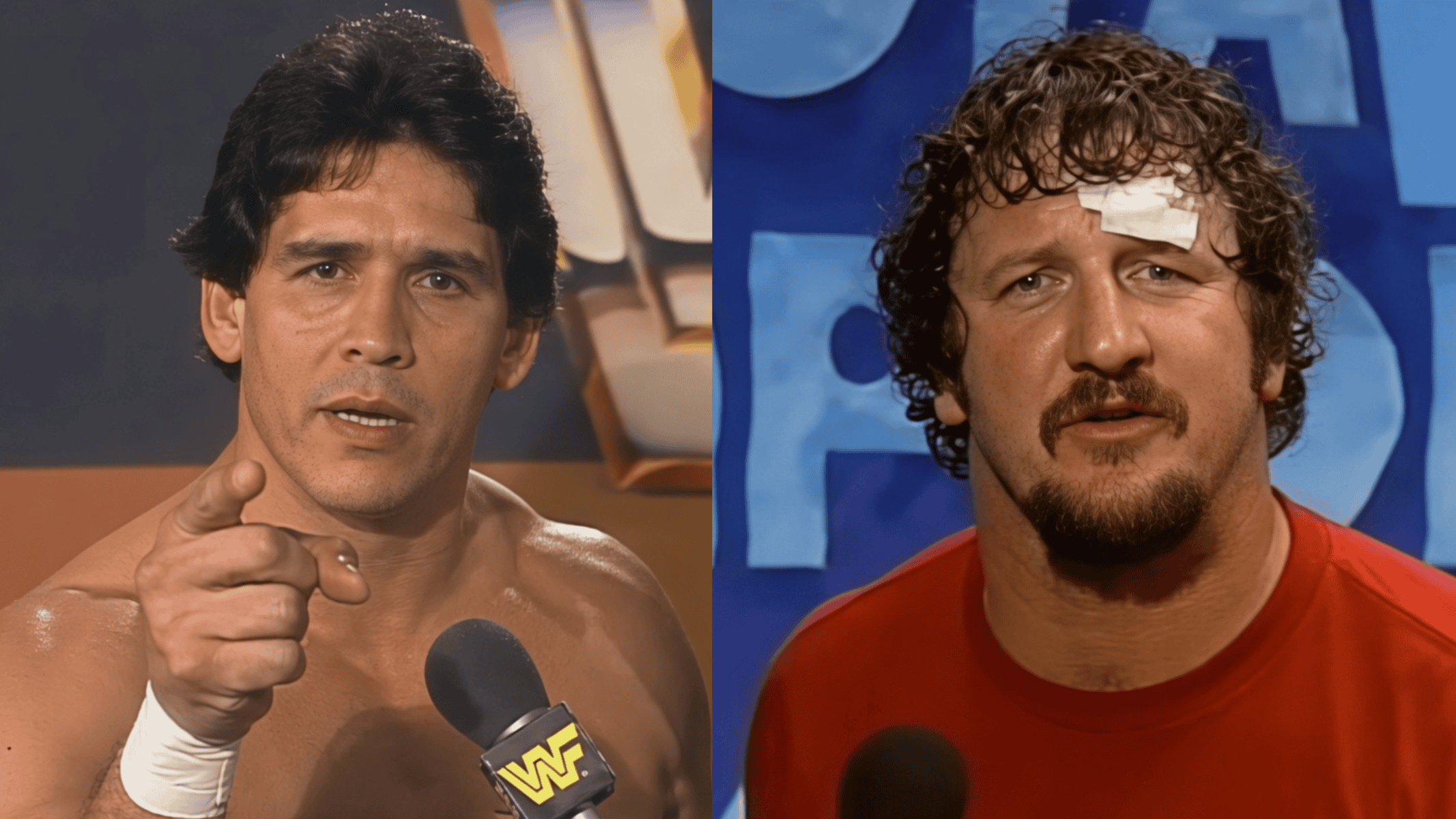
But one particular counterfactual from the early 1990s rarely gets the oxygen it deserves. It involves a midcard workhorse, a frantic global expansion plan, and the WWF Championship. According to long-standing rumors recently resurfacing through wrestling historians, Vince McMahon seriously considered putting the company's top prize on Tito Santana.
The goal was to aggressively expand the WWF's footprint into the international market. McMahon was specifically targeting Central and South America. It sounds almost absurd to modern ears. We remember the early 1990s as the awkward, stuttering transition from Hulk Hogan to Bret Hart, with a brief, miserable detour through the Lex Luger push.
Santana was firmly entrenched as a reliable, aging hand by that point. He was the guy you put in the ring to make a rising star look like a million bucks. He wasn't the guy you built the entire corporate machine around.
The desperate search for a lifeline
To understand why McMahon even entertained the idea of putting the belt on Santana, you have to look at the grim reality of the WWF in 1992. The walls were closing in. The federal government was preparing its steroid distribution case against McMahon, stemming from the Dr. George Zahorian trial.
Hogan, the golden goose who had carried the promotion on his back for eight years, was radioactive. Following his disastrous Arsenio Hall appearance, Hogan was quietly on his way out the door. Domestic business was cratering at an alarming rate.
Arena attendance was down, and pay-per-view buyrates were slipping rapidly. The cartoonish formula of the 1980s was rotting on the vine. The World Bodybuilding Federation had just collapsed, bleeding millions of dollars from Titan Sports. McMahon desperately needed a financial lifeline.
He found it by looking at a map. If the domestic market was shrinking, the WWF had to become a truly global touring brand to survive. Europe was an obvious target—proven by the overwhelming success of SummerSlam 1992 at Wembley Stadium in London, which drew over 80,000 fans.
That single event proved that foreign markets could prop up the entire company. But the Spanish-speaking market offered massive, completely untapped potential. This is exactly where Santana entered the conversation.
The 'El Matador' mistake
Merced Solis was the ultimate company man. He never complained about his spot, never caused backstage political headaches, and consistently delivered solid, logical matches. He had real pedigree, having held the Intercontinental Championship twice.
His 1984 feud with Greg 'The Hammer' Valentine over the IC belt is the stuff of legend. It culminated in a brutal steel cage match in Baltimore where Santana reclaimed the gold. He later lost it to a young Randy Savage in Boston Garden after a shot with a foreign object, cementing Savage as a mega-heel.
He was also a two-time Tag Team Champion, most notably in the brilliant Strike Force run with Rick Martel. That partnership ended in heartbreak at WrestleMania V when Martel abandoned him against the Brain Busters. More importantly for 1992, he was a fluent Spanish speaker who could act as the ultimate ambassador for a massive demographic.
In late 1991, the WWF abruptly repackaged him. After years of wrestling under his own name with a generic, fiery babyface presentation, he was transformed into 'El Matador' Tito Santana. He started wearing a matador outfit, complete with teal tights, and carrying a red cape to the ring.
It was a terrible, lazy gimmick. It leaned into the worst kind of one-dimensional cultural stereotyping that defined the era. Instead of presenting Santana as a serious, legitimate athletic contender, the WWF slapped a cartoonish coat of paint on him.
If this was truly the start of a massive push to the main event, the execution was fatally flawed from day one. You don't build the top star of a global expansion by dressing him up for a local theater production of Carmen. The gimmick actively undermined his credibility with the domestic audience.
The fork in the boardroom road
Yet, despite the awful presentation, the internal discussions were reportedly very real. The WWF boardroom was actively weighing two distinct international expansion strategies to save the bottom line. Strategy A was to push hard into the Latin American market with Santana as the corporate spearhead.
Strategy B was to focus heavily on Canada and Western Europe, utilizing a younger, technically proficient roster. We all know which file McMahon ultimately chose. The decision came down to a cold, calculated evaluation of the talent roster.
While Santana was a great worker, Bret Hart was younger. Hart possessed a rapidly growing international fanbase of his own and didn't have a decade of midcard baggage weighing him down. He was the fresh start the company desperately needed.
The Santana title run never materialized. On October 12, 1992, at a television taping in Saskatoon, Saskatchewan, Hart defeated Ric Flair to win the WWF Championship. That single booking decision altered the course of wrestling history.
It established Hart as the definitive face of the New Generation. It paved the way for Shawn Michaels. Indirectly, it set the stage for the Attitude Era. Santana, meanwhile, was left holding the cape.
His 'El Matador' run never escaped the opening matches. He wrestled Michaels in the curtain-jerker at WrestleMania VIII in Indianapolis, putting the younger star over cleanly in a solid but forgettable ten-minute bout. He was used as cannon fodder for newly arrived monsters like Papa Shango.
He was a professional about it, taking the pins and making the new guys look formidable. By the summer of 1993, he quietly left the promotion. He worked the independent circuit and eventually Eastern Championship Wrestling, where he briefly held the ECW Heavyweight Championship before Shane Douglas famously threw the NWA belt down.
The counterfactual booking
But let's entertain the counterfactual. What if McMahon had actually pulled the trigger on Santana? What if he won the belt?
Imagine the timeline. It's late 1992. Instead of Hart, Santana shocks the world and defeats Flair for the belt. The WWF immediately launches a massive media blitz across Mexico, Puerto Rico, and South America.
Santana is doing constant press in Spanish, presenting the WWF not as a cartoon, but as a legitimate sporting enterprise. The booking would have been fascinating. A Santana title reign would have required an entirely different crop of challengers.
You could have built a massive, culturally charged program between Santana and Razor Ramon. Scott Hall's 'Bad Guy' persona, heavily influenced by Scarface, was gaining serious traction. A feud rooted in the contrasting styles and cultural presentations could have drawn serious money in specific markets, particularly in Miami and the Southwest.
Imagine the vignettes. Razor Ramon flicking toothpicks and cutting promos in broken Spanglish, mocking Santana's pure, working-class ethos. Santana firing back, defending his heritage and his work ethic. It would have been visceral television.
You also have to wonder if a Santana title run would have forced the WWF to abandon the 'El Matador' gimmick entirely. It's hard to imagine him carrying the company as a credible champion while wearing the matador gear. They would have needed to strip away the nonsense and present him as the gritty, determined veteran finally reaching the mountaintop after a decade of hard work.
How would WrestleMania IX have looked? Would we have been spared the agonizing sight of Hogan returning to squash Yokozuna? Would a Santana versus Yokozuna main event have drawn a dime? Probably not.
The right call in hindsight
The harsh truth is that McMahon made the right call with Hart. The Canadian and European markets were red-hot for the WWF in the mid-1990s. They effectively kept the lights on and the payroll funded while the domestic business suffered through the brutal Diesel era.
Hart was a transcendent talent who could anchor a two-hour pay-per-view with an absolute masterpiece of a match. Santana was very good, but Hart was in a different stratosphere mechanically.
There's also the serious question of whether a Latin American expansion would have actually worked in 1992. The WWF's heavyweight, punch-and-kick style was drastically different from the rapid-fire lucha libre traditions that dominated Mexico. Trying to sell the lumbering matches of Earthquake or the Ultimate Warrior to a fanbase raised on high-flying acrobatics and intricate submission wrestling was a massive gamble.
The WWF product simply wasn't calibrated for that audience yet. Furthermore, Santana, despite his intense reliability, lacked the explosive charisma of a Hogan or the intense, believable edge of a Hart. He was a quintessential white-meat babyface from a bygone era.
In a television environment that was slowly beginning to demand more complex, morally ambiguous characters, a Santana title reign might have felt like a massive step backward. It would have looked like a desperate attempt to recreate the 1980s formula with a different coat of paint.
The 'El Matador' experiment remains a fascinating footnote. It highlights the frantic, throw-everything-at-the-wall desperation of the WWF boardroom during their darkest period. They were terrified of the encroaching legal and financial ruin and were willing to consider almost anything to stop the bleeding.
Santana's legacy isn't diminished by the fact that he didn't win the big one in 1992. He was an essential, foundational component of the machine for over a decade. He won the first match in WrestleMania history against The Executioner.
He held titles when holding titles actually meant you were drawing money on the road. But the story of his aborted push is a blunt reminder of the arbitrary nature of wrestling stardom. You can be incredibly talented, completely loyal, and bilingual.
You can check every single box the front office asks you to check. But if the boss wakes up one morning and decides that the Canadian market is a slightly better bet than the South American market, you spend the rest of your career wearing a bullfighter outfit and staring at the lights. That is the unforgiving reality of the business.
Becky Lynch: The Man: Not Your Average Average Girl by Becky Lynch
An unfiltered, raw, and incredibly inspiring look inside the life of WWE's 'The
More Coverage

Drew McIntyre sidelined following brutal SmackDown encounter
an hour agoWWE's New York gamble is a calculated risk ahead of WrestleMania 42
2 hours ago
WWE's Saturday Night's Main Event math doesn't add up
2 hours agoWWE's return to New York changes the math on stadium attendance
2 hours ago
Top 10: Top Moments from MSG
2 hours ago
SmackDown is drifting into mid-summer malaise
3 hours agoMore Analysis
The high cost of paying dues in professional wrestling
2 months, 2 weeks agoDino Bravo didn't invent 'Arriba!' and anyone saying otherwise is losing it
2 months, 1 week ago
The vintage Vince McMahon chaos was a masterclass in petty booking
1 month, 3 weeks ago
Top 10: The Most Rewritten Pages in Wrestling History
2 months, 1 week agoOn This Day in Wrestling: May 29
1 month, 2 weeks ago