The Anatomy of Missed Opportunities
Professional wrestling is a business built on split-second pivots and abandoned scripts. The history books often focus on the winners, but the real intrigue lies in the plans that never left the booking office.
We have combed through decades of backstage shifts to rank the moments where the industry nearly took a different path. These choices defined the direction of companies regardless of whether they actually hit the airwaves.
10. The 1993 Luger Coronation
Vince McMahon tried to manufacture a successor to Hulk Hogan by pushing Lex Luger as an All-American hero, culminating at SummerSlam 1993. The plan failed because the crowd never truly bought the character switch. Luger took the count-out victory over Yokozuna, but the lackluster pop proved that the WWF had misread the room. It ranks here because it represents the last gasp of 1980s booking formulas before the New Generation era forced a change.
9. Tito Santana's Lost Championship Run
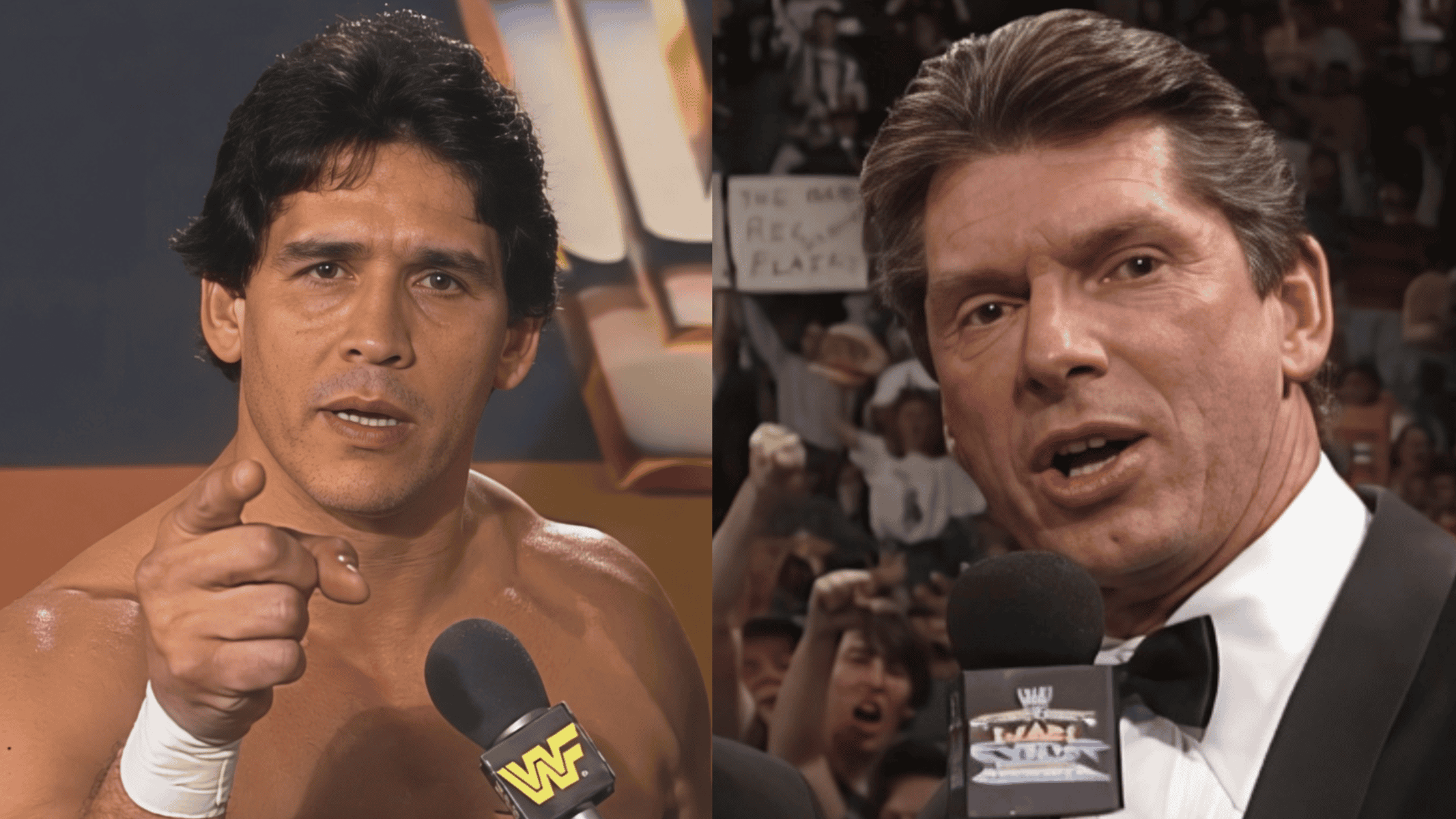
Reported plans from the golden era suggest Vince McMahon considered putting the WWF title on Tito Santana to facilitate international expansion in the mid-1980s. Santana was a workhorse, but he lacked the monstrous aura McMahon usually required for his top stars. If this had occurred, the era of the Hogan-led monolith might have looked significantly more like a territories-style product. It failed to materialize, likely due to concerns regarding Santana's ability to draw on the scale of a national powerhouse.
8. The Fingerpoke of Doom
In January 1999, WCW decided to have Kevin Nash lie down for Hulk Hogan on Nitro. This moment killed the credibility of the nWo and sparked a massive decline in WCW ratings from which they never recovered. It ranks here because it serves as the ultimate example of self-sabotage in wrestling booking. Fans felt cheated, and the product never regained their trust afterward.
7. Sting’s Debut in WWE
The 14-year wait for Sting to step into a WWE ring finally ended at Survivor Series 2014. While the moment was electric, the execution felt disconnected from the magnitude of his career. He interfered to help Dolph Ziggler, a decision that felt small for a man who represented the final stand of WCW. It earns a spot for the sheer historical gravity of the image alone.
6. The Montreal Screwjob
Bret Hart leaving for WCW in 1997 forced a decision that changed the tone of WWF programming forever. By forcing the finish in Montreal, McMahon transitioned from an onscreen promoter to a central character. It was a dark, necessary evolution, though it undeniably cheapened the sanctity of the championship. The fallout paved the way for the Attitude Era’s chaotic moral ambiguity.
5. Shawn Michaels’ Forfeit
When Shawn Michaels vacated the WWF Championship in 1997 due to a knee injury and a "loss of smile," the company faced a genuine crisis. His departure pushed Stone Cold Steve Austin into the main event spotlight years ahead of original scheduling. Without this forced transition, the blueprint for the company’s biggest financial boom might never have been written. The booking was disorganized, but the outcome was historic.
4. The Formation of the Bloodline
Roman Reigns’ pivot to a villainous, tribal-centric persona during the 2020 pandemic saved his career. By aligning with Paul Heyman, he found the missing piece that linked his lineage to his current psychological dominance. It ranks this high because it provided four years of consistent, high-level storytelling. Without this specific character turn, the modern product would be rudderless.
3. The Megapowers Explode
The split between Hogan and Randy Savage at The Main Event in 1989 is the gold standard for long-term storytelling. The slow-burn jealousy over Elizabeth provided a human element that made the wrestling feel vital. It ranks higher than modern angles because it relied on character consistency rather than shock value. The payoff at WrestleMania 5 remains the high-water mark for mainstream wrestling production.
2. Stone Cold’s 1998 Coronation
Austin winning the title against Shawn Michaels at WrestleMania 14 was the moment the business finally shifted to the adult-oriented product of the late 90s. Mike Tyson’s involvement provided the mainstream crossover noise necessitated by the competition with WCW. It shifted the financial needle immediately, ending the stagnant transition period between the New Generation and the Attitude Era. It is the precise moment the WWF won the war.
1. The Invasion Fumble
The purchase of WCW in 2001 remains the biggest missed opportunity in sports entertainment history. Instead of pitting the two greatest rosters in history against each other, the story became a vehicle for McMahon to continue winning over his former competitors. The creative direction was disjointed, leading to months of confusion for the audience and underwhelming television payoffs. It is the number one spot because it was the one moment that could have set up a decade of dominance, but instead, it marked the beginning of creative stagnation.
Honorable Mentions
The debut of the Nexus in 2010 provided a brief flash of excitement before being buried at SummerSlam. CM Punk’s 2011 Pipebomb speech injected authentic tension into a stale environment, even if the subsequent booking fell flat. These moments represent a specific kind of frustration where the potential of the talent clearly outpaced the creative vision behind them.