The television balancing act
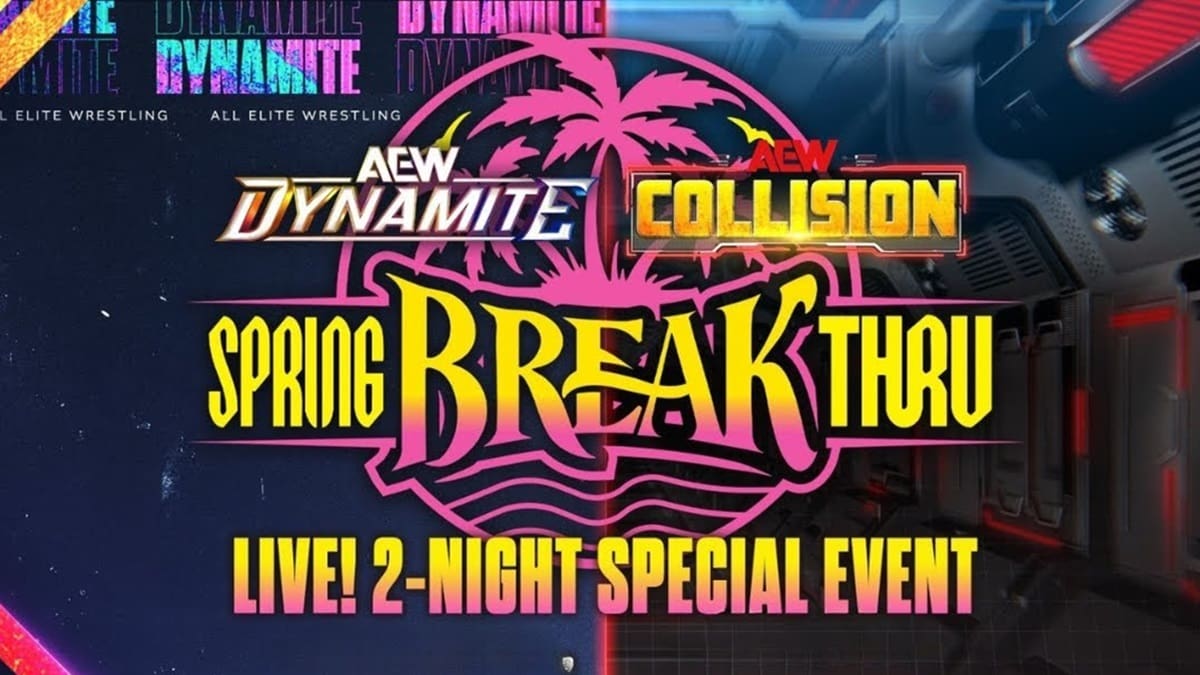
AEW Dynamite hits TBS this Wednesday with a special Spring Break Thru edition. As Bodyslam confirmed, the hook here is not just the branding. It is the structure. We are looking at a two-night event that spills over into a special Thursday broadcast of AEW Collision. Back-to-back nights of major television.
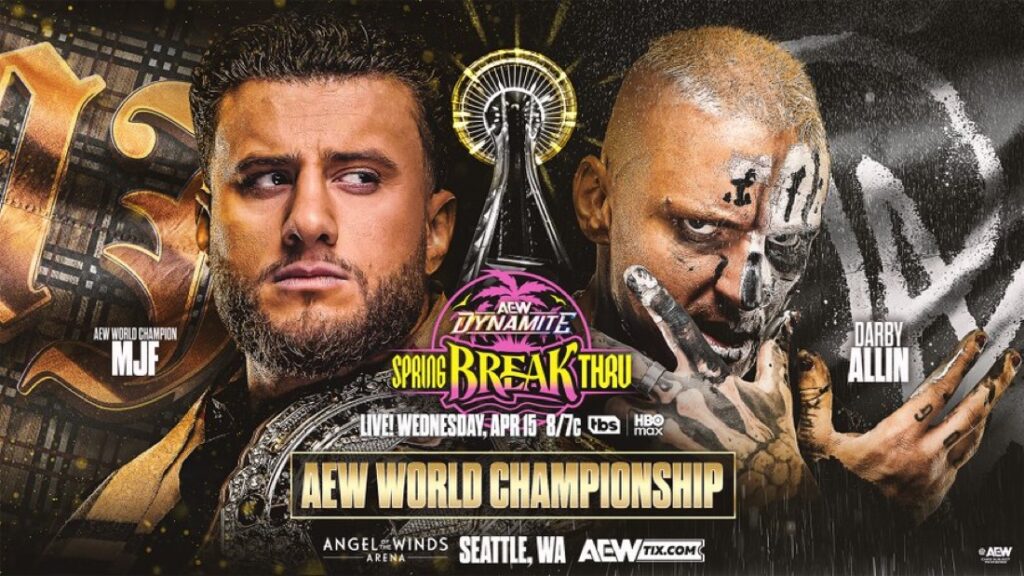
Coming out of the AEW Dynasty pay-per-view, the promotion needs a bridge. Dynasty delivered the high-end in-ring product you expect, but the immediate aftermath on television often suffers from a noticeable pacing drop. Tony Khan is attempting to solve that post-PPV dip by loading up this week's television with three championship matches.
It is an aggressive strategy. But it also highlights one of the most persistent flaws in AEW's current booking philosophy.
The dilution of consequence
Let's address the reality of putting three title matches on a single episode of Dynamite. On paper, it looks spectacular. It guarantees high-stakes action and gives the live crowd a reason to stay invested through the commercial breaks.
In practice, it often leads to rushed pacing and a lack of breathing room for the actual champions. When you cram three championship bouts into a standard two-hour broadcast, someone's storyline is getting shortchanged. You cannot dedicate twenty minutes of bell-to-bell action, plus entrances, plus post-match angles, for three separate title fights without severely compressing the rest of the card.
This has been a recurring issue. AEW frequently relies on these themed television specials to pop a short-term rating, sacrificing the slow, methodical build that makes pay-per-view matches draw. Throwing three belts on the line in one night feels less like a special event and more like a panicked attempt to prevent viewers from changing the channel.
There is a mechanical problem with the two-night structure as well. Moving Collision to Thursday night, just 24 hours after Dynamite, asks a lot of the viewing audience. Wrestling fans are already conditioned to specific viewing routines. Disrupting that routine requires a card so strong that fans feel forced to follow the product across the weekly schedule.
Navigating the dead zone
We are currently in the gap between Dynasty and Double or Nothing. That late-May pay-per-view is still over a month away. The calendar is unforgiving. You have to fill five weeks of television without peaking too early or boring the audience to sleep.
Spring Break Thru is clearly designed to act as a tentpole event in the middle of this stretch. If you look at historical television ratings for April, wrestling often struggles against the start of the NBA playoffs and the Champions League knockout stages. You need a hook.
But the execution has to match the ambition. If these three championship matches end in run-ins, disqualifications, or messy broadway draws, the audience will recognize the bait-and-switch. Tony Khan has generally been good about delivering clean finishes in TV title matches, but the temptation to protect everyone is always lingering when you stack a card this heavily.
The mechanics of a loaded card
When you book three championship matches on a single two-hour broadcast, you are playing a dangerous game with match psychology. Professional wrestling relies heavily on the escalation of violence and near-falls. If the opening match features multiple table spots, Canadian Destroyers, and kickouts at 2.9 seconds, the main event has nowhere to go.
This is where the agenting of the matches becomes the most important factor of the night. The producers backstage have to enforce strict boundaries on what the talent can do in the ring. The first title match needs to be grounded. It should rely on technical exchanges, working holds, and a slow build to a single, definitive finisher. If it devolves into a high-spot festival, the rest of the card is doomed.
Unfortunately, AEW has historically struggled with this exact discipline. The locker room is fiercely competitive, and every performer wants their match to be the talking point of the week. This often results in a sequence of matches that escalate too quickly, desensitizing the live crowd before the main event even begins.
We have seen cards where an undercard bout features a terrifying bump onto the ring apron, only for the main event to try and top it with a bump through the timekeeper's table. It is the law of diminishing returns. By the time the third championship match starts on Wednesday night, the audience might be entirely exhausted.
The broadcast transition
Let's also examine the transition from Wednesday to Thursday. TBS has heavily promoted this crossover, but migrating a wrestling audience to a different night is notoriously difficult. The viewing habits of the modern fan are rigid. When you ask them to tune in on a Thursday, you are competing against established routines, streaming algorithms, and general viewer fatigue.
To make the Thursday Collision episode work, Wednesday's Dynamite cannot simply end with a standard pose-down. It needs a massive cliffhanger. It needs an angle that is so disruptive, so unresolved, that the audience feels compelled to tune in 24 hours later just to see the fallout. A post-match beatdown is not enough. A staredown on the ramp is not enough.
We are talking about a systemic shift in the storyline. A betrayal within a major faction. A shocking return that directly impacts the main event scene. Without a hook of that magnitude, the Thursday broadcast risks feeling like an afterthought—a collection of taped promos rather than a vital piece of the weekly narrative.
The refereeing dilemma
Another overlooked aspect of these chaotic, title-heavy television specials is the role of the officials. In AEW, the refereeing has often been heavily criticized for being too lenient, allowing matches to break down into chaotic brawls without consequences. When you have three championship matches in one night, the rules need to be enforced rigidly, or the prestige of the titles evaporates.
If a heel champion retains through blatant outside interference while the referee is inexplicably distracted for thirty seconds, the audience will immediately turn on the booking. You can get away with that finish once on a pay-per-view. You cannot get away with it on free television when you are trying to establish the legitimacy of a special event.
The officials need to take control of these bouts. Count-outs should be threatened. Disqualifications for excessive violence should be a real possibility. By establishing a strict framework of rules early in the broadcast, the eventual rule-breaking in the main event feels significantly more impactful.
The pressure on the roster
Back-to-back nights of television tapings alter the physical demands on the talent. The energy in the arena on a Wednesday night is naturally different from a Thursday. If they are taping both shows in the same building, the crowd fatigue is going to be a massive factor by the middle of the Collision broadcast.
We saw this exact scenario play out during the pandemic era and occasionally during the early days of Rampage tapings. A hot crowd for the first two hours turns into a polite, exhausted crowd for the final hour. The wrestlers end up working twice as hard to get half the reaction.
This means the match order and the pacing of the Thursday Collision broadcast will be vital. You cannot put a technical, submission-heavy clinic in the middle of the Thursday show if the audience has already sat through three title matches the night before. You need fast, explosive offense. You need car crashes. You need violence.
The Double or Nothing picture
Whatever happens at Spring Break Thru will establish the foundation for the Double or Nothing build. The champions who walk out of Thursday night with their belts are the ones who will carry the promotion into Las Vegas next month.
The danger is that these television defenses feel like foregone conclusions. When a champion defends a title on a special episode of Dynamite, the inherent assumption is that they will retain. Title changes on free television are rare enough that the audience instinctively anticipates a successful defense. To combat this, the booking needs to create genuine jeopardy.
The challengers in these three matches need to look like legitimate threats from the opening bell. If they are just stepping stones, the matches will feel like exhibitions rather than fights. This is where the in-ring psychology has to carry the weight of the booking. The challengers have to target limbs, use weapons behind the referee's back, and exploit any available advantage to make the crowd believe a title change is actually possible.
Prediction and fallout
Looking at the layout of this two-night event, I expect a chaotic, high-energy Wednesday Dynamite that ultimately burns the crowd out. The three championship matches will deliver from an athletic standpoint, but at least one will suffer from obvious time constraints.
The Thursday Collision is the real wildcard. Moving nights changes the viewing dynamic, and the roster will be working in front of a tired audience. Expect a heavy reliance on pre-taped video packages and backstage segments on Thursday to give the live crowd a break.
My prediction: We will see exactly one title change across the two nights. Tony Khan knows he needs a headline-grabbing moment to justify the Spring Break Thru branding. A mid-card or tag team championship will switch hands on Dynamite to pop the crowd and create a sense of unpredictability for the rest of the broadcast. The main event champion will retain, but barely, setting up a desperate, bloodier rematch for Double or Nothing.
It is a bold scheduling move. But if AEW wants to maintain its momentum through the spring, they have to prove they can deliver consecutive nights of television without exhausting their fanbase or diluting their championships.