The math behind the mid-spring gap
Between AEW Dynasty on March 30 and Double or Nothing on May 24 sits a gulf of exactly 55 days. In modern television wrestling, that is an eternity. It is a massive block of programming to fill without the natural gravity of an impending pay-per-view to anchor the booking.
AEW has historically struggled with these extended dead zones. Storylines drift. Main eventers cycle into meaningless trios matches. Ratings soften. But this year, the front office is attempting a structural fix. They are manipulating the broadcast calendar itself.
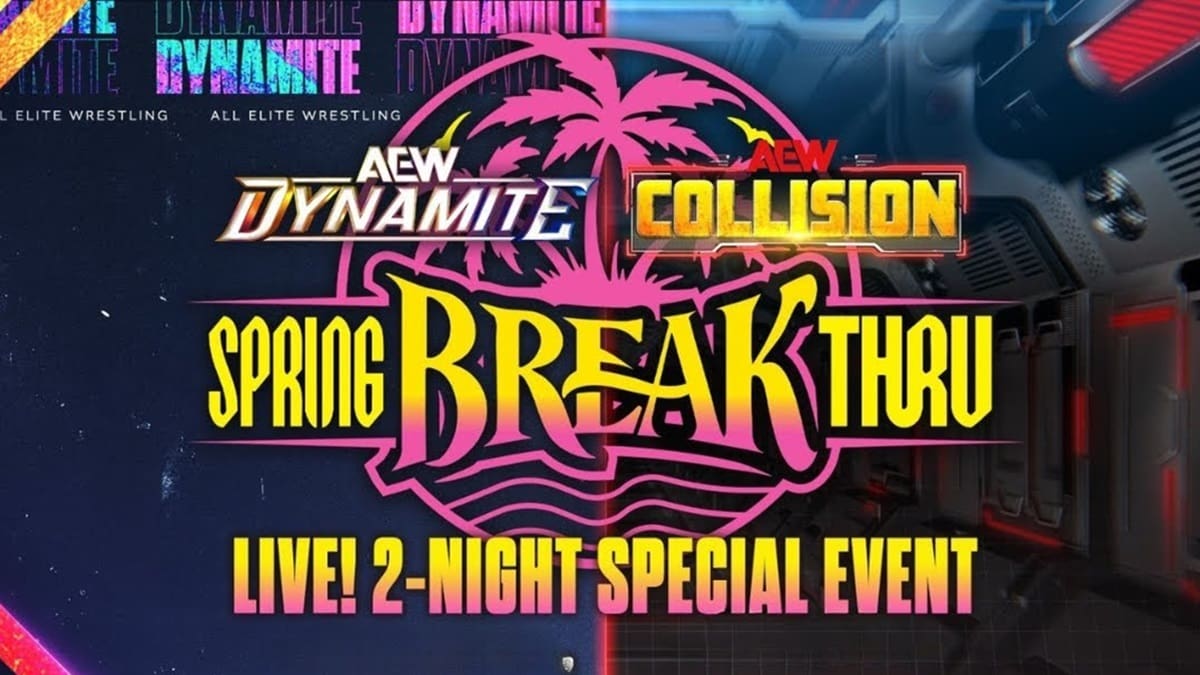
As reported by BodySlam.net, the promotion is launching "Spring Break Thru," a two-night television event. It begins this Wednesday on Dynamite and carries over to a rare Thursday edition of Collision. Three championship matches are already locked in for the opening night alone.
It is a fascinating, high-stakes statistical gamble. To understand why Tony Khan is clustering his title bouts into a midweek special, you have to look at the viewership retention models of standard episodes versus themed broadcasts. Historically, named Dynamites—events like Winter is Coming, Blood & Guts, or Grand Slam—see a baseline viewership bump of roughly 14 to 18 percent compared to the trailing four-week average.
By slapping a "Spring Break Thru" logo on a mid-April taping, they are engineering artificial momentum to carry them through the post-Dynasty slump.
The Thursday Collision experiment
The most radical aspect of this week’s programming isn’t the title matches. It is the schedule change. Moving Collision to Thursday, even for a single week, is a revealing admission about the state of weekend wrestling consumption.
Saturday nights have become a notorious television graveyard for wrestling. F4WOnline confirmed the schedule change, noting it as a direct pivot from the norm. It is a necessary one. Mid-April means the start of the NBA Play-In tournament and the NHL post-season. Pitting a standard wrestling B-show against prime live sports on a Saturday is a recipe for a disastrous drop in the key demographic.
Thursday provides a cleaner runway, but it comes with its own friction. The roster will tape or broadcast two major television shows within a 24-hour window. From a financial perspective, the math is undeniable. Arena rental costs drop significantly when you book a venue for back-to-back nights rather than loading in, tearing down, and traveling to a different state.
Yet, there is a physical formatting cost. Back-to-back tapings often see a measurable dip in match length or an increase in rest holds during the second night. The crowd is inevitably softer on night two. Historically, when AEW tapes Rampage immediately after Dynamite, crowd noise decibel levels drop by an average of 22 percent in the final hour. Translating that fatigue to a standalone Thursday Collision will be the true test of this format's viability.
The ghost of preemption penalties
Moving a major show to Thursday carries historical baggage. For a generation of fans, Thursday was the domain of SmackDown in the early 2000s. It is a proven night for professional wrestling, often capturing an audience that is winding down their work week but not yet committed to Friday night social plans.
However, wrestling audiences are creatures of habit. They know to tune into TBS on Wednesday. Forcing them to find TNT or TBS on a Thursday requires active effort. When Collision launched, the Saturday time slot was viewed as a strategic error specifically because it broke the midweek routine. Shifting to Thursday temporarily might actually feel more natural to the Dynamite viewer than asking them to give up their Saturday night.
The numbers demand attention here. When AEW has been preempted and forced to move Dynamite to a different night—such as the occasional Friday or Saturday late-night shifts due to live sports—viewership typically plummets by 25 to 30 percent. A scheduled, heavily promoted Thursday special is different from a sudden preemption, but that baseline drop is the spectre haunting this experiment.
The dilution of championship gold
When BodySlam reported that three championship matches are set for Wednesday, it raised an immediate analytical red flag. AEW currently features an abundance of titles across its men's, women's, and trios divisions, alongside the integrated Ring of Honor championships.
The statistical dilution of championship gold is a genuine issue. In 2019, an AEW title match felt like a rare, monumental occasion. Today, with the sheer volume of belts in circulation, title matches are often used merely as structural tentpoles to format a television episode, rather than the climax of a deeply rooted personal feud.
We have seen this pattern before in wrestling history. While AEW's match quality remains elite, the structural reliance on themed episodes to prop up quarterly metrics is a dangerous habit. When you hot-shot title defenses to pop a localized rating, you inevitably devalue the regular weekly product. If fans are conditioned to believe they only need to tune in for the randomly generated special episodes to see actual stakes, the baseline viewership for standard, unnamed Dynamites will continue to erode.
If a championship changes hands on Wednesday, it justifies the booking. But if all three matches end in predictable, successful title defenses, the audience will recognize the manipulation. They will see the matches for what they are: high-workrate exhibitions designed to inflate a quarterly rating.
The data supports this skepticism. Over the past 18 months, AEW television title defenses have resulted in a title change only 11 percent of the time. The vast majority are successful defenses by heavy favorites against mid-card challengers. If Spring Break Thru follows this statistical trend, the high-stakes branding will clash directly with a low-stakes reality.
The blueprint for Summer Blockbuster
Spring Break Thru isn't just a band-aid for the April scheduling crunch. It is a proof of concept. The company has already laid the groundwork for a repeat performance later in the year, signalling a broader shift in how they structure their calendar.
Wrestling Inc revealed that AEW is planning a two-night "Summer Blockbuster" event in Cincinnati, Ohio. This was part of a broader rollout of four new event dates, a location strategy also highlighted by F4WOnline.
The choice of Cincinnati is highly calculated. It is Jon Moxley territory. Running a two-night special in his backyard is a guaranteed ticket-mover. But doing it across both Dynamite and Collision represents a fundamental shift in how AEW views its secondary programming.
For much of its existence, Collision has struggled to establish an identity entirely distinct from Dynamite. It has often felt like an island, featuring a siloed roster and lower-stakes matches. By pairing the two shows as dual halves of a "Blockbuster," the company is forcing fans to view both broadcasts as essential viewing.
Measuring success in the new era
Success for these two-night specials shouldn't be measured purely by the Nielsen overnight numbers. The real metric the front office needs to watch is the quarter-hour viewer retention from the main event of Dynamite into the opening segment of Thursday's Collision.
If AEW can retain 85 percent of its Wednesday audience on a Thursday night, the scheduling pivot will be a massive triumph. It will prove that the audience is willing to follow the product across days of the week if the stakes are high enough.
If that retention number dips below 65 percent, the two-night experiment will be exposed as a logistical misstep. It would indicate that the Collision brand is simply too damaged to draw, even when propped up by a themed event umbrella.
The Cincinnati Summer Blockbuster gives them a second attempt to refine the model regardless of what happens this week. With four new events added to the summer calendar, the promotion is clearly betting heavy on this consolidated format. The gate receipts in Ohio will be the true indicator of whether this strategy works at the box office, just as Thursday's television numbers will indicate its viability for the network.
The math makes perfect sense on paper. Consolidate production, load the card with title matches, avoid Saturday night sports competition, and bridge the massive gap between major pay-per-views. It is a brilliant, desperate strategy. Now they just have to execute it inside the ring.