AEW Dynamite has a pacing problem, and it's built into the format
The Nitro hangover
Every episode of AEW Dynamite is a high-wire act fighting against the clock. Tony Khan built his flagship show on the structural bones of WCW Monday Nitro, prioritizing in-ring action and breakneck momentum over the methodical, promo-heavy pacing of traditional WWE television. That philosophy was revolutionary in 2019.
Seven years later, the formula is showing structural fatigue. As detailed in recent Dynamite reports, the reliance on cold-open bangers — throwing two top-tier workers into the ring at exactly 8:00 PM EST without an entrance — guarantees a strong first quarter-hour. It pops the crowd immediately. But it also sets an unsustainable athletic baseline for the remaining broadcast.
When you start a television broadcast with a 15-minute, high-workrate sprint featuring Canadian Destroyers and apron bumps, you are effectively cannibalizing the rest of the card. The mid-card matches that follow are forced into an impossible position. They either have to wrestle a slower, psychological style that the live crowd isn't primed for, or they have to escalate the violence to ridiculous extremes just to register a reaction.
This is a fundamental misunderstanding of television match psychology. You cannot have every match operate in fifth gear. A wrestling card needs valleys to make the peaks matter, but Dynamite's current format treats every segment as if it's the main event of a super-indie show.
The Picture-in-Picture trap
Then there is the issue of commercial formatting. AEW's commitment to Picture-in-Picture (PiP) during matches was initially hailed as a viewer-friendly alternative to the traditional commercial break. In practice, it has created a predictable, rigid match structure that even casual fans can set their watches to.
Watch any standard Dynamite television match. Around the eight-minute mark, the babyface will hit a high-impact dive to the outside. The crowd pops, the commentators shout their approval, and then the screen immediately shrinks into the PiP box. The heel instantly recovers, takes control on the floor, and locks in a prolonged heat segment that lasts exactly the duration of the commercial break.
When they return to full screen, the babyface begins their fiery comeback within thirty seconds. It happens so consistently that it shatters the illusion of a competitive contest. The wrestlers are no longer fighting each other; they are fighting the TBS ad schedule.
This predictability strips the drama out of the middle act of the match. If the audience knows that the heel is just stalling for time while an insurance commercial plays, they emotionally disengage. The art of the heat segment — making the crowd genuinely fear for the babyface's safety — is lost entirely in this sterile, formatted approach.
The backstage interruption trope
The predictability extends beyond the ring and into the backstage segments. AEW has assembled one of the most talented broadcast teams in wrestling history, anchored by Renee Paquette. Yet, they are consistently placed in the exact same narrative box week after week.
The formula is painfully rigid. Paquette asks a question, the wrestler gets exactly one sentence into their response, and they are immediately interrupted by their rival walking into the frame. The camera pans slightly, a brief verbal altercation ensues, and then a brawl breaks out before security rushes in to pull them apart.
It feels less like a spontaneous sports broadcast and more like a rehearsed play. Real combat sports don't operate this way. If a UFC fighter is giving a backstage interview, their opponent doesn't magically materialize from behind a lighting rig to shove them into a road case. It happens occasionally, which makes it special. On Dynamite, it happens three times a night.
This structure undermines the intelligence of the characters. If you know you are going to be jumped during an interview, why wouldn't you bring backup? The internal logic of the show falls apart when the same tropes are relied upon too heavily. The production needs to breathe. Let a wrestler finish a thought. Let a promo stand on its own without requiring a physical confrontation to end the segment.
Roster and booking logistics
These structural quirks are becoming especially apparent as AEW navigates the road to Double or Nothing. We are exactly 45 days away from the May 24 pay-per-view in Las Vegas. With the addition of Dynasty to the schedule last month, AEW has altered its traditional pay-per-view rhythm.
They are no longer building to four major shows a year. The compression of the schedule requires a different pacing strategy. You cannot give away pay-per-view quality matchups on free television every Wednesday when you have to convince fans to spend $50 on a premium live event just a few weeks later.
The challenge is maintaining heat. If a feud peaks too early on Dynamite, the eventual pay-per-view match feels like an afterthought. We are seeing this right now with the handling of the main event picture. The desire to deliver a stacked television product is actively fighting against the long-term goal of selling pay-per-views.
Booking a two-month cycle requires restraint. It requires keeping rivals apart. It requires squash matches that establish dominance without giving away competitive near-falls. Dynamite struggles with restraint. The house style demands competitive, back-and-forth action, even when a one-sided destruction would serve the narrative better.
The Tag Team Division's identity crisis
There was a time when AEW's tag team division was the undisputed best in the world. The Young Bucks, FTR, The Lucha Bros, and Santana & Ortiz were putting on clinics every Wednesday. The tag division wasn't an afterthought; it was the main draw. It was the foundation the company was built upon.
Today, the division feels entirely disjointed. The shift towards trios matches and faction warfare has diluted the traditional two-on-two tag team structure. When you throw six or eight men into a ring, the psychology of cutting off the ring and isolating an opponent vanishes. It becomes a tornado of high spots.
This structural shift has hurt the storytelling. A classic tag team match relies on the hot tag — the buildup of anticipation as the isolated babyface struggles to reach their fresh partner. Trios matches, by their very nature, are too chaotic to sustain that particular tension. There are too many moving parts.
Re-establishing the two-on-two tag team division as a marquee attraction would solve a lot of Dynamite's pacing issues. A methodical, perfectly executed tag match provides a completely different rhythm than a frantic trios sprint. It forces the audience to slow down and invest in the struggle, rather than just waiting for the next flip.
The density of championships
Another factor clogging the arteries of Dynamite is the sheer density of championships. Between the World Title, the Continental Championship, the International Title, the TNT Title, the FTW Title, and the various tag team and trios belts, almost every match has some form of hardware attached to it.
When everyone is a champion, no one is a champion. The original appeal of the AEW title hierarchy was its strictness. The World Championship felt untouchable. The TNT Title was the television workhorse belt. Now, the lines have blurred so heavily that the prestige of the mid-card titles fluctuates wildly from week to week.
A two-hour television show simply does not have the oxygen to sustain meaningful storylines for six different singles championships. What ends up happening is a rotational booking system. A champion will get a heavy focus for two weeks, and then disappear into the background to make room for another title feud. It kills momentum.
Consolidating these belts, or at least heavily restricting which ones are featured on Dynamite versus Collision, would instantly clean up the booking format. It would give the remaining champions more screen time to develop deeper, more nuanced rivalries that don't rely entirely on match quality to carry the interest.
The final hour fade
No discussion of Dynamite's structural issues is complete without addressing the placement of the women's division. For years, the dedicated women's match has almost exclusively occupied the third-to-last or second-to-last segment of the show. It is the notorious death slot right before the main event.
Placing a match in this designated time block is a massive disadvantage. The live crowd has just sat through ninety minutes of intense action and is naturally fatigued. They are saving their energy for the main event. Asking any performers, male or female, to heat up a tired room near the end of the broadcast is an uphill battle.
This predictable placement signals to the television audience that the match isn't a priority. It feels like a contractual obligation rather than an organic part of the card. If you want the audience to treat the women's division with main-event reverence, you have to present them as main-event stars. That means opening the show with them. That means giving them the crossover segment.
Breaking the format is the only way to break the stigma. When a women's segment is unexpectedly placed at the top of the hour, the energy in the arena completely changes. It snaps the audience to attention. Dynamite needs to utilize this element of surprise far more often.
The 9:45 PM sprint
Finally, we have to talk about the main event pacing. Dynamite has a notorious habit of running completely out of time. The final match of the night is almost always forced into a hyper-accelerated pace to fit within the remaining broadcast window.
You can see the exact moment the referee receives the call in their earpiece to go home. The psychology of the match gets thrown out the window, and the wrestlers rush through their planned high-spots at double speed. It turns what should be the dramatic climax of the show into a frantic race against the TBS feed cutting to black.
This is a formatting failure. If a mid-card promo segment goes two minutes long, those two minutes are stolen directly from the main event. It shows a lack of strict time management at the gorilla position. The main event should be the most protected segment on the show, not the dumping ground for the show's cumulative timing errors.
Sometimes they get an overrun, but even that is unpredictable. Relying on an extra three minutes of network grace time is not a sustainable production strategy. It leaves the viewing audience feeling stressed rather than entertained as the clock ticks closer to the top of the hour.
Finding the rhythm
AEW Dynamite remains one of the most athletically impressive wrestling shows on television. The raw talent on the roster is undeniable. But talent alone cannot overcome a rigid, predictable television structure. The show desperately needs a change of pace.
Vary the match lengths. End a segment without a brawl. Let a heel win a match cleanly without a distraction finish. Stop cutting to commercial right after a dive. These are small, tactical shifts that would instantly make the show feel more dangerous and unpredictable.
The magic of live wrestling is the feeling that anything can happen at any moment. When a show falls into a predictable rhythm, that magic is replaced by mechanical execution. Dynamite needs to break its own rules if it wants to recapture the chaotic energy that made it so special in the first place.
Read Next
- Tony Khan is finally admitting the 2022 ghost still haunts AEW leadership
- Tony Khan thinks Chris Jericho chose AEW but the fans might feel differently
- MJF Draws New Battle Lines as AEW's Strategy Pivots
- Paul Wight deserves a better final act than these injury-prone tropes
- 🎲 AEW Double or Nothing 2026 — Full Coverage Hub
Cody Rhodes "American Nightmare" Adult Weight Belt
The ultimate signature accessory for the American Nightmare's biggest fans.
More Coverage
WWE’s Saturday Night strategy needs a rethink
3 hours ago
Strategy gaps heading into a triple-title AEW Collision
3 hours ago
G1 Climax 36 is already testing the limits of New Japan's depth
4 hours ago
Roman Reigns and the lonely reality of the Tribal Chief era
6 hours ago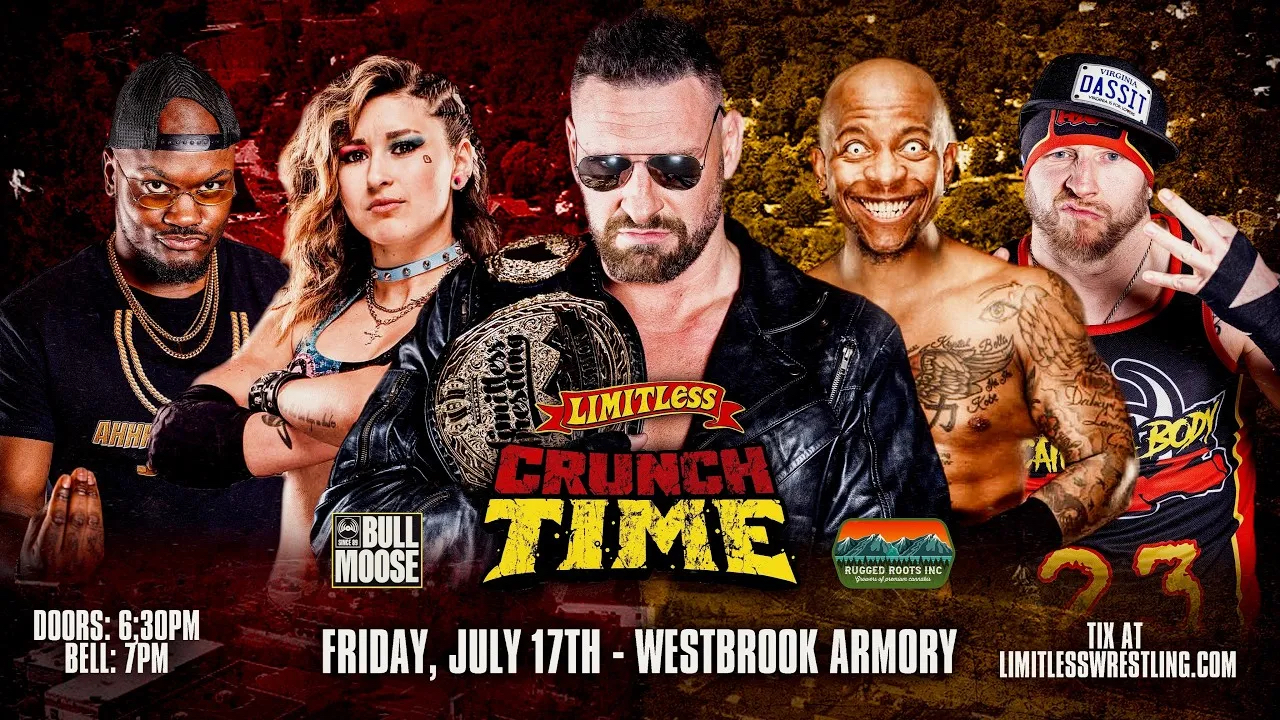
Westbrook Armory turned into a pressure cooker for Crunch Time
6 hours ago
Tony Khan is fighting on every front and the fans are officially exhausted
8 hours agoMore Analysis
AEW's bumpy road to Double or Nothing exposes their biggest flaw
2 months ago
AEW has a major problem with momentum heading into Double or Nothing
2 months ago
AEW's Double or Nothing build is falling apart right before our eyes
2 months ago
AEW has a major problem to solve on Dynamite tonight
1 month, 3 weeks agoAEW Dynamite's frantic pacing is hurting their build to Double or Nothing
3 months ago