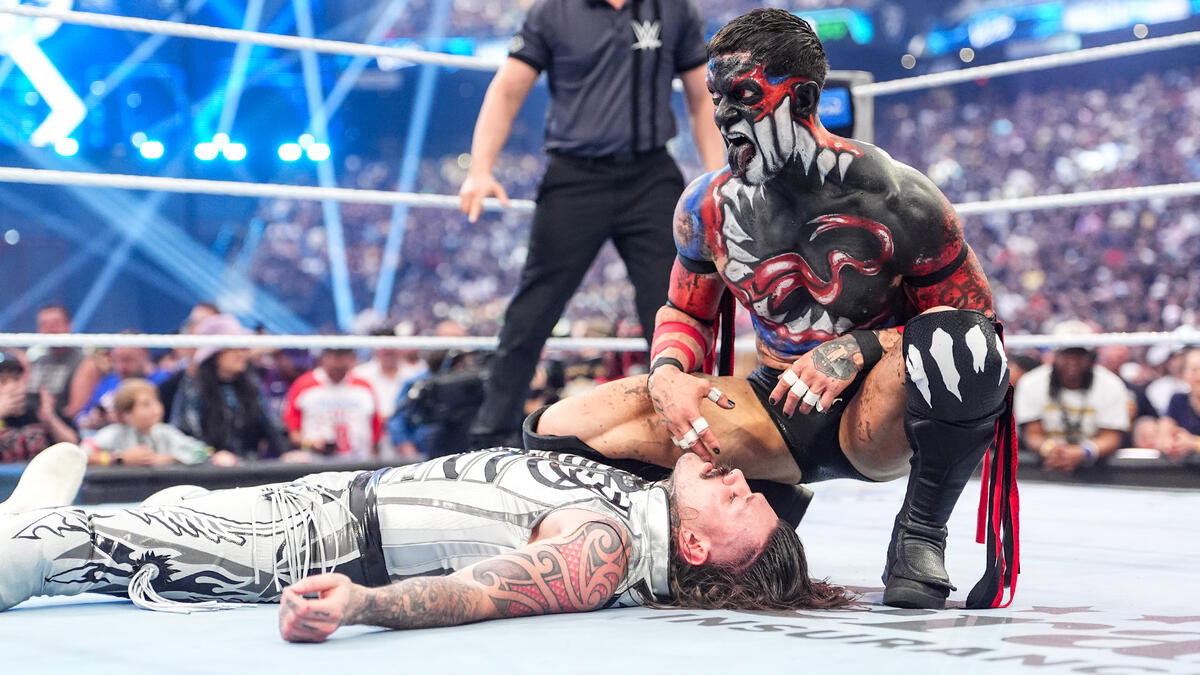
The Physical Reality of WrestleMania Week
We are exactly two days away from WrestleMania 41 in Las Vegas. While the medical tent at Allegiant Stadium is currently prepping for the inevitable bumps, bruises, and concussions that come with a two-night premium live event, a wave of recent backstage revelations provides a stark reminder of the physical tightrope these athletes walk.
You do not make it to the grandest stage without a few near-misses. Right now, the active roster is surprisingly healthy. The real medical story this week isn't about who is missing the show. Instead, it revolves around the historic risks talent have taken, and the executives who tried to stop them.
The reality of professional wrestling is that the most dangerous opponent is often the environment itself. The ringside barricades, the steel steps, and the unforgiving LED boards have ended more pushes than any botched suplex. As the industry descends on Allegiant Stadium, the medical staff is prepping thousands of pounds of ice, reviewing emergency evacuation routes to local trauma centers, and calibrating their sideline concussion evaluation tablets.
The Biomechanics of the Cage and Trish Stratus
According to a recent report from Ringside News, WWE Hall of Famer Trish Stratus confirmed that Vince McMahon actively tried to shut down a major spot during one of her cage matches. From a medical and kinesiology standpoint, McMahon's hesitation is completely justified.
We often talk about the visual spectacle of a steel cage. We rarely discuss the brutal physics involved in taking a bump off the unforgiving chain link.
The human spine is not designed to absorb lateral impacts against unyielding steel. When a performer launches themselves from the top turnbuckle or the cage wall, they are fighting gravity with zero margin for error. A standard ring canvas has give. It is constructed with plywood, foam padding, and a spring mechanism. A steel cage has none of that.
If a performer misjudges a rotation by even a few degrees during a high-risk cage spot, the kinetic energy is transferred entirely into the cervical vertebrae or the lumbar spine. We have seen this lead to catastrophic outcomes in the past. High-risk cage impacts routinely expose performers to major orthopedic trauma.
When spots go wrong, the medical team is usually dealing with three primary catastrophic outcomes:
- Severe cervical whiplash from unnatural rotational forces upon impact.
- Herniated discs requiring anterior cervical discectomy and fusion (ACDF) surgery.
- Complete anterior cruciate ligament (ACL) ruptures resulting from off-balance landings.
Stratus pushing to keep the spot was a massive gamble with her long-term mobility. McMahon’s attempt to veto the action wasn't necessarily born out of paternal instinct. It was standard risk management. You do not risk your top female star on a single high-impact bump that could fracture a collarbone.
The fact that Stratus managed to execute these moments without permanent neurological damage is a minor medical miracle. Her athletic conditioning saved her career.
The Rousey Factor and Stephanie McMahon's Physical Gamble
The physical toll of professional wrestling isn't just reserved for the full-time roster. This week, WrestlingNews.co highlighted Stephanie McMahon's revelation regarding her mixed tag team match at WrestleMania 34.
"She’s the reason I ever competed at WrestleMania," McMahon stated, confirming that Ronda Rousey specifically requested the matchup.
From a sports medicine perspective, putting a corporate executive in the ring with a former Olympic judoka and UFC champion is a terrifying proposition. The conditioning required to simply survive a 15-minute match is immense. For a non-active competitor, the cardiovascular strain is immediate.
The heart rate spikes to 180-190 BPM within the first three minutes. Lactic acid buildup in untrained muscle groups leads to rapid fatigue, which drastically increases the risk of a soft-tissue tear. But the real danger was the specific skill set of her opponent.
Rousey's offense is rooted in legitimate judo throws and joint manipulations. Taking a hip toss from an Olympian requires knowing exactly how to tuck your chin and distribute the impact across the broad muscles of the back. If Stephanie had braced improperly with an extended arm, she would have been looking at a radial head fracture or a dislocated shoulder.
Then there is the armbar. While the move is heavily modified for sports entertainment, the torque applied to the elbow joint is still significant. The ulnar collateral ligament (UCL) is heavily exposed during this submission. Even a slight miscommunication in the ring could result in a hyperextended elbow or a torn rotator cuff.
Stephanie’s grueling training camp ahead of WrestleMania 34 was less about learning holds. It was a desperate race to condition her joints to withstand sudden, violent forces.
Risk Management and The Hall of Fame
All of this historical medical context ties back to the man who ultimately had to sign off on these health risks. As reported by Wrestling Inc, there is ongoing backstage debate regarding whether Vince McMahon will appear at the 2026 WWE Hall of Fame ceremony tonight.
For decades, McMahon was the final filter for medical clearance. He was the one weighing the risk of a cage spot against the financial draw of a pay-per-view. The irony is thick. The same executive who would notoriously rewrite concussion protocols and push talent to return prematurely is the same man who allegedly tried to protect Stratus from a cage bump.
This inconsistency has always been WWE's biggest medical flaw. Safety protocols historically fluctuated based on a performer's spot on the card. Mid-card talent worked through torn labrums, while main event stars had their spots micromanaged for safety. It was a broken system.
The subjective nature of WWE's old medical clearances left many wrestlers dealing with chronic pain well into their retirement. The reliance on ringside doctors who were directly on the company payroll created an inherent conflict of interest. Wrestlers knew that reporting a concussion or a lingering knee issue could cost them their television time, so they hid their symptoms. McMahon's iron grip on the product meant that his personal judgment often superseded objective medical advice.
This history makes the current debate around his Hall of Fame appearance particularly complex for the older generation of talent. Many of the veterans sitting in the audience tonight have surgical scars directly resulting from the brutal schedule McMahon demanded.
Today's WWE medical team operates far differently. The protocols heading into WrestleMania 41 are stringent. We now see a mandatory baseline concussion testing system and independent neurologists at ringside. If a modern superstar wanted to try a massive, unplanned cage spot, the match would likely be stopped by the referee on medical advice before the performer even reached the top rope.
Looking Ahead to Allegiant Stadium
As we prepare for the chaos in Las Vegas, the physical reality of the industry remains unchanged. The athletes taking the ring starting this Sunday are walking a very fine line. One wrong step means trading a stadium pop for nine months in a physical therapy clinic.
The stories from Stratus and McMahon serve as critical reminders. The bumps we cheer for have a permanent cost. The human body is remarkably resilient, but it has a finite bump card.
The medical staff will be watching closely on Sunday and Monday. They are the unsung safety net of the entire event. Let's just hope they have a quiet two nights in Nevada.
Read Next
- Vince McMahon status for WWE Hall of Fame ceremony remains murky
- Stephanie McMahon's HOF Induction: The Corporate Architect's Crowning Moment
- Wrestling Twitter is tearing itself apart over Stephanie McMahon's HOF induction
- Liv Morgan is currently having the most chaotic WrestleMania week in history
- 🏆 WrestleMania 41 — Full Coverage Hub