
Dennis Condrey and the lost geometry of tag team wrestling

The master of spatial manipulation
A recent news dump from PWInsider highlighted a fundraiser for Dennis Condrey’s family, alongside notes on upcoming Gotham Wrestling shows, Little Guido, Tommy Dreamer, and the Glamour Girls. It is a sobering note. The physical toll of the 1980s territorial loop is notoriously unforgiving.
But reading Condrey's name in 2024 immediately forces a tactical rewind. If you want to understand why modern tag team wrestling often feels like a chaotic, weightless exhibition, you have to watch Dennis Condrey.
He was a geometrician. Alongside Bobby Eaton in the original Midnight Express, Condrey didn't just wrestle matches. He solved spatial equations.
Watch their mid-80s run in Jim Crockett Promotions against the Rock 'n' Roll Express. The modern tag team match treats the ring as a single open space. Condrey treated it as a grid. He understood that the most dangerous weapon a heel tag team possesses is the referee's line of sight.
When the Midnight Express wanted to cut the ring in half, they didn't just stomp Ricky Morton in the corner. Condrey actively manipulated referee Tommy Young's peripheral vision. It was a precise, calculated distraction.
If Eaton had Morton trapped in a front facelock, Condrey wouldn't just stand on the apron reaching for a tag. He would step down to the floor. He would casually walk toward the center of the ring apron, drawing the referee's eyes exactly five degrees away from the action.
That tiny shift was all Eaton needed. A subtle eye gouge followed. A choke over the middle rope. By the time the referee snapped his head back, Condrey was back in his corner, hand extended, looking entirely innocent.
It is a lost art. Today, a heel distracts the referee by jumping on the apron and screaming wildly. It's theatrical, but it lacks mechanical logic. The referee looks stupid for indulging it. Condrey made the referee look overworked, not incompetent.
The false tag and the 4.5 second window
The true genius of the Midnight Express was the false tag mechanic. It requires exact timing to execute without looking contrived.
Morton would absorb minutes of punishment. He would hit a desperation enzuigiri. He would drag himself to Robert Gibson. The tag would happen. The crowd would explode. But Tommy Young wouldn't see it, because Jim Cornette was on the opposite apron waving his tennis racket.
Young would turn around, see Gibson in the ring, and force him back to the apron. This entire sequence took exactly 4.5 seconds. In that brief window of distraction, Condrey and Eaton would drag Morton back to their corner and execute a double-team move.
Perfect efficiency. Modern teams completely fail at this. They drag the distraction out for ten seconds, standing around waiting for the next spot. Condrey never waited. He operated with brutal urgency.
The mechanical anchors of the women's division
The PWInsider update also mentions the Glamour Girls, Judy Martin and Leilani Kai. It is a fitting inclusion when discussing lost in-ring mechanics.
If Condrey was the master of spatial manipulation, Martin and Kai were the ultimate mechanical anchors. Their work against the Jumping Bomb Angels at the first Survivor Series on November 26, 1987 remains a masterclass in grounding high-flyers.
Noriyo Tateno and Itsuki Yamazaki were operating at twice the speed of the American women's division. They utilized planchas, missile dropkicks, and high-speed rope running. How do you stop that? You do not try to speed up.
Martin weaponized her lack of speed. When Yamazaki came off the top rope, Martin didn't stand there waiting to catch her like a modern base. She stepped out of the way. She absorbed the momentum and immediately applied a double underhook suplex.
It was brutally basic. It was also functionally perfect. You beat speed with gravity. You use hair pulls. You use the ropes to break their base.
The tragedy of the WWF's booking in that era is their complete failure to understand what they had. Vince McMahon saw Martin and Kai as relics. He dumped the women's tag titles shortly after. He sacrificed a division with actual tactical depth because it didn't fit his cartoon aesthetic. It was a massive structural failure.
The ECW erosion of rules
The news roundup then pivots to the 1990s, mentioning Tommy Dreamer and Little Guido. This is where the structural integrity of the wrestling match began to fracture.
Extreme Championship Wrestling actively destroyed the rules that Condrey built. This is not a stylistic preference. It is an analytical observation of ring pacing.
Dreamer was the patron saint of the ECW brawl. His matches rarely featured a tag rope. The five-second double-team rule was treated as a mild suggestion. When Dreamer tagged in, the match instantly devolving into a four-way street fight was a guarantee.
This was exciting in 1996. It was poison for long-term ring psychology.
Once you teach an audience that the referee will not enforce the legal man rule, the hot tag loses all of its tension. Why care about the babyface desperately crawling to his corner if his partner can just walk into the ring with a steel chair anyway?
Dreamer substituted physical escalation for narrative escalation. If you introduce a weapon at minute three, you have nowhere to go by minute twelve. The heel didn't need to work a body part. The heel just needed to hit Dreamer with a sign.
The UWFi technician in a garbage promotion
Little Guido existed in complete contrast to this. He was a pure mat technician trapped in a promotion that celebrated flaming tables.
James Maritato was trained by Billy Robinson. That catch wrestling pedigree is obvious when you watch his ECW tape. His work in the Full Blooded Italians is often remembered for the comedy, which ignores his actual mechanics.
Watch his TV matches with Tajiri in 1999. Guido didn't just throw a Fujiwara armbar out of nowhere. He worked the wrist. He used a snapmare to manipulate Tajiri's center of mass, dropping him to a seated position before isolating the shoulder joint.
When applying an armbar, Guido didn't just pull the arm back. He bridged his hips up to apply maximum pressure to the elbow joint, while hooking the far leg with his free arm so Tajiri couldn't roll out.
That is pure UWFi technique disguised as an ECW undercard match. Guido was doing Zack Sabre Jr. work in a ring covered in broken tables.
But the ECW style won the ideological war. The structural discipline of Condrey and Guido was replaced by the chaotic brawling of Dreamer.
The modern indie synchronization problem
Which brings us to Gotham Wrestling returning to New York next week. The modern independent scene is a direct descendant of that ECW chaos, filtered through the high-spot obsession of the early 2000s.
Go to any indie show in the northeast today. Watch the tag team matches.
You will see incredible athleticism. You will see Canadian Destroyers off the middle rope. What you will not see is anyone cutting the ring in half.
Modern tag teams treat the legal man rule as an inconvenience. They spend three minutes setting up an intricate six-man dive sequence. The referee stands in the corner, effectively acting as a spectator. It destroys the illusion of combat.
If you do not enforce the rules, breaking the rules means nothing.
When Dennis Condrey choked a man behind the referee's back, it drew visceral anger from the crowd. The tension came from the threat of disqualification. Today, nobody believes a tag team will be disqualified for a double-team move. The threat is gone.
We have traded mechanical logic for synchronized gymnastics. Wrestler A stands outside the ring for exactly 14 seconds waiting for Wrestler B to complete a convoluted rope-walk dive. It looks cooperative.
Condrey never stood around waiting to catch a flying opponent. He moved. Or he hit them.
The necessity of the tape library
This isn't just nostalgia talking. A match without a foundation cannot sustain emotional investment. You can only pop the crowd so many times with a superkick before they go numb.
Wrestling needs to rediscover its geometry. It needs to look at how Judy Martin shut down the Bomb Angels. It needs to watch Little Guido transition from a headlock to a short-arm scissors.
Most importantly, it needs to study Dennis Condrey.
The industry should absolutely rally to support Condrey's family. But we should also preserve his tape. It holds the blueprints for a style of wrestling that actually made sense.
Read Next
Becky Lynch: The Man: Not Your Average Average Girl
Becky Lynch's unfiltered, inspiring journey to the top of WWE.
Frequently Asked Questions
How did Dennis Condrey manipulate the referee's vision?
What made the Midnight Express's false tag mechanic effective?
Why does the author feel modern tag team wrestling lacks logic?
How did Dennis Condrey utilize ring space during tag matches?
What role did Jim Cornette play in the Midnight Express's tag team strategy?
More Coverage
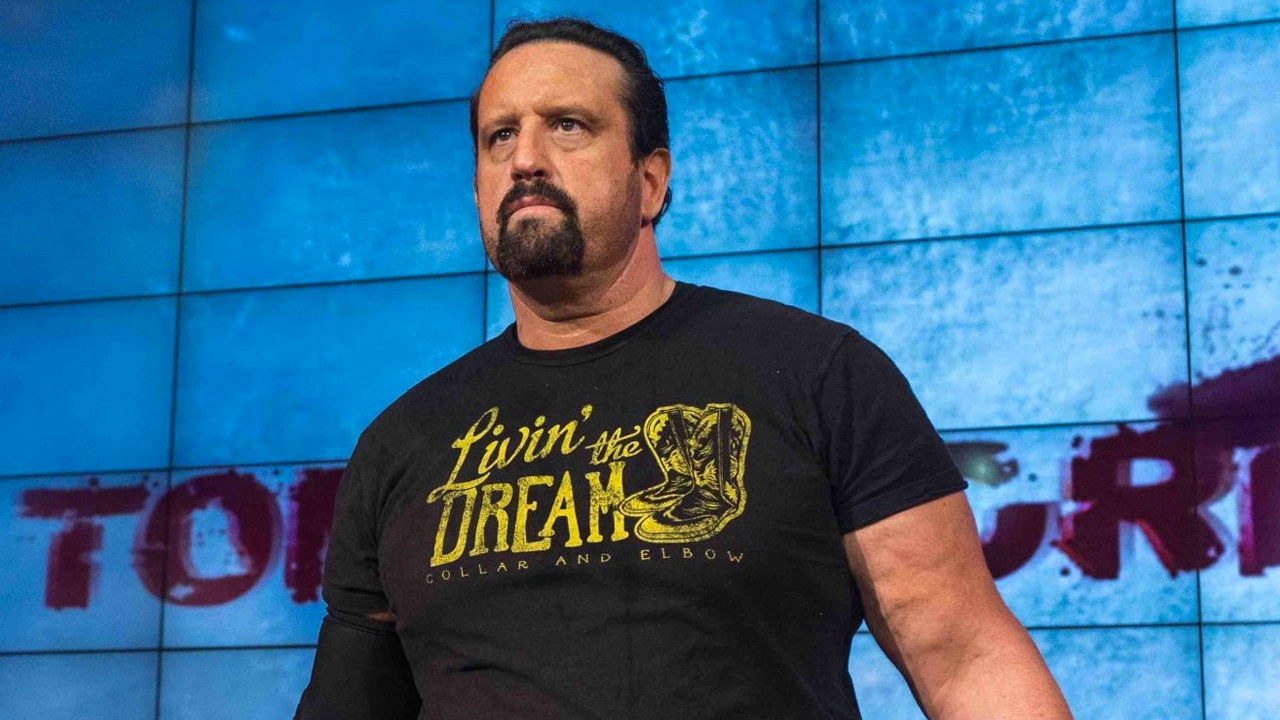
The math behind WWE's thin heel roster
an hour ago2 Cold Scorpio: A legal shadow over a veteran technical legacy
1 day, 1 hour agoRemembering ECW veteran Paul Bykow
1 day, 17 hours ago
Fatal Influence are testing the durability of WWE's tag team division
1 day, 19 hours ago
Why Kazuchika Okada is currently wrestling's biggest tactical puzzle
4 days, 19 hours ago
Tommy Dreamer is huffing the AEW supply again
4 days, 20 hours agoMore Analysis
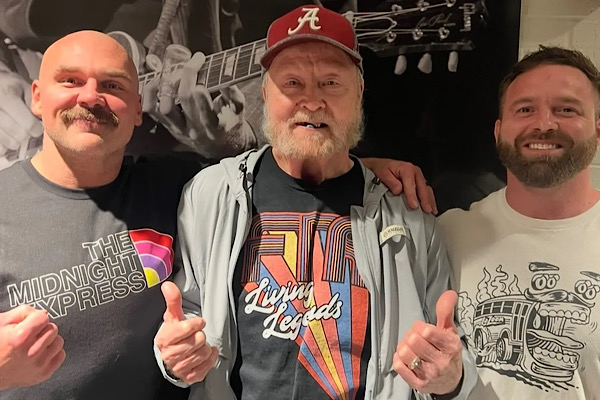
Dennis Condrey was the gritty architect of modern tag team heat
3 months, 3 weeks ago
Why the legacy of Dennis Condrey defines modern tag team wrestling
3 months, 4 weeks ago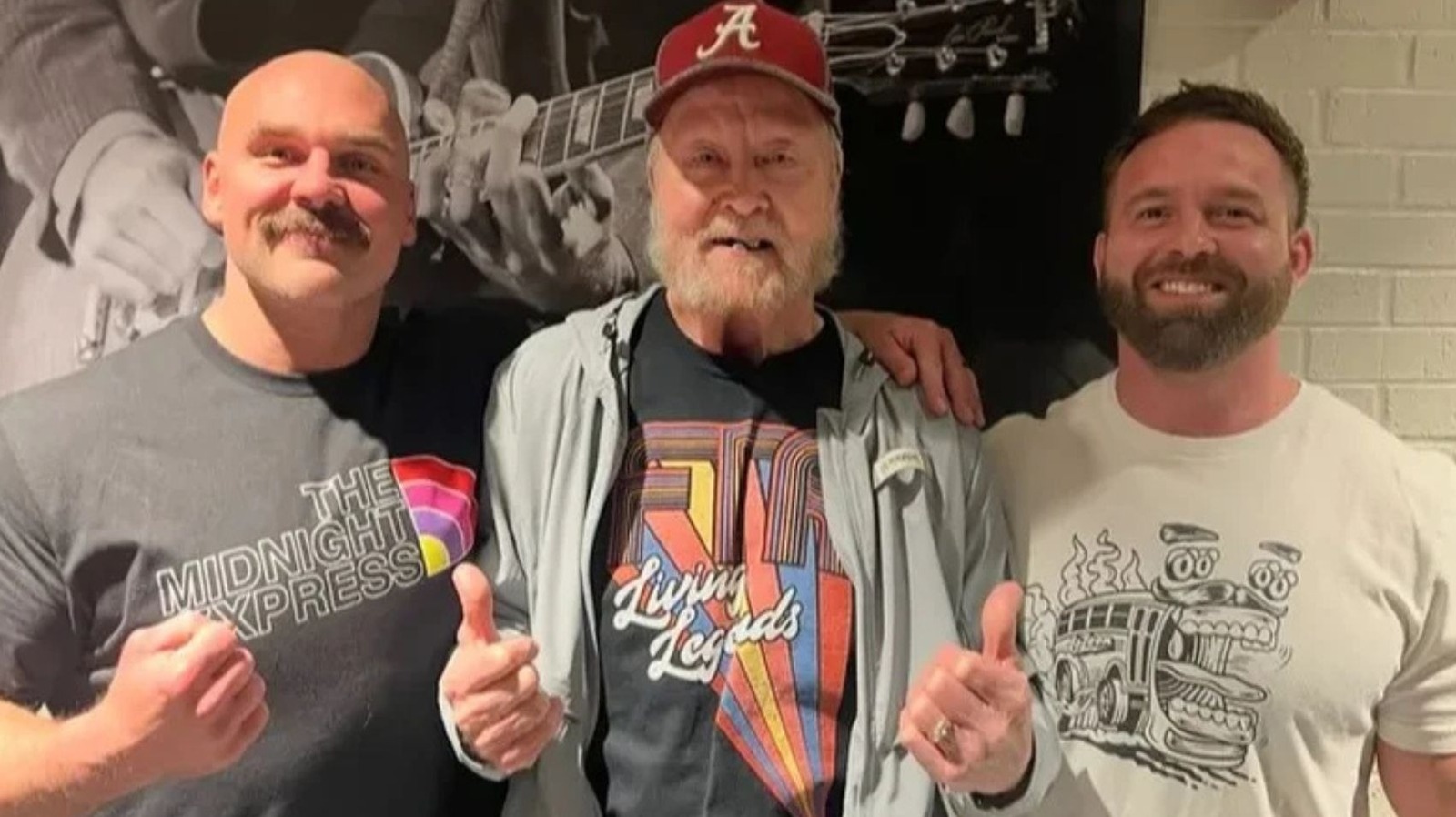
Dennis Condrey was the mechanic who built modern tag team wrestling
3 months, 3 weeks ago
Dennis Condrey was the blue-collar architect of tag team perfection
4 months ago
Dennis Condrey and the blueprint for the perfect tag team
3 months, 4 weeks ago