The four-week experiment
Developmental wrestling is supposed to be a slow burn. The Performance Center was built on the premise of repetition, drills, and months of untelevised coconut loop matches before a talent ever sees a hard cam. Then came the NXT 2.0 era.
The mandate shifted overnight. Suddenly, athletes with zero wrestling background were being thrust onto live television to sink or swim. It was a chaotic period for WWE's developmental brand, producing a lot of objectively terrible television. But it also produced Tiffany Stratton.
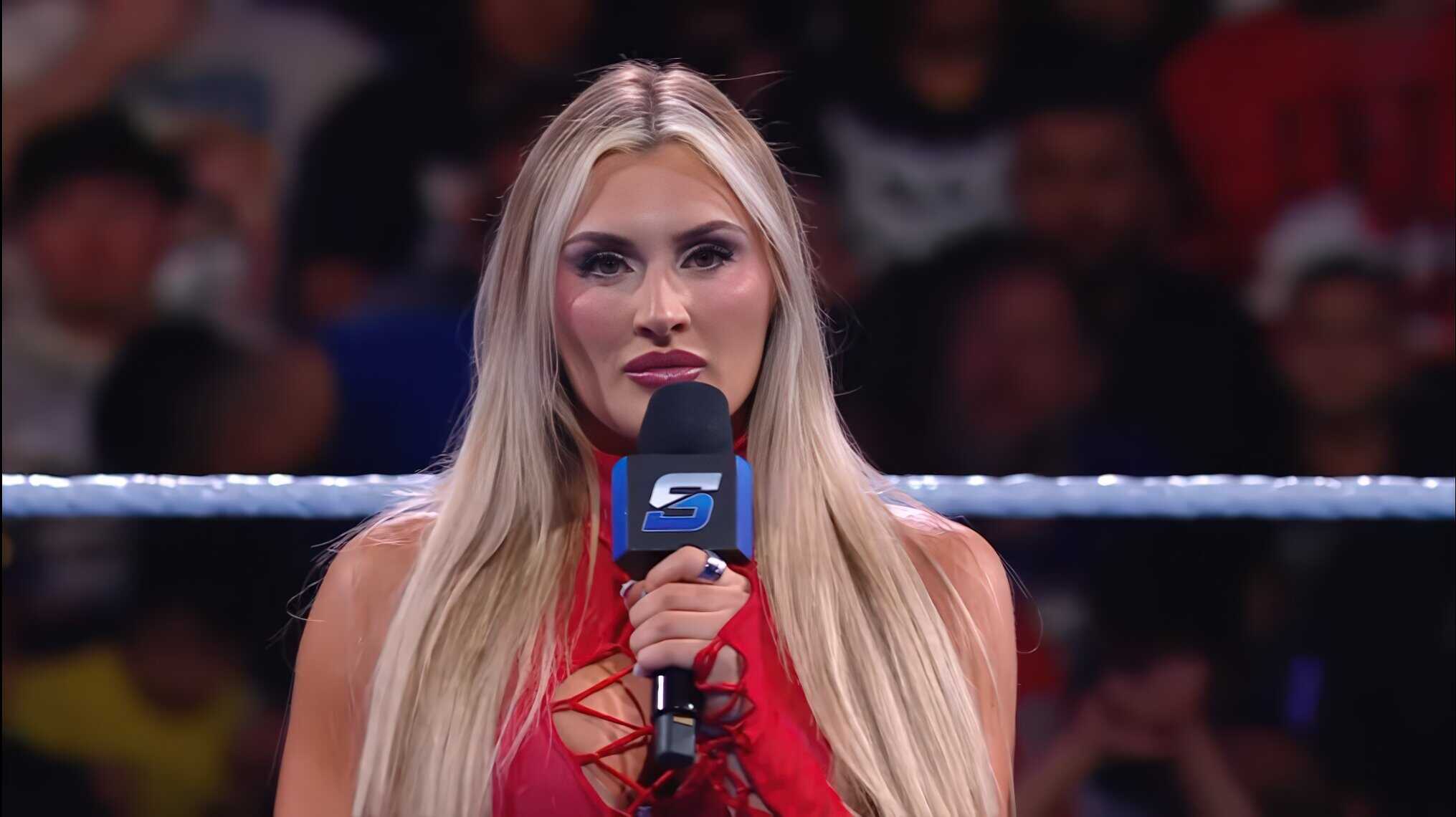
Stratton recently admitted just how absurd her timeline was. As WrestleTalk covered this week, she was thrown on TV four weeks after signing her contract. She didn't even have ring gear ready. That is a fundamentally insane timeline for a professional wrestler. For context, most independent standouts spend six months unlearning their bad habits before NXT puts them on screen.
Stratton bypassed the line entirely. The resulting product was raw, heavily scripted, and fascinating from a biomechanical standpoint. We were watching someone learn the geometry of a wrestling ring in real-time on national television.
Mechanics over psychology
When you watch early Stratton matches, the lack of ring psychology is glaring. This is the necessary critical observation when evaluating her ascent. She didn't know how to fill the space between high spots. Her transitions were clunky, and her selling was purely reactionary rather than structural.
If you worked over her left arm for ten minutes, she would still use it to post up for a springboard. That is the hallmark of a rookie who is memorizing steps rather than understanding the match's narrative. She was structurally hollow.
However, her athletic baseline masked these deficiencies. Stratton is a former elite gymnast, specifically trained in trampoline and tumbling. That specific background translates to professional wrestling better than almost any other discipline. It dictates air awareness, body control, and explosive fast-twitch muscle fiber activation.
When she runs the ropes, there is no wasted motion. Her footwork is precise. She hits the ropes high on her back, maximizing the rebound kinetic energy rather than absorbing it. It is a minor detail that drastically alters the pacing of her offensive sequences.
The geometry of the Prettiest Moonsault Ever
We need to talk about her finisher. The Prettiest Moonsault Ever is a direct evolution of Christopher Daniels' Best Moonsault Ever, but executed with significantly more amplitude. Daniels relied on a quick snap off the middle rope. Stratton uses the top rope and relies on a massive vertical leap before initiating the backward rotation.
Look at the apex of her jump. She achieves nearly three feet of vertical clearance above the top turnbuckle before rotating. This gives her the hang time necessary to adjust her landing trajectory mid-air, ensuring she hits her opponent squarely in the chest cavity rather than glancing off the shoulder or dropping knees into the ribcage.
It is a devastatingly safe move. That sounds like an oxymoron, but in wrestling, it is the highest compliment you can give an aerial maneuver. She protects herself and her opponent while maximizing the visual impact.
The Becky Lynch catalyst
The turning point in her tactical development was the feud with Becky Lynch. The No Mercy main event was a masterclass in masking a rookie's weaknesses while highlighting her strengths. Lynch dictated the pacing. She forced Stratton to slow down, to sell exhaustion, to understand the concept of breathing within a hold.
Stratton lost that match, but it was the exact moment her in-ring IQ leveled up. You can track her spatial awareness before and after that program. Post-Lynch, Stratton started actively cutting off the ring. She stopped letting her opponents dictate the center of the mat.
She began utilizing rest holds not just as breathers, but as psychological weapons. She started manipulating the referee's sightlines. These are veteran tactics that she absorbed through osmosis by working with someone who understands the granular details of match construction.
Projecting the main roster ceiling
Stratton is now a featured act, but the training wheels are fully off. The main roster is unforgiving. You are working four days a week, often with opponents who have entirely different stylistic backgrounds. You cannot script every sequence.
This is where she still occasionally stumbles. Put her in the ring with a pure striker like Asuka, and Stratton's timing looks rushed. She still struggles slightly with chain wrestling against technical specialists. When a match breaks down and the planned spots fall apart, her improvisational skills are still developing.
Her promos, while vastly improved, still carry the cadence of someone reciting lines rather than speaking from a place of organic character motivation. She hits her marks, but the delivery lacks the spontaneous venom of a top-tier heel.
But the raw materials are undeniable. She has the physical tools to match up with Bianca Belair in a pure athletic showcase, and the character arrogance to be a perfect foil for a white-meat babyface.
The booking prediction
WWE is notoriously protective of their homegrown investments. They rushed her to television, but they have been remarkably careful with her main roster presentation. They are hiding her flaws in multi-woman matches and heavily produced segments.
My prediction: She wins a major singles championship within the next 12 months, likely cashing in a Money in the Bank briefcase or winning a multi-woman scramble. They won't book her to submit a veteran in the center of the ring yet. They will use a chaotic finish to protect her while giving her the hardware.
It is a calculated risk. Throwing someone on television four weeks into their career usually ends in disaster. Tiffany Stratton is the statistical outlier. She survived the deep end, and now she is learning how to swim with the sharks. Watch her footwork in her next match. The details are all there.