
Dennis Condrey wrote the rulebook modern tag teams are still failing to read
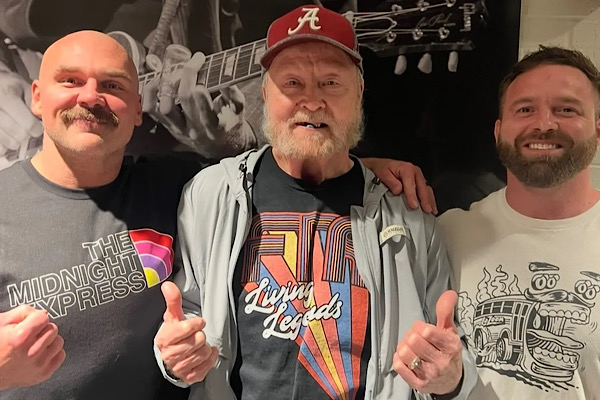
The geometry of heel heat
Dennis Condrey died on March 20 at the age of 74. Mike Johnson of PWInsider broke the news late in the evening. Within hours, the tributes poured in from across the wrestling industry.
You had the expected names. Michael Hayes, who spent the 1980s working opposite Condrey in various territories, offered his respects. WWE officials like Adam Pearce and Nick Aldis chimed in. But the most telling tribute came from Brooks Jensen.
Jensen is 22 years old. He wasn't even a concept when Condrey was drawing nuclear heat in Mid-South Wrestling or Jim Crockett Promotions. Yet Jensen felt compelled to publicly honor the founding member of the Midnight Express.
There is a reason for that. If you walk into the WWE Performance Center today and ask to learn how to work a tag team match, they do not show you tape of modern main events. They show you Dennis Condrey.
Condrey was the architect of the ring. He understood spatial awareness better than almost anyone of his era. When people talk about "cutting the ring in half," they are usually referencing a watered-down version of what Condrey perfected alongside Bobby Eaton and Randy Rose.
Mechanics over high spots
Watch a Midnight Express match from 1986. Pay attention to Condrey's feet. He never drifted into the wrong corner. He never allowed the babyface a clear line of sight to their partner.
Modern tag team wrestling has largely abandoned this. Watch a random episode of AEW Dynamite or Monday Night Raw today. The heel team will frequently beat down the face in the middle of the ring, leaving the babyface's partner within arm's reach. It makes no logical sense.
Condrey would drag his opponent by the hair to the furthest diagonal point away from the babyface corner. He forced the referee to position himself exactly where Condrey wanted him. If Eaton was going to choke Ricky Morton behind the referee's back, Condrey was the one actively managing the referee's sightline.
It was a masterclass in manipulation. He used the referee as a physical shield. He used the ropes as weapons. Every single movement had a tactical purpose.
He wasn't flashy. Eaton was the guy hitting the diving elbow drops. Condrey was the guy taking the bump, feeding the babyface's comeback, and making sure the crowd believed the hot tag was actually in jeopardy.
The lost art of the false tag
The false tag is one of the most abused tropes in modern wrestling. A babyface makes the tag, the referee misses it because he's distracted, and the heels take over again. Today, it usually feels contrived. The referee looks like an idiot.
When Condrey did it, it made sense. He didn't just distract the referee; he created a chaotic situation that demanded the referee's attention. He would draw the illegal babyface into the ring, forcing the referee to intervene, and then use that exact window to switch places with Eaton.
It was fluid. It was believable. It made the fans genuinely angry, rather than just annoyed at the booking.
That is why Hayes, Pearce, and Aldis are paying tribute. They are paying tribute to a guy who made their jobs easier. A heel who actually wanted to be hated.
Condrey didn't care about getting his own moves in. He didn't care about selling merchandise. He cared about making the babyfaces look like victims right up until the exact moment they needed to look like heroes.
A flawed modern imitation
We see flashes of this today. FTR clearly studies Condrey. The Revival in NXT was essentially a love letter to the Midnight Express playbook. But they are the exception.
The standard tag match today is a collection of isolated moves. Team A hits their spots. Team B hits their spots. Someone does a dive. Someone kicks out at 2.9 seconds. The psychology of isolation is gone.
If you isolate an opponent today, the crowd gets restless. They want the high spots. But Condrey could keep a crowd engaged in a side headlock for four minutes because he made it matter. He made the struggle matter.
Brooks Jensen paying tribute is a good sign. It means someone in the developmental system is forcing the next generation to watch the tape. They are forcing them to look past the flips and understand the mechanics.
The blueprint remains
Condrey's legacy is secure, even if the casual fan doesn't instantly recognize his name. He was the foundation of the greatest tag team of the 1980s. He helped draw massive houses across the country.
He didn't need a finishing move that went viral. He just needed a basic understanding of human psychology and the willingness to be the bad guy.
He was the guy who made the Midnight Express work. Jim Cornette was the mouthpiece. Eaton was the spectacular athlete. Condrey was the glue.
When he left the team, the dynamic changed. Stan Lane was great, but he was a different type of worker. The gritty, mean, purely tactical element that Condrey brought was irreplaceable.
He passed away at 74, but his matches from 1985 are still the best textbook available for anyone who wants to understand how professional wrestling is actually supposed to work.
WWE Championship Title Belt, Authentic Styling with Metallic Medallions
The ultimate living room prop for when the promo battles get real.
Frequently Asked Questions
Who was Dennis Condrey?
Why is Dennis Condrey considered a pioneer of tag team wrestling?
How did Dennis Condrey manage referees during matches?
What distinguishes Condrey's tag team work from modern wrestling styles?
Why was Condrey's execution of the false tag effective?
More Coverage

Dustin Rhodes is waiting for his final act
a minute agoWWE’s SummerSlam kickoff hype is drowning in a sea of corporate polish
an hour agoOn This Day in Wrestling: July 20
2 hours ago
John Cena’s final act is becoming a masterclass in nostalgia
3 hours ago
Is Tommaso Ciampa eyeing an AEW jump after the Jericho feud?
3 hours agoSummerSlam's digital buildup misses the physical mark
4 hours agoMore Analysis

Dennis Condrey was the blue-collar architect of tag team perfection
3 months, 4 weeks ago
Dennis Condrey and the blueprint for the perfect tag team
3 months, 3 weeks ago
Why the legacy of Dennis Condrey defines modern tag team wrestling
3 months, 3 weeks ago
Dennis Condrey was the mechanic who built modern tag team wrestling
3 months, 3 weeks ago
Dennis Condrey was the gritty architect of modern tag team heat
3 months, 3 weeks ago