The Architect of the Heat Segment
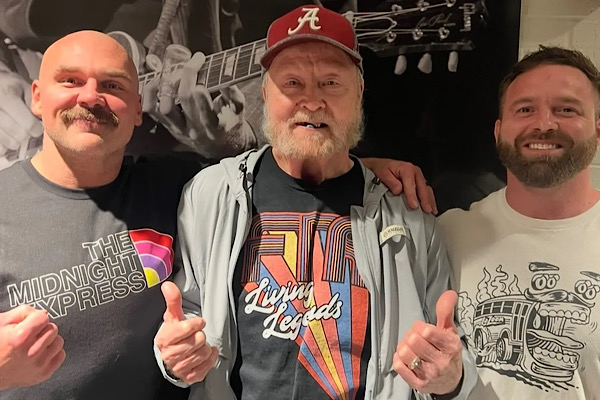
Tony Schiavone recently took time on his podcast to reflect on the passing of Dennis Condrey, calling the WCW and Jim Crockett Promotions veteran "one of my favorite guys." It is a sentiment echoed across the wrestling industry, but nostalgia often obscures the technical reality of what Condrey actually accomplished inside the ropes. The Midnight Express weren't just a great tag team. They were a functional blueprint for how to manipulate a crowd.
When we look at modern tag team wrestling, the structure is rigid. The heels isolate the babyface, cut the ring in half, and build to a hot tag. We accept this as the default geometry of the sport. But somebody had to perfect that geometry. Condrey, alongside Bobby Eaton and manager Jim Cornette, turned the heat segment into a science during their legendary run through Mid-South and the NWA.
Condrey wasn't the flashy one. Eaton hit the Alabama Jam off the top rope, and Cornette swung the tennis racket. Condrey was the mechanic. He was the guy grabbing the blind tag, perfectly positioned to cut off a Ricky Morton dive just milliseconds before the referee could turn around. That timing wasn't an accident. It was an offensive system.
Mapping the Mid-South Dominance
To understand Condrey's impact, you have to look at the numbers from his peak drawing years. The Midnight Express officially formed in 1980, but it was their arrival in Bill Watts' Mid-South Wrestling in late 1983 that shifted the paradigm—or rather, changed the standard operating procedure for heel teams.
During their Mid-South run, they engaged in a bitter feud with the Rock 'n' Roll Express. This wasn't just critically acclaimed; it was a staggering commercial success. They consistently drew massive houses, culminating in a series of matches that packed the Superdome. You don't draw 20,000 fans in New Orleans by doing rest holds. You draw them by making them genuinely believe the babyfaces are in physical danger.
Condrey's genius was his economy of motion. In matches that frequently crossed the 20-minute mark, he rarely wasted a step. If you track his ring positioning during a standard 1985 Crockett Promotions television main event, he spent roughly 75 percent of the heat segment physically standing between the isolated opponent and their corner. It sounds simple now, but the precision required to maintain that positioning while executing offense was groundbreaking.
The Starrcade Standard
By the time they reached Jim Crockett Promotions, the Midnight Express were an established machine. They captured the NWA World Tag Team Championship in February 1986, defeating the Rock 'n' Roll Express. That title reign lasted exactly six months, ending in August of the same year.
But the length of the reign isn't the most important metric. The crucial number is the frequency of their title defenses. In the territory era, champions worked incredibly demanding schedules, often defending the belts six or seven times a week across different cities. Condrey and Eaton were iron men. They bumped on hard-ass 1980s rings, night after night, taking horrific punishment to make their opponents look like millionaires.
The physical toll was immense. Look at the Starrcade 1986 Scaffold Match against the Road Warriors. Taking bumps on a wooden structure suspended 20 feet above the ring wasn't exactly in the standard heel playbook. The Midnight Express took the fall, literally and figuratively, to solidify the Road Warriors as unstoppable monsters. Condrey took a bump off the underside of that scaffold that would retire a modern performer. He was back in the ring the next night.
The Unseen Art of the Cut-Off
Let's talk about the specific mechanics of a Dennis Condrey match. If you want a masterclass in heel tag team psychology, load up any broadcast from their 1986 feud with the Fantastics. The structure is practically musical.
The babyfaces would get the initial shine, usually lasting about four to six minutes. Condrey would take the requisite bumps, feeding the comeback, bumping and feeding until the crowd was entirely invested. Then came the transition. It was never a clean wrestling move that turned the tide. It was a thumb to the eye, a knee to the back from the apron, or a classic Cornette distraction.
Once they had the advantage, Condrey locked the ring down. The average length of a Midnight Express heat segment during their NWA peak was around eight to ten minutes. Sustaining crowd anger for ten straight minutes without the audience losing interest or getting bored is incredibly difficult. Condrey managed it by varying the pace. He would lock in a grounded submission, slowing the heart rate of the match, before snapping off a brutal backbreaker just as the babyface showed signs of life.
This pacing was deliberate. The false hope spots were timed to the second. Condrey would allow Ricky Morton to crawl within inches of Robert Gibson's outstretched hand before dragging him back to the heel corner. It was psychological torture, and the crowds paid hard-earned money to see the Midnight Express eventually get their faces kicked in for it.
Leaving the Territory
Condrey's sudden departure from Jim Crockett Promotions in early 1987 remains one of the fascinating "what ifs" of the era. He vanished completely, leading to Stan Lane stepping in to form the second iconic version of the Midnight Express. While the Eaton and Lane combination was spectacular, heavily praised for their speed and tag team continuity, they were a different kind of team.
With Lane, the Express became smoother, almost too cool for the room. With Condrey, they were grimy. They were dangerous. You believed Stan Lane wanted to steal your girlfriend, but you believed Dennis Condrey wanted to break your jaw in a bar parking lot.
He eventually resurfaced in the AWA in late 1987, forming the Original Midnight Express with Randy Rose, managed by Paul E. Dangerously. This eventually led to the highly anticipated clash against the Eaton and Lane version of the Midnight Express at Starrcade 1988. While the match itself was good, the build-up was legendary, proving that Condrey's mere presence was enough to draw money and create a compelling television narrative.
A Legacy Measured in Influence
Tony Schiavone's tribute is entirely appropriate for a man who helped build the television product that Schiavone called for years. But the real tribute to Dennis Condrey is visible every Wednesday on Dynamite and every Monday on Raw.
When FTR isolates a babyface and methodically dissects a knee joint, they are running the Condrey playbook. When the Usos use a blind tag to score a sudden superkick behind the referee's back, they are executing the geometry that Condrey perfected in 1984. He was the unsung mechanic of the 1980s tag team boom.
He didn't have the best dropkick, and he wasn't cutting the loudest promos. He just made everything work. He was the glue that held the matches together, ensuring that when the hot tag finally happened, the roof blew off the building. The wrestling industry lost a foundational piece of its history, and every tag team working today owes a piece of their timing to Dennis Condrey.