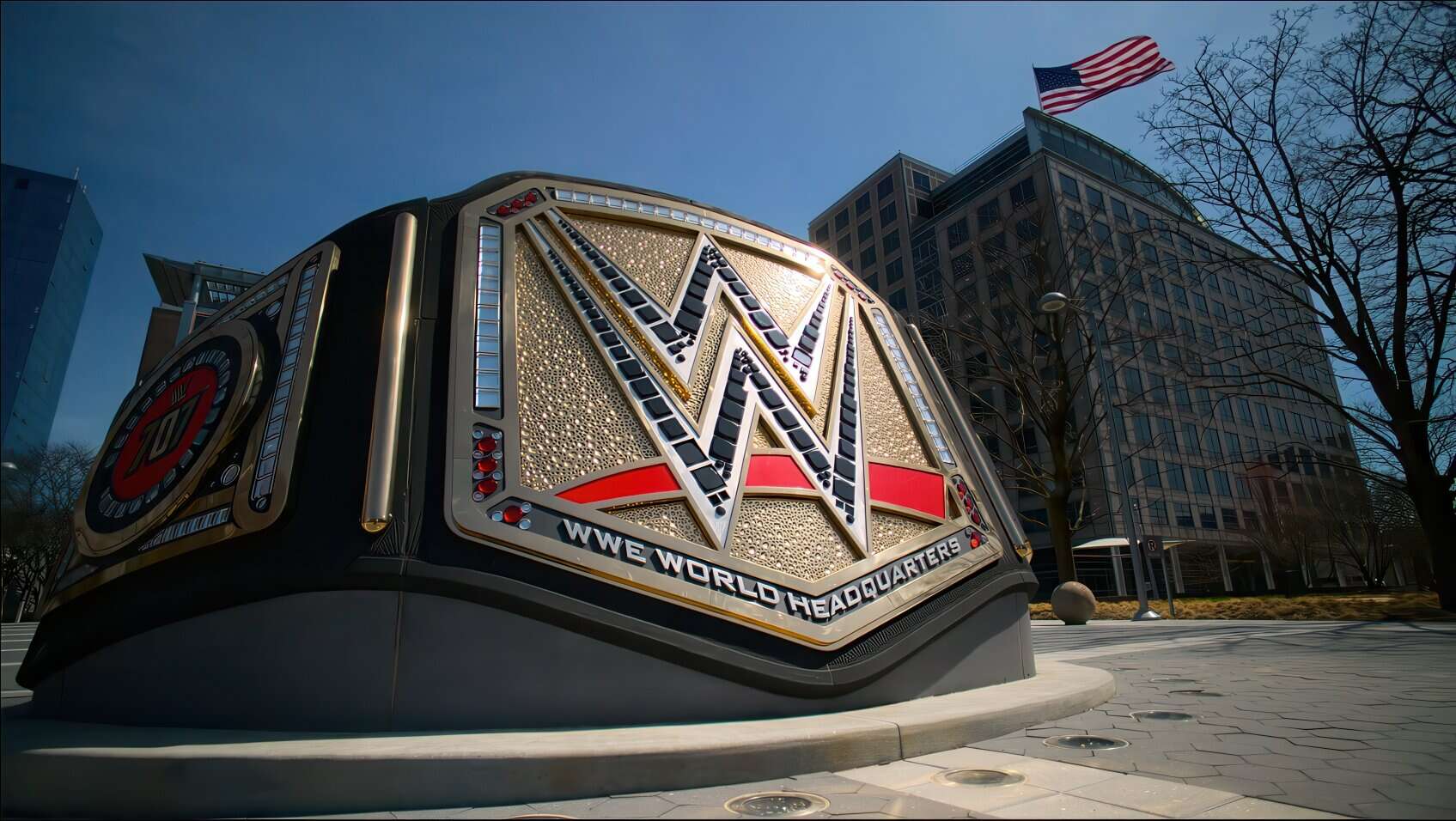
David Sahadi’s exit proves the Kevin Dunn era was built on paranoia

The Architect of the Attitude Aesthetic
David Sahadi didn't wrestle a single match, but he might have been the most important person in the building during the late nineties. If you remember the way the glass shattered for Stone Cold Steve Austin, or the cinematic sweep of the iconic 'My Sacrifice' video packages, you are remembering Sahadi’s vision. He was the man who took a wrestling company that looked like a cheap carnival and turned it into a gritty, cinematic powerhouse. His departure in the early 2000s wasn't just a personnel change; it was a shift in the DNA of how professional wrestling is presented to the world.
Sahadi recently opened up about his exit, and the details paint a familiar, depressing picture of life inside Titan Towers. The primary antagonist in this story is Kevin Dunn, the long-time Executive Producer who held a vice-grip on WWE’s production for decades. Sahadi describes a dynamic where Dunn viewed anyone with genuine creative talent as a direct threat to his proximity to Vince McMahon. This wasn't about who could make the better television show. It was about who could survive the political meat grinder of the front office.
The tension didn't happen overnight. It started during the height of the Monday Night Wars when WWE was desperate to find a new identity. Sahadi was the one who delivered the 'Attitude' scratch logo signature that defined an entire generation. He understood that wrestling fans didn't just want to see suplexes; they wanted to feel like they were watching something dangerous and real. Dunn, meanwhile, was focused on the technical polish of a traditional television broadcast. The two philosophies were bound to collide in a spectacular fashion.
The Control Room Cold War
Kevin Dunn has long been the most polarizing figure in wrestling production history. Fans hate the frantic camera cuts and the constant zooming, but within the company, he was the ultimate survivor. Sahadi’s account suggests that Dunn’s power came from his ability to isolate Vince McMahon from other creative voices. If Sahadi had a brilliant idea for a promo or a video package, it had to go through Dunn first. If it was too good, it became a problem. Success in that environment was often punished if it didn't credit the right people.
By the year 2003, the situation had become untenable. Sahadi was the creative force behind the 'Desire' series, which remains the gold standard for wrestling tribute videos. The 'Lonely Road of Faith' package for Kid Rock and the Creed-soundtracked 'My Sacrifice' montages were revolutionary. They humanized wrestlers like The Rock, Triple H, and The Undertaker in a way that made them feel like gods. But behind the scenes, the man who made those videos was being frozen out by a producer who preferred corporate efficiency over artistic flair.
The dynamic Sahadi describes is one of psychological warfare. It wasn't just that Dunn disagreed with his creative choices; it was that Dunn allegedly whispered in Vince’s ear to undermine Sahadi’s standing. This brand of corporate politicking is what drove many talented people out of WWE during that era. You couldn't just be good at your job; you had to be a master of the hallway conversation and the pre-meeting meeting. Sahadi, a true artist, found that world exhausting and eventually decided he’d had enough.
The Cinema vs. The Variety Show
There was a fundamental rift in how these two men saw the product. Sahadi wanted WWE to look like a Ridley Scott movie. He used deep shadows, slow-motion shots, and emotional pacing to tell stories. Dunn wanted a variety show. He wanted bright lights, fast cuts, and a product that looked like it belonged on a major network alongside sitcoms and news broadcasts. When Sahadi left, the 'Variety Show' won out. The WWE look became increasingly sterile and over-produced, losing the raw edge that Sahadi had cultivated.
The fallout of Sahadi’s exit was immediate. He eventually landed in TNA (now Impact Wrestling), where he was given the keys to the kingdom by Jeff Jarrett. In Nashville, Sahadi was able to experiment in ways that WWE would never allow. The early TNA pay-per-views like 'Unbreakable' and 'Bound for Glory' had a visual identity that felt distinct and expensive, despite having a fraction of WWE's budget. It was proof that Sahadi’s talent wasn't tied to the WWE machine; it was the machine that was lucky to have him.
However, it is worth noting that Sahadi’s work in TNA wasn't without its flaws. Free from the guardrails of a massive corporate structure, his work occasionally drifted into the realm of the melodramatic. Some of the TNA video packages felt more like soap opera openings than sports promos. It’s a classic example of how a great creative needs a strong editor. In WWE, Dunn was a terrible collaborator but a powerful filter. In TNA, Sahadi had no filter, and the results were sometimes hit-or-miss.
A Legacy of Missed Opportunities
Looking back at the early 2000s, it’s hard not to wonder what WWE would look like today if Sahadi had stayed. We might have been spared two decades of the 'shaky cam' and the nauseating zooms that defined the Dunn era. Sahadi understood the power of the static shot. He knew that if a wrestler like Brock Lesnar is standing in the ring looking like a monster, you don't need to cut the camera twelve times to show it. You just need to let the image breathe.
The departure of David Sahadi was the first major sign that WWE was prioritizing brand consistency over creative brilliance. The company wanted a 'WWE Style' that could be replicated by anyone, rather than a unique vision that required a specific artist. Dunn was the perfect man to oversee that transition into corporate blandness. He ensured that the show always stayed on time and that the sponsors were happy, even if the fans were getting a headache from the production style.
Sahadi’s comments remind us that the 'Attitude Era' wasn't just about Steve Austin and The Rock. It was about the people in the back who knew how to frame them. When you watch a modern WWE broadcast, the legacy of Kevin Dunn is everywhere—from the bright LED boards to the scripted commentary. But when you go back and watch the 1997 signature or a 2002 'Desire' video, you are seeing the ghost of David Sahadi. It is a reminder of a time when wrestling felt like art instead of just content.
Ultimately, the story of Sahadi and Dunn is the story of professional wrestling itself. It is a constant battle between the artistic soul of the business and the corporate machinery that keeps it running. Sahadi chose his soul and walked away, and while he may have lost the political battle in Connecticut, he won the war for the fans' memories. The 'Desire' videos will be watched long after people have forgotten which camera angle Dunn chose for a random episode of Monday Night Raw.
The loss of Sahadi was a self-inflicted wound for WWE. They chose a producer who was loyal over a director who was talented. In the short term, they got a stable, predictable product. In the long term, they lost the cinematic magic that makes wrestling feel larger than life. As Sahadi continues to share his story, it becomes clearer that the 'Kevin Dunn era' was less about technical excellence and more about the calculated removal of anyone who dared to be better than the boss’s favorite producer.
It took nearly 20 years for the production style of WWE to finally start shifting away from the Dunn template. With Dunn’s recent departure from the company, we are seeing a return to some of the cinematic elements that Sahadi pioneered. The wide shots are back. The lighting is moodier. The camera is finally staying still. It is a bittersweet validation for David Sahadi, a man who was decades ahead of his time and paid the price for it in a room full of people who were afraid of the future.
WWE Elite Collection Series 110 Drew McIntyre Action Figure
Highly poseable, museum-quality action figures for the true collector.
Frequently Asked Questions
Who was David Sahadi in the context of WWE production?
Why did David Sahadi leave WWE in the early 2000s?
What iconic WWE video packages were created by David Sahadi?
How did Kevin Dunn's production philosophy differ from David Sahadi's vision?
Who created the WWE Attitude Era scratch logo?
More Coverage

Drew McIntyre sidelined following brutal SmackDown encounter
an hour agoWWE's New York gamble is a calculated risk ahead of WrestleMania 42
2 hours ago
WWE's Saturday Night's Main Event math doesn't add up
2 hours agoWWE's return to New York changes the math on stadium attendance
2 hours ago
Top 10: Top Moments from MSG
2 hours ago
SmackDown is drifting into mid-summer malaise
2 hours agoMore Match Reports
David Sahadi just reminded us why modern WWE production feels like a hospital hallway
3 months, 3 weeks ago
David Sahadi (83 Weeks with Eric Bischoff): "They got back at me by getting back at my father. They had a meeting in Kevin Dunn's office and d..."
3 months, 2 weeks ago
The vintage Vince McMahon chaos was a masterclass in petty booking
1 month, 3 weeks ago
Why the corporate history of WWE is more dramatic than the booking
1 month ago
Road Dogg's departure exposes a systemic problem behind the curtain
1 month, 1 week ago