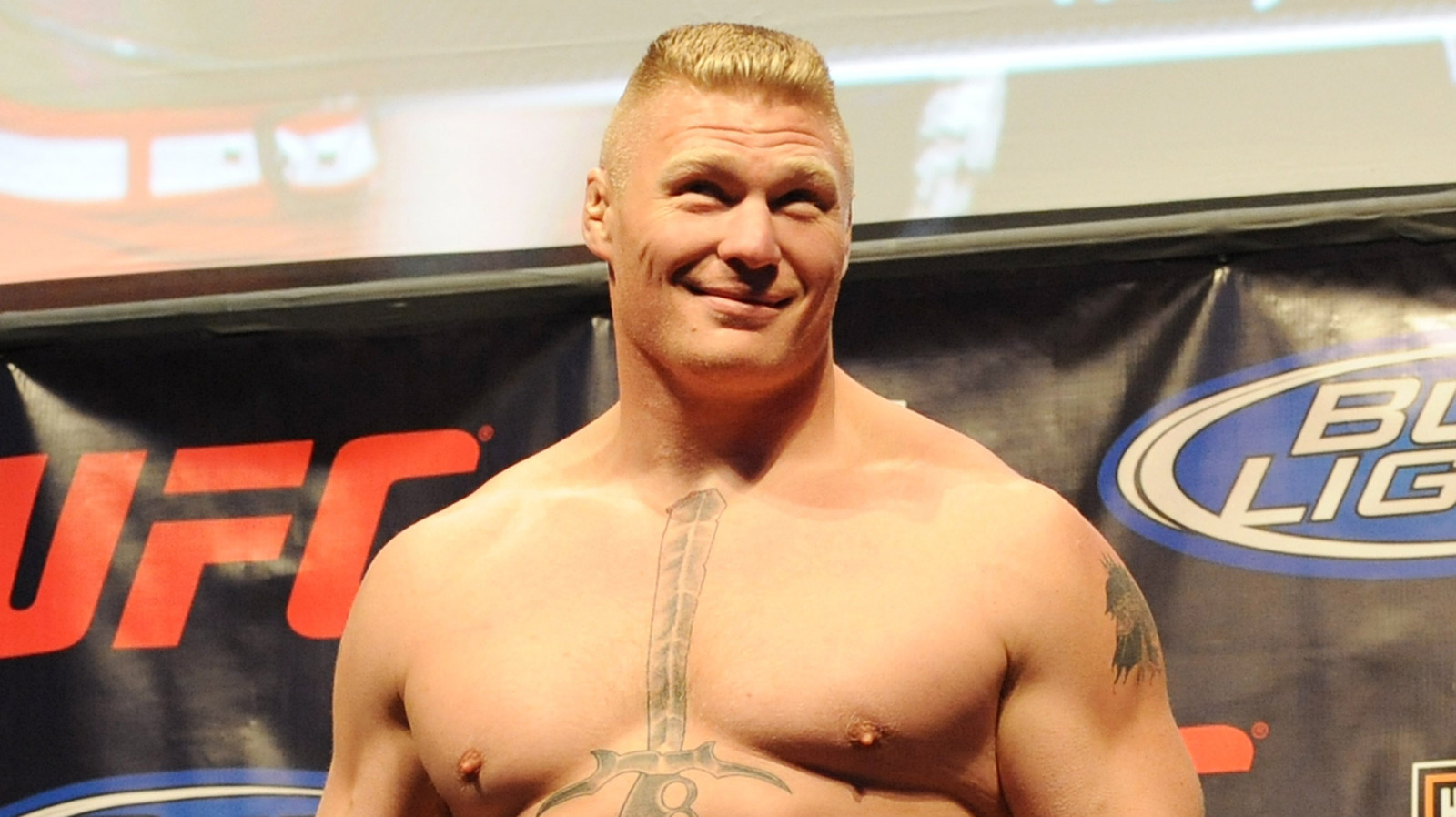
The quote dropped this week, but anyone who watched him fight in 2009 already knew the truth.
"I can be an a**hole when I want to be,"
Brock Lesnar said recently, reflecting on his run in the UFC. It is a massive understatement. Back in the late 2000s, MMA purists despised him. He was the intruder. The fake wrestler coming into their legitimate sport. Instead of trying to win them over with humility, Lesnar leaned into the skid.
He realized the most bankable commodity in combat sports isn't technical proficiency. It is raw, unadulterated resentment.
The Blueprint of Heat
Look back at the tape of UFC 100. The way he walked down Frank Mir. The post-fight interview with Joe Rogan where he disparaged the sponsor and mocked the crowd. That wasn't a fighter losing his temper. That was a seasoned professional wrestler cutting a territory-era heel promo on a global pay-per-view broadcast.
Let's look closely at that Mir fight. Mir had submitted him in their first encounter with a kneebar. Lesnar didn't just want to win the rematch; he wanted to dismantle the man. He trapped Mir against the cage, controlled the posture, and delivered right hands that looked like they were being fired from a piston.
When referee Herb Dean finally waved it off, Lesnar didn't celebrate. He stalked the cage. He got in Mir's face while he was still bleeding on the canvas. That is pure spite. You cannot teach that level of vitriol in the Performance Center.
He understood the assignment. People were paying $49.95 to see him get knocked out. He made sure to give them every reason to keep paying.
Translating the Octagon to the Squared Circle
When Lesnar returned to WWE in 2012, he wasn't the same guy who left in 2004. The NCAA Division I wrestling pedigree was still there, but the movement patterns had changed. Pre-UFC Lesnar was terrifying because he was a heavyweight who moved like a cruiserweight. Post-UFC Lesnar was terrifying because he moved like a predator.
He brought the MMA pacing with him. Watch his matches against John Cena at Extreme Rules 2012, or the infamous SummerSlam 2014 squash. The cadence was entirely different from the standard WWE main event style.
There were no lock-ups. No feeling-out process. He shot for takedowns, threw heavy knees to the ribs, and utilized ground-and-pound. It completely disrupted the rhythm of his opponents.
The Flaws in Suplex City
But we have to be honest about the back half of his WWE run. The "Suplex City" gimmick, initially a brilliant piece of ad-libbed marketing, eventually became a creative crutch.
For a stretch between 2016 and 2018, Lesnar's matches became intensely formulaic. German suplex, German suplex, F5. Wash, rinse, repeat. It was lazy booking, and frankly, lazy execution. He stopped selling for extended periods, relying entirely on his aura to carry the match.
When you strip away the intricate storytelling and rely solely on finisher spamming, the product suffers.
Consider the main event of WrestleMania 34 in New Orleans. The crowd had completely turned on the match before the bell even rang. Instead of adjusting on the fly, instead of calling an audible to pull the crowd back in, Lesnar and Roman Reigns stubbornly stuck to the script.
They traded heavy bombs and kickouts for twenty minutes to a chorus of boos and beach balls. It was a glaring failure of ring generalship. Lesnar, the man who supposedly understands crowd psychology better than anyone, checked out. He collected his check and walked to the back, leaving a bloody Reigns in the ring to absorb the apathy. It was the nadir of his return run. He stopped being the calculated villain he was in the UFC and simply became a wall to run into.
The Tactical Masterclass of the Underdog
However, when Lesnar is paired with a smaller, faster worker, we see the flashes of genius that make him a generational talent.
Look at the tape against AJ Styles at Survivor Series 2017 or Daniel Bryan the following year. Lesnar's selling in those matches is a masterclass in big-man psychology. He doesn't bump heavily early. He absorbs strikes, letting the smaller man bounce off him.
But when they finally chop him down—usually targeting the knee—his facial expressions are incredible. He turns purple. He gasps for air. He makes you believe, for a fleeting second, that the monster is mortal.
In the bout against Daniel Bryan, Lesnar gave us a blueprint for the perfect David vs. Goliath story. For the first ten minutes, Lesnar treated Bryan like a ragdoll. He threw him around the ring with careless abandon. The crowd was completely silenced.
Then came the referee bump. Bryan delivered a low blow, followed by a running knee. The near-fall that followed was one of the loudest pops of the decade. Why did it work? Because Lesnar had spent the previous ten minutes being that arrogant, untouchable force he perfected in the UFC. He built the heat so effectively that the release valve nearly blew the roof off the Staples Center.
That is the calculated mind he was talking about in the recent interview. He knows exactly when to give the audience hope, and exactly when to violently snatch it away.
The Road to Vegas
Now, we sit less than a month away from WrestleMania 41 at Allegiant Stadium. April 19 and 20 are looming. The current WWE roster is faster, more athletic, and more technically sound than ever before. We have a locker room full of guys who want to work 30-minute clinics with intricate counter-wrestling.
Lesnar is the perfect antidote to that. If he returns to the fold in Vegas, he doesn't need to chain wrestle. He needs to bring back the UFC 100 energy.
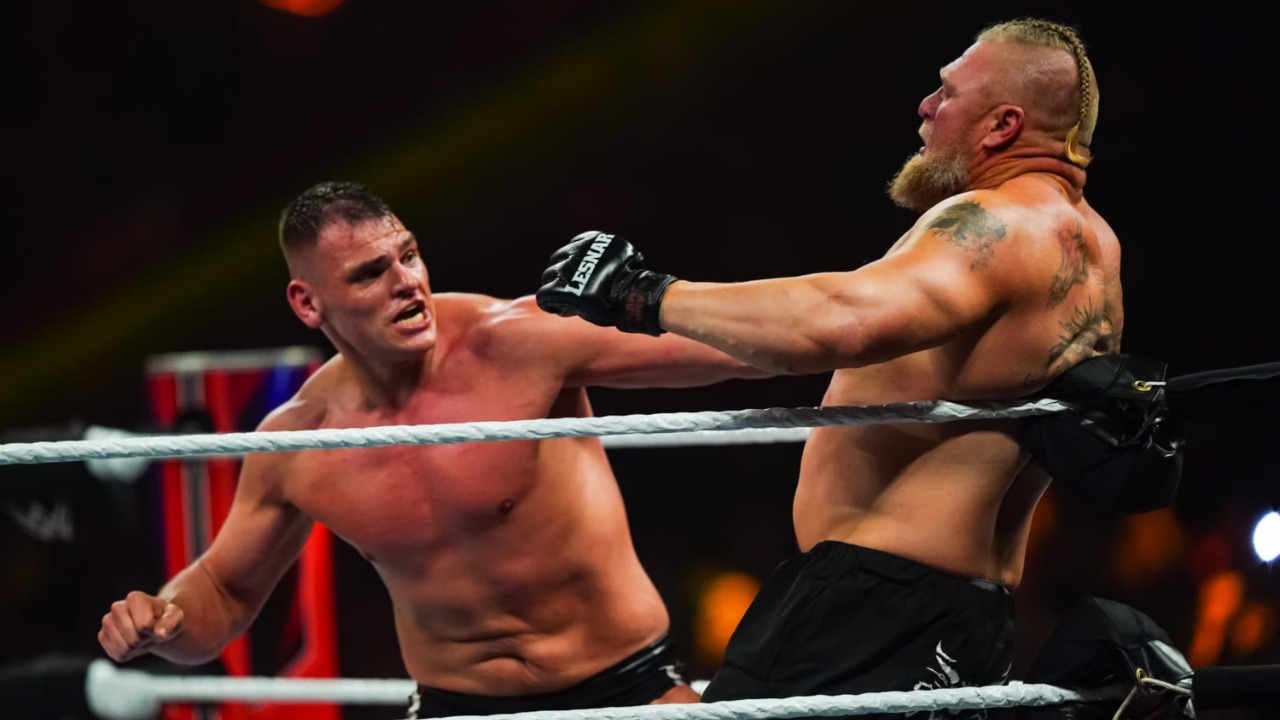
Imagine him stepping into the ring with someone like Gunther.
The Stylistic Matchup
Gunther relies on imposing his will through striking and steady forward pressure. He chops the chest to break the opponent's cardio. Lesnar doesn't care about chest chops.
If that match happens, the tactical preview writes itself. Gunther will try to establish range with the big boot and the chop. Lesnar will look to close the distance immediately and change levels.
Gunther has struggled in the past against opponents who force him out of his methodical pace. Chad Gable caused him problems with speed and amateur takedowns. Lesnar presents those same problems, but with an extra 80 pounds of muscle.
If Lesnar shoots a double leg and puts Gunther on his back early, the entire dynamic of the match flips. Gunther is not a guard player. He needs to be vertical.
The Final Verdict
Lesnar's admission about his UFC heel run is a reminder of his greatest asset. It's not the F5. It's not the speed. It's his brain.
He understands exactly how to manipulate a crowd's hatred.
As we head into the biggest weekend of the year, my prediction is simple. Whether it's Gunther, Bron Breakker, or an unexpected target, Lesnar's next major appearance won't be a happy nostalgia trip.
He is going to lean into the hostility. He is going to ground his opponent, brutalize them with short elbows, and remind everyone that the Octagon villain never really left. He just put on different boots. Expect a dominant, uncomfortable, and brilliant return to form. The industry is better when Brock Lesnar is making us absolutely despise him.
Read Next