The Last Outlaws in a Modern World
As we march toward WrestleMania 41 in Las Vegas, the historical weight of 'The Streak' still hangs heavy over the WWE landscape. While Cody Rhodes and Roman Reigns prepare for their own era-defining collision, it is worth looking back at the moment the foundation of the Phenom’s legend truly began to crack. The Georgia Dome in 2011 was not just a stadium; it was a laboratory for a specific brand of violence that the PG era had supposedly outgrown.
Triple H and The Undertaker did not just walk into WrestleMania 27 to have a match. They walked in to settle a generational debt that had been accruing since Shawn Michaels was forced into retirement a year earlier. This was not the technical masterclass we saw at WrestleMania 25 or 26. This was a No Holds Barred demolition derby that relied on the tactical use of cold steel and the psychological breakdown of an immortal.
When we analyze the 'form' going into this clash, it was remarkably unconventional. Neither man had been a regular on television for months. The Undertaker had been sidelined since his Buried Alive match against Kane at Bragging Rights in October 2010. Triple H had been absent since Sheamus put him on the shelf with a series of pipe shots the previous April. They returned on the same night — February 21, 2011 — and without saying a single word, set the stage for a match that would eventually be remembered as one of the best of the Streak.
Tactical Breakdown: The No Holds Barred Calculus
In a standard wrestling match, The Undertaker operates with a clear defensive shell. He uses his reach to keep opponents at bay, utilizing the 'Old School' rope walk and the big boot to dictate the pace. Triple H, the 'Cerebral Assassin,' usually counters this by targeting a specific limb — often the knee — to ground the big man. However, the No Holds Barred stipulation at WrestleMania 27 threw those traditional tactics out the window.
Triple H’s strategy was clear: attrition through blunt force. He knew he couldn't out-wrestle The Undertaker in a vacuum, so he introduced the chair early. We saw a series of chair shots to the back that were designed not just to hurt, but to compromise Taker’s ability to hit the Powerbomb or the Tombstone. By the 15th minute, Taker was visibly struggling to maintain his vertical base, a rarity in his WrestleMania tenure.
The Undertaker’s tactical response was a shift toward MMA-style grappling. When his back became too compromised for the heavy lifting, he relied on the Hell's Gate. It’s a transition move that requires zero vertical leverage. He waited for Triple H to get overconfident, for the 'Game' to lean into a cover or a ground-and-pound session, before snapping on the triangle choke. It was a brilliant tactical pivot that accounted for his physical limitations on that night.
Key Match-ups: The Spinebuster vs The Big Boot
The match revolved around three distinct high-impact sequences. The first was the Spinebuster through the announce table. This was a calculated risk by Triple H to remove Taker’s environmental advantage. By destroying the table, he removed a platform Taker often uses for the Chokeslam, effectively narrowing the 'field of play' back to the ring where HHH could utilize the ropes for his own momentum-based attacks.
The second key tactical battle was the 'Finisher Spam' phase. We saw three Pedigrees and a Tombstone Piledriver from Triple H (using Taker's own move). From a tactical standpoint, this was HHH trying to 'overclock' the Streak. He wasn't looking for a clean pin; he was looking for a total system failure. Most analysts at the time criticized this as 'excessive,' but in the context of the story, it was a desperate man using every bullet in the chamber.
The final match-up was the psychological one. Triple H brought out the sledgehammer. It is his ultimate 'equalizer,' a tactical weapon that essentially guarantees a victory if it connects. The fact that Taker was able to apply the Hell's Gate while the hammer was in play showed a level of ring awareness that surpassed even the Cerebral Assassin. Taker didn't fight the hammer; he fought the hand holding it.
The Critical Eye: A War of Excess
While history has been kind to this match, we must be critical of the pacing. The middle third of the contest felt like a series of disjointed 'spots' connected by long periods of both men laying on the canvas. This was a deliberate choice to sell the exhaustion, but it bordered on self-indulgence. At times, the referee’s count felt like the only thing keeping the crowd from drifting. They relied heavily on the 'kickout at 2.9' trope, which, while effective, started to lose its punch by the fourth iteration.
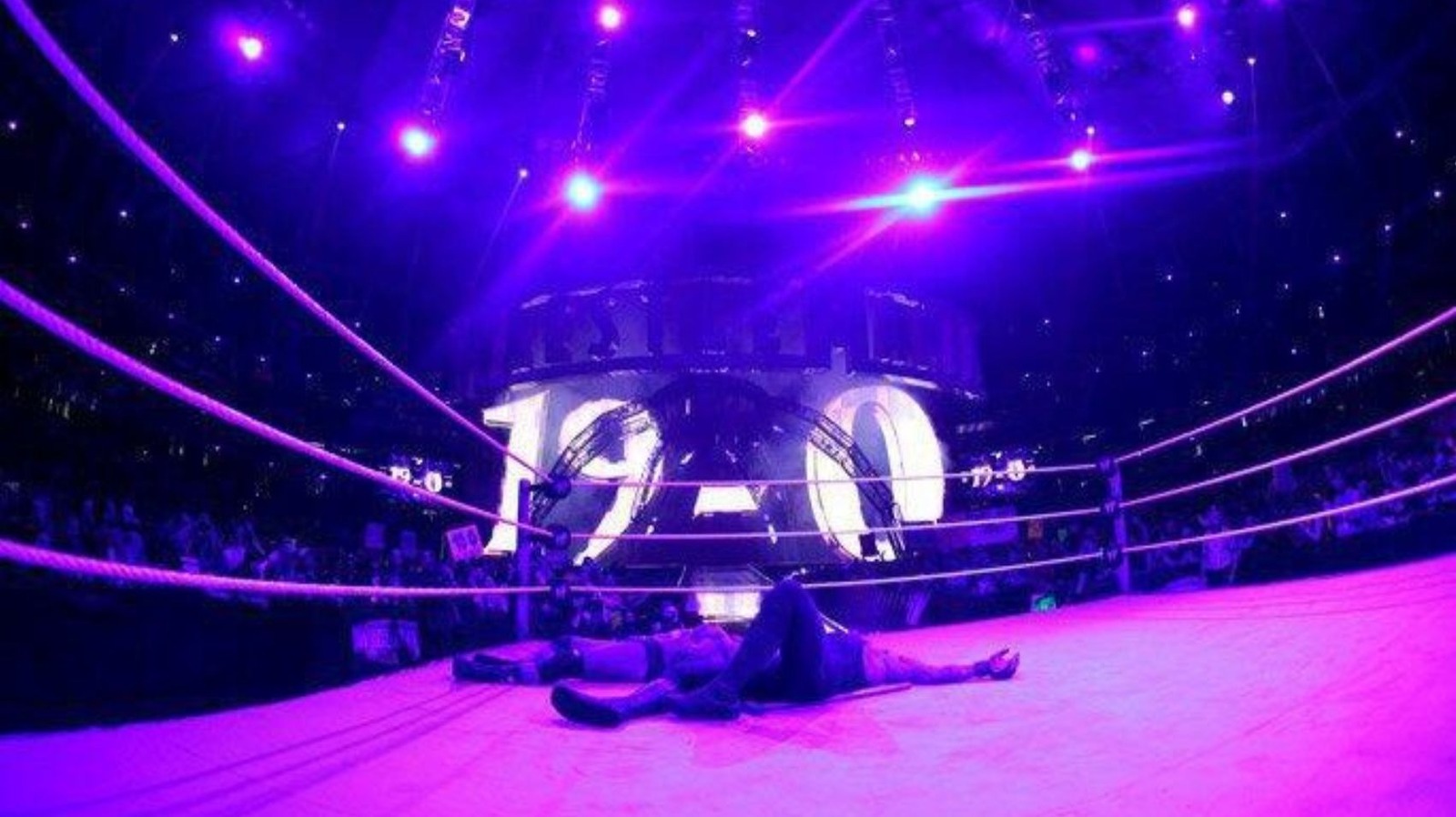
Furthermore, the physical toll on The Undertaker was so severe that it almost overshadowed the victory. He won the match, but he had to be carted out on a motorized stretcher. From a booking perspective, this was a masterful way to keep the Streak alive while acknowledging that the character was aging. However, it also signaled the end of 'The Phenom' as a full-time force. Every match after this would be a 'special attraction,' losing the week-to-week tactical continuity that made his earlier runs so compelling.
"I knew I had him. I had the hammer in my hand, and I just... I couldn't finish it. He's not human."
The above quote, often attributed to Triple H in the aftermath (though the internal records from 2011 are murky), captures the essence of the failure. HHH didn't lose because he was out-wrestled; he lost because he hesitated at the threshold of ending a legacy. That split-second gap between intent and execution is where The Undertaker has lived for three decades.
Prediction for the Ages
Looking back with the benefit of hindsight — yet placing ourselves firmly in the mindset of March 2011 — my prediction remains firm. Triple H will dominate 75 percent of the physical exchanges. He will break the chair, he will break the table, and he will seemingly break the man. But the Streak is more than a win-loss record; it is a psychological trap.
Triple H will go for the kill one too many times, and in his desperation to end the era, he will fall victim to the very submission he spent weeks mocking. The Undertaker will move to 19-0, but the image of him being unable to walk will be the lasting image of the night. It is a hollow victory that sets up the 'End of an Era' cell match a year later. Triple H wins the battle of the bodies, but Taker wins the war of the souls.
The final score in Atlanta won't be measured in points, but in the distance between the ring and the locker room. Triple H will walk out under his own power, and Taker will not. In the world of professional wrestling, sometimes the man standing is the one who lost everything.
Read Next