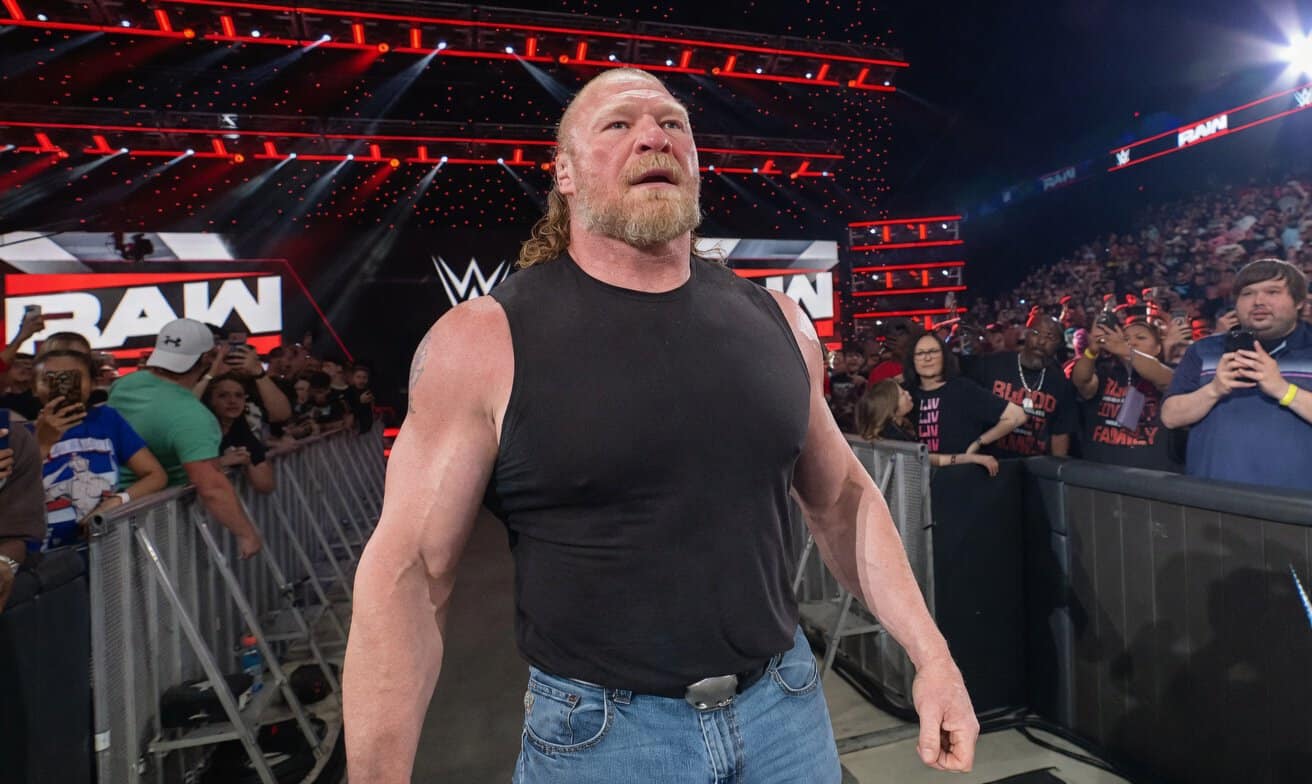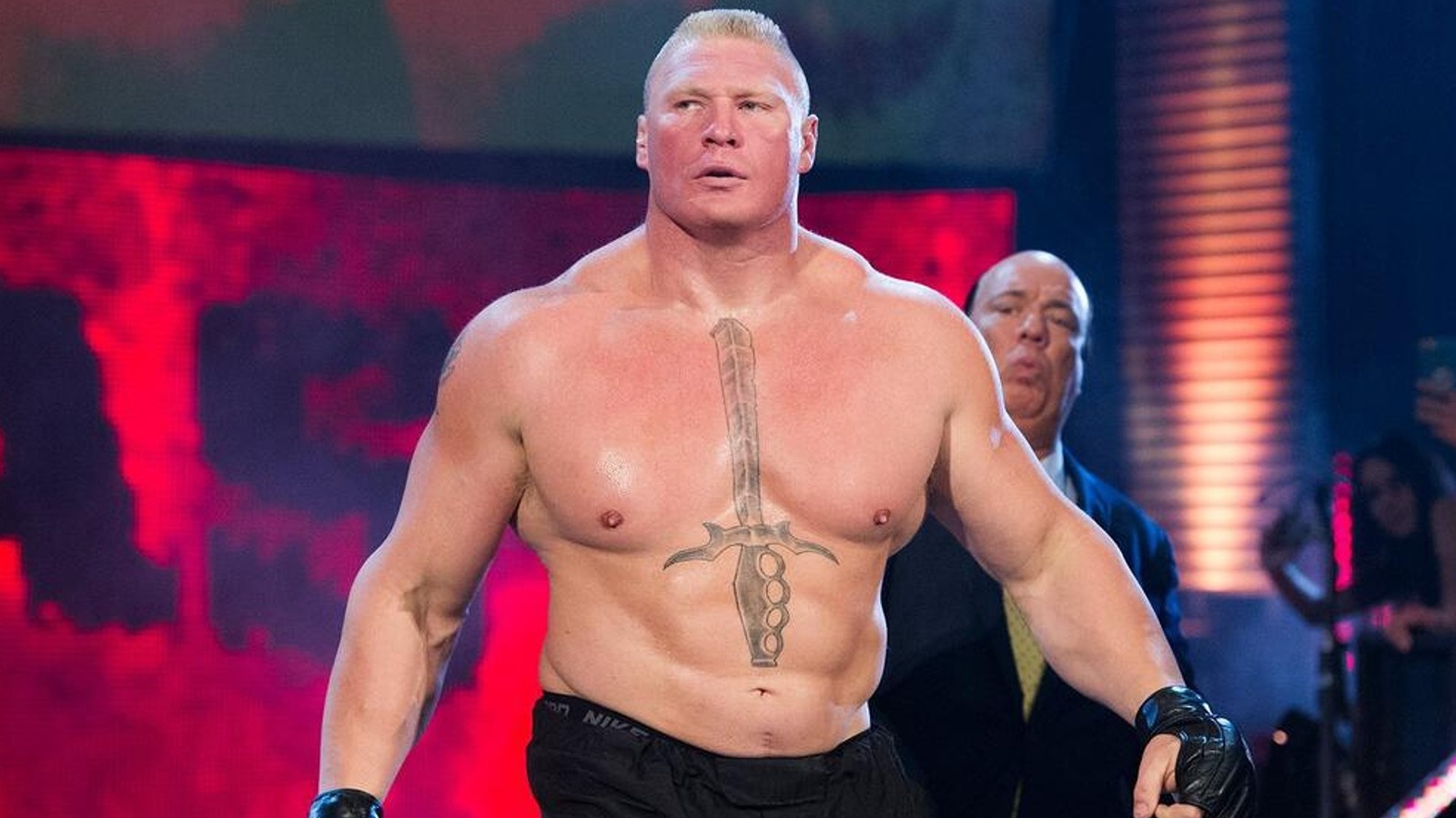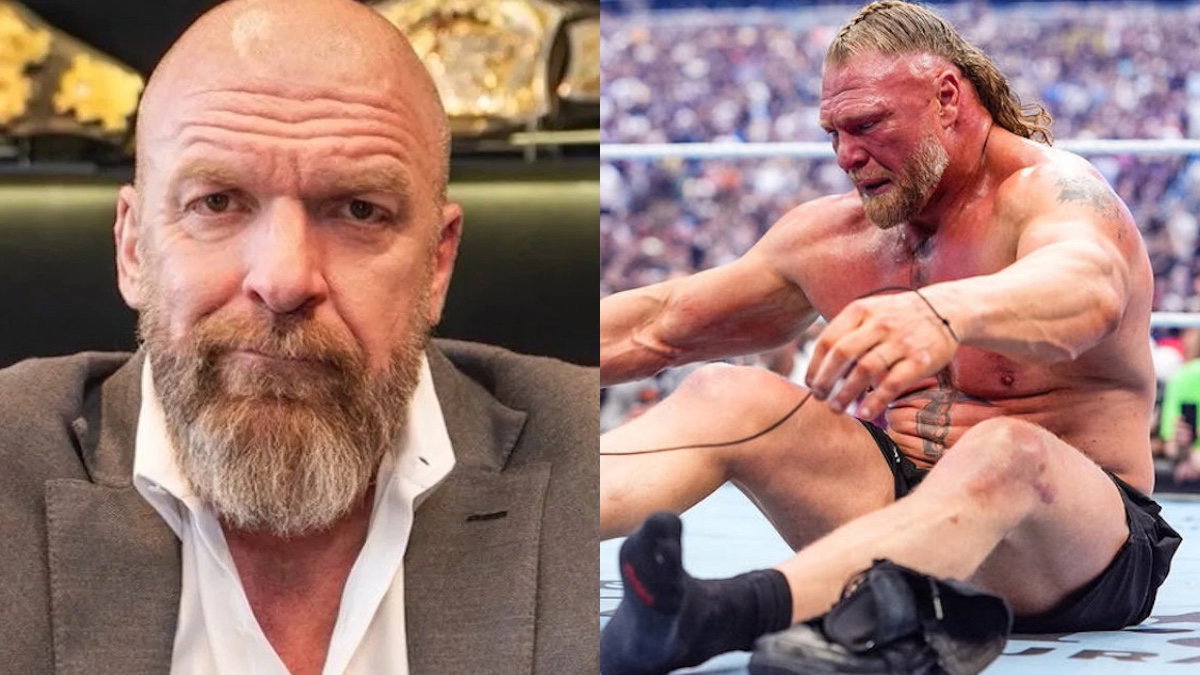
Brock Lesnar is back in the headlines, and he is finally talking about the night the streak died. As reported by WrestleTalk, the former heavyweight champion recently shared his unvarnished thoughts on ending The Undertaker’s undefeated run at WrestleMania 30.
Lesnar is not one for nostalgia. His recent comments, where Lesnar reflects on breaking the streak, are blunt and direct. He knew exactly what was happening in the ring that night.
It remains the most shocking result in professional wrestling history. The sudden silence inside the Superdome is legendary. But beneath the endless booking debates and fan outrage lies a much darker medical reality.
This was not just a wrestling match. It was an unscripted medical emergency broadcast live to millions of people. As a medical reporter, looking back at this match is harrowing.
This injury update breaks down exactly what happened in New Orleans. We are going to examine who was injured, the precise physiological nature of the trauma, the staggering timeline of the fallout, and how it forcibly reshaped the entire WWE roster.
The Diagnosis And The Trauma
The Undertaker suffered a severe Grade 3 concussion. In sports medicine, this is the absolute highest grade of concussion classification. It is strictly characterized by a complete loss of consciousness, profound confusion, and severe anterograde amnesia.
The injury occurred within the opening minutes of the contest. The exact mechanical trigger is still heavily debated among medical professionals and tape studiers. Some point to a heavy single-leg takedown from Lesnar.
Others blame a botched belly-to-belly suplex on the outside floor where Undertaker’s head whiplashed against the protective mats. Regardless of the exact impact point, the physiological result was catastrophic.
A concussion of this magnitude causes the brain tissue to violently strike the interior walls of the skull. This blunt force trauma triggers a massive, uncontrolled release of neurotransmitters. It instantly scrambles the vestibular system, which controls human balance.
Undertaker immediately lost his equilibrium. He lost his spatial awareness. Most alarmingly, he lost his short-term memory.
He was operating entirely on deep-seated muscle memory. His conscious brain was essentially offline for over fifteen minutes. He was a 300-pound man moving through the motions of a heavyweight prize fight while completely disconnected from reality.
A Complete Failure Of Medical Protocol
Here is the deeply uncomfortable truth about that night. The match should have been stopped immediately. Allowing a visibly concussed performer to continue taking heavy, high-impact bumps is a massive dereliction of duty.
WWE’s medical staff and the ringside referee, Chad Patton, completely failed to protect the performer. They stood by and watched a highly vulnerable man take three consecutive F5s while his brain tissue was actively swelling inside his skull.
Every single suplex Lesnar delivered after the initial injury was a massive gamble with a man's life. In sports medicine, there is a terrifying phenomenon known as second impact syndrome. This occurs when a brain suffers a second trauma before the first concussion has properly healed.
The result is rapid, often uncontrollable cerebral swelling. It can be instantly fatal. The fact that the bout was allowed to continue to its scripted conclusion is a brutal indictment of the safety protocols of that era.
It was a dangerous, unacceptable oversight that prioritized the show over human life.
The Immediate And Long-Term Timeline
The immediate timeline following the bell was terrifying. The moment the three-count landed, the adrenaline faded. Undertaker stumbled backstage and immediately collapsed in the Gorilla Position.
He did not walk out of the arena under his own power. The situation was so dire that Vince McMahon abandoned the WrestleMania 30 main event entirely. The chairman rode in the back of the ambulance with his top star to a local New Orleans emergency room.
Undertaker spent the entire night undergoing extensive CT scans to rule out a life-threatening subdural hematoma or brain bleed. The short-term recovery was incredibly brutal. Undertaker spent weeks confined to a completely darkened room.
Sensory deprivation is standard medical protocol for severe head trauma. Any exposure to bright light, loud sound, or even reading text causes intense nausea and crippling migraines. The long-term timeline was a grueling waiting game.
He was officially out of action for exactly 12 months. He did not step foot in a wrestling ring again until WrestleMania 31, undergoing a rigorous neurological clearance process before taking a single bump.
The Concussion Epidemic In Wrestling
Has the Deadman suffered this specific injury before? The Undertaker had a legendary laundry list of physical ailments. He had broken his orbital bone, torn his pectoral muscle, and required multiple hip surgeries.
But a traumatic brain injury of this specific severity was a new, terrifying frontier for him. Professional wrestling has a notoriously grim history with repeated head trauma. Bret Hart saw his legendary in-ring career abruptly ended by a severe concussion and a subsequent stroke.
Daniel Bryan was forced into a premature retirement due to repeated concussions just a few years later. Similar injuries usually spell the permanent end of a career. The brain does not heal like a torn ligament or a fractured bone.
The delicate neurological tissue does not scar over and become stronger. Every subsequent concussion requires significantly less force to trigger and carries much more severe, long-lasting symptoms. Undertaker defied the medical odds by returning, but the psychological damage was profound.
Tactical Adjustments And Roster Impact
When a franchise player goes down with a massive injury, the entire promotion has to aggressively pivot. The impact on upcoming matches, team selection, and roster depth was immediate and massive.
Without The Undertaker available as an active, reliable special attraction, WWE had to scramble their long-term booking plans. Their primary tactical adjustment was to weaponize Brock Lesnar to a degree never seen before in modern wrestling. Lesnar essentially absorbed the aura of the streak.
The creative team pivoted hard. Lesnar was positioned as an unstoppable, final boss antagonist. This culminated in him absolutely destroying John Cena at SummerSlam 2014 in a completely one-sided squash match, claiming the WWE World Heavyweight Championship.
This radical shift altered the entire team selection. Lesnar became a part-time champion. The company's top prize vanished from weekly television for months at a time.
This forced a massive adjustment in roster depth. Mid-card talents were suddenly elevated to carry the grueling three-hour weekly broadcasts. Roman Reigns, Seth Rollins, and Dean Ambrose were heavily relied upon to anchor the product in Lesnar's absence.
The entire creative direction of the company was rewritten on the fly because of the trauma sustained in the Superdome. Undertaker eventually made his return, but he has openly admitted the injury completely shattered his confidence.
He spent his entire physical recovery doubting his ability to ever perform again. The legendary streak ended, but the medical fallout altered the industry forever.