The Wyatt Sicks face a brutal reality check at WrestleCon
The Production Gap
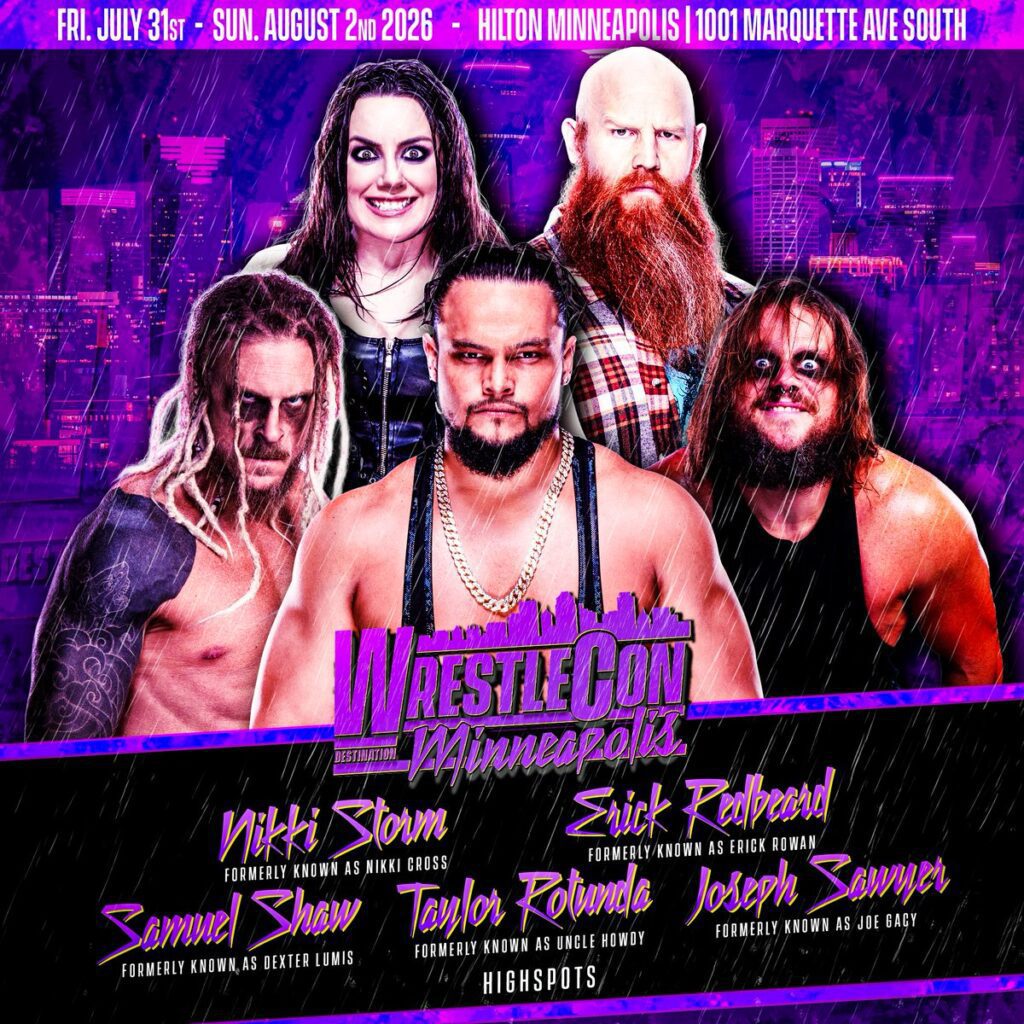
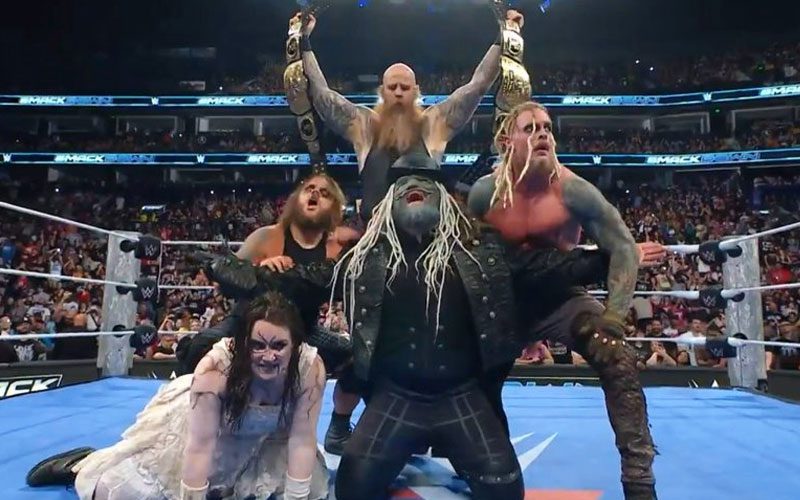
The news dropped quietly for a group that once commanded WWE's entire production truck. As Ringside News reported, the Wyatt Sicks are reuniting at WrestleCon. It marks their first public wrestling-related appearance since WWE released the faction.
No fog machines. No augmented reality crows. No arena-wide blackouts. They get a convention hall, a folding table, and fans wanting autographs.
This is the harsh truth of the post-WWE environment. The Wyatt Sicks—Bo Dallas, Erick Rowan, Dexter Lumis, Joe Gacy, and Nikki Cross—were a highly produced, lore-heavy act. They existed within a massive corporate framework that could afford to spend six figures on lighting and soundtrack rights just for a single entrance.
Now, they are stepping into the wild west of the independent scene. WrestleCon is a smart first step from a business perspective. It guarantees a solid payday.
But the question hovering over this reunion is entirely tactical. How exactly does a supernatural, cinematic faction function outside of a billion-dollar television product?
The End of the Supernatural Era
To understand their future, we have to look at why their run ended. The release of the Wyatt Sicks was not just a random roster shuffle. It was a clear philosophical shift in Paul Levesque's booking strategy.
WWE has moved aggressively toward sports-based realism. The top programs revolve around deeply personal, grounded conflicts. Cody Rhodes defending his championship. The ongoing Bloodline civil war. CM Punk's bitter feuds.
In this environment, a group of spooky figures teleporting around the arena felt completely out of place. They belonged to a different era of wrestling storytelling. That era peaked with The Undertaker and evolved through Bray Wyatt.
But the modern fan has been trained to look for workrate, logic gaps, and stories rooted in human emotion. The audience wants 30-minute classics. They do not want horror movies in the middle of a wrestling card.
Tactical Paralysis in the Ring
Then there was the in-ring reality. We have to be brutally honest about the bell-to-bell execution of the Wyatt Sicks. The initial debut was a masterclass in atmospheric television. It was jarring and violent.
But eventually, the bell has to ring. And that is where the gimmick always struggled.
Their matches were severely compromised by the demands of their characters. Lumis, Gacy, and Rowan are all capable professional wrestlers. Gacy has a deep indie background and a brilliant mind for match pacing.
Yet, their WWE tags frequently ground to an excruciating halt. Their feud with Chad Gable's American Made faction highlighted every flaw in the act. You had Gable and the Creed Brothers, three elite amateur athletes who wrestle at a frenetic, suplex-heavy pace.
Against them, the Wyatt Sicks plodded. Instead of crisp transitions or logical heat segments, they surrendered ring positioning for aesthetics. Matches devolved into theatrical staring contests.
Someone would hit a move, then spend thirty seconds doing a menacing head tilt while the crowd waited. You cannot build sustained heat in a modern wrestling match by standing perfectly still. They failed to control the tempo, allowing matches to stagnate.
Look at their spacing during six-man tag matches. A functional trios team utilizes the apron effectively, making blind tags and cutting off the ring to isolate an opponent. The Wyatt Sicks consistently ignored these fundamentals.
Gacy would secure an opponent in a dominant position, but instead of tagging Lumis to maintain pressure, he would break the hold to perform a character taunt. They gave their opponents entirely too much time to recover.
In a worked environment, you still have to simulate the struggle of a real athletic contest. By constantly prioritizing theatricality over ring positioning, they broke the suspension of disbelief.
The audience could see the gears turning. You cannot have a terrifying monster faction if they wrestle like they are choreographing a stage play at half speed.
Even their finishing sequences lacked snap. Instead of devastating, sudden-impact maneuvers that would fit a group of unhinged killers, they opted for elaborate setups. Every second wasted in the ring bleeds heat from the crowd.
The Economics of Indie Horror
Now, they face the independent circuit. Indie wrestling thrives on high-impact, fast-paced workrate or extreme violence. The spooky gimmick is notoriously difficult to pull off in a VFW hall or a soundstage.
Think about the mechanics of an independent show. You do not control the lighting rig. The crowd is right on top of you, sitting in folding chairs three feet from the apron. You cannot hide behind clever camera angles or post-production audio sweeteners.
Consider the lighting requirements alone. A standard indie show operates with a static lighting rig, maybe a few colored gels if you are lucky. The Wyatt Sicks relied on precision blackouts and isolated spotlights to hide their movement.
If you try to appear out of nowhere in a room with standard fluorescent lights, the crowd is just going to watch you jog down the aisle in the dark. The mystique is instantly shattered. This is where tactical adaptation is mandatory.
You cannot run a WWE playbook on an indie budget. The presentation has to become raw. It has to look like a documentary rather than a Marvel movie.
Matt Hardy cracked this code with his Broken universe years ago. But he did it by leaning completely into the absurdity. The Broken gimmick worked because it was inherently campy. Hardy winked at the audience.
The Wyatt Sicks take themselves dead seriously. If they try to do the exact same slow-walking, heavy-breathing act in a poorly lit armory in New Jersey, it will fail miserably.
So, how do they adapt? The smart move is to pivot from supernatural monsters to an unhinged cult. Strip away the magic. No more flickering lights or teleportation.
Lean hard into the psychological horror. Make them a dangerous, erratic gang of outcasts. Joe Gacy is tailor-made for this. He can operate as the mouthpiece, channeling his old CZW roots to deliver promos that sound like violent manifestos.
Scaling the Faction
Erick Rowan is a massive human being. On the indies, genuine size is a premium asset. He doesn't need to be a lumbering zombie. He just needs to be a terrifying enforcer who throws smaller wrestlers out of the ring with extreme prejudice.
Dexter Lumis is the silent psychopath. We already know that act works everywhere. Nikki Cross is the wild card. Her recent version was too clean. She needs to go back to the feral brawler of her 2017 Sanity days in NXT.
And then there is Bo Dallas. He is the engine of the entire operation. Dallas has incredible range as a performer. Look back at his run as the aggressively positive NXT Champion. It was brilliant character work.
The Uncle Howdy character masked his facial expressions, which are arguably his strongest asset. Removing the mask and returning to Bo Dallas, a deranged cult leader freed from heavy lore, would be a masterstroke.
The financial logistics are another hurdle entirely. Booking a five-person faction is incredibly expensive for an independent promoter. You are paying five flight tickets at $500 each, five hotel rooms, and five appearance fees.
Most promoters will likely try to book Dallas and Rowan as a package, or perhaps just bring in Dallas solo. Keeping the entire unit together for regular in-ring competition might be economically impossible outside of major conventions.
TNA Wrestling is another obvious landing spot. TNA has a long, successful history of accommodating cinematic gimmicks, from the Broken Hardys to Decay. They have the production values to support the Wyatt Sicks, but a roster small enough that the group could instantly slot into the main event picture.
However, TNA is also heavily focused on in-ring product right now. If the Wyatt Sicks show up in the Impact Zone, they will be expected to wrestle 20-minute, high-workrate matches against teams like The Rascalz or ABC.
They cannot hide behind a smoke machine in that environment. They will be exposed immediately if they do not increase their physical intensity.
The Burden of Legacy
That makes this WrestleCon appearance essential. It is a networking event as much as a fan fest. Every major promoter in the country will be walking around that hall. The Wyatt Sicks need to pitch a viable, scalable version of their act.
We also have to acknowledge the emotional weight of this group. The Wyatt Sicks were created to honor the late Windham Rotunda. They carried the heavy burden of his legacy on their shoulders. Every video package was soaked in grief and tribute.
But the wrestling business moves fast. The tribute has been paid. Now, the members of the faction have to worry about their own careers. Bo Dallas cannot spend the next ten years playing a tribute act to his brother.
He has to evolve the character, or drop it entirely and reinvent himself. This transition period is the most dangerous phase of a wrestler's career.
WWE provides a massive safety net. You show up to the arena, hit your marks, and get paid. The independent scene requires you to be your own booker, agent, and publicist. You have to hustle.
Their first post-WWE appearance will dictate the narrative. If they show up to WrestleCon just to sign autographs and fade away, they will be remembered as a brief, ambitious experiment that stalled out.
But if they use this platform to launch a new, grittier version of the faction? That changes the math entirely. Imagine Bo Dallas cutting an unscripted, raw promo on an indie streaming platform. Imagine Rowan tossing someone through a merch table.
They have the talent. They have the mainstream recognition. They just need a massive tactical overhaul.
The supernatural era of professional wrestling is dead. But a vicious, grounded cult of WWE exiles with a chip on their shoulder? That could print money on the independent circuit. The ball is entirely in their court.
McDavid Knee Brace with Stays, Knee Support for Men and Women, Compression Sleeve
Professional-grade stability for when you’re pushing your limits like your favor
More Coverage
Top 10: The Definitive Ranking of Mid-Summer WWE Moments
an hour agoThis Week in Wrestling: MSG Stardust and Championship Shakeups (Jul 13–Jul 19, 2026)
2 hours agoKarl-Anthony Towns at Saturday Night’s Main Event was a fever dream gone wrong
2 hours agoKarl Anthony Towns just created the weirdest wrestling moment of 2026
2 hours ago
LA Knight turns viral frustration into a merchandise play
2 hours ago
WWE roster health check: The mid-summer injury grind hits home
2 hours agoMore Analysis
Wyatt Sicks prepare for life after WWE with WrestleCon debut
2 months ago
Wyatt Sicks reunion set for WrestleCon after surprise WWE exit
2 months agoWyatt Sicks reunion at WrestleCon is a direct challenge to WWE
2 months ago
The Wyatt Sicks release proves WWE still can't book the supernatural
2 months ago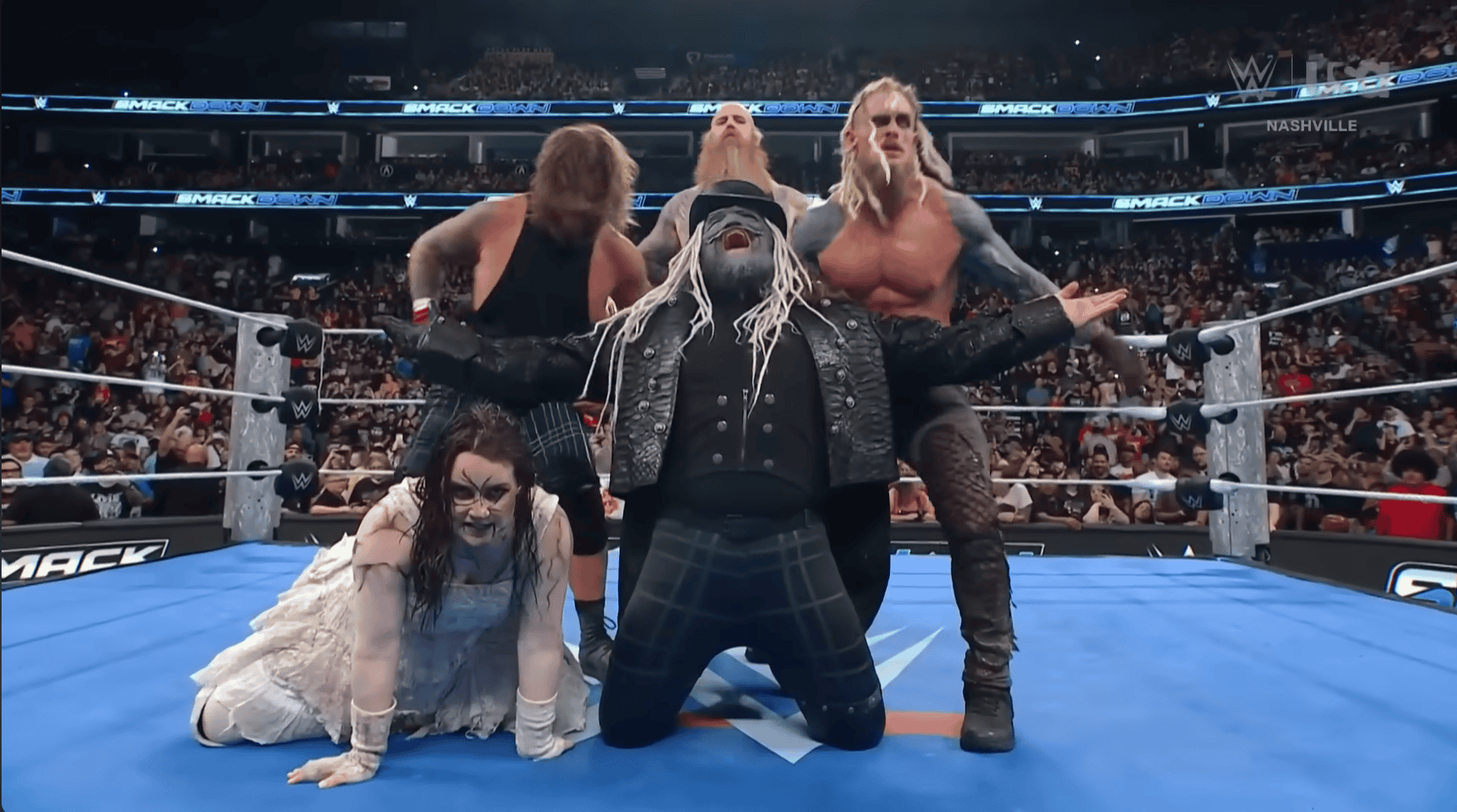
The Wyatt Sicks are heading to the indies after a statistical collapse
2 months ago