The Physical Collapse at Allegiant Stadium
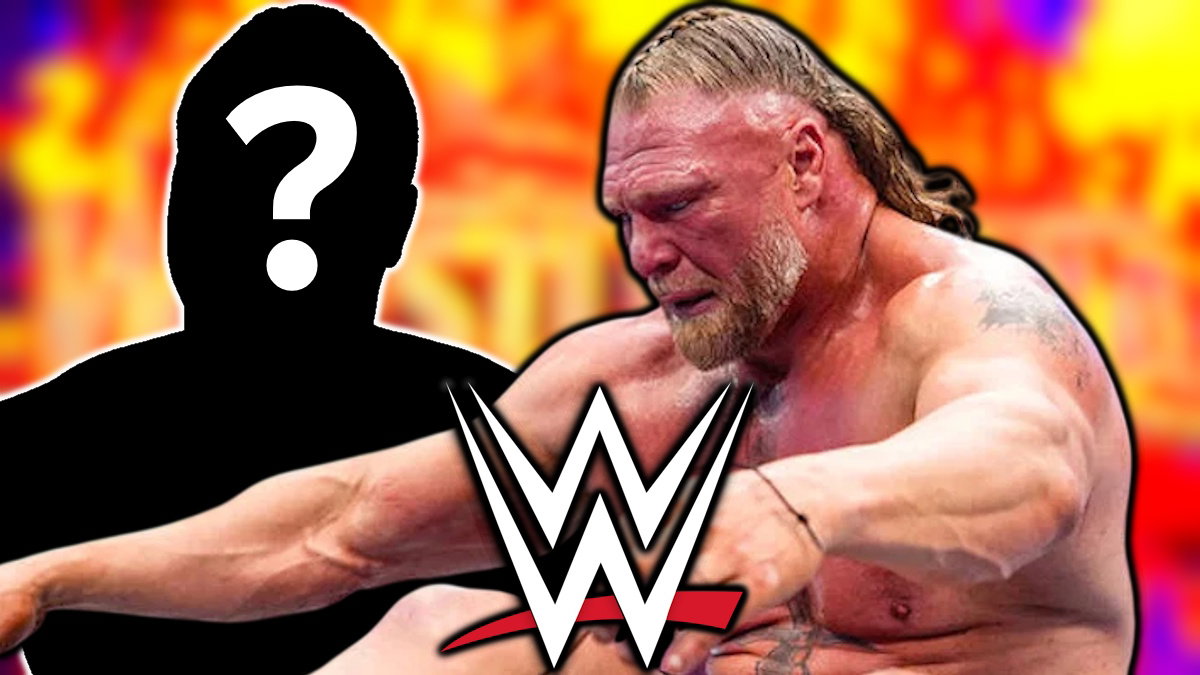
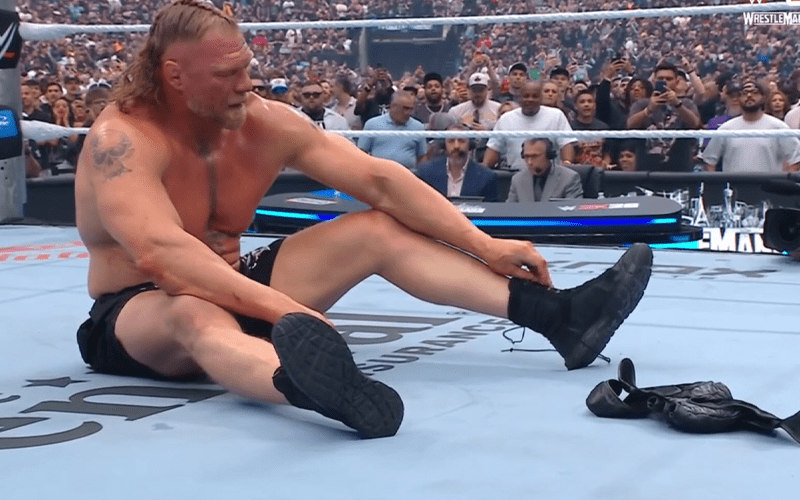
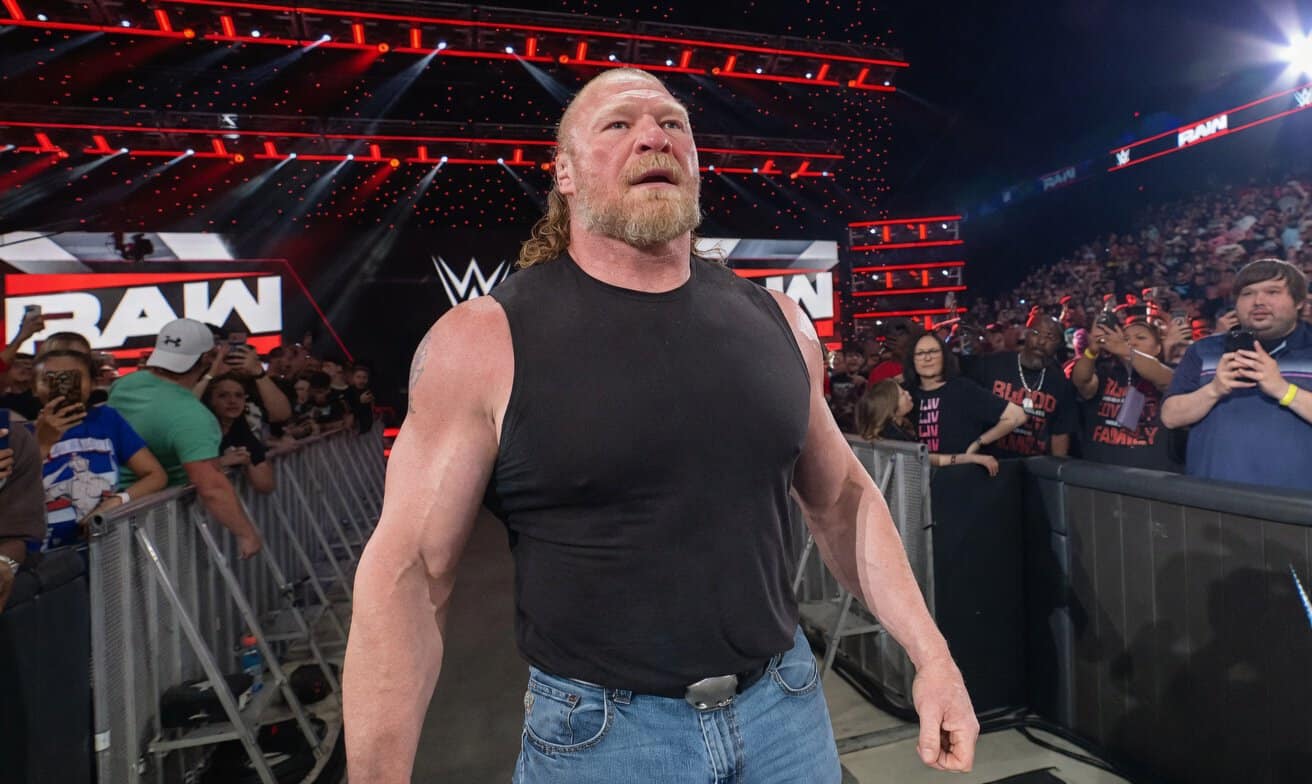
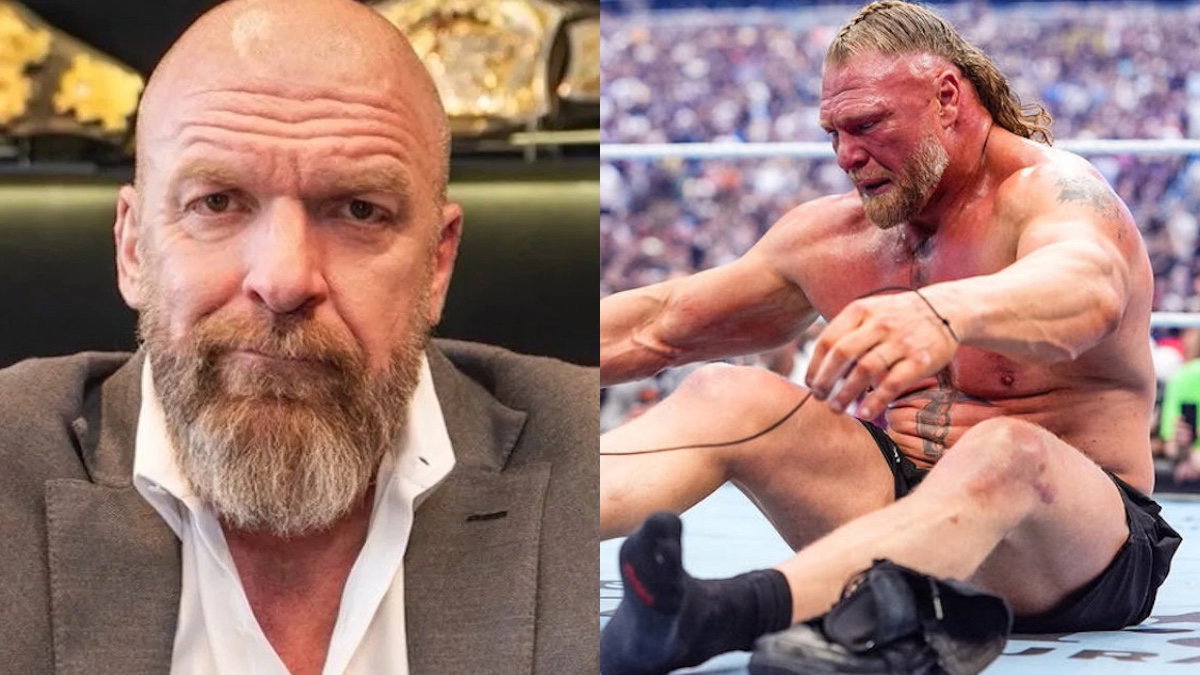
WrestleMania 41 Night 2 ended with a visual that few fans were prepared for. Brock Lesnar, the man who has spent two decades treating world-class athletes like laundry, was left staring at the Vegas rafters. He didn't just lose to Oba Femi; he looked physically spent in a way that suggests the biological clock has finally caught up to the Beast Incarnate. The match lasted exactly 14 minutes, but the toll it took on Lesnar's 48-year-old frame appeared to last a lifetime.
The sequence that effectively ended the contest saw Femi catch a charging Lesnar and drive him into the canvas with a powerbomb that registered on the arena's internal sensors. Lesnar’s neck snapped back in a way that usually precedes a multi-month medical hiatus. When the three-count landed, the silence in Allegiant Stadium wasn't just shock at the result. It was the collective realization that we were watching a legend's engine finally seize up after years of redlining.
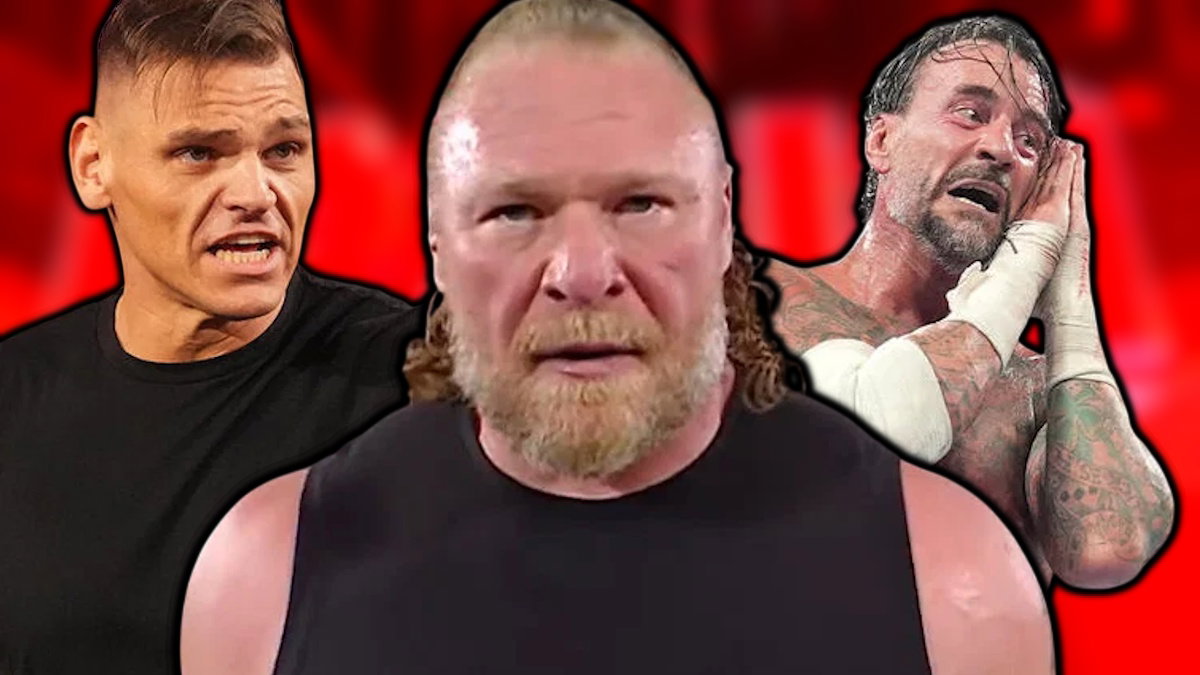
Triple H didn't offer much comfort during the post-show press conference when asked if this was the end for Lesnar. The Chief Content Officer was blunt about the atmosphere in the Gorilla Position. He noted that the way Lesnar walked away from the ring felt final. Regarding the retirement rumors, Triple H stated that it certainly seemed that way.
The Medical Reality of an Aging Beast
From a fitness and medical perspective, Lesnar is an anomaly. Most men his age are struggling with hip mobility and declining testosterone; Brock is still trying to throw 270-pound humans over his head. However, the kinetic energy required to maintain the Lesnar style is unsustainable. His game is built on explosive power, specifically in the fast-twitch fibers of his lats and quads. Once those fibers begin to lose their elasticity, the risk of catastrophic tendon rupture increases exponentially.
We have to look at Lesnar's extensive medical history to understand why this match felt like a breaking point. His well-documented battle with diverticulitis years ago resulted in the removal of a significant portion of his colon. While he made a miraculous recovery to compete in both the UFC and WWE, that kind of internal trauma leaves lasting structural weaknesses in the core. When a powerhouse like Oba Femi targets the midsection with high-impact strikes, he isn't just hurting Lesnar's muscles; he is testing the integrity of a surgically repaired abdomen.
The orthopedic reality is even grimmer. Lesnar has spent years landing on his back and neck, absorbing the shock of his own high-amplitude suplexes. In the closing moments of the WrestleMania match, his timing was noticeably off. He was roughly 0.5 seconds slow on a counter-attempt, a margin that would be negligible for most, but is a death sentence in a high-stakes combat environment. This lack of reaction time is the first sign of neurological fatigue and declining motor coordination.
Oba Femi and the Trauma of a New Era
Oba Femi represents the specific kind of physical threat that Lesnar used to be. He is younger, denser, and carries a level of raw strength that makes the veteran's technical shortcuts obsolete. During the match, Femi focused heavily on Lesnar's lower back. By utilizing a series of deadlift gut-wrench suplexes, Femi forced Lesnar’s L4 and L5 vertebrae to bear the brunt of the impact. It was a calculated demolition of a man who has spent years refusing to age.
Wrestling trainers often talk about the bump card. Every performer has a finite number of high-impact landings before the body simply refuses to reset. Lesnar has played his cards better than most, working a limited schedule and protecting his health. But even a part-time Beast cannot escape the physics of a 270-pound Nigerian powerhouse crashing down on his chest. The medical team at ringside reportedly performed a brief evaluation of Lesnar’s cervical spine immediately after he reached the back, though no official injury report was released.
The lack of a specific 'broken bone' or 'torn ligament' actually makes the situation more dire. This isn't a case of a single injury that can be repaired with a six-month rehab cycle. This is systemic degradation. Lesnar's body is effectively a high-performance vehicle that has been driven at 200 mph for 25 years. The frame is bent, the transmission is slipping, and there are no replacement parts for the years of micro-concussions and compressed discs.
Historical Context and the Industry Fallout
We have seen this play out before, but rarely with an athlete of this caliber. When the Undertaker’s streak ended at WrestleMania 30, it was a similar shock, but the Undertaker had been visibly slowing down for years. Lesnar, conversely, has maintained the illusion of invincibility right up until the Femi feud. Seeing him unable to kick out of a standard, albeit devastating, powerbomb felt like a glitch in the simulation of professional wrestling. It marks the first time since his 2012 return that Brock looked like a man who was hurting rather than a man who was doing the hurting.
Strategic implications for WWE are massive. Lesnar has been the ultimate safety net for creative. If a show needed a ratings spike or a premium live event needed a sense of danger, they could always break the glass and bring in the Beast. If he is truly retired, that safety net is gone. The pressure now shifts entirely to the younger core. If Oba Femi can't immediately step into that 'final boss' role, there is a vacuum at the top of the card that no amount of flashy promos can fill.
Competitors like AEW will undoubtedly look at this as a shift in the gravity of the industry. For years, Lesnar was the one name that stayed beyond their reach, a mountain that couldn't be moved. With him out of the picture, the 'big man' hierarchy in wrestling is officially up for grabs. However, the negative observation here is that WWE might have waited too long to pull this trigger. Had they done this 18 months ago, the passing of the torch might have felt more like a celebration and less like a public physical breakdown.
The Final Walk and What Comes Next
There was no post-match speech. There was no 'thank you' chant that lasted ten minutes. Lesnar simply rolled out of the ring, looked at the crowd for a beat too long, and walked up the ramp. For a man who has always been obsessed with the business side of the industry, this exit felt strangely personal. It wasn't the polished goodbye of a Shawn Michaels or a Ric Flair. It was the exit of a hunter who realized the woods had become too cold.
"It certainly seemed that way," Triple H repeated when pressed on whether a contract extension was even on the table.
If this is indeed the end, the medical staff will likely be relieved. Keeping a 48-year-old Brock Lesnar in a ring with the likes of Oba Femi or Gunther is a recipe for a career-ending injury that happens on live television. By walking away now, Lesnar preserves what is left of his physical integrity. He leaves with a legacy of being the most dominant physical force of his generation, even if the final chapter saw him face-down in a Las Vegas stadium.
The next few weeks will be telling. Normally, a WrestleMania loss for Lesnar is followed by a silent period and then a return for a summer stadium show. If we don't see his name on the internal charts for the UCL Final window or the build to SummerSlam, we can assume the Beast has finally retreated to his farm for good. The industry is changing, and as we saw tonight, it is changing with a violence that even Brock Lesnar can no longer withstand.
Read Next
- The Miz thinks it is time to go all-in on Oba Femi after WrestleMania shocker
- Oba Femi's rapid destruction of Brock Lesnar at WrestleMania 41
- Brock Lesnar suffers significant shoulder injury at WrestleMania 41
- Oba Femi is calling his shots after a wrecking ball performance at WrestleMania
- 🏆 WrestleMania 41 — Full Coverage Hub