The Immediate Status: Medical Reality and Current Timeline
Seth Rollins remains under intense medical monitoring as WWE navigates his chronic right knee instability. The current situation stems from a structural breakdown anchored by the severe Grade 2 MCL tear and partially torn meniscus he suffered on January 15, 2024, during a title defense against Jinder Mahal.
Rehab protocols have kept Rollins in a strict routine of non-contact training and physical therapy. Medical staff re-evaluated the joint after he landed awkwardly from a springboard moonsault at the 14-minute mark of that match. Conservative management avoided immediate surgery, but non-surgical repair leaves lasting structural vulnerabilities.
While out of full-contact competition, Rollins continues to fulfill high-profile promotional commitments. ESPN featured him on SportsCenter for its Make-A-Wish series, as PWInsider reported on July 21, 2026. Fans saw Rollins hosting six-year-old Ledger, but behind the scenes, orthopedic doctors are tracking his physical recovery timeline.
Ortho specialists confirm that a Grade 2 MCL tear involves partial ligament disruption requiring 4 to 8 weeks of knee immobilization. When combined with a meniscus flap tear, resting the leg rarely fixes joint catching. If Rollins undergoes an arthroscopic meniscectomy, recovery takes 6 to 12 weeks. A full meniscus repair pushes recovery past 5 months.
WWE doctors face a clear operational dilemma. They can permit Rollins to wrestle a restricted style with a hinged knee brace, or force him into complete downtime for invasive surgical cleanup. Continuing to delay surgery keeps him on television, but it increases the risk of a catastrophic joint blowout in the ring.
Historical Precedent: A Decade of Right Knee Instability
This is not uncharted territory for Rollins. His right knee has functioned as a ticking clock since November 4, 2015. During a live event match against Kane in Dublin, Ireland, Rollins attempted a sunset flip powerbomb off the top turnbuckle and blew out the entire joint structure on landing.
That 2015 injury resulted in a torn ACL, torn MCL, and torn medial meniscus. Rollins was forced to vacate the WWE World Heavyweight Championship immediately and spent 9 months out of action. Surgeons reconstructed the anterior cruciate ligament, but the procedure left permanent scar tissue and altered his lower-body mechanics.
History repeated itself on February 27, 2017. An ambush by Samoa Joe on Monday Night Raw resulted in another re-tear of the right MCL. Rollins rushed back to competition in just 8 weeks to face Triple H, wearing a bulky medical brace to stabilize the unstable joint.
The exact pattern re-emerged on January 15, 2024. Wrestling Jinder Mahal in Little Rock, Arkansas, Rollins hit a springboard moonsault to the floor, landing with his right foot inverted. He finished the match with a Curb Stomp, but MRI scans confirmed the Grade 2 sprain and meniscus damage hours later.
Rollins has consistently prioritized short-term main event spots over long-term physical health. Returning prematurely from ligament tears causes micro-instability within the knee capsule. Every time he executes high-impact aerial moves without full ligament integrity, he accelerates joint wear.
Strategic Roster Impact and Championship Pivot Points
When a primary main-event draw operates at 60 percent physical capacity, creative booking hits a wall. Rollins anchors Monday Night Raw's main event scene. His medical availability directly determines title match lineups, premium live event cards, and house show ticket sales nationwide.
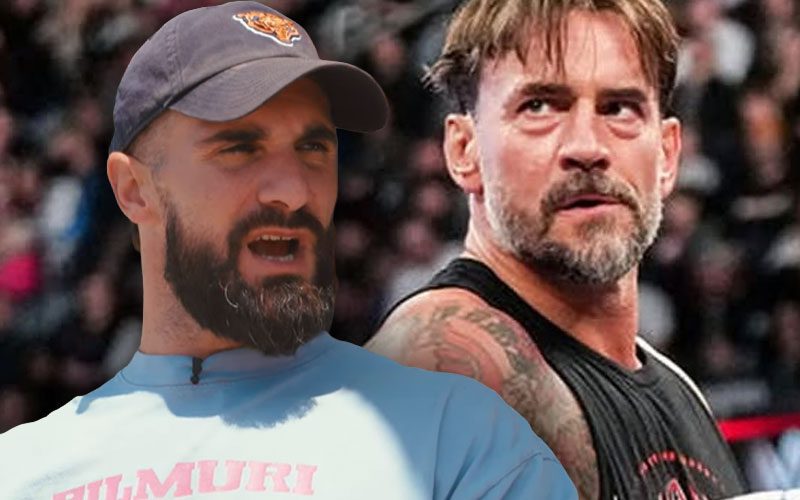
The ripple effect hits his opponents immediately. Rivalries with Cody Rhodes, CM Punk, and Drew McIntyre depend on Rollins taking high-angle bumps, including overhead suplexes and table crashes. If Rollins cannot safely absorb heavy impacts, producers must completely rewrite match structures on short notice.
Roster depth faces an immediate test when a central star slows down. WWE relies on Rollins to carry 20-minute television segments and main-event live events. Sidelining him forces management to push upper-midcard talent like Gunther or Damian Priest into high-pressure championship slots before planned timelines.
Competing promotions monitor these health dynamics closely. When a marquee star in WWE struggles with chronic knee damage, rival executives note the physical strain of WWE's year-round touring schedule. It highlights the brutal toll of performing over 100 dates annually without an off-season.
For audience members, the ongoing uncertainty impacts the viewing experience. Watching a top champion move cautiously in a heavy knee brace alters match pacing. Instead of fluid, high-velocity wrestling, matches shift into slower brawls designed specifically to mask an injured leg.
Biomechanical Breakdown and Critical Assessment
At 38 years old, Rollins must reconcile his aggressive style with orthopedic reality. Signature maneuvers like the Phoenix Splash, buckle bomb, and springboard knee strike have created iconic moments, but they have severely damaged his lower body over a 15-year career.
WWE's medical protocol deserves direct criticism for allowing Rollins to repeatedly work through partial ligament tears. Delaying necessary surgical procedures to protect televised storylines is a shortsighted strategy. Rushing an injured athlete back onto live television may satisfy immediate television ratings, but it risks permanent physical impairment.
Sports medicine research shows that repeated MCL sprains compromise lateral knee stability, forcing the surrounding muscle groups to overcompensate. This overcompensation frequently leads to secondary hip and lower-back issues. Rollins has already displayed altered gait mechanics during long matches, signaling that his kinetic chain is breaking down.
To extend his career, Rollins must permanently modify his move-set. Eliminating springboards, top-rope landings, and high-impact dives is essential. Transitioning to a grounded offense built around the Pedigree, submission holds, and tactical strikes is the only viable path forward.
The coming weeks will force WWE executives to make a firm decision. As of July 21, 2026, Rollins remains caught between active rehabilitation and public media appearances. Whether he accepts surgical intervention or relies on heavy bracing, the era of Rollins as an indestructible high-flyer has reached its end.