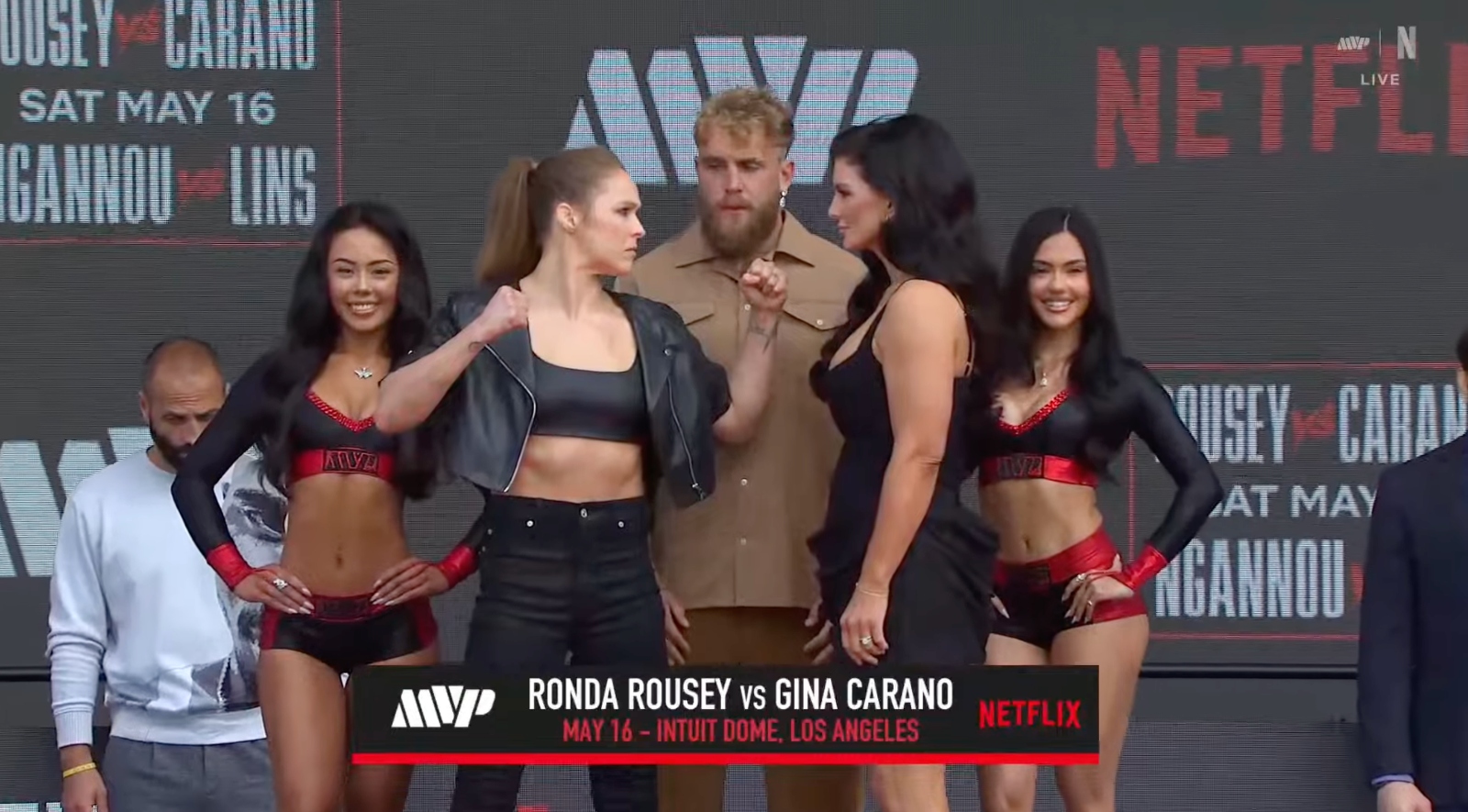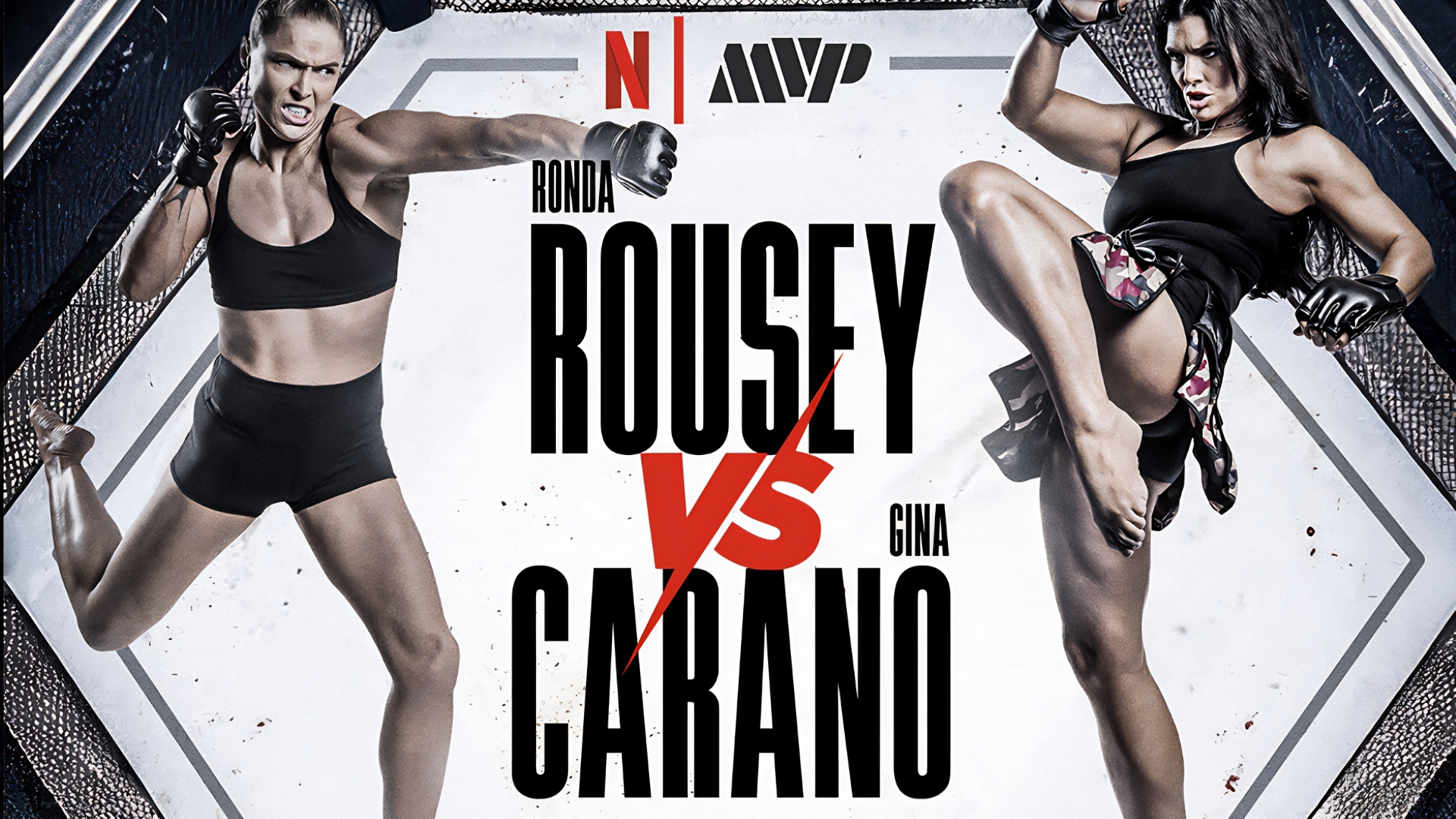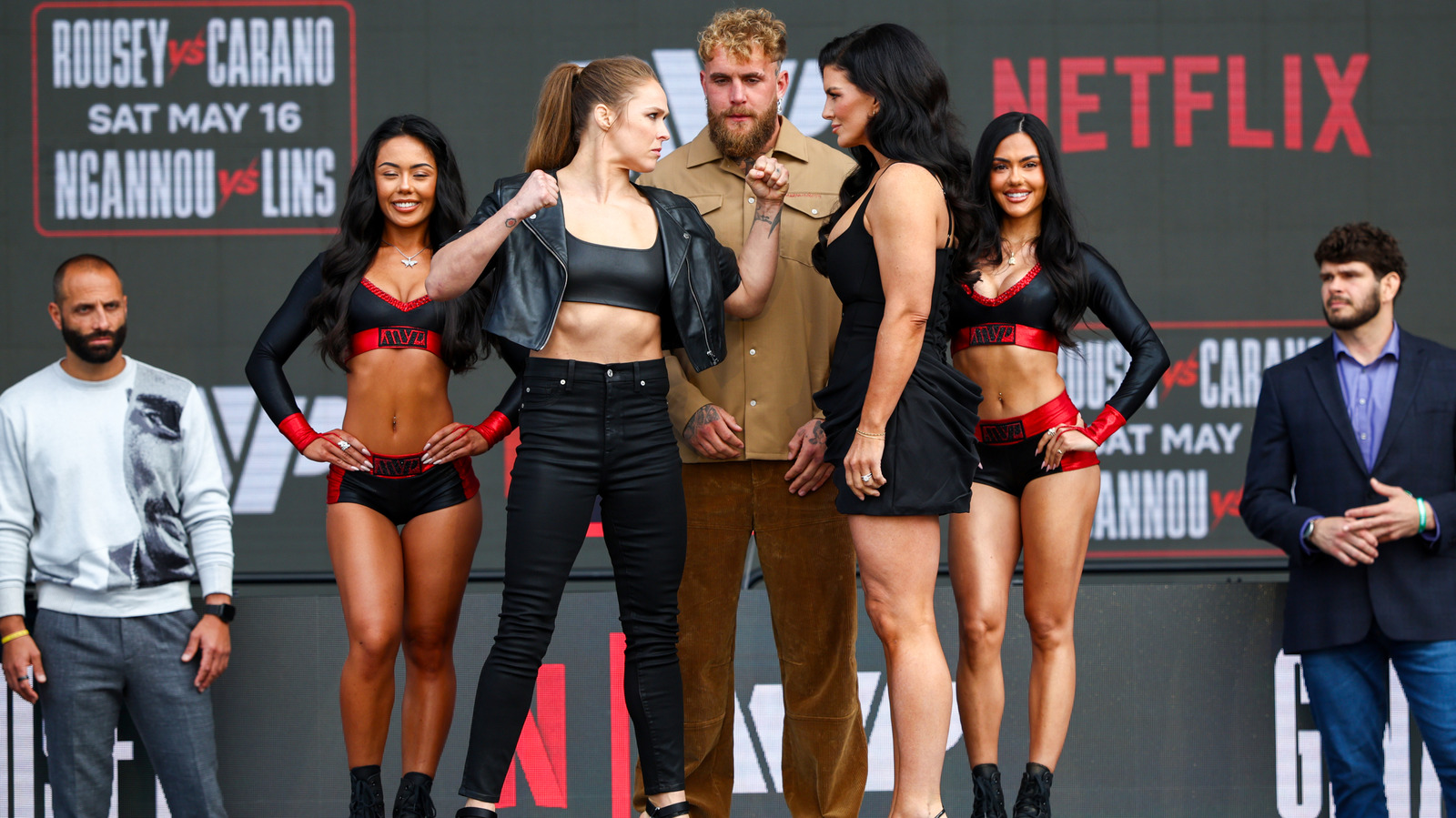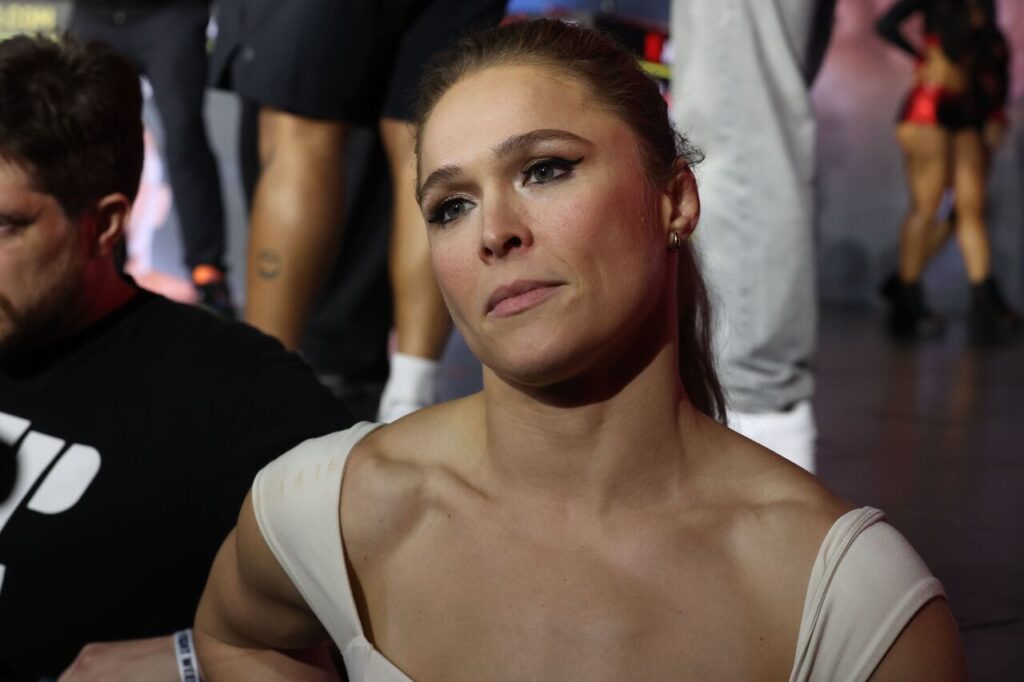
To fully grasp the magnitude and the absurdity of this event, you have to wind the clock back to August 2009. That was the last time Gina Carano stepped into a cage for a professional mixed martial arts bout. She faced Cris Cyborg under the Strikeforce banner and suffered a brutal, definitive defeat.
Following that loss, Carano walked away, transitioning into a successful career in Hollywood. She hasn't felt the adrenaline dump of a real fight in 17 years. In those 17 years, women's MMA didn't just evolve; it mutated into an entirely different sport.
Carano was a pioneer, a Muay Thai specialist who brought technical striking to a division that was still finding its footing. But the modern game, built on relentless cross-training and seamless transitions between disciplines, has left the early eras in the dust. Ronda Rousey was the catalyst for that first major leap forward.
Rousey dragged the UFC into promoting women's bouts through sheer force of personality and unmatched judo prowess. Now, these two distinct eras are colliding on Netflix. As Wrestling Inc reported, Rousey is already billing this as the biggest MMA fight in history.
That is promotional gold, but as analysts, we have to slice through the hyperbole. You do not just pause your fighting career for nearly two decades and jump back into the deep end against a decorated Olympic medalist. Ring rust is not a myth; it is a physiological reality.
Timing fades, distance management suffers, and the ability to process strikes in real-time deteriorates.
The UFC Void and the MVP Rebellion
The most fascinating aspect of this matchup isn't just who is fighting, but who isn't promoting it. The UFC has completely washed its hands of this event. For a company that built its modern empire on Rousey's back, their absence speaks volumes.
Rousey hasn't been shy about the reasons why. In a recent interview, she launched a blistering attack on UFC Chief Business Officer Hunter Campbell.
"Hunter Campbell is a chauvinist prick."
That quote, highlighted by BodySlam.net, burns any remaining bridges between Rousey and the promotion that made her a global icon. It also perfectly explains why Most Valuable Promotions (MVP) swooped in.
MVP has built a lucrative business model out of staging spectacle fights. They capitalize on massive names outside the traditional structures of combat sports. This rebellious streak aligns perfectly with Rousey's recent mindset.
After a frustrating, highly criticized run in WWE, she made a brief appearance in AEW at the Revolution pay-per-view. As Wrestling Inc noted, she openly discussed how much she enjoyed the creative freedom in AEW compared to the rigid, heavily scripted environment of WWE.
This fight on Netflix is the ultimate manifestation of that freedom. She is dictating the terms, choosing the opponent, and taking the broadcast to a streaming giant rather than a traditional pay-per-view distributor.
Tactical Breakdown: The Clinch vs. The Outside
When we break down the actual Xs and Os of this matchup, it paints a very concerning picture for Carano. Even at her peak, Carano's game was built on forward pressure and Muay Thai combinations. She possessed a stiff jab and devastating leg kicks.
But she was never an elite defensive grappler. Her hips were often too high, and she struggled when opponents forced her back against the fence. Rousey, despite the glaring holes in her striking defense that Holly Holm and Amanda Nunes brutally exposed, remains one of the most lethal offensive grapplers in the history of the sport.
Her judo base is built entirely on closing the distance, securing the clinch, and executing high-amplitude throws like the harai goshi or uchi mata. Once the fight hits the mat, her armbar setups are systematic and terrifyingly fast.
Carano's path to victory requires a masterclass in lateral movement. She cannot allow Rousey to dictate the center of the cage. She must circle on the outside, pepper Rousey with straight punches, and angle out before Rousey can latch onto a collar tie.
The problem? That kind of elusive footwork requires a gas tank and a level of cardiovascular conditioning that is incredibly difficult to simulate in a gym environment. Open workouts, which were streamed live recently, only show pad work.
Pads don't hit back, and they don't drag you into deep waters.
The Netflix Disruption
MVP's involvement here is a massive disruptor. We are looking at a fundamental shift in how combat sports are distributed. For decades, the pay-per-view model has been the undisputed king of fight economics.
You pay your sixty or eighty dollars, you gather your friends, and you watch the card. But MVP partnering with Netflix obliterates that barrier to entry. Suddenly, a fight card isn't a premium purchase; it is just another tile on the home screen of hundreds of millions of subscribers.
The sheer volume of casual viewers who will tune in simply because it automatically plays after they finish their latest binge-watch is staggering. This is precisely why Rousey's comments about the UFC and Hunter Campbell carry so much weight.
She isn't just burning a bridge; she is building a bypass. By proving that a massive, needle-moving event can happen entirely outside the UFC bubble and outside the traditional pay-per-view structure, she is setting a dangerous precedent for the established order.
If MVP and Netflix succeed here, it opens the floodgates for other disgruntled stars to test their true market value without a promoter taking the lion's share of the revenue. But the business revolution only matters if the product delivers.
And that brings us back to the cage. The training footage of Carano that has leaked out leading up to this bout is concerning. Hitting mitts is a cooperative drill.
The pad holder is feeding you the rhythm, offering the target exactly where you want it. Live sparring is chaotic, uncooperative, and violent. When Rousey closes the distance, she isn't going to hold a target for Carano's right cross.
She is going to grab her by the throat, strip her balance, and drag her to the canvas.
The Broadcast Booth
If the actual fight threatens to be a messy, clunky affair between two retired veterans, the presentation promises to be immaculate. Netflix is not cutting corners on production value. The smartest decision they made was securing Mauro Ranallo for the broadcast booth.
As Ringside News confirmed, Ranallo is back in a major combat sports spotlight. Ranallo's ability to inject gravity into a moment is unparalleled.
He understands the mechanics of a fight and the theatricality required to sell a spectacle. He has called historic MMA bouts, legendary boxing matches, and main events in WWE. He is the auditory glue that will hold this broadcast together.
If the action stalls against the cage, Ranallo's frantic, impassioned commentary will make a simple battle for underhooks sound like a clash of titans.
What to Watch For on May 16
When the bell rings, pay close attention to the first 30 seconds. That opening sequence will reveal exactly what kind of fight we are getting. If Carano comes out flat-footed, relying on her old timing to land a counter right hand, she is going to find herself airborne.
Rousey will gladly eat a punch to close the distance. She always has. We also have to question Rousey's chin. She hasn't taken a legitimate MMA strike since Nunes ended her UFC career in under a minute.
While professional wrestling involves significant physical trauma, it is a fundamentally different impact than a shin bone connecting with the jaw. If Carano can land early and hard, we might see the same panic in Rousey's eyes that we saw during her final UFC run.
But that is a massive "if." The reality of 17 years away from the sport cannot be overstated. You do not shake off nearly two decades of cage rust under the bright lights of a global Netflix broadcast.
It is a terrifying proposition for Carano, stepping back into the fire against someone whose entire identity is tied to physical dominance.
The Final Prediction
We have to separate the promotional narrative from the grim reality of combat sports. This is not the greatest fight of all time. It is a fascinating, morbidly curious spectacle driven by nostalgia and the sheer star power of its participants.
It is the combat sports equivalent of a legacy rock band playing their greatest hits, but one of the guitarists hasn't picked up an instrument since the Bush administration. The fight will likely be disjointed.
Carano will look hesitant, her timing a fraction off. Rousey will look stiff on her feet, still possessing the same rudimentary head movement that plagued her late UFC career. But the grappling differential is simply too vast to ignore.
Rousey's offensive grappling is a sequence of forced errors. She initiates contact, creating a reaction. If you push back, she uses your momentum for a throw. If you pull away, she snaps you down.
In her prime, she was solving grappling equations three steps faster than her opponents. Even if she has lost a step, Carano is essentially trying to solve calculus after taking a 17-year break from basic algebra. The math does not compute.
Rousey has remained active in physical environments, training for WWE and AEW, keeping her body accustomed to the grind of falling and grappling. Expect Rousey to push forward aggressively, eating a grazing shot from Carano before tying her up against the fence.
From there, the judo takes over. A body lock, an inside trip or hip toss, and a scramble to the mat. Carano will instinctively try to defend, but Rousey's muscle memory will lock in the submission before Carano can establish a defensive guard.
It will be quick, it might be slightly ugly, but it will be definitive. Rousey by first-round armbar at the 2:15 mark. Time remains undefeated, and 17 years is a lifetime in the cage.