The unseen battleground of professional wrestling
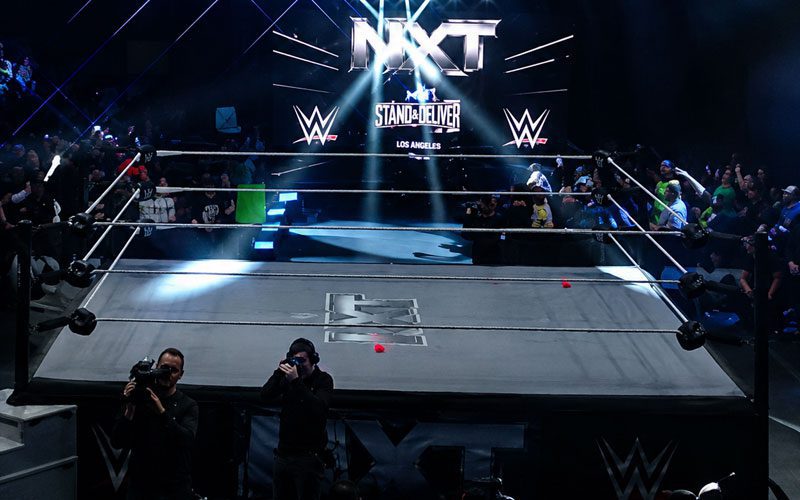
The lights in the Venice Community Center hit differently than the blinding LEDs of a televised arena. There is no hard cam to constantly play to. There are no commercial breaks to catch your breath or reset a blown spot.
This weekend, NXT returns to the Florida live event loop, kicking off the summer tour schedule in earnest. While the main roster gears up for massive stadium shows, the real foundational work of professional wrestling is happening right here. It happens in front of a few hundred die-hard fans sitting on folding chairs.
This is where the rough edges are violently sanded down. It is the ultimate proving ground for a developmental roster that is constantly in flux, rotating new recruits in as established stars are called up. When you buy a ticket to a Florida loop show, you aren't just watching a wrestling match.
You are watching a real-time stress test of the entire developmental system. You are seeing the blueprints of what the main event scene will look like in three years.
To truly understand the value of these untelevised shows, you have to watch the footwork. On television, a seasoned wrestler can rely on quick camera cuts and production tricks to hide a sloppy transition or a misjudged distance. In a small gymnasium with the crowd practically sitting on the ring apron, every single misstep is magnified.
This is the tactical laboratory of the industry. It is where a talent learns the hard lesson that a simple, violently applied wristlock can be exponentially more effective than a spectacular 450 splash. That is, provided it is executed with the right torque and psychological intent.
You see wrestlers actively experimenting with their pacing in real time. A young prospect might try slowing down their heat segment, deliberately giving the crowd absolutely nothing for three agonizing minutes just to see if they can maintain the negative reaction. It requires a terrifying level of confidence that can only be built through endless repetition in front of live audiences.
The difference between a good athletic prospect and a great professional wrestler is their ability to call a match in the ring. The Florida loop forces them to do exactly that. The referee isn't constantly feeding them times through an earpiece like they do on television.
Clashing styles and the education of a roster
They must read the room. If a complex sequence falls flat and the crowd goes quiet, they can't just rigidly move to the next spot on their predetermined script. They have to pivot, call an audible, and find a way to get the audience back.
The current composition of the NXT roster makes this summer tour particularly fascinating to analyze. You have a massive influx of incredible collegiate athletes with zero prior wrestling experience sharing the locker room with battle-scarred veterans. These are veterans who spent a decade grinding on the independent scene.
The clash of styles is stark and undeniable. When a former Division I gymnast steps into the ring with a seasoned, mat-based grappler, the tactical mismatch is instantly obvious. The gymnast inherently wants to hit their beautifully rehearsed tumbling sequences.
The veteran wants to slow it down, grind it out, and actually wrestle. The ultimate goal of these live events is to successfully bridge that massive gap. You watch the veterans actively guide the newer talent, physically pulling them into the correct position for a vital cutoff spot.
It is an education. But it certainly doesn't always go smoothly. Miscommunication happens constantly.
A missed cue on a complex reversal can lead to an awkward, embarrassing standoff in the center of the ring. That, however, is the entire point of the exercise. Management wants those glaring mistakes to happen in Fort Pierce on a Friday night, not on a premium live event broadcast to millions.
You learn more from a blown spot in front of 300 people than you do from a perfect sequence in an empty Performance Center. However, it is impossible to ignore the glaring, systemic flaws in how some of these matches are currently being structured. There is a deeply frustrating reliance on a modernized, heavily homogenized match formula that is stifling creativity.
The formulaic booking problem
Too many of the newer talents are being explicitly taught to work the exact same style. We are seeing a severe, undeniable lack of diversity in offensive move sets across the card. Everyone seems to have a mandatory suicide dive in their arsenal, regardless of their physical size or character alignment.
The move has been entirely devalued through sheer repetition. It is no longer a high-risk desperation tactic. It is just a lazy transitional spot to set up a meaningless two-count before the heat segment begins.
Furthermore, the internal logic of selling is frequently absent on these shows. A talent will take a devastating, high-angle brainbuster and lay on the mat for thirty seconds selling death. Then they suddenly pop up to deliver a flawless springboard cutter.
It shatters the physical illusion. The agents producing these live events desperately need to crack down on this video game-style pacing. If a move looks like it should legitimately end the match, the recipient needs to sell it like they are severely injured.
The overwhelming obsession with getting all their flashy spots in is actively hurting their development as storytellers. They are learning how to perform impressive moves, but they aren't learning how to wrestle a coherent match. Let's talk about the specific mechanics of the heel heat segment.
This is arguably the weakest aspect of modern developmental wrestling across the board. A true, effective heel understands how to mathematically suffocate hope. They cut off the ring, violently isolate the babyface in the wrong corner, and systematically break down a specific body part.
The mechanics of a main event
What we are seeing on the Florida loop recently is a hollow, pantomimed imitation of this fundamental concept. A heel will lazily lock in a generic chinlock, randomly shout at the crowd without making eye contact, and just wait for the babyface to start their inevitable comeback. There is no targeting.
There is no viciousness or intent to injure. If you want the crowd to truly invest in the fiery comeback, you have to make them believe the babyface is in genuine, agonizing danger. You need deliberate, targeted violence.
Stomping viciously on a hand trapped on the canvas. Grinding a sharp elbow into the exposed ribs. These small, incredibly vicious details are what separate the eventual main eventers from the career curtain jerkers.
The talent that figures this out over the course of the summer will be the ones fast-tracked to the main roster. Closing a live event is a very specific, heavy responsibility. The main event has to send the crowd home happy, but it also has to deliver a main-roster quality performance that justifies the ticket price.
The cardiovascular stamina required to work a 20-minute main event is vastly different from a chaotic eight-minute TV sprint. This weekend's shows will be a massive litmus test for several top-tier prospects. Can they sustain the crowd's interest for that length of time without relying on cheap near-falls?
Can they pace their high-impact spots effectively so the finish actually means something? If a wrestler visibly blows up and starts sucking wind at the 12-minute mark, the front office absolutely notes it in their file. The cardio demands of the modern main event style are brutal and punishing.
It requires a relentless pace, constant lateral motion, and the physical resilience to take heavy, impactful bumps late in the match when exhaustion has set in. The Florida heat only amplifies this physical challenge. The buildings are often sweltering, and the ring ropes get slick with sweat.
The prediction
It is a grueling endurance test disguised as sports entertainment. As the summer tour officially kicks off, the evaluation process accelerates dramatically. Every single match is a vital data point for management.
The front office is watching closely to see exactly who sinks and who swims when the pressure is applied in these intimate, unforgiving venues. My confident prediction for this weekend's return to the Florida loop? We are going to see a drastic, immediate shift in the tag team division booking.
The singles roster is currently overcrowded with prospects. The easiest, most efficient way to elevate promising talent right now is to pair them up and hide their individual weaknesses. Expect to see two completely unexpected names thrown together in a makeshift tag team in the semi-main event this weekend.
They will likely be given 15 solid minutes to see if there is any undeniable chemistry. If it works, they will be rushed to television by next Tuesday. The developmental system is absolutely desperate for fresh, cohesive tag team acts, and the sweaty mats of the Florida loop are the perfect place to test the waters.
They probably won't hit every spot cleanly. But the raw, unpolished aggression will be impossible to ignore.