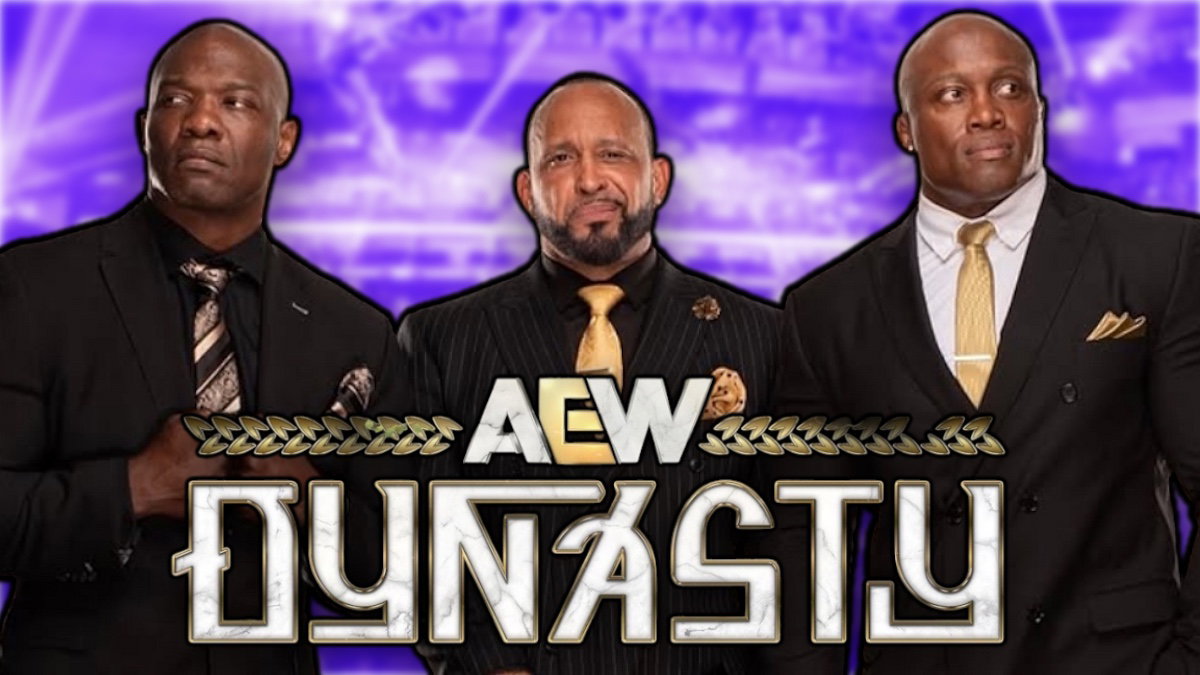
MJF's latest Twitter spat exposes AEW's most exhausting booking habit
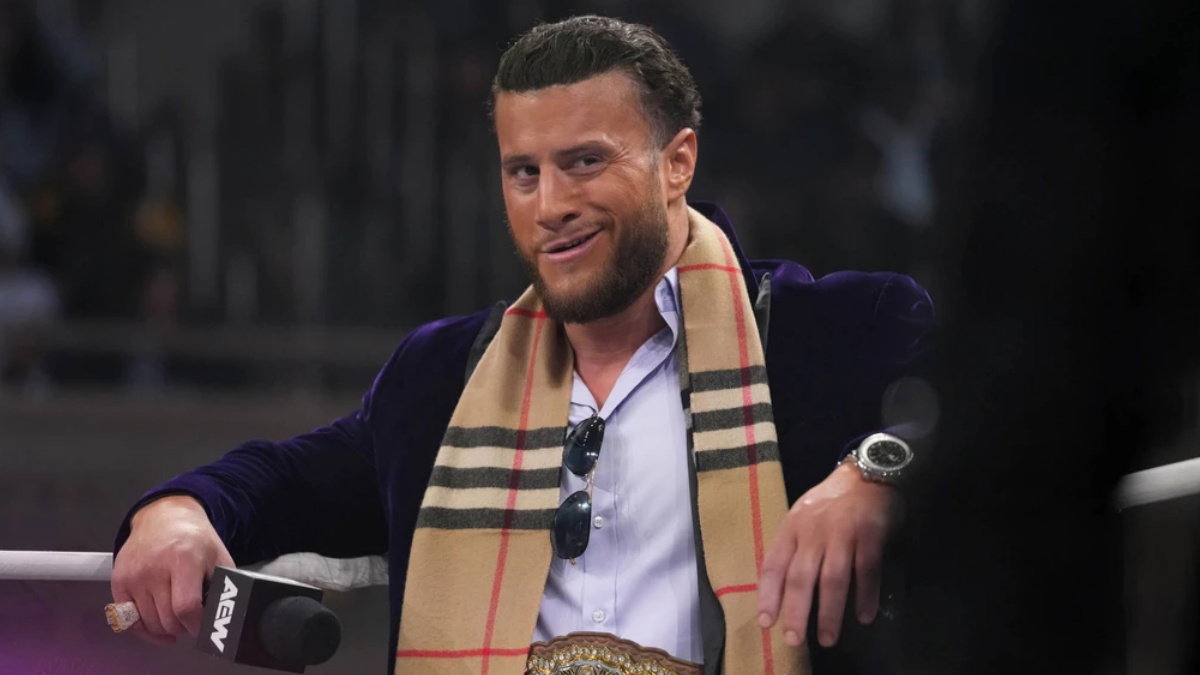
The Twitter Booking Crutch
Professional wrestling used to be built on television time. Promoters would dedicate weeks of programming to establish a grievance between two men. Tony Khan has increasingly outsourced that labor to Elon Musk.
The recent news that AEW World Champion MJF is set for a television match against a "former WWE star" following a social media spat is entirely unsurprising. It is the exact formula the company has leaned on for television main events over the last three years. Instead of giving us a reason to care on Dynamite, we are expected to read the backstory on our phones.
This is not a new tactic, but it is becoming a tired one. MJF is arguably the best promo in the industry. Forcing him to rely on quote-tweets to build heat for a title defense or a television main event feels like a massive misallocation of resources.
It also reflects a broader issue with AEW's current creative direction heading into Dynasty 2026. We are just four days away from the pay-per-view in Kansas City, and the television product is still bogged down by these micro-feuds. When your world champion is wasting energy on timeline arguments, the prestige of the belt suffers.
The "Former WWE Star" Trope
There is a distinct pattern to how AEW integrates talent who made their name in Stamford. They debut to a massive pop, cut a promo about finally being unchained, and then spend a month wrestling high-workrate matches on Collision. Eventually, they cross paths with MJF.
The news report from WrestleTalk highlights exactly how generic this has become.
AEW World Champion MJF is set for a match with a former WWE star after recently firing shots at them on social media.
The fact that the opponent is completely interchangeable in the headline tells you everything you need to know. It could be Nic Nemeth. It could be Shelton Benjamin. It could be someone who was released two months ago. The identity barely matters. The opponent is just a prop for MJF to dissect on the microphone before carrying them to a four-and-a-half-star match.
This does a disservice to the AEW original roster. While MJF is busy wrestling ex-WWE guys in matches built on Twitter heat, homegrown talents like Ricky Starks, Powerhouse Hobbs, or Konosuke Takeshita are left fighting for television time. It sends a clear message about who management views as a main event draw.
We saw this exact same scenario play out last year. A former WWE talent arrived, racked up a few wins against lower-card guys on Rampage, and was immediately fed to the world champion. The match was structurally sound, but the emotional investment was zero. The audience knows these matches are filler. They watch the execution of the moves, but they do not buy the near-falls.
In-Ring Reality vs. Build
Here is the frustrating part about criticizing AEW's booking: the matches almost always deliver. Once the bell rings, MJF is a savant. He does not wrestle the hyper-kinetic, million-miles-an-hour style that dominates the rest of the card.
He works slowly. He grabs a side headlock and holds it for three minutes, daring the crowd to boo. He works over a body part with methodical precision. If he targets the left arm, he will spend the entire match setting up the Salt of the Earth armbar.
This grounded, psychological approach forces the "former WWE star" to adapt. We have seen it repeatedly. The opponent wants to get their stuff in. They want to hit their signature sequence. MJF denies them. He rolls out of the ring. He pokes them in the eye. He dictates the tempo entirely.
When the pace finally accelerates in the final five minutes, the near-falls actually mean something. A simple backslide or an inside cradle suddenly feels like a finish because MJF has trained the audience to respect the basics. The physical execution is flawless. The emotional investment, however, is often lacking.
Watch his footwork during these transitions. When his opponent hits the ropes for a springboard attack, MJF does not stand there waiting to catch them like a base in cheerleading. He actively avoids the contact, forcing a crash out to the floor. It is brilliant heel work that makes the babyface look foolish. But brilliant mechanics cannot fix a hollow story.
The Mechanics of Control
If you want to understand why MJF is so heavily protected by management, look at his match architecture. He does not take unnecessary bumps. He does not dive to the floor unless the pay-per-view demands it. Every movement is calculated to minimize risk and maximize crowd response.
When he locks in a wristlock, he does not just hold it. He grinds his forearm into the opponent's face. He uses the referee's five-count to the absolute limit. He will blatantly pull the tights on a suplex just to infuriate the front row. These are lost arts in an era where most wrestlers are trying to string together cooperative gymnastics routines.
This is why the ex-WWE talent usually looks great against him. They are forced to slow down. A wrestler who relies on high spots suddenly has to sell their knee for twelve minutes because MJF dropkicked their kneecap into the steel steps. He forces his opponents to tell a story of survival rather than just hitting their offensive checklist.
But again, this excellent ring work is wasted when the stakes are nonexistent. A masterful psychological performance means less when the audience knows the match was booked simply to fill a quarter-hour of television time.
The Limits of Meta-Storytelling
MJF's entire gimmick is built on blurring the lines of reality. He wants you to believe he actually hates his employer, his coworkers, and the fans. That works brilliantly for long-term programs. The build to his Iron Man match with Bryan Danielson was a masterclass in escalating tension.
But when you apply that same meta-storytelling to a random television match, it falls flat. Firing off insults on a social app does not translate to visceral anger in an arena. The live crowd has not seen the tweets. They just see two guys standing in a ring pretending to be mad.
This reliance on insider baseball isolates casual viewers. If you did not log online on Tuesday afternoon, you have no idea why MJF is attacking this person's neck on Wednesday night. Wrestling should be self-contained. The television show must explain the television show.
When Excalibur has to spend the first three minutes of a match speed-reading through a timeline of deleted tweets just to explain why the two men are fighting, the promotion has failed. Tony Schiavone usually chips in with a tired sigh, trying to sell the anger, but it never registers. You cannot manufacture hatred out of a character limit.
The Television Ratings Reality
The business metrics for AEW tell a clear story about what the audience values. When MJF was deeply entrenched in a personal, multi-month storyline with Samoa Joe, the quarter-hour numbers remained stable. Fans were invested in the narrative progression.
Contrast that with these sudden, Twitter-fueled exhibitions. The initial pop of the ring entrances often holds the viewership, but the minute the match settles into its pacing, the dial turns. A cold match, even one featuring the world champion, is a prime channel-changing opportunity by the 9:00 PM crossover.
Tony Khan is an analytics-driven promoter, so it is baffling that he continues to lean on a formula that actively sheds viewers. You cannot pop a rating on a Wednesday by relying on an internet argument that happened on a Monday. The casual television viewer does not scroll the timeline; they just want a compelling reason to keep watching the broadcast.
Furthermore, these matches follow a rigid structural template. The babyface gets the early shine, MJF takes over during the picture-in-picture commercial break, and the babyface makes a fiery comeback before MJF cheats to win. We have seen this exact sequence dozens of times. The predictability is lethal for live television.
A Waste of the Champion's Time
Let's look at the calendar. AEW Dynasty is on March 30. That is just four days away. The World Champion should be singularly focused on the main event of a premium live event. Instead, he is picking fights with mid-carders online.
This is a booking failure. It makes the champion look easily distracted. It makes the upcoming pay-per-view feel like an afterthought. When Roman Reigns was champion, he was not arguing with Dolph Ziggler on Twitter four days before WrestleMania. He was presented as an untouchable final boss.
Tony Khan needs to protect MJF from his own worst impulses. MJF is a brilliant talker, but he lacks an editing filter. If you let him, he will engage in a war of words with anyone who tags him. The booker's job is to say no. The booker's job is to keep the champion focused on the money.
It is basic promotional discipline. The television leading into a major event should be entirely dedicated to selling the main event. Every promo, every backstage segment, every match should point toward Sunday. Detouring into a meaningless grudge match wastes premium television real estate.
The Ghost of CM Punk
We cannot talk about MJF without talking about CM Punk. Their feud was the creative peak of AEW. It was built on deeply personal promos, historical callbacks, and visceral violence. It culminated in a Dog Collar match that remains one of the best bouts in company history.
Ever since Punk left, MJF has been searching for a dance partner who can match him on the microphone. He has tried to recreate that magic with Adam Cole, with Samoa Joe, and with Jay White. None of it has reached the same heights. The emotional core is missing.
These Twitter feuds with former WWE stars feel like a cheap imitation of the Punk rivalry. It is MJF trying to generate real-world controversy because the scripted storylines are not giving him enough material to work with. It is a desperate grasp for relevance in a wrestling world that is increasingly focused on the Bloodline drama over in WWE.
The numbers back this up. AEW's television ratings are stubbornly stagnant. Bringing in ex-WWE talent for one-off matches does not move the needle. The audience has seen this trick too many times. They know the newcomer is going to lose. There is zero suspense.
Breaking the Cycle
How does AEW fix this? It starts by taking the phone out of the champion's hands. No more quote-tweets. No more insider references. MJF needs to return to being a traditional, television-based heel.
He needs an opponent who is entirely homegrown. Someone like Swerve Strickland or Hangman Page. A rivalry built purely on AEW history, untainted by WWE comparisons. They need to spend six weeks building the match through in-ring promos, backstage attacks, and meaningful video packages.
They also need to stop using the "former WWE star" label as a marketing tool. It makes AEW look second-rate. If a wrestler is good enough to be in the ring with MJF, they should be defined by what they are doing now, not by where they used to work. The constant referencing of the other channel is a minor-league mentality.
Imagine a build where MJF absolutely refuses to mention WWE. Imagine him treating his AEW challengers with the gravity of legitimate prize fighters. It would instantly elevate the entire roster. Instead, we get cheap heat and winking references to Vince McMahon or Triple H. It is lazy writing disguised as being edgy.
The Road to Kansas City
As we approach Dynasty 2026, the focus must shift entirely to the pay-per-view. This upcoming television match needs to be short, brutal, and decisive. MJF cannot afford to go twenty minutes with a challenger of the week.
He needs to hit the Dynamite Diamond Ring punch, lock in the Salt of the Earth, and force a tap out in under five minutes. He needs to grab a microphone and cut a promo that sells the Sunday main event. Anything else is a failure of prioritization.
If the match stretches through two commercial breaks, it will confirm every negative observation about AEW's match structure. It will show that Tony Khan values star ratings over star-building. It will prove that the company still struggles with the basic mechanics of pacing a television show.
MJF is a generational talent. He has the potential to be the biggest star in the industry. But he is currently trapped in a booking loop that limits his ceiling. He is playing out the same greatest hits, over and over again, against a rotating cast of familiar faces.
A Critical Juncture
We are entering a massive period for professional wrestling. WrestleMania 41 in Las Vegas is looming on April 19 and April 20. The entire industry will be watching to see how WWE follows up on an incredibly successful year. AEW cannot afford to be treading water.
Dynasty needs to be a home run. The matches will be excellent, because they always are. But the creative direction needs a serious overhaul. The reliance on Twitter spats, insider baseball, and ex-WWE talent is yielding diminishing returns.
The bell will ring on this upcoming television match. The crowd will cheer for the near-falls. MJF will almost certainly win. And then we will all forget about it by Thursday morning. That is the definition of disposable content. A world champion should be making history, not throwing away matches on a Wednesday night because someone made a joke on the internet.
Read Next
- MJF's latest Twitter spat proves AEW is still booking from the timeline
- Ospreay vs MJF will steal Dynasty, but AEW's tag division is broken
- MJF vs Nic Nemeth at Dynasty is a fascinating tactical clash
- Nic Nemeth trashed MJF's lazy promo and AEW fans are furious
- ⚡ AEW Dynasty 2026 — Full Coverage Hub
- 🎲 AEW Double or Nothing 2026 — Full Coverage Hub
WWE Cody Rhodes American Nightmare Claim Your Kingdom T-Shirt
Finish your story with the official tee of the American Nightmare.
Frequently Asked Questions
Why is MJF wrestling a former WWE star on AEW television?
What is the main criticism of AEW's current booking strategy?
When and where is the AEW Dynasty 2026 pay-per-view taking place?
Who are the homegrown AEW talents being affected by this booking?
How do the former WWE stars typically debut in AEW?
More Coverage
Andre Chase pulls back the curtain on the Shawn Michaels era at NXT
3 hours ago
WWE’s Saturday Night strategy needs a rethink
16 hours ago
Strategy gaps heading into a triple-title AEW Collision
17 hours ago
G1 Climax 36 is already testing the limits of New Japan's depth
18 hours ago
Roman Reigns and the lonely reality of the Tribal Chief era
19 hours ago
Westbrook Armory turned into a pressure cooker for Crunch Time
19 hours agoMore Analysis
MJF's latest Twitter spat proves AEW is still booking from the timeline
3 months, 3 weeks ago
MJF's dirty win over Kenny Omega exposes a tired AEW booking formula
3 months ago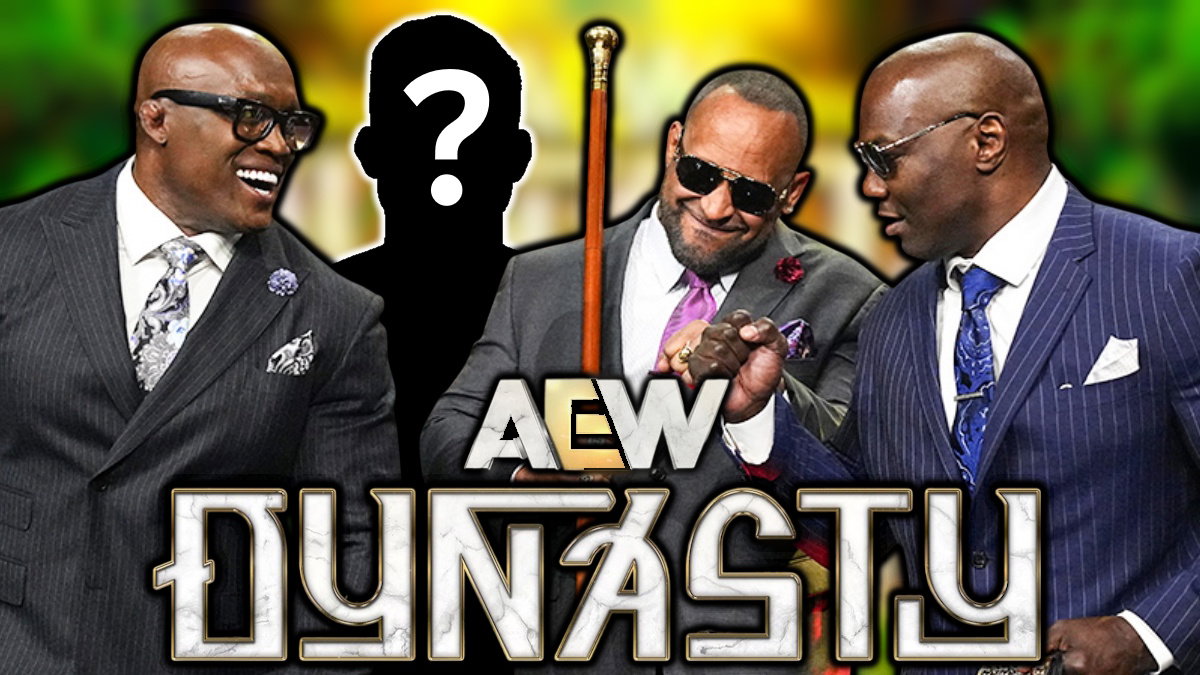
AEW Dynasty is relying on dream matches to mask a glaring creative habit
3 months, 3 weeks agoAEW Dynasty signals a necessary reset for a division in drift
3 months ago
AEW's booking dysfunction is visible from orbit
1 week ago