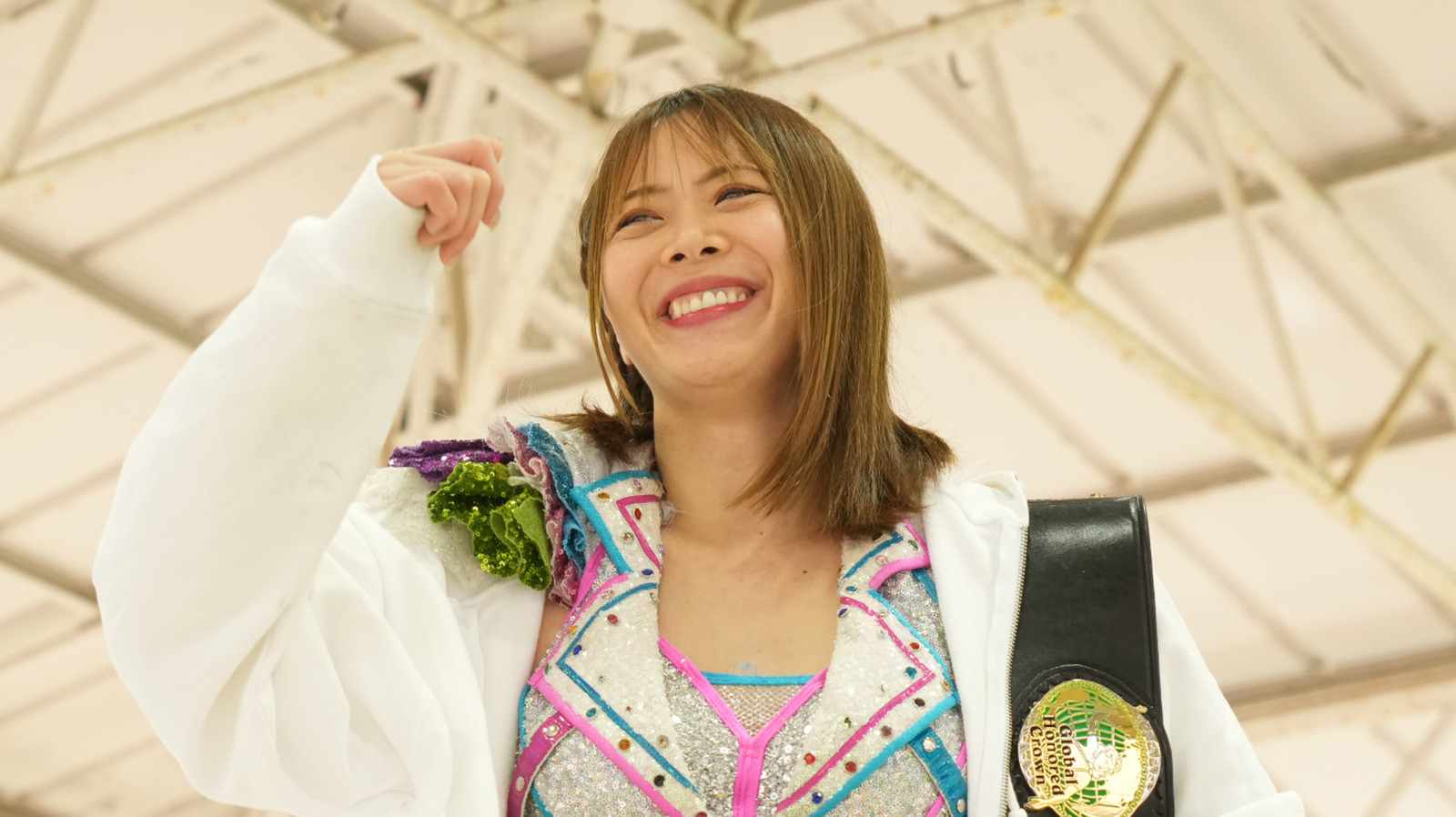
The Diagnosis: A Broken Toe in Tokyo
Dream Star Marigold officials confirmed late Monday night that Mayu Iwatani, the undisputed centerpiece of the promotion, has suffered a broken toe. The announcement, which came via official social media channels, stated that the injury will keep the Icon out of action for an unknown amount of time. The timing is catastrophic for Rossy Ogawa’s startup promotion as they enter the busiest stretch of the Japanese wrestling calendar.
The injury occurred during a recent set of tapings, though the specific moment of the fracture hasn't been pinpointed. Medical staff in Tokyo reportedly evaluated Iwatani over the weekend before making the call to pull her from all upcoming dates. Marigold’s medical bulletin was characteristically brief, sticking to the facts of the fracture and the indefinite status of their top star.
For a wrestler of Iwatani's caliber, there is no such thing as a minor foot injury. She is a performer who relies entirely on balance, explosive liftoff, and precise footwork to execute her high-tension style. A broken toe isn't just a pain management issue; it is a structural failure at the foundation of her offense. The ability to pivot for a superkick or plant for a Dragon Suplex is now compromised until the bone fully knits.
The Physics of the Icon: Why a Toe Matters
Wrestling analysts often overlook the importance of the hallux or the smaller phalanges, but for a high-flyer like Iwatani, they are essential tools. When she climbs the turnbuckle for a moonsault, the toes provide the final push and the initial grip. Without that stability, the risk of a slip or a short-rotation landing increases exponentially. Marigold’s decision to sideline her indefinitely is a rare moment of caution for a talent known for working through extreme physical trauma.
Historically, Iwatani has been the most resilient yet fragile athlete in the joshi world. She has worked through shoulder dislocations, neck scares, and ligament damage that would have ended the careers of lesser wrestlers. The fact that a toe injury is the catalyst for an indefinite hiatus suggests either a multi-point fracture or a realization by management that they cannot afford to let their franchise player limp into the summer.
Similar injuries in the past have sidelined strikers for anywhere from four to six weeks. However, the 'indefinite' tag suggests Marigold is waiting for a secondary scan to rule out ligament tears in the foot. If the fracture is near the joint, the recovery window could stretch significantly longer. Iwatani’s style doesn't allow for a 'safe' version of her matches; if she can't go at 100 percent, the match quality drops below the standard she has set for a decade.
Marigold’s Strategy: A Roster Under Pressure
The strategic implications for Marigold are immediate and grim. Since launching, the promotion has leaned heavily on Iwatani’s name value to sell tickets and international streaming subs. While the roster features elite talents like Sariiee and the powerhouse Bozilla, Iwatani is the bridge to the casual fan. She is the one who brings the Stardom legacy into the Marigold ring.
Rossy Ogawa now faces a booking nightmare. The 'Icon' was likely slated for a major role as the wrestling world descends on Las Vegas for WrestleMania 41 in just six days. While Marigold isn't a WWE property, the cross-promotional buzz between Ogawa and Triple H has been the worst-kept secret in the industry. Losing Iwatani right as the global spotlight intensifies is a massive blow to the promotion's visibility.
The pressure now shifts to the mid-card. Miku Aono and Natsumi Showzuki will have to carry a heavier load in the coming weeks. Marigold has been criticized by some for being too 'top-heavy' in its booking, relying on Iwatani to save shows that lack depth. This injury exposes that flaw. Without Mayu, the promotion is forced to find out if their young core can draw a house on their own merit without the safety net of a legend in the main event.
The Broader Joshi Landscape and WWE Rumors
This injury doesn't happen in a vacuum. The Japanese scene in 2026 is more volatile than ever, with talent raids and promotional wars becoming the norm. Iwatani was the stable point in the storm. Her presence in Marigold was meant to be the ultimate proof-of-concept for Ogawa’s vision. Now, the promotion has to pivot while their primary rival, Stardom, continues to consolidate power under the Bushiroad umbrella.
There is also the matter of the WWE partnership. Rossy Ogawa has been seen backstage at multiple WWE events over the last year, fueling speculation of a talent exchange or a developmental agreement. Iwatani was the name most often mentioned in those boardroom discussions. A broken toe effectively kills any momentum for a surprise appearance or a high-profile exhibition match during the festivities in Las Vegas next week.
Negative observations about Marigold’s scheduling have begun to circulate among Tokyo's beat reporters. The promotion has been running a grueling pace to establish its market share, and Iwatani has been at the center of almost every main event. This injury might be the bill coming due for a schedule that didn't allow for proper rest. You can only ask a 33-year-old veteran to carry a new company for so long before the body starts to splinter at the smallest points.
The Recovery Road: What Comes Next
The recovery for a broken toe is rarely about surgery and almost always about time and immobilization. The problem is that wrestlers hate both. Iwatani is notorious for trying to talk her way back into the ring weeks before she is cleared. Marigold’s management must act as the adults in the room here. If they rush her back for a big May show and she re-breaks the bone or compensates and tears an Achilles, the promotion’s entire 2026 revenue projection goes to zero.
We should expect a total blackout on Iwatani content for the next three weeks while the initial inflammation subsides. Marigold will likely lean into Bozilla as their primary attraction in the interim. The German powerhouse provides a completely different aesthetic, and her 'monster' booking allows for shorter, more controlled matches that don't require a technical masterclass to succeed. It’s a temporary fix for a long-term problem.
Ultimately, this is the first real test of Marigold as a brand. Can the company survive when the 'Icon' isn't in the building? Every startup promotion eventually hits this wall. How Ogawa adjusts his tournament brackets and title pictures in the next 48 hours will determine if Marigold is a legitimate powerhouse or just a Mayu Iwatani vanity project. For now, the wrestling world waits for a second medical update, hoping that 'indefinite' doesn't turn into 'permanent'.
The injury is a broken toe, but for a promotion this young, it feels like a broken heart.
We will continue to monitor the situation as Marigold prepares for their first show without Iwatani this weekend. The card, which was built around her presence, is currently being overhauled by the creative team. Expect a heavy dose of tag team matches to fill the time as the promotion tries to hide the gaping hole at the top of the lineup.