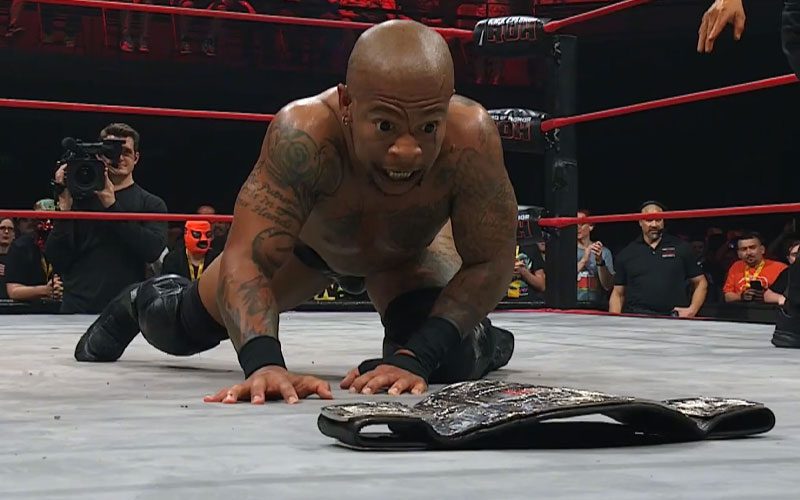
Lio Rush impact and availability concerns
Lio Rush remains a high-variance asset on the independent circuit. Recent reports from Wrestling Open confirm his ongoing active status, yet the demands of his schedule raise questions about physical sustainability. While Rush continues to showcase high-velocity maneuvers that define his aerial repertoire, the toll of this pace is a recurring baseline for medical scrutiny in the industry.
We examine the broader implications of his current usage rate. When a performer centers their identity on speed and technical precision, the margin for error narrows. The constant travel between promotions—like his recent engagement with Wrestling Open—functions as a stress test for recovery windows. Critics argue that promoters prioritize the immediate draw of his name over the long-term joint health inherent in his bump-heavy style.
Historical context and injury patterns
The history of high-flyers who rely on explosive movement is littered with soft-tissue setbacks. We have seen performers maintain this velocity for years, but the accumulation of minor ligament strain often leads to a sudden, sideline-altering event. Wrestling medicine has evolved, yet the inherent nature of the athletic craft remains unforgiving.
Unlike stable, major-promotion athletes, independent performers often lack the same layer of preventative care infrastructure. This creates a vacuum in maintenance. If a minor tear or inflammation occurs during a weekend loop, the standard procedure is often to work through it until a hard stop becomes unavoidable. This cycle of compensation injuries is an open secret among trainers.
Strategic implications for the division
Promoters rely on Rush to elevate cards through sheer work rate. When he is absent, mid-card structures often collapse because the pace of the show drops significantly. This dependency is dangerous for any organization. If he were to face an extended absence, the programming void would be substantial.
The current scheduling model is optimized for visibility but poor for physiological longevity. We are seeing a shift where talent is pushing for shorter, high-impact windows to preserve their careers. Rush represents the classic dilemma: stay active to stay relevant, or scale back to stay healthy. His performance at current bookings suggests he is choosing the former, despite the evident risk.
Critical clinical observation
There is a glaring lack of transparency regarding pre-match conditioning for high-tempo performers on the independent circuit. Medical professionals in sports diagnostics often point to the high frequency of matches as a primary factor in the degradation of ankle and knee stability. The industry needs to address the frequency of these bookings.
Matches involving personnel with high-octane styles should ideally be spaced by 72-hour recovery windows at minimum. Current booking trends routinely ignore this threshold. Until promoters recognize that the physical cost of a high-speed match creates an effective 48-hour recovery requirement, we will continue to see avoidable fatigue-related injuries sidelining top-tier athletes.
The upcoming event horizon
As we approach May 24, 2026, and the upcoming slate of high-profile events, observers are watching the health of the entire field. The physical preparation for these dates is notoriously intense. Any underlying, unaddressed inflammation from current bookings could be the factor that renders a performer unable to participate in marquee matchups.
The business model necessitates a delicate balance. If a performer is pushed beyond their threshold this close to a major weekend, the potential for a catastrophic setback is elevated. Industry stakeholders are watching the metrics closely. Without a change in logistical planning, we are looking at a cycle where injury announcements become as frequent as match announcements.
Ultimately, the burden of health falls on both the talent and the booking agents. The history of this business shows that those who prioritize recovery alongside development are the ones who achieve long-term career viability. Those who burn the candle at both ends rarely last beyond their mid-thirties.