Pull Up a Stool and Let's Talk Locker Room Debt
Pull up a stool, grab a cold draft, and let us talk about how the wrestling business actually works behind the curtain.
While the rest of the internet is obsessing over AEW Double or Nothing tomorrow night, or arguing about the UCL Final in five days, I was busy scrolling through old podcast transcripts.
Forget the corporate press releases and the suits talking about media rights deals or brand extension nonsense. The real currency in professional wrestling is locker room debt.
It is the quiet understanding that if you do a favor for someone today, they will pay you back down the road when the spotlight is bright and the paychecks are fat.
We just got a beautiful reminder of this from AEW star Paul Wight, the man once known as the Big Show. Speaking on the High Performance podcast, Wight dropped some gold about his legendary triple threat match at WrestleMania 25.
As Wight recalled on the High Performance podcast, his spot on that massive card was not booked by a creative team in a boardroom. It was born out of John Cena remembering a favor from five years prior.
But because this is the wrestling business, that favor came with a hilarious, spine-crushing catch. Cena wanted to lift both Wight and Edge on his shoulders at the same time, and he told the giant to start skipping dessert.
The Madison Square Garden Debt of 2004
To understand why Cena was handing out favors in 2009, you have to go back to WrestleMania 20 in 2004. Madison Square Garden was packed, and the atmosphere was electric.
John Cena was a rising star with a spinner plate on his belt and a rap gimmick that was printing money. Wight was the giant holding the United States Championship, a veteran who could make or break a young kid's career in five minutes.
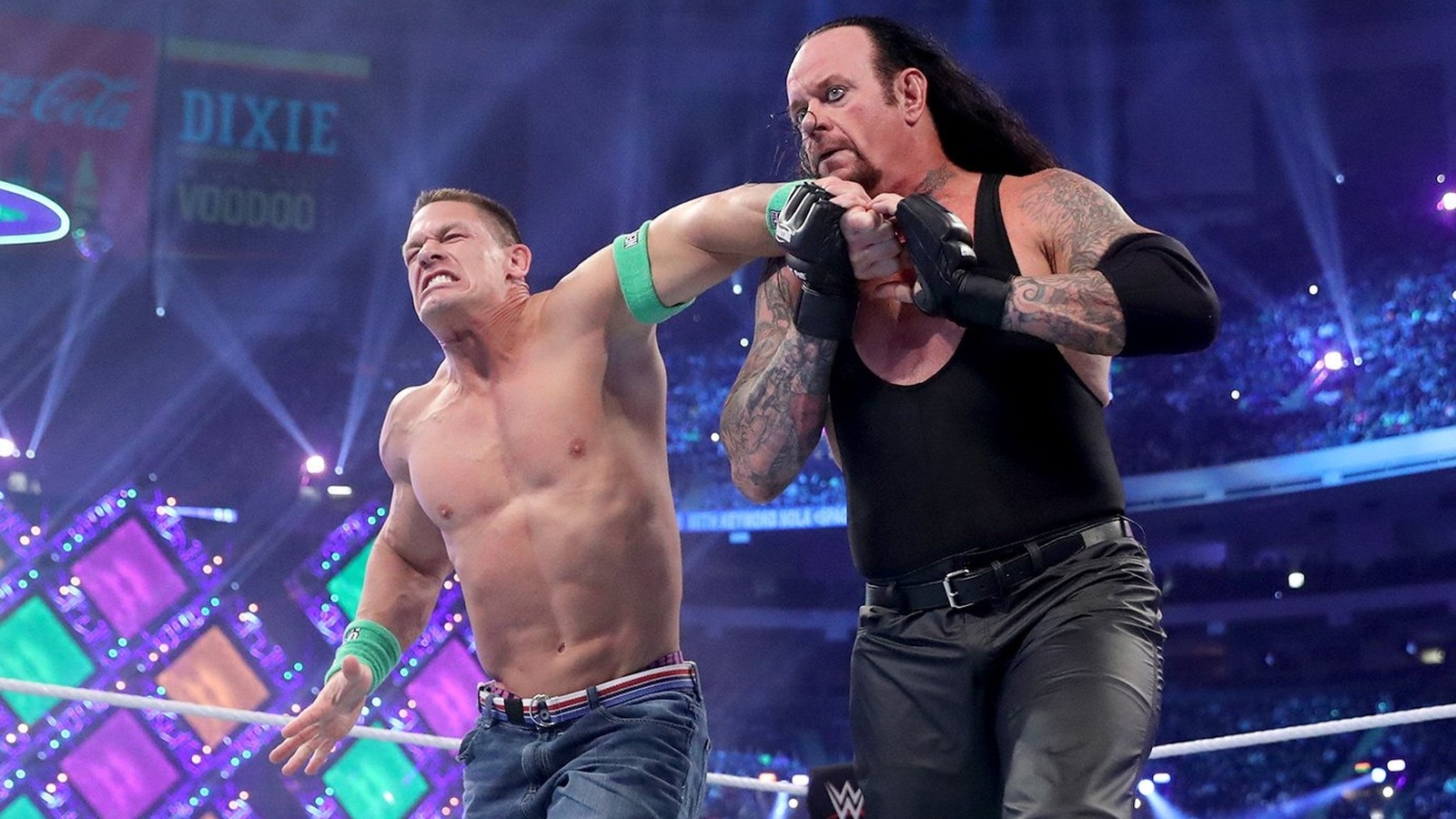
In their clash at WrestleMania 20, Wight did what veterans are supposed to do. He took the loss, ate the FU, and let Cena walk out of the Garden with the gold and a rocket strapped to his back.
That match proved Cena could carry the big guys. Lifting a five-hundred-pound giant in the middle of the ring is the ultimate visual of super-hero strength.
It cemented Cena as the next franchise player of the company. Fast forward five years to 2009, and Cena is the franchise, while Wight is suddenly staring down a WrestleMania card with absolutely nothing to do.
In wrestling, missing WrestleMania is not just a blow to your ego. It is a massive hit to your bank account, the kind that determines whether you buy a new boat or look at your mortgage statement with a cold sweat.
The Bus Ride and the 450-Pound Ultimatum
Locker room legends are built on tour buses, and this story is no exception. Wight saw Cena and basically threw himself at the franchise player's mercy.
According to Wight, he told Cena he did not have an opponent and was pretty good at taking finishes. Wight was essentially offering to put Cena over again just to get on the card.
Cena gave him a nod, and later on the bus, he delivered the good news. He told Wight it was going to be a triple threat match with Edge for the World Heavyweight Championship.
More importantly, Cena wanted to repay the giant for taking care of him at WrestleMania 20. That is locker room respect in its purest form.
blockquote>“I said [to Cena], 'Hey, I don't know if you know, John, but I don't have an opponent for WrestleMania. I'm pretty good at taking finishes, you know, so if you need an opponent.' And he looked at me and smiled and just gave me the nod. We got back on the bus that night to go to the arena. He says, 'Hey, it's going to be me, you, and Edge at WrestleMania. It's going to be a triple threat. And thank you for what you did for me at WrestleMania 20 when you put the US title.' He remembered me, like, that's class”But Cena had one giant condition for the match to work. He wanted to lift both Edge and Wight at the same time for the ultimate WrestleMania visual.
And he told Wight he had to be under 450 pounds for the spot to happen. The reasoning was pure comedy: Edge was already a skinny rockstar who could not lose another ounce, so the weight cut was entirely on the giant.
blockquote>“The only thing he did is, he did break my balls a little bit. He said, 'Listen, I'm going to AA you and Edge at the same time.' He says, 'I need you to be under 450. Can you get under 450 for me 'cause Edge can't lose any more weight?' And I'm like, 'For you? Yes.' And I came in that day at 446. He says, 'Okay, we're good. I can do both of you then.'”Think about the sheer madness of this request. Cena was asking a massive man to drop weight not for health, but to save Cena's own lower lumbar spine.
Wight took it seriously and showed up at 446 pounds on the big day. He starved himself, skipped the late-night diner runs, and hit the cardio just to get Cena's green light.
The Physics, the Circus, and the Big Payday
Let us talk about the math here, because the human body is not designed for this kind of nonsense. Edge weighed around two hundred and forty pounds at the time.
Add a slimmed-down Wight at four hundred and forty-six pounds. You are talking about John Cena trying to lift nearly seven hundred pounds of moving, sweating human flesh on his shoulders.
Wrestling rings are not solid ground; they are bouncy, unstable platforms built on steel beams. One slip, one bad step, and Cena's knees explode like cheap firecrackers.
But Cena has always been a freak of nature in the weight room. His squat sessions are legendary, and his neck looks like a fire hydrant.
Wight knew that if anyone could pull off this trick without paralyzing everyone involved, it was the leader of the Cenation. It was a calculated gamble, a high-stakes stunt designed to be replayed in every video package for twenty years.
Wight did his part, putting his own body through the ringer to make the scale cooperate. He did it for the spot, he did it for the money, and he did it because he trusted Cena with his life.
Let us look at the direct trade-offs Wight had to make during this rapid weight cut:
- Late-night Waffle House orders at two in the morning after a grueling house show.
- The luxury of extra helpings of road food while traveling in rental cars.
- The general comfort of carrying his natural giant size.
Now, let us be completely honest about the match itself. WrestleMania 25 was not a great night for the World Heavyweight Championship.
The entire show is remembered for one thing: Shawn Michaels and The Undertaker putting on a flat-out masterpiece. Everything else on that card was just living in their shadow, and this triple threat was particularly messy.
The build-up was an absolute soap opera disaster. We had a bizarre love triangle involving Vickie Guerrero, who was rolling around in a wheelchair while both Edge and Wight competed for her affection.
It was cheesy, it was bloated, and it took focus away from the actual gold. The match itself only lasted about 14 minutes, which is incredibly short for a world title match at a stadium show.
It felt rushed, chaotic, and over-choreographed. And when the big moment arrived, the physics of the universe finally caught up with John Cena.
He did not actually hit the Attitude Adjustment on both men at the same time. He managed to lift them both up for a brief, terrifying second, but Edge slipped off his shoulders almost immediately.
Cena then dropped Wight with the AA, hit a separate AA on Edge, and pinned the giant to walk out with the big gold belt. The iconic image we all remember is Cena holding both of them up, but the actual execution was a bit of a visual lie.
Despite the messy booking and the failed double-lift, Wight was still incredibly grateful. In the wrestling business, a WrestleMania co-main event spot is the holy grail.
It means your merchandise flies off the shelves, your royalty checks are massive, and your spot on the card is secured for another year. Wight knew that Cena could have easily worked a singles match against Edge and left the giant off the card entirely.
Instead, Cena remembered the debt from WrestleMania 20 and made sure his friend got paid. That is the side of the wrestling business the fans rarely see.
Behind the scripted promos and the fake rivalries, these guys are traveling performers who look out for their own. Wight starving himself to hit that weight limit shows the respect he had for Cena's career and Cena's back.
It is a wild story that shows just how much weird, behind-the-scenes negotiation goes into the matches we see on television. Next time you watch a wrestling match and see a giant take a big bump, remember what it took to get him there.