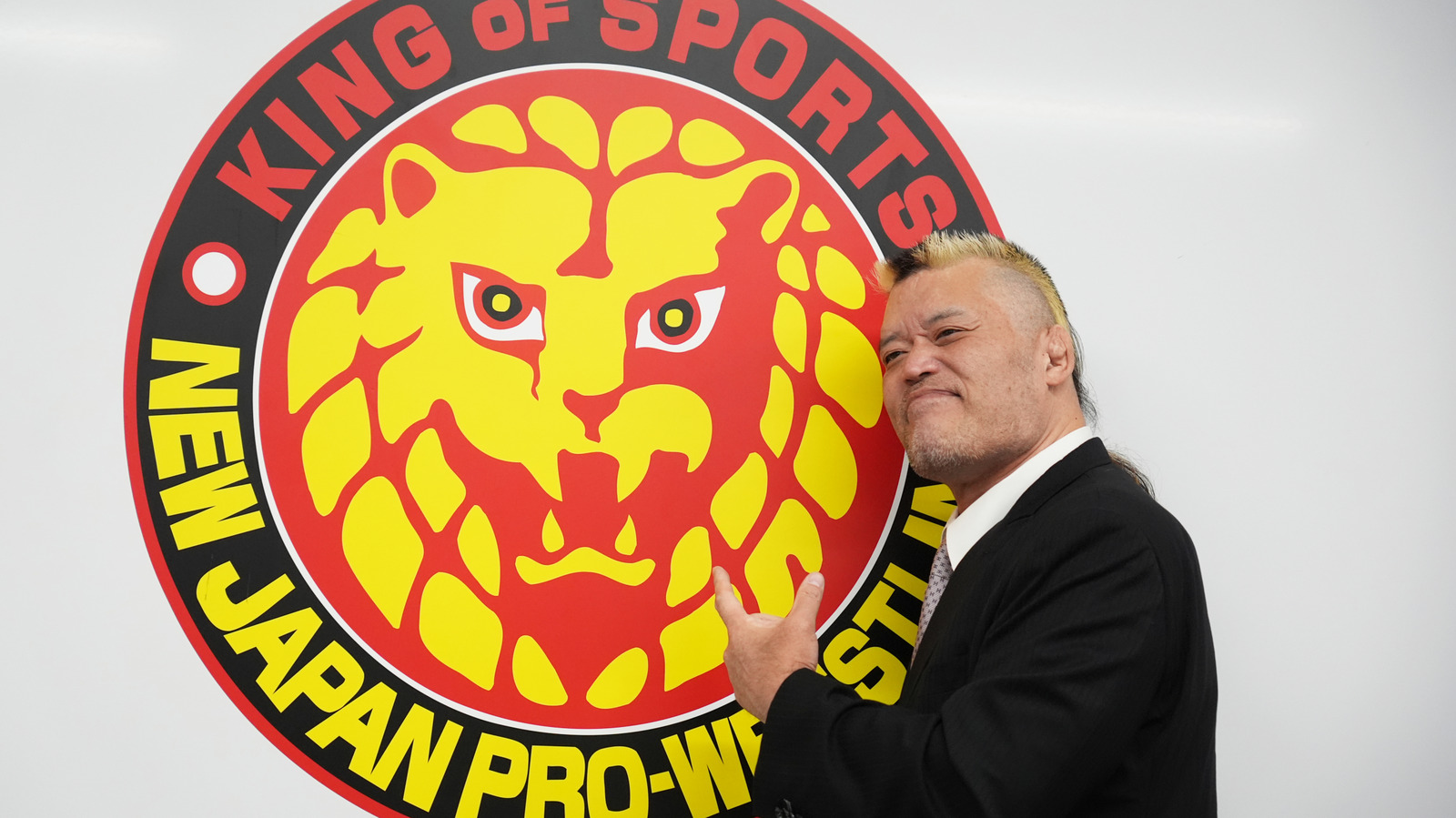
So, the news finally dropped. As Wrestling Inc reported today, NJPW legend Hiroyoshi Tenzan has announced that he will compete in his final career match later this summer, officially hanging up his boots for good.
If you’ve been watching New Japan Pro-Wrestling over the last few years, you probably aren't shocked by this. To be brutally honest, watching Tenzan walk down the ramp lately has been a tough watch. The guy's ankles look like they're held together by athletic tape and pure stubbornness.
His mobility has been shot for the better part of a decade. But hearing that it's officially ending? That still hits hard.
Tenzan isn't just another guy on the roster retiring to become a trainer. He’s the physical embodiment of an entire era of NJPW. He’s a guy who bled for the lion mark during the absolute worst times in the company's history, giving everything he had to a promotion that rarely rewarded him with the booking he actually deserved.
The face of the dark ages and awful booking
You can't talk about Tenzan without talking about the early-to-mid 2000s. The dreaded Inokism era. Antonio Inoki was obsessed with MMA, and he was feeding his pro wrestlers to real-life shooters in PRIDE and K-1.
It was an unmitigated disaster that nearly bankrupted the promotion. But amidst all that chaos, who were the fans cheering for? Tenzan.
He was throwing Mongolian chops like his life depended on it, and the crowds desperately wanted him to be the undisputed top guy. Here is where we need to heavily criticize NJPW's creative direction during that period.
Tenzan won the IWGP Heavyweight Championship four times. On paper, that sounds incredible. But the reality is infuriating.
His total combined days as champion across those four reigns is barely 200 days. He had zero successful title defenses in his first three reigns. Not one.
He would win the belt, the crowd would go insane, and then management would immediately panic and take the belt off him. Usually, they dropped it to an MMA fighter like Bob Sapp or Kazuyuki Fujita.
It was one of the worst booking blunders in the history of Japanese wrestling. They had a white-hot star who was over organically, and they cut his legs out from under him repeatedly just to satisfy Inoki's weird fetish for shoot fights.
And yet, the fans never turned on Tenzan. They loved him because he wrestled with an intensity that made you believe every single strike.
A product of the Dojo and the European excursion
Before he was the snarling, mullet-wearing brawler we all know, he was just Hiroyoshi Yamamoto, a young lion who debuted way back in 1991. The NJPW dojo system was notoriously brutal back then.
You survived by being tougher than everyone else. Like all young lions, he was sent on a learning excursion overseas.
He went to Europe, wrestling for the Catch Wrestling Association in Austria and Germany. That's where the transformation happened.
He adopted the Hiroyoshi Tenzan name, bulked up, and developed that incredibly distinct, menacing aura. When he returned to Japan in 1995, he wasn't a rookie anymore.
He was a made man, quickly aligning himself with Masahiro Chono and Team 2000. He was a revelation. A heavy-hitting heavyweight who moved with terrifying speed.
The undisputed king of the grueling tournament
If there's one place Tenzan was treated like undisputed royalty, it was the G1 Climax.
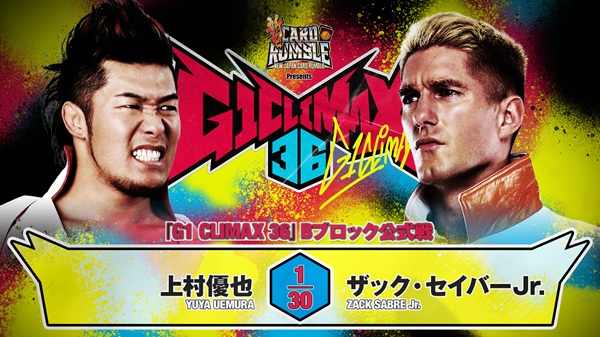
They didn't call him Mr. August for nothing. The man won the most grueling round-robin tournament in pro wrestling three times. Only a handful of guys have ever pulled that off.
Tenzan always seemed to find an extra gear when the summer heat hit, securing tournament victories in:
- 2003 against Jun Akiyama
- 2004 against Hiroshi Tanahashi
- 2006 against Satoshi Kojima
He would endure absolutely brutal punishment, taking stiff shots from guys like Kensuke Sasaki and Yuji Nagata. Somehow, he would fire up with those roaring elbows and headbutts.
The image of Tenzan locking in the Anaconda Vice in the middle of the ring is etched into the brains of anyone who watched puroresu in the 2000s. His face would be contorted in a scream while the crowd went absolutely nuclear.
The submission was legitimate, looking like it could snap a guy's neck at any moment. During the G1, it was practically a death sentence.
TenKoji: A tag team institution
You can't write a retrospective on Tenzan without talking about his other half.
Satoshi Kojima and Hiroyoshi Tenzan. TenKoji. Arguably the greatest tag team in the history of New Japan Pro-Wrestling, and arguably the anchor that kept the tag division afloat for years.
These two guys were magic together. They held the IWGP Tag Team Championships six times as a duo. They won the World Tag League three times.
What made TenKoji work so well was their chemistry. They were both hard-hitting heavyweights, but they had very distinct personalities.
Kojima was the flashy, lariat-throwing machine who loved his bread. Tenzan was the gritty, ferocious street fighter. They complemented each other perfectly.
Even when Kojima left for All Japan Pro Wrestling, their eventual reunion felt like a massive deal. Some of the most emotional moments in Tenzan's later career revolved around his friendship with Kojima.
Back in 2016, Kojima practically surrendered his own G1 Climax spot to Tenzan so he could have one last run in the tournament. That’s the kind of loyalty and storytelling that money can't buy.
The physical toll of strong style
Let's get back to the reality of the situation today. Tenzan is making the absolute right call by retiring this summer.
Wrestling the way he did, for as long as he did, completely breaks a human body. He debuted in 1991.
Think about that. He’s been taking bumps for over three decades.
His neck and back issues are well documented. The fact that he was still taking high-angle suplexes in his late 40s was terrifying for anyone watching.
His movement in the ring had become a sad shadow of what it once was. He went from being a dynamic, agile heavyweight to a guy who had to rely entirely on striking exchanges and crowd psychology just to get through a six-man tag match.
It reached a point where the Mongolian chops—his signature move—became a storyline device. He lost the rights to use them to Great-O-Khan, then eventually got them back.
It was a clever way to mask his physical limitations. They leaned into the nostalgia and the emotion of his signature spots because he literally couldn't do much else.
Seeing him struggle to run the ropes over the past two years has been depressing. Nobody wants to see their heroes moving in slow motion. Retirement isn't a tragedy here; it's a massive relief.
What does the final match look like?
So, he’s wrapping it up later this summer. The big question now is how Gedo and the NJPW booking committee handle the final match.
New Japan usually handles retirements with the utmost respect. We saw it with Jushin Thunder Liger, and we'll undoubtedly see it with Tenzan.
They don't usually do the American thing where the retiring guy gets squashed by a young heel to pass the torch in a humiliating way.
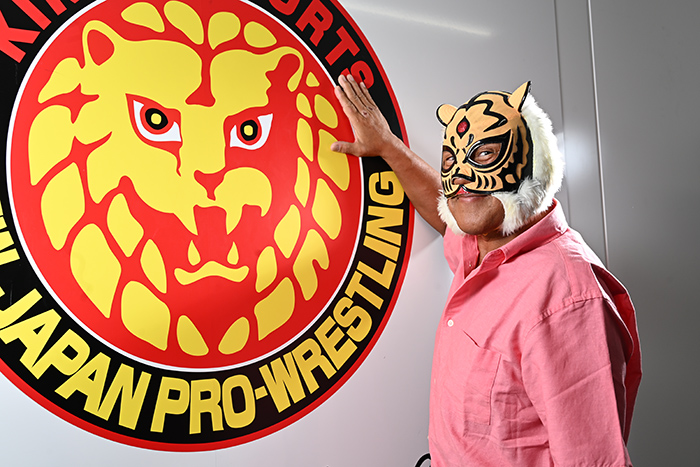
The obvious, and probably safest, route is a massive multi-man tag team match featuring the Third Generation. Put Tenzan in there with Kojima, Nagata, and maybe Tiger Mask.
Let them go up against the young lions or a heel faction like Bullet Club War Dogs or House of Torture. Let Tenzan hit the Mongolian chops one last time.
Let him lock in the Anaconda Vice. Give the crowd the greatest hits and let him stand tall.
Or maybe, just maybe, it's one final singles match against Kojima. That would be brutal, emotional, and a fitting end to a career defined by that partnership.
But given Tenzan's physical state, a tag match protects him and lets him go out on a high note without overexposing his injuries.
A legacy absolutely secured
Whatever happens this summer, Tenzan's legacy is absolutely bulletproof.
He wasn't the slick, modern ace like Hiroshi Tanahashi. He wasn't the global crossover star like Kazuchika Okada or Tetsuya Naito.
He was the workhorse. The guy who held the line when the company was struggling to figure out its own identity and bleeding money.
He gave his body to the business. He gave the fans countless memorable moments. And he did it all with a unique, aggressive charisma that you just can't manufacture in a performance center.
We’ve only got a few months left to appreciate him. The retirement tour is going to be heavy on nostalgia and light on actual work rate, and that’s perfectly fine.
We aren't watching for five-star classics anymore. We're watching to say thank you to a guy who almost killed himself trying to keep NJPW alive.
So when that final bell rings this summer, raise a glass. Throw up a Mongolian chop. Mr. August has more than earned his rest.