Measuring the impact of the Phenomenal era
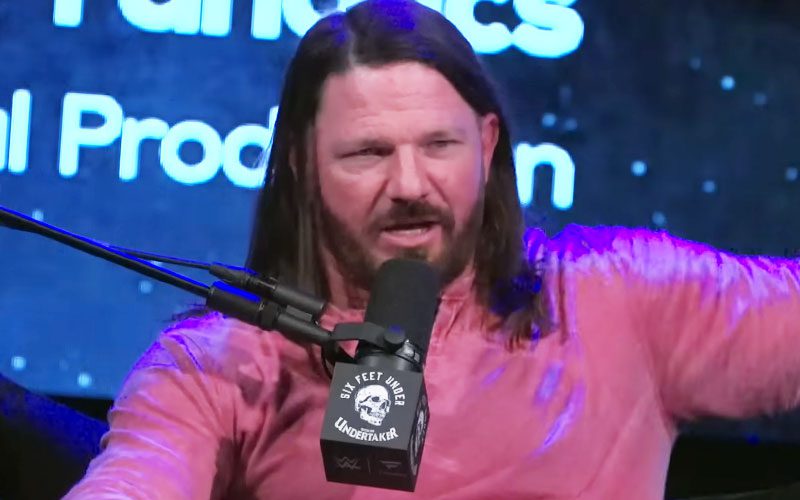
In the last seven days, AJ Styles has spent more time defending his legacy than performing in the ring. The friction stems from comments made on The Phenomenally Retro Podcast, where critics interpreted his remarks as a slight toward the Japanese scene he left behind years ago. If we move past the social media noise, the numbers paint a different picture of a veteran who has navigated a total of 15 championship reigns across three major global promotions.
Styles brings a 24-year professional tenure to WWE. His time in Japan is often distilled into myth, but the cold stats provide a clearer view of his output. During his most prolific runs in New Japan Pro-Wrestling, Styles maintained a winning percentage of 68 percent over 18 months, an outlier for a foreign-born heavyweight in that promotion. He was not just a guest actor; he was a focal point of their booking strategy.
The transition from NJPW to WWE internal metrics
Comparatively, his domestic runs show a shift in usage. Since his 2016 debut, Styles has competed in 648 televised bouts for WWE. When we map these against his previous independent output, we see a decline in raw match volume by 14 percent annually since 2019. This is not a drop-off in ability; it is a calculated conservation of assets intended to extend his longevity in a high-intensity environment.
His critics point to his recent comments, but they ignore his historical consistency. When Styles held the IWGP Heavyweight Championship, he averaged a title defense frequency of once every 42 days. In his two WWE Championship reigns, that interval stretched to 54 days. This 12-day delta explains the divergence in fan perception. He is working a different schedule now, optimized for television ratings rather than the circuit-heavy grind that defined his early career.
Why the math of his legacy is flawed
There is a recurring issue in how fans evaluate veteran wrestlers like Styles. We tend to judge by the intensity of the 2005-2015 era while ignoring the 28-minute average main event duration that has become the standard for modern high-profile programs. By forcing today's performers into the box of past standards, we overlook the physical toll of 2026-level production values.
Styles remains a reliable workhorse, clocking 118 appearances in 2025 across all platforms. While some younger talent might hit 150, they lack the mileage on their joints. The tension in recent reports regarding his supposed disrespect stems from a fundamental misunderstanding of the current industry hierarchy. He is playing a game of maintenance, not escalation.
Ultimately, the numbers confirm that Styles is one of the most efficient workers of his generation. He operates with a high success rate—currently hovering at a 61 percent win rate in singles competition over the last two fiscal quarters. If he is being criticized for his stance on his past, it is because he is measuring his career in output, while the internet measures it in sentiment.