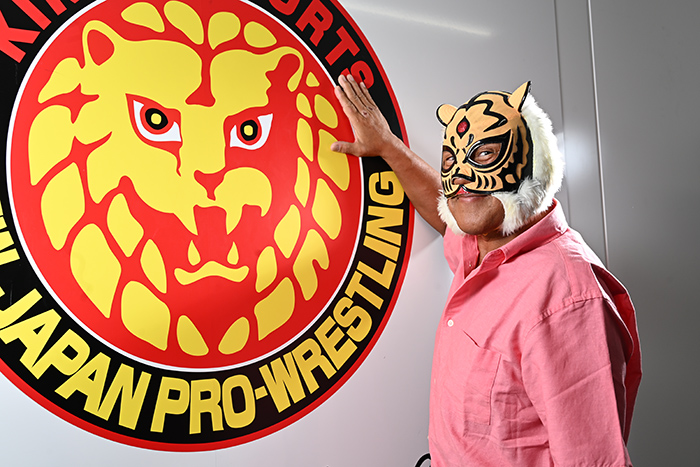
Grab a stool, order a cold one, and let's talk about how the longest-running mascot in professional wrestling history finally decided to put his stripes in the closet. On Tuesday, July 7, 2026, Yoshihiro Yamazaki officially ended his in-ring career. He walked out of Korakuen Hall in Tokyo with his mask still on his face, but his boots are officially hung up.
For a historic 31-year career, this man has been carrying the burden of the Tiger Mask name. That is longer than most modern wrestling fans have been alive. Yamazaki's longevity under the hood is unmatched by any of his predecessors.
Let's be completely honest for a second. Yamazaki's knees probably look like a bag of potato chips that got stepped on by a sumo wrestler. If you have watched New Japan Pro Wrestling in the last ten years, you know his singles matches were rarer than a decent ticket price for a stadium show.
He was mostly relegated to the opening matches, teaming up with young lions or other veterans to absorb the bumps while the young stars got the glory. He looked slow, his kicks lacked the snap they had in 2004, and his role was basically to show up, do a tombstone suplex, and get the crowd to clap.
But yesterday in Tokyo, New Japan pulled out all the stops to give the old tiger one last glorious run. Yamazaki wrestled not one, but two matches in front of a packed, emotional house. Both matches had a strict five-minute time limit, which was a brilliant booking decision because it protected a 55-year-old veteran whose joints are crying out for retirement.
The first match was a time-limit draw against Tommy Billington, who is currently tearing things up in AEW and Ring of Honor. This match was a direct callback to the legendary 1980s rivalry between Yamazaki's mentor, Satoru Sayama, and Tommy's legendary uncle, the Dynamite Kid Tom Billington.
They traded quick submissions, showed off some classic junior heavyweight grappling, and left the fans wanting more. Just as the bell rang to signal the draw, Rocky Romero ran down to the ring dressed as Black Tiger.
Romero reprised the heel gimmick for one night only, attacking both men and setting up the next phase of the drama. Billington didn't let the veteran go down without a fight, hitting Romero with a massive clothesline to help his opponent.
That led right into Tiger Mask taking on Black Tiger in another match that went to a five-minute draw. But Romero, playing the stubborn heel perfectly, demanded five more minutes to settle the score.
Yamazaki accepted, restarted the match, and immediately hit a tiger suplex to grab the victory. To see Rocky Romero hand over the Black Tiger mask after the match was a class act. It showed the deep respect these guys have for the history of the junior division.
If you want to read more details about the card, PWInsider has the full results from the entire event. The atmosphere in Korakuen Hall was electric from the opening bell to the final bell.
A Lineage That Redefined the Junior Heavyweight Division
We cannot talk about Yamazaki's retirement without looking at the massive shadow he wrestled under for three decades. The Tiger Mask name isn't just a gimmick; it is the holy grail of junior heavyweight wrestling.
The original Tiger Mask Satoru Sayama was an absolute alien in the 1980s, doing things in the ring that people had only seen in anime. He was followed by some of the greatest to ever lace up a pair of boots:
- Satoru Sayama: The innovator who started it all and set the gold standard.
- Mitsuharu Misawa: The second iteration who eventually became the king of All Japan Pro Wrestling.
- Koji Kanemoto: The third Tiger Mask who brought a vicious, kick-heavy style to the role.
- Yoshihiro Yamazaki: The fourth mask who became the longest-serving guardian of the legacy.
Yamazaki started his run under the mask in 1995 while working for Michinoku Pro. It took him seven years to finally bring the gimmick to NJPW in 2002. He won the IWGP Junior Heavyweight Championship six times, which is a massive stat when you think about the killers who have held that belt.
He also won the Best of the Super Juniors tournament twice and held the tag titles with Robbie Eagles and Jushin Thunder Liger. According to the retirement report on Wrestling Inc, his 31-year run is the longest tenure under the mask by far.
Let's do some math here. Sayama only wore the mask for a few years before quitting. Misawa transitioned to his real name quickly. Kanemoto did the same.
Yamazaki was the only one who stayed committed to the character for his entire adult life. He became the face of NJPW's junior division stability during the dark years of the early 2000s when Antonio Inoki was trying to turn the company into an MMA circus. He was the anchor, even if he was never the main event draw that Misawa was.
The Mentor's Blessing and the Locker Room Salute
The retirement ceremony itself was a tear-jerker for any old-school fan. The entire roster came down to the ring, but the real highlight was the appearance of Satoru Sayama. Sayama, who has been dealing with serious health issues for years, showed up wearing his own mask.
Yamazaki asked his mentor for one final lock-up, and the two legends locked horns in the middle of the ring before embracing. It was a simple, quiet moment carrying more weight than any five-star classic.
Jushin Thunder Liger was on the commentary table, probably holding back tears himself. Kero Tanaka, the legendary ring announcer whose voice is synonymous with classic NJPW, returned to announce Tiger Mask one last time.
Tatsunori Hara, a legend of Japanese baseball, even made an appearance to show respect. It was a star-studded crowd for a guy who was never the biggest star, but who was always the most reliable soldier in the locker room.
Yamazaki gave a heartfelt speech, thanking the fans and telling them that the future of NJPW is safe with the younger generation. He won't be leaving the company entirely, as he is set to work as a trainer in the dojo.
Having a veteran with three decades of experience teaching the young lions how to work is a massive win for New Japan. As the F4WOnline breakdown explains, he will remain a vital part of NJPW's developmental system.
The Big Question: Is There a Tiger Mask V?
With Yamazaki stepping away, the biggest question in Japanese wrestling is whether NJPW will crown a fifth Tiger Mask. Commentator Chris Charlton pointed out during the broadcast that it is still undetermined whether the lineage will continue. Honestly, they should let it rest.
In a world where wrestling is more athletic and exposed than ever, trying to put a young guy under that mask is a recipe for disaster. The expectations are too high, and the comparison to Yamazaki's longevity and Sayama's innovation is a career-killer.
If they do decide to name a successor, who could it even be? Putting a guy like Master Wato under the mask would feel like a cheap toy commercial.
The gimmick belongs to a different era, and Yamazaki was the perfect bridge to keep that history alive. Now that the bridge is retired, NJPW should leave the mask in the trophy case.
Let the legend of the fourth tiger stand as the final chapter of a great story. We are looking at a changing of the guard in Japan.
With Yamazaki retiring and other legends slowing down, the junior division needs to find its new identity. But for one night in Tokyo, none of that mattered. Yamazaki got his flowers, hit his tiger suplex, and walked out a winner.
That is about as perfect an ending as you can ask for in this crazy business. He gave everything to the industry, and the industry gave him a beautiful send-off on July 7, 2026.