The architecture of a sprint
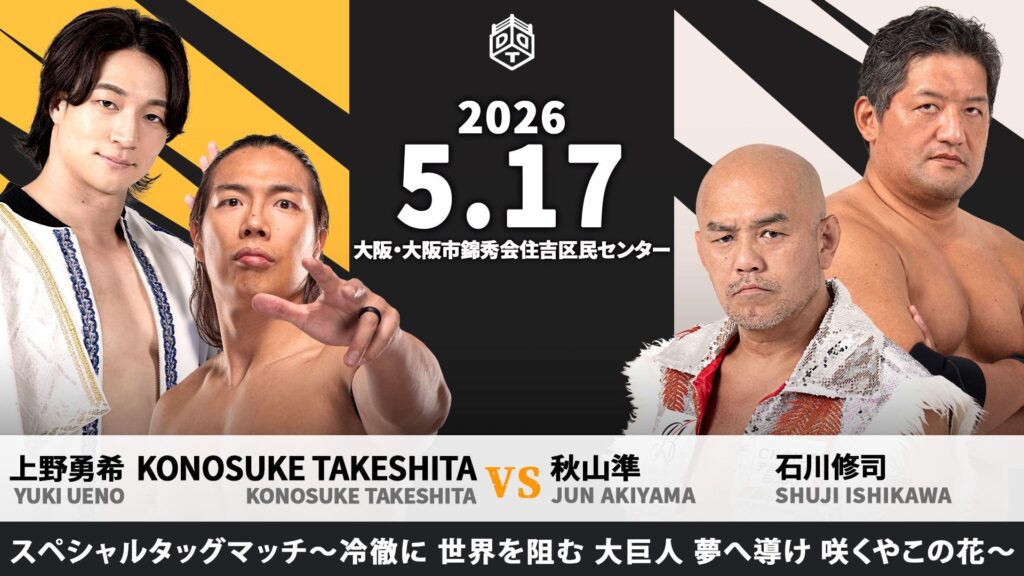
The Sumiyoshi Community Center is not the Tokyo Dome. It is an intimate, sweat-drenched room in Osaka where the echoes of chops bounce off flat walls.
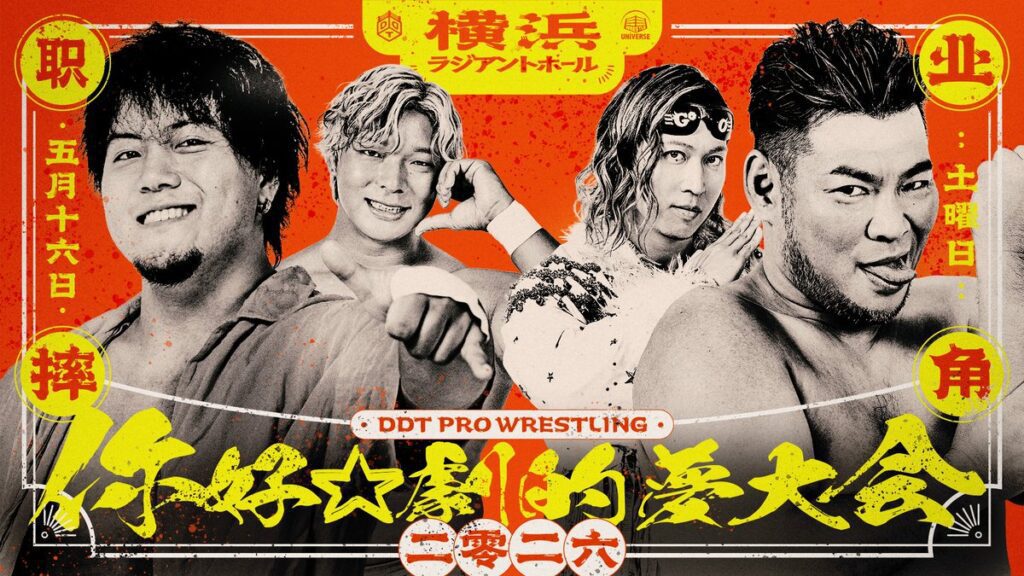
On Sunday, DDT Pro-Wrestling brought their thirteenth installment of Dramatic Dreams to this exact building. Most international eyes are currently fixed on AEW's impending Double or Nothing pay-per-view this weekend. Ignoring the domestic Japanese undercard, however, is a fatal flaw for any serious analyst.
The pre-show featured a seemingly disposable six-man tag team match. It was anything but.
Takahiro Hirakimoto, Sora Fujikawa, and Koki Fujimoto took exactly nine minutes and four seconds to dismantle Tetsuya Goto, Masaya Ishikawa, and Hinata Kasai. Let us talk about that runtime.
Nine minutes for a six-man tag on a pre-show is an aggressive sprint. It leaves zero room for the meandering, rest-hold heavy sequences that plague modern wrestling. Every transition had to mean something. Every tag had to serve the finish.
In a standard twenty-minute tag match, the first five minutes are dedicated to chain wrestling and establishing the dynamic. In a sub-ten minute sprint, that luxury is completely gone. You are immediately thrust into the high-spot sequence.
The fact that these six men were able to keep up with the frenetic pace speaks volumes about their cardiovascular conditioning. The modern DDT undercard is being drilled relentlessly.
But let us not pretend the execution was flawless.
Goto looked visibly gassed around the six-minute mark. There was a noticeable delay during a double-team sequence where Ishikawa had to audibly call the spot to get Goto back into position.
These are the growing pains of young talent being pushed to work at a television-ready pace. It is a harsh criticism, but an absolutely necessary one. If you are going to work a sprint, you cannot have dead space. Dead space exposes the choreography and kills the crowd's suspension of disbelief.
The mechanical perfection of the Little Boy
Hirakimoto securing the pinfall over Kasai with the Little Boy was the definitive exclamation point. It was not a sloppy roll-up. It was not a distraction finish. It was a clean, decisive maneuver in the center of the ring.
This matters deeply. DDT has a documented history of muddying the waters in their opening contests. For the last three years, their pre-shows have often devolved into overbooked comedy routines that fail to establish any clear hierarchy among the younger roster members.
For years, fans have had to endure pre-shows featuring inflatable dolls, invisible men, and convoluted slapstick routines. While that has a place in DDT's DNA, it completely derails the development of actual professional wrestlers.
You cannot teach a trainee how to pace a main event by having them wrestle a ladder. The shift to a hard-hitting, nine-minute trios match signals that the front office is finally taking roster development seriously. Sunday felt like a deliberate course correction.
Let us break down the tactical implications of the Little Boy being used to close out a match of this pace. It requires a significant exertion of core strength, especially after running the ropes at a high clip for nearly ten minutes.
Taking the pin via the Little Boy is not a career death sentence for Kasai. He bumped beautifully for the finish, folding in half to ensure the impact looked devastating on camera. The art of taking a finish is just as vital as the art of executing one.
Kasai made Hirakimoto look like a killer. In the long run, promotions remember the guys who are willing to make the product look good at their own expense. Kasai will get his wins back eventually, but his primary job on Sunday was to be the anvil. He played the role perfectly.
Tactical spacing and spatial awareness
The isolation of Kasai in the final sequence was clearly by design. Hirakimoto and his partners systematically cut off the ring.
If you watch the tape from Osaka, notice the spacing. Fujikawa and Fujimoto did not just stand on the apron cheering. They actively blocked Goto and Ishikawa from entering the ring during the final sequence.
Look at the geometry of the ring during the 8:45 mark of the match. As Hirakimoto sets up the Little Boy, Fujikawa cuts a sharp angle to the opposite turnbuckle. He does not run directly at Goto; he takes an intercepting angle that completely neutralizes any potential break-up attempt.
This is spatial awareness that usually takes years to develop. It is the difference between a sloppy indie spot-fest and a professional wrestling match. They treated the ring like a chessboard, and they achieved checkmate in nine minutes.
Economic realities forcing a youth movement
We must also look at the broader context of the Japanese independent scene in May 2026. The yen is weak, and foreign talent is expensive. Domestic promotions are being forced to rely on their homegrown trainees more than ever before.
This economic reality is reshaping the in-ring product. You cannot hide a lack of depth behind a pricey import. You have to put your own guys in the ring and pray they swim.
Hirakimoto is swimming. His finishing maneuver is a perfect encapsulation of this survivalist mentality. It is not a flashy, multi-rotational dive that risks catastrophic injury.
It is a high-impact, reliable match-ender that can be hit on opponents of varying sizes. When you are fighting your way up the card, your finisher needs to be versatile. You cannot rely on a move that only works on guys under two hundred pounds.
DDT's Dramatic Dreams series has always been a strange beast. Held in Osaka, the crowd is notoriously demanding. They do not react to standard Tokyo-style pandering. You have to hit hard, and you have to move fast.
The pre-show is particularly difficult in Osaka because the crowd is still filtering in. Engaging a half-full, distracted room requires a level of raw aggression that cannot be taught in a dojo. Fujimoto and Fujikawa deserve immense credit here as well.
While Hirakimoto got the pin, the foundational work was laid by Fujimoto's stiff strikes in the opening minutes. He set the tone. He let the Osaka crowd know that this was not going to be a comedy match.
Projecting the summer schedule
So, what does this mean moving forward? The Japanese summer scheduling block is notoriously grueling. DDT will need fresh legs to anchor the middle of their cards.
Hirakimoto is demonstrating the exact kind of high-impact, low-wasted-motion style that translates well to singles competition. I am projecting a clear shift in his booking over the next three months.
The prediction here is not that Hirakimoto is suddenly going to challenge for the KO-D Openweight Championship next week. That is fantasy booking nonsense. The prediction is that he will be entered into a prominent midcard tournament or title picture by August.
He has outgrown the pre-show. The sprint against Kasai was his graduation test, and he passed it cleanly.
Contrast this with the current mess in the upper midcard, where veteran talent continues to trade wins in exhausting slogs. DDT needs a jolt of urgency. The Fujikawa-Fujimoto-Hirakimoto trio operates with that exact urgency.
If management fails to capitalize on this momentum, it will be a gross dereliction of duty. We have seen this pattern before. A young talent shows flashes of brilliance, the crowd catches on, and management either pulls the trigger or misses the window entirely.
The window for Hirakimoto is opening right now. Watch his footwork during the initial tie-ups. He does not waste steps. Every movement is calculated to force his opponent toward his own corner.
This is veteran ring awareness from a guy still fighting on the pre-show. It is the kind of subtle tactical advantage that wins matches before the first strike is even thrown. Management is clearly testing him, and the promotion will be better for it.