The 'pray for Rebel' angle highlights AEW's ongoing manager problem
The breakdown of the broadcast
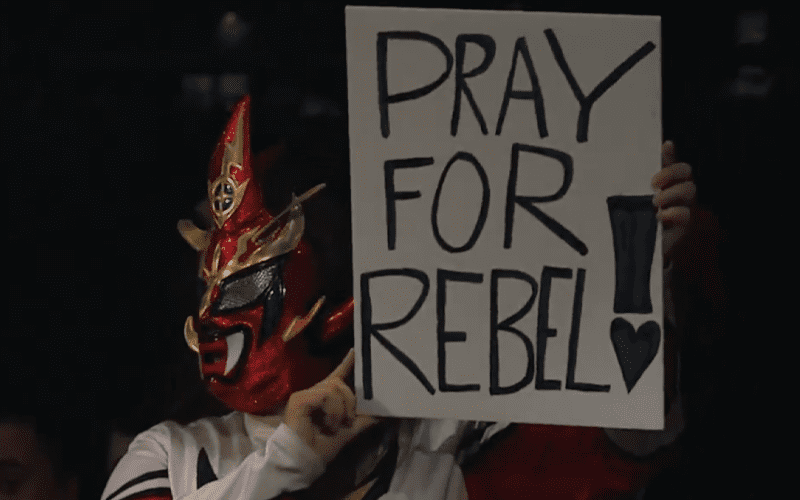
The broadcast of AEW Collision on May 2 took a sudden, jarring detour from its usual breakneck formatting. A direct request for fans to "pray for Rebel" filtered through the programming. It instantly shifted the mood of the Saturday night show. AEW is usually a promotion that runs at maximum velocity, sprinting from one high-impact sequence to the next without leaving room for oxygen.
Pausing the machinery to focus on the wellbeing of a supporting character is exceedingly rare. Whether this was a dramatic angle to write her off television or a genuine moment of concern, it forces us to examine exactly what role Rebel plays in the structural framing of AEW's women's division. For years, Tanea Brooks has operated as the ultimate tactical shield. Initially introduced as Dr. Britt Baker's makeup artist, her character evolved into a human barricade designed to absorb punishment.
She is a manager who takes the bumps the primary talent cannot afford to take during the long build to pay-per-views. As we approach Double or Nothing on May 24, removing a piece from the board changes the geometry of every match her stablemates are involved in. Let us look at the bare mechanics of the ringside second. In modern professional wrestling, the manager is rarely just a mouthpiece; they are an active, physical participant in the pacing of the match itself.
The geometry of the ringside distraction
When a babyface builds momentum, the manager's primary job is to break the visual focus of the referee. AEW has struggled immensely with the internal logic of this trope since the company's inception. Too often, the distraction spots feel aggressively choreographed rather than organic. A referee will wander over to the apron, turning their back on the center of the ring for an absurdly long window.
This allows the heel to recover, deploy a weapon, and completely reset the match state. Rebel has been the primary operator of this sequence for the better part of three years. Her absence leaves a massive tactical void that cannot be easily filled. You cannot simply slot another body into that role on the outside and expect the timing to remain consistent.
Rebel understands the spatial requirements of an AEW ring perfectly. She knows exactly when to slide a crutch into the corner out of the referee's sightline. She knows how to position herself to block a suicide dive without making the diving wrestler look foolish. These are micro-skills that go completely unnoticed by the casual viewer, but they dictate the absolute flow of a 15-minute television bout.
When you remove the designated interference runner, the heel has to find a new way to transition out of the babyface's shine. This is exactly where Tony Khan's booking often falls flat. Without a manager to rely on, heels are forced to use lazy eye pokes or heavily contrived referee bumps. The structural integrity of the match begins to fray almost immediately.
The official's cone of vision
Consider the visual field of the referee during a standard AEW broadcast. When an official like Paul Turner or Aubrey Edwards is officiating, their cone of vision is naturally restricted by the physical dimensions of the squared circle. AEW's tag rules already blur the lines of legality with an overly generous 10-second count on double-teams, which stretches the official's attention thin.
Add an active manager to this equation, and the referee's visual field is entirely compromised. The manager operates strictly in the blind spot. If you map the spatial flow of an AEW television bout, you will notice a distinct pattern. Rebel rarely approaches the hard cam side of the ring; she almost exclusively operates on the apron near the timekeeper's table.
This is a deliberate tactical choice by the performers. It forces the referee to turn his back to the majority of the arena, placing the heel out of his direct sightline but perfectly framed for the television audience at home. It is a classic piece of wrestling geometry. But AEW abuses it to the point of absurdity.
When a division runs this exact spatial manipulation three times on a single two-hour broadcast, it ceases to be a clever heel tactic. It becomes an administrative failure by the fictional promotion. In a sport that relies heavily on the illusion of competitive integrity, the persistent, unpunished outside interference completely destroys the suspension of disbelief. It reduces serious combatants to supporting actors in a comedy routine.
The picture-in-picture pacing trap
We must also look at how managers are used to navigate television commercial breaks. AEW relies heavily on the picture-in-picture format to maintain viewership during ad blocks. Historically, the transition into this commercial break is triggered by a massive outside spot. Often, it is the manager executing a distraction that sends the babyface tumbling forcefully to the arena floor.
The heel poses in the ring, the referee begins a slow count, and the broadcast fades to a split screen. Rebel was a master of this exact transition. Her timing was impeccable. She knew exactly when to trip the running babyface to initiate the network ad break. But from a purely analytical standpoint, this creates a predictable, tedious rhythm that ruins viewer engagement.
If the audience knows that the 8-minute mark of the match will always feature a manager distraction leading into a commercial, they simply stop investing in the opening sequences. They know intuitively that nothing consequential will happen before the break. The match is effectively running on autopilot until the full broadcast returns.
By enforcing this rigid commercial structure, the promotion is actively training its audience to ignore the first half of every television match. Removing the manager forces a drastic, necessary change in this formatting. Without an external distraction, the heel must find an organic, in-ring method to gain control before the network cuts away.
Perhaps they counter a high-risk dive with a stiff mid-air strike. Perhaps they catch the babyface in a sudden, brutal submission hold that grounds the action. These are active, athletic decisions. They reinforce the core idea that the wrestlers are dangerous competitors capable of ending the match at any second, rather than actors waiting for a cue.
Tactical isolation ahead of Double or Nothing
The May 2 announcement on Collision felt incredibly heavy. It immediately derailed the pacing of the surrounding segments. You cannot transition from a sincere plea for a talent's wellbeing directly into a scripted, aggressive promo about a championship match without the structural seams showing.
This is a glaring flaw in the show's formatting. The rundown lacks connective tissue. When something real bleeds into the broadcast, the rigid, pre-planned structure completely breaks down. The commentary team struggles to bridge the massive gap between human empathy and their required corporate enthusiasm.
This tonal clash is highly problematic as we head into the final weeks before Double or Nothing. We are exactly three weeks away from May 24. The narrative threads for Las Vegas are already being pulled tight. If Britt Baker or any associated talent is marching into a pay-per-view scenario, they need to do it without the comfortable safety net of outside interference.
They need to prove they can dictate the tempo of a major match strictly between the ropes. This means a heavier reliance on legitimate chain wrestling to control the opening sequences. It means using the ring posts and the apron for actual tactical advantages, rather than just staging areas for a cheap distraction.
The absolute best heel work is built on cutting off the ring. You systematically isolate the opponent in your corner. You attack a specific limb to ground a high-flyer and eliminate their vertical advantage. You do not need a manager standing on the steel steps waving their arms to generate heat in 2026. True heat comes from positional dominance and malicious, targeted intent.
The mandatory recalibration
AEW has the roster depth to execute this flawlessly. The talent pool is deep enough to move completely past the crutch of 1980s manager tropes. Removing the manager from the equation is the quickest, most effective way to test a wrestler's actual ring IQ. Can you pace a 20-minute pay-per-view match without someone feeding you spots from the floor?
Can you read the live crowd and know exactly when to cut off a hope spot without relying on an external, visual cue? The reliance on the ringside second has masked a massive amount of transitional flaws in AEW's midcard for years. Wrestlers constantly use the distraction spot to cover up their stark inability to link offensive sequences naturally.
When you remove the smoke and mirrors of the outside interference, you are left with pure ring positioning. You are left with the raw, unforgiving mechanics of professional wrestling. That is exactly what Collision was originally designed to highlight when the show launched. It was built on the distinct promise of hard-hitting, logical bouts that made absolute sense from bell to bell.
Drifting back toward heavily managed, overbooked finishes was a massive unforced error. The May 2 incident, whatever its underlying reality off-camera, forces a mandatory return to basics. Tony Khan cannot just write around a missing character. He has to change the fundamental way these television matches are laid out.
Let the talent work the mat. Let them figure out how to generate a visceral reaction without relying on a cheap shot behind an oblivious referee's back. If they fail, then they simply are not ready for the main event slot on a premium live event. The prayers for Rebel are, hopefully, answered with positive news. But on-screen, her absence must mark the definitive end of an outdated, lazy booking philosophy.
WWE Elite Collection Series 108 - Solo Sikoa Action Figure
A highly articulated action figure of one of the current Bloodline's top stars.
More Coverage
Tony Khan is fighting on every front and the fans are officially exhausted
22 hours agoAEW All In London 2026 is a masterclass in 'just enough'
1 day, 12 hours ago
AEW Collision in Boston hits the reset button on championship focus
1 day, 14 hours ago
Tony Khan is playing chicken with WWE and the fans are losing
1 day, 17 hours ago
WWE is weaponizing scheduling to suffocate AEW All Out
2 days, 2 hours agoTony Khan is drowning in roster depth while the main event stays stagnant
2 days, 6 hours agoMore Analysis
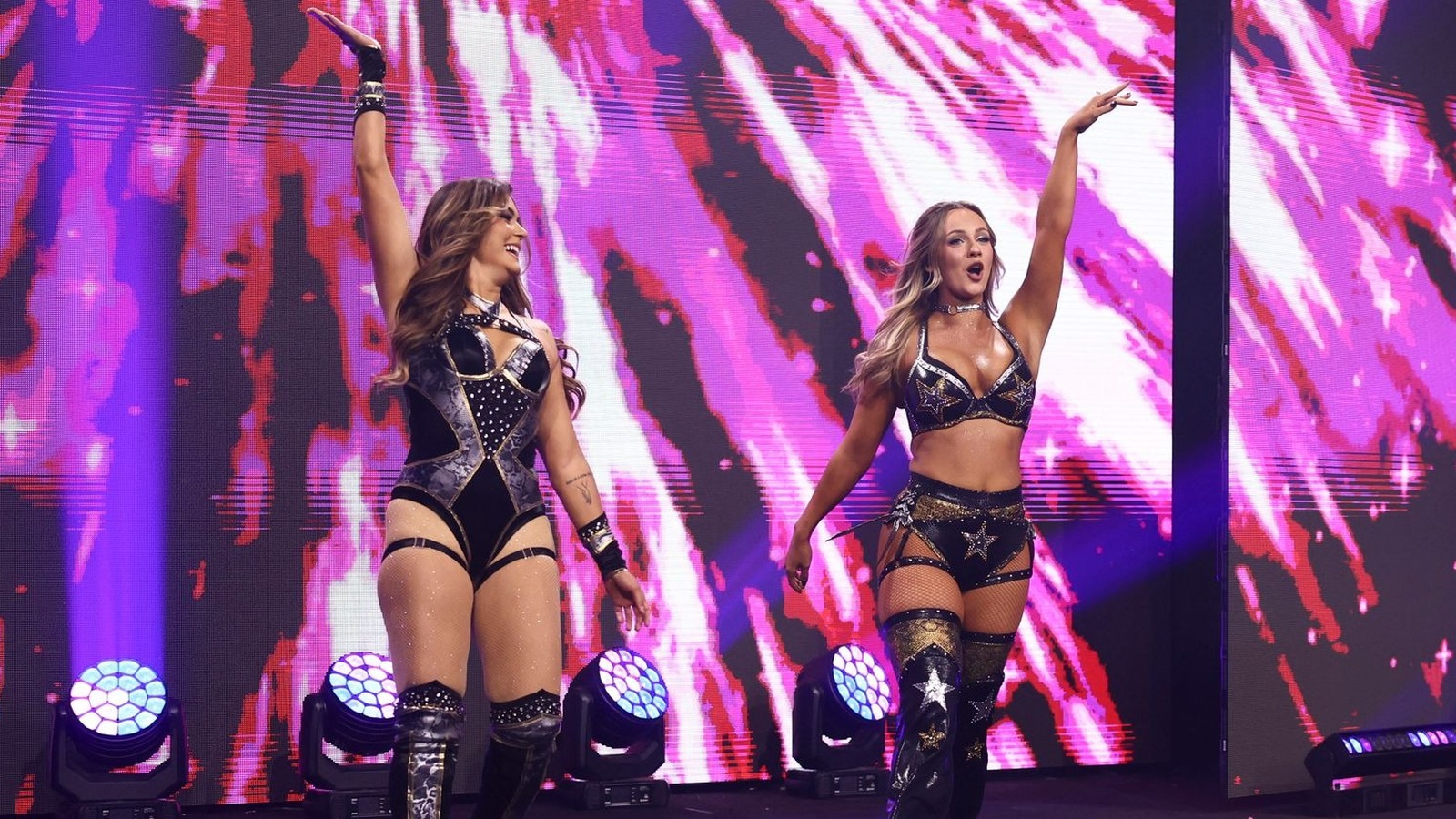
AEW's Collision booking is fraying as travel issues derail plans
1 month, 1 week agoAEW Collision needs a structural identity, not just more highlight reels
1 week ago
The Rebel injury scare on AEW Collision exposes a broken news cycle
2 months, 2 weeks agoAEW Collision is caught in a booking identity crisis
1 week agoAEW Collision hits New Mexico with shaky foundations
3 weeks, 3 days ago