A Glorified House Show
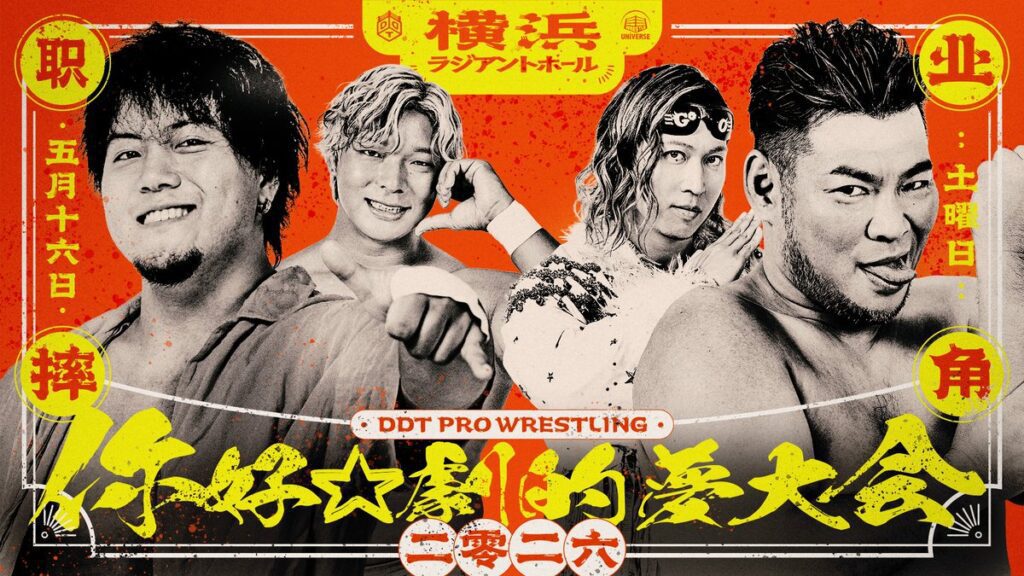
DDT Pro-Wrestling rolled into Yokohama Radiant Hall on Saturday for the Hello Dramatic Dreams Festival. It sounded like a marquee event on paper. In execution, the Wrestle Universe broadcast felt like a glorified house show with a few champions sprinkled in to justify the ticket price.
The main talking point exiting the building wasn't a five-star classic or a shocking betrayal. Instead, the focus was entirely on a perplexing six-man tag team match. It left more questions than answers about the promotion's summer booking strategy.
The bout pitted 6-Man Tag Team Champion Daichi Sato, Universal Champion Kazumi Sumi, and veteran Akito against the powerhouse duo of Naomi Yoshimura and Yukio Naya, who teamed with Miles Karu. As BodySlam.net reported following the event, Sato, Sumi, and Akito picked up the victory. The match ended abruptly via a sudden flash pin that cut the legs out from the closing stretch.
Backstage, the post-match press scrums offered absolutely nothing of substance. No one threw chairs. No one issued blood-curdling challenges for the KO-D Openweight title. It was business as usual, which might be exactly the problem DDT is facing in the middle of 2026.
The Universal Champion's Burden
Let’s start with the winners. Kazumi Sumi holding the Universal Championship should mean something. That belt was designed to be a workhorse title, often carrying the promotion's international visibility.
Booking your Universal Champion in a mid-card-feeling six-man tag on a show labeled a festival is a massive misallocation of resources. Sumi needs high-profile singles defenses to build his reign. Tagging alongside Sato and Akito is fine for getting him on the card, but it does absolutely nothing to elevate his status.
Previous champions like Chris Brookes and MAO made the Universal belt feel chaotic and essential. Every time they stepped in the ring, you felt like the title was in jeopardy or that a wild angle was about to kick off. Sumi is struggling to find that same unhinged gear.
Daichi Sato brings a different dynamic entirely. As a reigning 6-Man Tag Team Champion, these multiman formats are his bread and butter. He looked completely comfortable coordinating with Akito, who remains one of the sharpest in-ring generals under the CyberFight umbrella.
Akito rarely wastes a single motion. Every joint manipulation and strategic tag serves a very specific purpose. He anchored the trio, allowing Sumi to hit his high-impact spots and Sato to keep the pacing brisk.
Mishandling the Monsters
The real story of this match is the criminal mishandling of Yukio Naya. This is my biggest gripe with the current DDT product. Naya is a legitimate super-heavyweight with the size, the scowl, and the striking power to be a terrifying force.
Putting him on the losing end of a six-man tag in front of a modest Yokohama crowd diminishes his aura completely. Even if Miles Karu took the final pinfall, guilt by association hurts monsters. You cannot book a giant to lose in the mid-card and expect the audience to buy him as a major threat next month.
Naya should be running through opponents in two minutes. He should be powerbombing undercard guys through tables and demanding main events. Instead, he spent Saturday trading basic elbow exchanges and standing on the apron waiting for a hot tag.
Naomi Yoshimura finds himself in a similarly frustrating position. When healthy, Yoshimura has the explosiveness of a premier heavyweight. He and Naya teaming up should have been a horrifying prospect for Sato, Sumi, and Akito.
The physical disparity between the two teams was massive. Yet, the match layout completely ignored this size difference. We didn't get a compelling David versus Goliath narrative. We just got a standard professional wrestling match where the smaller guys eventually outmaneuvered the bigger guys.
Predictability and Presentation
Miles Karu served as the connective tissue and the eventual sacrifice. Karu worked hard, bumping generously to make Sumi’s offense look devastating. That is his role, and he executes it well on a nightly basis.
But assembling a team of two massive bruisers and one obvious fall guy creates a predictable match structure. Everyone inside Radiant Hall knew Karu was taking the loss the moment the opening bell rang. That predictable booking strips away the dramatic tension necessary for a compelling closing sequence.
The finish itself was a stark reminder of these structural issues. Sato and Akito isolated the larger men on the floor, allowing Sumi to catch Karu in a sudden flash pin. The match clocked in around the 14-minute mark. A flash pin protects the losers on paper, but it frustrates a live crowd that paid to see a decisive finish.
We also need to talk about the presentation on Wrestle Universe. The platform has been pushing hard for subscriber retention this spring. They need reliable, must-see content. While the event delivered a solid three hours of in-ring action, it severely lacked urgency.
Yokohama Radiant Hall is a notoriously tricky venue to shoot for television. The lighting is often flat. The crowd noise rarely translates well through the broadcast feed unless the fans are at an absolute fever pitch.
On Saturday, the crowd was polite but incredibly reserved. You could hear individual conversations during the rest holds. That sterile atmosphere exposes the mechanical nature of a wrestling match. When the crowd isn't roaring, you notice the setup for every single spot.
The Summer Problem
So where does DDT go from here? We are three days removed from the show, and the frustration online is already brewing. They are approaching the crucial summer stretch, and the build to Wrestle Peter Pan usually starts taking shape by late May.
Look at what is happening elsewhere under the CyberFight umbrella. Pro Wrestling NOAH is running massive, high-stakes angles that feel violently unpredictable. Tokyo Joshi Pro continues to deliver character-driven drama that hooks their core fanbase. In contrast, DDT currently feels like it is operating on autopilot.
They are leaning entirely on their talented roster to carry standard matches, rather than writing compelling television. You cannot rely on in-ring workrate alone when your competitors are throwing fire. DDT built its entire reputation on being the most creatively unhinged promotion in Japan. They need to rediscover that identity.
If Kazumi Sumi is going to walk into the summer as a strong champion, he needs to be detached from these multi-man exhibitions immediately. He needs a clear, dangerous contender. The company needs to give him a microphone and a reason to be angry.
As for the heavyweights, a massive course correction is required before June. If management believes Yukio Naya is a future tentpole star, they need to start protecting him. You can't start and stop a monster push in professional wrestling. It has to be a relentless, violent march to the top of the card.
A loss in Yokohama, even in a tag match, halts whatever momentum Naya was building. It tells the audience that he is just another guy on the roster. In a promotion that desperately needs serious heavyweight contenders, treating Naya like an afterthought is booking malpractice.
Ultimately, the May 16th show was a functional night of wrestling that advanced zero storylines. Daichi Sato gets to boast about another win. Akito gets to count his executive paycheck. Sumi holds onto his belt without breaking a serious sweat.
But as the Wrestle Universe feed faded to black, it was hard to shake the feeling that DDT left money on the table. They have the talent on the roster. They just need the conviction to book them aggressively.