
Brett Mettro's pinfall win proves Wrestling Open is still the ultimate stress test
The Venue As A Filter
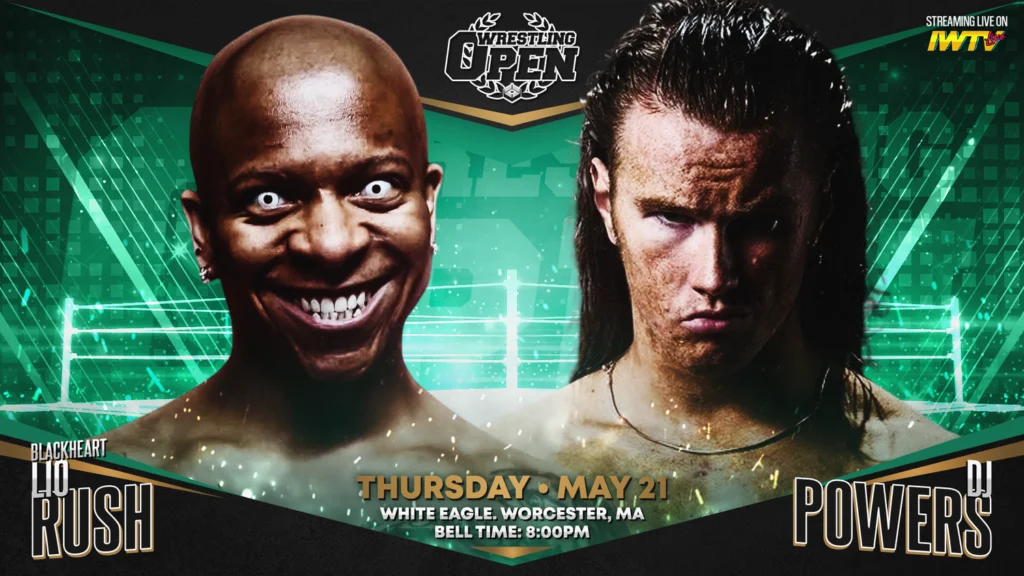
The White Eagle in Worcester, Massachusetts, operates as a high-friction environment. It is the ultimate stress test for independent professional wrestling. You don't get the luxury of heavy production values or forgiving camera angles to mask your mistakes.
The ceiling is low, the acoustics are brutal, and the regulars sitting in the front row are essentially beta-testers who have seen every possible variation of a wristlock. You cannot hide weak fundamentals in this building.
Thursday night's May 21 card, broadcast live from the White Eagle, demonstrated exactly why Wrestling Open is a mandatory stop for talent. The promotion isn't just running shows; it is running a brutal evaluation framework.
From the opening rounds of the women’s championship tournament to the tag team title battle, the entire card functioned as a stress test for the roster's current mechanics. Booking a heavy card in a room like the White Eagle requires absolute precision.
The crowd burns out quickly. If a match runs too long and exceeds its heat capacity, the audience completely checks out. You have to optimize for engagement, and a significant portion of last night's undercard failed to read the room.
The Economics of the Independent Scene
To understand why Wrestling Open matters right now, you have to look at the current market conditions of independent wrestling in 2026. We are operating in a heavily fractured market.
With the major televised companies locking down anyone who can lace a pair of boots, the independent tier has been stripped of its mid-card veterans. Promotions are being forced to build from scratch.
You can no longer rely on a rotating cast of ex-television talent to pop a local rating. You have to manufacture your own stars. This requires a dedicated pipeline, and that pipeline requires constant, high-pressure testing.
The White Eagle provides the perfect pressure cooker. The crowd is ruthless. They are deeply educated on ring mechanics, and they will immediately reject anyone who relies on outdated tropes. You can't just walk into Worcester and run through a rehearsed sequence.
The audience will see right through the input lag. You have to be present, and you have to adapt your pacing in real-time. If you fail, the silence in the building is deafening.
The Structural Flaws in the Tag Division
The battle for the tag team championships was a complete failure of match architecture. We have reached a point on the independent circuit where workers no longer understand the constraints of tag team wrestling.
A successful tag match relies on a strict bottleneck: the legal man rule. That rule isn't just a tradition. It is the core mechanic that generates heat. It forces isolation and builds tension by denying the babyface a clear path to their partner.
Instead, last night's title bout devolved into an unstructured, four-way sprint. The referee lost control of the ring positioning almost immediately. When you remove the constraints, you destroy the scaling laws of the match.
You cannot build to a massive crescendo if everyone is hitting high-impact moves from the opening bell. The legal man rule was completely ignored, meaning the workers were just executing parallel offense with no narrative thread connecting the spots.
It is lazy programming. Sure, the synchronized dives got a cheap pop from the floor, but the match had zero structural integrity. If you want the tag titles to mean anything, the booking committee needs to start enforcing basic rules.
Stop giving us poorly optimized tornado matches and get back to cutting off the ring. The audience is smart enough to handle a slow build.
The Arbitration Problem
There is a glaring issue with rule enforcement across the independent tier, and Thursday night put a spotlight on it. Wrestling matches are governed by an implicit contract between the workers, the referee, and the audience.
When the referee allows a ten-count on the floor to drag out to 45 real-time seconds, that contract is broken. We saw this repeatedly during the undercard. The arbitration logic is entirely inconsistent.
If you want the audience to suspend disbelief, the rules of the simulation have to remain rigid. The moment a referee selectively enforces a rope break or ignores an illegal double-team, the match stops being a contest and becomes a choreographed routine.
Wrestling Open needs to tighten the firmware on its officiating. Give the referees the authority to actually disqualify workers who ignore the five-count. It might ruin one match in the short term, but it will instantly repair the credibility of the entire product.
The crowd at the White Eagle isn't stupid. They understand the difference between a referee missing a spot to build heel heat and a referee simply forgetting to do their job. Right now, too many matches fall into the latter category.
Bootstrapping a Women's Division
Wrestling Open finally initiated the opening rounds of its women's championship tournament. Implementing a title is a necessary protocol upgrade.
You cannot run a credible division on one-off exhibition matches. A tournament forces a hierarchy. It provides clear stakes and gives the audience a measurable way to track progression.
But a tournament also functions as an audit. When you run a multi-person bracket, you immediately expose your depth chart. Thursday’s opening matches revealed a massive variance in performance metrics across the division.
The top-tier competitors clearly understood ring geometry. They chained their offense logically and sold the damage. However, the bottom half of the bracket looked entirely unprepared for the spotlight.
We saw heavily blown spots, terrible spacing, and a complete lack of aggression. The Northeast indie scene is currently suffering from a talent vacuum. Anyone with three years of TV-ready experience is getting scooped up by tier-two contracts.
The resulting talent pool is raw. These opening rounds felt less like a championship pursuit and more like open sparring sessions. If Wrestling Open expects the crowd to care about the finals, the remaining competitors need to significantly increase their work rate.
Look at the data from the last two years. Independent promotions that fail to establish a credible women's title inevitably see their female talent leave. Workers need tape. They need high-stakes matches they can send to scouts.
A random six-woman tag match on the undercard doesn't provide the necessary footage. The tournament bracket solves this, but early iterations are going to look messy until the talent adapts to the pressure.
Lio Rush and Pacing Optimization
The most compelling data point of the night came from Lio Rush stepping into the ring with DJ Powers. Watching Rush operate in 2026 is like watching a senior engineer dismantle poorly written code.
He is no longer relying on raw speed to win over a room. He has optimized his entire moveset for maximum efficiency. DJ Powers is young, hungry, and completely erratic.
From the opening bell, Powers tried to force a high-speed sprint. He was throwing high-energy offense, burning his stamina reserves without establishing any actual ring control.
Powers is essentially a high-end processor with a terrible cooling system. He can run at incredible speeds, but he overheats instantly. Every time he launched into a sequence against Rush, he forgot to establish his base.
Rush simply refused to engage at that frequency. He grounded the match. He dictated the spacing. When Powers tried to accelerate, Rush introduced latency. He would roll out of the ring, stare down a fan in the second row, and burn 30 seconds of clock.
Let's look closer at Rush's movement patterns. When he hit the ropes, he wasn't just building momentum; he was constantly scanning DJ Powers' footwork. Powers has a terrible habit of planting his feet entirely too early when setting up for a counter.
Rush picked up on this immediately. Instead of running into the predictable back body drop or clothesline, Rush would intentionally stutter-step, forcing Powers to commit to empty space. Once Powers was off-balance, Rush would execute a punishing strike to the back of the neck.
This is the difference between running plays and reading the defense. Powers was running plays. He had a sequence of moves loaded up in his head, and he was determined to execute them regardless of where Rush was standing in the ring.
Rush was reading the defense. He processed the variables in real-time and adjusted his outputs accordingly. Until young workers like Powers learn to stop relying on pre-programmed scripts, they will always hit a hard ceiling on the independent scene.
This is exactly why you allocate budget to bring in a veteran like Lio Rush. You don't book him for the short-term ticket sales.
You book him to evaluate DJ Powers. A fifteen-minute match against Rush provides the booker with more actionable data on Powers than a year of him squashing local talent.
Rush forced Powers to work within a heavily constrained environment, testing his ring IQ instead of his vertical leap. Powers survived, but the gap in processing speed was painfully obvious. Rush punished every inefficiency ruthlessly.
Mettro Passes the Ultimate Test
The spotlight match between Cash McGuiness and Brett Mettro was the main takeaway from Thursday. Mettro taking the clean pinfall victory was the only correct output for this feud.
Let’s analyze the mechanics of the finish. The independent circuit has a massive problem with protected finishes. Promoters are terrified of downgrading anyone's stock, so matches constantly end in dusty rollups or outside interference.
It is a terrible strategy that trains the audience to expect zero resolution. Mettro didn't win with a fluke. He won with a clean, definitive pinfall.
When the referee's hand hit the mat for the third time, the fans made genuine noise. The crowd didn't just pop for the move; they popped for the finality of the decision.
The match leading up to that pinfall was an exercise in defensive structure. McGuiness is a blunt-force instrument. His entire offensive package is based on high-impact strikes and heavy corner work.
McGuiness's performance deserves its own technical breakdown. He is operating with a highly specialized, low-complexity moveset. He relies on short-arm clotheslines, European uppercuts, and a suffocating headlock.
In modern wrestling, that kind of minimalism is almost unheard of. Everyone wants to hit a Canadian Destroyer on the apron. McGuiness refuses to cater to that impulse. He understands that a well-placed forearm to the jaw, delivered with genuine velocity, is far more effective than a convoluted flipping piledriver.
But that minimalism requires elite cardio to maintain. Because McGuiness isn't using high-risk moves to create natural pauses in the match, he has to constantly apply pressure. He has to be on top of his opponent every single second.
McGuiness represents an older, unoptimized style of professional wrestling. In a purely technical matchup, his lack of agility would be a massive liability. But in a confined space like the White Eagle, his mass becomes a weapon.
He cuts off the ring organically simply by taking up so much space. Mettro spent the first 8 minutes absorbing the damage, allowing McGuiness to empty his stamina bar.
That constant output creates a massive drain on stamina. By the time he locked up with Mettro for the final sequence, you could visibly see McGuiness's strike velocity drop. Mettro's victory was a direct result of out-processing his opponent's stamina drain.
Mettro’s selling was elite. He didn't just flop around; he actively degraded. He had to calculate exactly when to attempt his comeback, knowing that a single missed strike would result in another beating.
He knew that McGuiness's output would drop sharply in the second half of the match. The moment McGuiness slowed down, Mettro executed a flawless counter-sequence. He hit his spots, spiked his opponent, and secured the pin without hesitation.
This is the exact manufacturing process Wrestling Open is designed for. You take a guy with high upside like Mettro, run him through a brutal physical test against a veteran enforcer like McGuiness, and see if his mechanics hold up under pressure.
On Thursday night, Mettro's execution was flawless. He proved he is ready for a higher load capacity, and the promotion finally has a clear path forward for its main event scene.
Read Next
WWE Cody Rhodes Signature "American Nightmare" Weight Belt Replica
The ultimate fan accessory to complete your American Nightmare look.
Frequently Asked Questions
What is the Wrestling Open?
Why is the White Eagle a stress test for wrestlers?
Who did Brett Mettro defeat at the Wrestling Open?
Why do modern independent promotions have to build stars from scratch?
What structural flaws were exposed in the Wrestling Open tag team match?
More Coverage
Why the Scenic City Invitational is the indie wrestling heart we need
13 hours agoBeyond Wrestling just booked a show for nobody and it somehow worked
14 hours ago
AEW is throwing everything at the wall right now
1 day ago
Why the Wrestling Open Street Fight demands your immediate attention
1 day, 20 hours ago
Lio Rush and the vanity of the new ROH Television title
2 days, 1 hour agoMaple Leaf Pro Wrestling is the fever dream we actually need
3 days, 6 hours agoMore Analysis
Wrestling Open is betting the house on their tournament final
2 months ago
Wrestling Open is proving the indies aren't just surviving, they're thriving
3 months, 4 weeks ago