A brutal end to a grueling battle
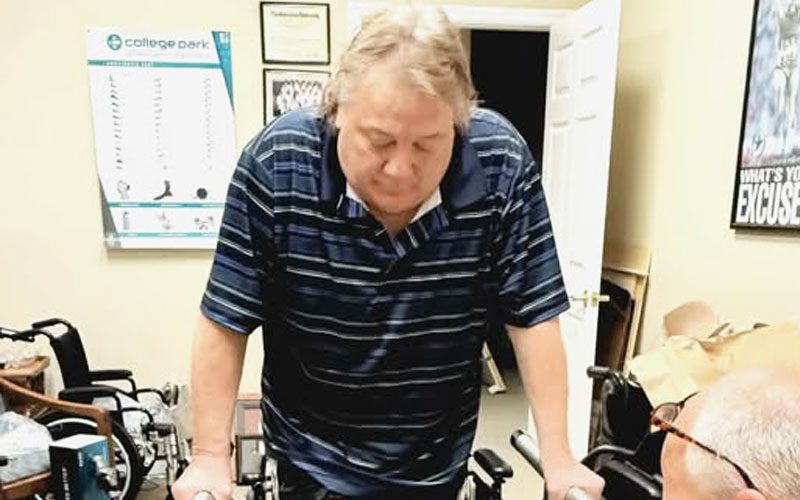
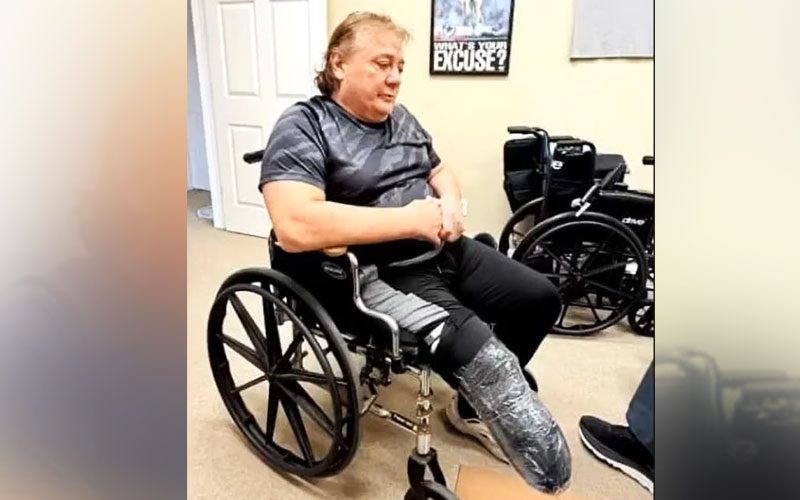
The wrestling world received grim news this week regarding one of its most iconic high-flyers. Former WWE Intercontinental Champion Marty Jannetty has reportedly undergone a foot amputation. The news was brought to light by former wrestler Eddie Mansfield, who shared that Jannetty's years-long fight with sepsis ultimately led to the drastic surgical measure.
For anyone who has followed Jannetty in recent years, this development is heartbreaking, though sadly not entirely surprising. The 64-year-old has been terrifyingly candid about his deteriorating health on social media. His ankles had become severely disfigured over the last decade, essentially rolling inward to the point where he was walking on the sides of his joints.
Jannetty had undergone numerous surgeries attempting to rebuild his severely damaged lower extremities. Unfortunately, infections set in, leading to the prolonged battle with sepsis mentioned in recent reports. When infections settle deep into bone hardware, amputation often becomes the only medical option left to save the patient's life.
"Marty Jannetty’s heartbreaking health battle has taken another devastating turn, as former wrestler Eddie Mansfield revealed that Jannetty ultimately had his foot [amputated]..."
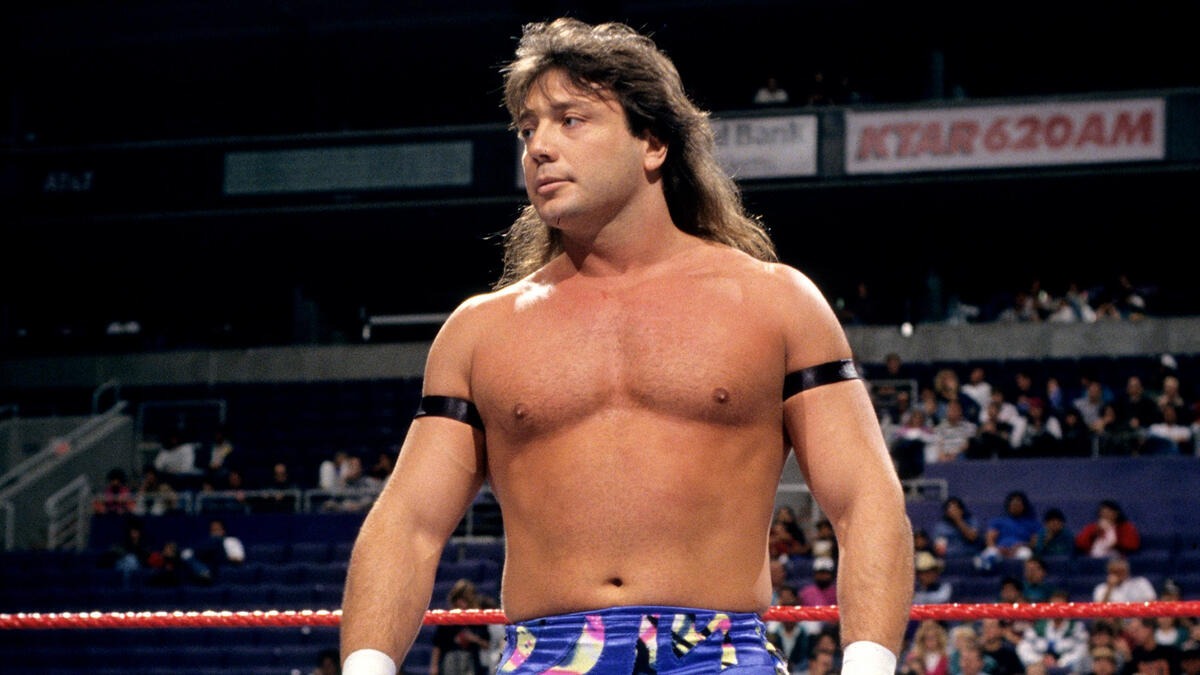
As Ringside News noted, this is just the latest tragedy in a prolonged medical nightmare. To understand how a world-class athlete ends up in this condition, you have to look at the era in which he worked. The Midnight Rockers burst onto the scene in the American Wrestling Association in the mid-1980s. They were working a style that heavily involved top-rope dives, dropkicks, and massive bumps.
The physical toll of the 1980s style
Wrestling rings in the 1980s and 1990s were famously unforgiving. They were essentially wooden planks covered by a thin layer of foam and canvas. Every time Jannetty launched himself from the top turnbuckle and landed on his feet, the impact sent shockwaves directly up his legs.
When The Rockers moved to the World Wrestling Federation, their schedule exploded. They were working over 250 days a year, driving from town to town, and tearing down the house every single night. There was no load management, no rotation, and certainly no state-of-the-art medical team waiting backstage.
The industry standard back then was simple: tape it up, take a pill, and get through the match. This culture of working through pain is the direct cause of the broken bodies we see from that generation today. Jannetty sacrificed his joints for crowd pops in minor market towns, leaving him with permanent, irreversible damage.
You cannot discuss Marty Jannetty without talking about Shawn Michaels. The two men revolutionized tag team wrestling before their famous split in 1991. The Barber Shop window segment remains one of the most famous angles in professional wrestling history.
Michaels threw Jannetty through the glass window, effectively launching his singles run as the Heartbreak Kid. Jannetty was supposed to be his first major rival. Instead, he was fired from the company shortly after due to an incident outside a nightclub.
A career defined by self-sabotage
This set a grim pattern that would define the rest of Jannetty's career. He would return, show flashes of absolute brilliance, and then completely derail his own momentum. His shocking Intercontinental Championship victory over Michaels on Monday Night Raw in 1993 remains a legendary television moment.
The pop from the crowd that night was deafening. Fans legitimately loved Jannetty and wanted to see him succeed. But he lost the title back to Michaels weeks later and was soon gone from the company yet again.
It is entirely fair to point a finger at the wrestling business for destroying Jannetty's body. But any honest assessment of his life must also acknowledge his own self-destructive tendencies. He was notoriously unreliable, battling severe substance abuse issues that ruined every major push he ever received.
Even his biggest supporters eventually grew tired of bailing him out. While Michaels found religion, got sober, and cemented his legacy as one of the greatest ever, Jannetty spiraled. He became an unpredictable figure on the independent circuit, taking bookings long after his body begged him to stop.
His social media presence over the last decade has been a massive source of concern and bizarre controversy. He routinely posted erratic, disturbing messages, including a 2020 post where he seemingly confessed to a decades-old murder. That post prompted an actual police investigation, further destroying what little credibility he had left.
Jannetty later claimed it was a wrestling storyline angle he was working on, but nobody bought it. It was just another sad chapter for a guy who refused to transition into normal life after the spotlight faded. He was desperately clinging to whatever relevance he could generate, even if it meant looking completely unhinged online.
Flashes of brilliance amid the chaos
Despite all the controversies, his in-ring talent was undeniable. When he made a surprise return to WWE in 2005 to team with Michaels against La Resistance, he looked fantastic. A subsequent match against Kurt Angle on SmackDown showed he could still hang with the best in the world.
WWE even offered him a contract after those appearances. True to form, however, a domestic incident resulted in the offer being pulled before he could even start. He was his own worst enemy, snatching defeat from the jaws of victory time and time again.
The physical toll of his specific in-ring style simply caught up with him. He was a small guy who bumped like a madman for bigger opponents. Taking high-impact moves from guys weighing 300 pounds night after night compresses the spine and shatters the ankles.
Modern wrestlers have the benefit of better ring construction and a medical staff that will bench them if they are hurt. Jannetty had none of those safety nets. He worked through the pain because taking a night off meant missing a payday.
When you constantly favor an injured joint, it throws off your entire kinetic chain. Jannetty's bad ankles likely led to bad knees, bad hips, and a bad back. His body was a crumbling foundation, and the chronic sepsis was simply the final straw.
As PWInsider reported, the amputation was a direct result of this ongoing medical crisis. Sepsis is a life-threatening response to infection that can rapidly cause organ failure. It is a brutal condition that leaves doctors with very few choices once it takes hold in the bone.
The true cost of sports entertainment
Eddie Mansfield's revelation brings a harsh reality check to fans who idolized the colorful 1980s stars. The bright neon tights and upbeat theme music hid a dark, grueling reality. These men were engaging in a high-speed demolition derby with their own bodies.
Jannetty's situation is extreme, but he is far from the only wrestler of his era dealing with severe mobility issues. Dynamite Kid spent his final years in a wheelchair. Hulk Hogan has had countless back surgeries. The bill always comes due.
As fans, we consume these matches and quickly move on to the next storyline. We rarely stop to think about how a guy like Marty Jannetty will be functioning thirty years after the final bell rings. This amputation is a stark reminder of the permanent price paid for temporary entertainment.
Hopefully, this surgery ultimately saves his life and provides him with some level of comfort. Living with chronic bone infections is a miserable, painful existence. An amputation, while devastating, might finally clear the persistent sepsis that has ravaged his system.
We have to acknowledge the absolute tragedy of his career arc. He was arguably a better pure athlete than Shawn Michaels in their prime. He hit the ropes faster, his dropkicks were crisper, and his high-flying spots were more innovative.
But raw athleticism only takes you so far in professional wrestling. You need political savvy, reliability, and the mental toughness to handle the grueling schedule. Jannetty lacked those traits, and his career suffered immensely for it.
His legacy is complicated. He is beloved for his time in The Rockers and remembered fondly for his brief flashes of singles glory. But he is equally remembered as a cautionary tale of squandered potential and self-sabotage.
There is genuine sadness in seeing a guy who used to literally fly through the air confined to such a grim medical reality. It is a sobering image. The high-flying pioneer who inspired a generation of smaller wrestlers is now permanently grounded.
Wrestling fans have long debated what could have been if Jannetty had stayed out of trouble in 1992. Perhaps he would have had a multi-year run as a main event player. We will never know, and all that remains is the stark reality of his current medical situation.
The updates from F4WOnline and others confirm the worst fears of those who have been monitoring his health. The photos he previously shared of his ankles were difficult to look at. They showed joints that were completely devoid of cartilage and structurally collapsed.
The human body is simply not designed to do what Marty Jannetty asked of it. Every top rope elbow drop was a gamble. Every missed leap off the top turnbuckle was an injury waiting to happen.
This amputation is the final, brutal receipt for a career built on taking extreme risks. He gave everything to the wrestling business. It gave him fame, money, and eventually, a broken body that betrayed him.
As the wrestling community reacts to this update, the outpouring of sympathy is expected. Fans remember the good times, the incredible matches against the Hart Foundation and the Brain Busters. They remember the neon fringe and the incredible energy he brought to the ring.
We can only hope that this medical intervention stops the sepsis and allows him to find some peace. Jannetty has fought countless battles inside the squared circle. This recovery will undoubtedly be the toughest fight of his entire life.