Eric Bischoff's revisionism and the Pat McAfee warning sign
The Pat McAfee Warning Sign
Eric Bischoff has built a secondary career acting as wrestling’s premier revisionist historian. His latest media tour, however, offers a sharp and accurate critique of modern booking structures. The catalyst is Pat McAfee. Following reports that the former punter abruptly pulled out of a planned WWE storyline, Bischoff immediately went on the offensive.
"No one ever pulled out of a celebrity angle in WCW like Pat McAfee did."
It is a bold claim, but historically, it largely tracks. Bischoff’s WCW tenure was defined by aggressive mainstream integration. Dennis Rodman skipped Chicago Bulls playoff practice to appear on Monday Nitro. Karl Malone worked a pay-per-view main event. Jay Leno main-evented Road Wild. Bischoff secured their commitment through exorbitant payouts and incredibly light physical demands. They were protected assets. They showed up, posed, threw a clothesline, and collected the check.
Bischoff’s strategy peaked at Bash at the Beach 1998. Putting Karl Malone and Dennis Rodman in a tag team main event alongside Diamond Dallas Page and Hulk Hogan drew a massive buyrate. It worked because the match was entirely smoke and mirrors. The professional wrestlers carried the workload, taking the bumps and calling the spots, while the NBA stars hit their designated cues. It was an illusion of competition. WWE today demands actual competition from their guests.
McAfee pulling the ripcord exposes a glaring vulnerability in the TKO-era WWE strategy. Modern WWE relies heavily on outside influencers to drive social metrics. When Logan Paul executes a top-rope splash, the system looks flawless. But building premium live event structures around non-contracted talent carries immense risk. McAfee has a daily ESPN show. He has an independent media empire. If he decides an angle is detrimental to his personal brand, he can walk away without hesitation.
The contracted roster cannot do that. This creates a massive disparity in locker room accountability. When an outside star bails on an angle, the wrestler they were programmed with is suddenly left without a program. With WWE Backlash scheduled for May 9, rapid creative pivots are dangerous. Bischoff is entirely correct about the reliability gap. WCW paid celebrities simply to exist on screen. WWE asks celebrities to be professional wrestlers. That is a vastly different proposition, especially when the creative direction inevitably shifts. And sudden creative shifting is a subject Bischoff understands intimately.
The Mechanics of Corporate Hazing
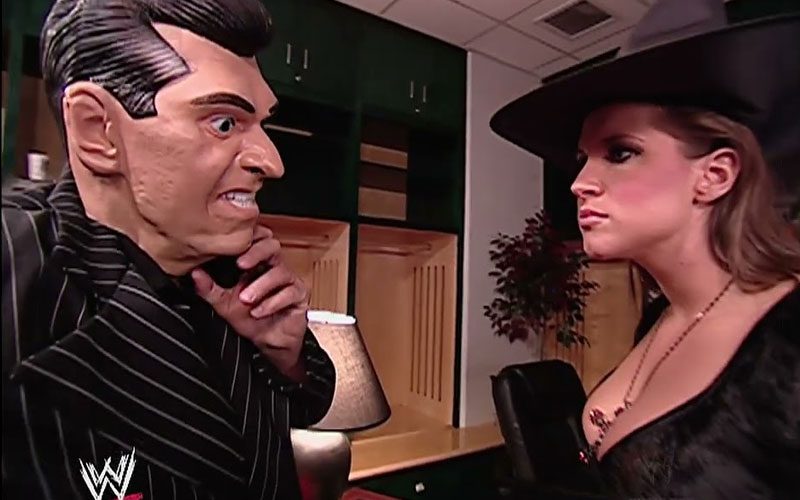
While defending his own track record with celebrities, Bischoff simultaneously distanced himself from his onscreen run in WWE. He recently detailed a highly uncomfortable incident involving Stephanie McMahon. According to Bischoff, Vince McMahon personally ordered a last-minute segment between the two that felt entirely bizarre. He noted that the instructions came down just hours before the live broadcast.
This was the fundamental reality of WWE television in the early 2000s. The script was fluid until the red light turned on. Vince McMahon operated entirely on his own whims. Bischoff, who had previously run a rival organization, was reduced to a middle-management character tasked with executing ideas he actively disliked. The Stephanie McMahon segment, thrown together in a panic, is symptomatic of a broken creative pipeline. You cannot build logical, long-term narrative arcs when the chairman is tearing up the format sheet at 5:00 PM.
It is a criticism that haunted WWE for over two decades. Bischoff highlighting this now is certainly convenient for his brand, but it is not inaccurate. The chaotic energy of those early brand extension episodes frequently resulted in segments that made zero logical sense. But it was more than just bad writing. It was a form of corporate hazing. Vince McMahon had defeated his greatest rival. Putting Bischoff in awkward, nonsensical television segments was a public display of dominance.
It was psychological warfare broadcast on the USA Network. Bischoff had to play the subservient employee. He had to take the bizarre creative edicts and try to make them work on live television. When the segments inevitably fell flat, the blame rarely fell on the chairman. The blame fell on the performer in the ring. Bischoff lived this dynamic for years. He watched angles get scrapped, rewritten, and ruined based on a fleeting mood change in the gorilla position. This environment breeds resentment. It also breeds terrible television.
Desperation and Trash Television
The most damning admission from Bischoff’s recent comments centers on the infamous HLA storyline. Hot Lesbian Action. It remains the absolute nadir of the Ruthless Aggression era. Bischoff, acting as the on-screen general manager of Monday Night Raw, routinely forced female talent into these segments in a desperate bid to pop a quarterly rating. He now openly states the storyline felt exploitative and made him profoundly uncomfortable. He claims he is not pretending he enjoyed being part of it.
This is a fascinating historical pivot. At the time, Bischoff played the sleazy executive to absolute perfection. It fit the crash-TV aesthetic WWE was desperately clinging to as the Attitude Era faded. But analyzing it without the lens of nostalgia reveals it as objectively terrible programming. It completely devalued the women's division. It relied on cheap shock value instead of compelling character work or athletic showcase.
You have to look at the structural context of the company at the time. SmackDown, under Paul Heyman, was heavily focused on work rate. The "SmackDown Six" were delivering wrestling clinics every Thursday night. Raw, under the creative direction of Brian Gewirtz and Vince McMahon, countered with Katie Vick and HLA. It was a fundamental clash of booking philosophies. Raw was failing to create new main event stars, so they leaned into sheer exploitation to maintain viewership.
The contrast was visually jarring. On Thursday nights, you could watch Kurt Angle, Edge, Rey Mysterio, Chris Benoit, Eddie Guerrero, and Chavo Guerrero redefine tag team wrestling. Their match at No Mercy 2002 remains a tactical masterclass in pacing and false finishes. On Monday nights, Bischoff was instructed to send two women to the ring for an HLA segment that served no narrative purpose other than titillation. Vince McMahon was operating two distinct television shows with completely incompatible creative philosophies.
Bischoff admitting his discomfort is a rare instance of vulnerability. Usually, he defends even his most controversial booking decisions with aggressive defiance. Blaming Vince McMahon for the exploitative nature of HLA is undoubtedly an easy way out. Bischoff was the performer on the screen. He cashed the weekly checks. He delivered the dialogue. He could have refused. He could have pushed back harder against the creative direction. He chose compliance over conflict. He chose the paycheck.
The Illusion of Control
This highlights the core contradiction of Eric Bischoff the pundit. He is fiercely eager to claim sole credit for the initial success of the nWo and the flawless execution of celebrity involvement in WCW. He is equally eager to shift all blame for the creative failures he participated in during his WWE tenure. He wants history to remember him as the mastermind behind the Dennis Rodman phenomenon, but as a helpless victim of Vince McMahon's bizarre booking edicts.
The modern wrestling industry is actively trying to sanitize its image. The TKO conglomerate wants blue-chip sponsors and premium advertising rates. You do not secure those partnerships by airing HLA segments. You secure them by integrating mainstream figures like Bad Bunny into high-profile, carefully choreographed matches. But as the Pat McAfee situation clearly demonstrates, this modern, sanitized product generates its own specific set of logistical nightmares.
Today is April 28. We are less than two weeks away from Backlash. When a piece of the puzzle like McAfee goes missing this late in the cycle, it forces the entire creative team to scramble. Writers have to reassign television time. Producers have to adjust segment lengths. It creates a ripple effect that damages the structural integrity of the entire premium live event. Bischoff is pointing out a very real operational hazard.
When a major angle collapses because a celebrity alters their schedule, it leaves a massive structural hole in the booking sheet. The resulting chaos is identical to a last-minute Vince McMahon rewrite. The underlying cause has changed, but the panic in the production truck remains the same. Bischoff recognizes this structural weakness. He understands the danger of relying on talent who do not require the wrestling business for their financial survival. McAfee holds all the leverage. In 1998, WCW held the leverage because they regularly pulled a 4.0 cable rating and controlled the narrative. That dynamic has completely inverted.
There is deep irony in Bischoff critiquing exploitative television while running a media empire built on analyzing decades-old wrestling gossip. He knows what drives engagement. Controversy is reliable. Pointing out that WWE's current celebrity strategy has massive flaws generates attention. Confirming that Vince McMahon's creative process was often unhinged validates the feelings of disgruntled fans. But strip away the self-promotion, and his underlying tactical analysis is sound. The integration of outside talent requires absolute, unwavering commitment. The Pat McAfee situation is a massive red flag. It is a stark reminder that you cannot build a sturdy main event program using rented bricks.
Funko Pop! WWE: Cody Rhodes Hell in a Cell Edition (#152)
Celebrate the grit of 'The American Nightmare' with this iconic Hell in a Cell v
Frequently Asked Questions
Why did Eric Bischoff criticize WWE's celebrity booking?
How did WCW manage celebrity wrestling appearances?
What makes WWE's reliance on outside influencers risky?
Why can Pat McAfee easily walk away from WWE storylines?
What did Eric Bischoff say about working with Vince McMahon?
More Coverage

Data suggests Nick Aldis is manipulating WWE main event windows
53 minutes ago
Top 10: The Most Impactful Pro Wrestling Moments of 2026
2 hours agoWhy the Broken Hardy act is a major gamble for Philadelphia
3 hours ago
WWE reshuffles NXT pipeline as Meghan Walker eyes main roster debut
4 hours agoAEW needs more than just Ospreay to fix the Collision slide
4 hours ago
Andre Chase pulls back the curtain on the Shawn Michaels era at NXT
5 hours agoMore Analysis
Eric Bischoff's nWo ghost still hangs over modern booking
1 month, 2 weeks ago
WWE needs to stop relying on celebrities who might ghost them before Backlash
2 months, 3 weeks ago
Eric Bischoff is right about the Monday Night Wars
1 month, 1 week ago
Pat McAfee is the modern bridge to old-school wrestling heat
2 months, 3 weeks ago
Pat McAfee Is The Cause And Solution To WWE's Celebrity Problem
3 months, 1 week ago