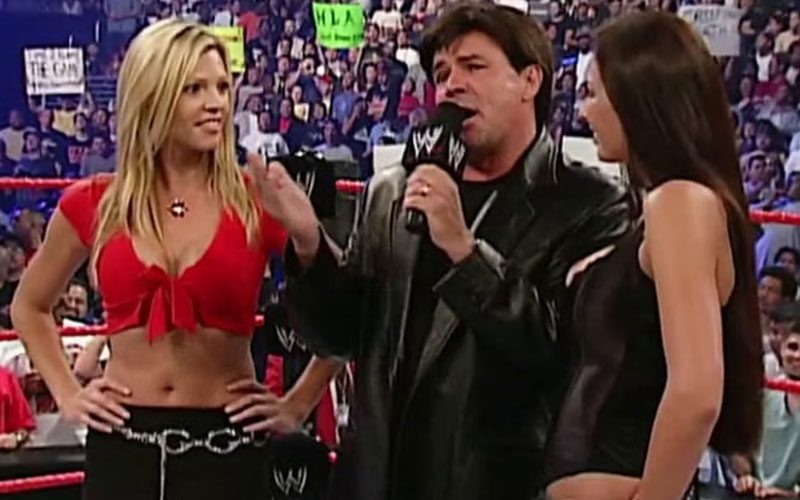
Nick Hogan wants to wrestle but the industry has moved past the Hulkamania era
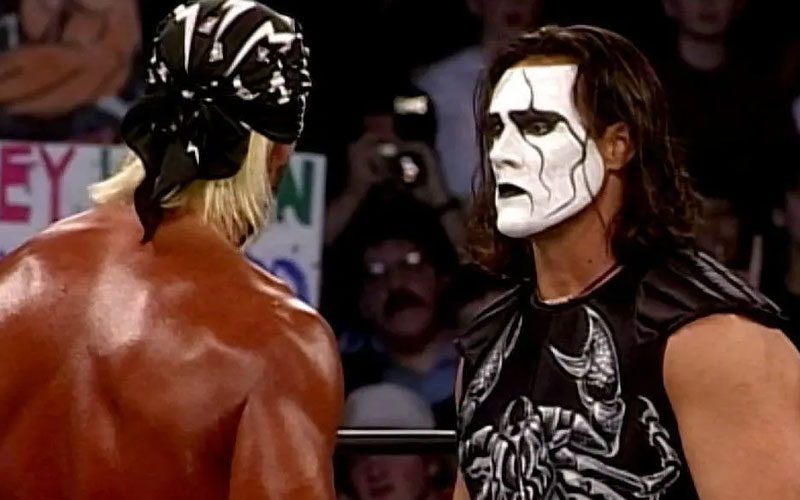
The exhausting ghost of WCW politics
Eric Bischoff rarely speaks without a specific agenda, but his recent reflections on the psychological toll of managing WCW stars feel unusually sincere. Speaking on the mechanics of his executive tenure, Bischoff identified the constant navigation of personalities like Hulk Hogan and Sting as the single most draining aspect of his career. It was not the 83-week ratings war or the logistics of running a global media company that broke his spirit. It was the perpetual friction of managing the creative control clauses and the fragile egos of the industry's largest icons.
As Ringside News recently detailed, Bischoff’s exhaustion stemmed from the fact that with Hogan, every segment was a negotiation. The 'drain' he describes is the literal energy required to convince a man with a 1980s mindset to function in a 1990s reality. We see the scars of this in the booking of Starrcade 1997. The convoluted finish of the Sting versus Hogan main event remains a masterclass in how backstage politics can butcher a three-year narrative arc.
Bischoff’s retrospective serves as a cold warning to anyone attempting to revive the Hogan brand in 2026. The industry has spent two decades trying to de-program the 'Creative Control' era. Modern WWE, under the guidance of Triple H, functions on a logic of system over individual. The idea that a Hogan-adjacent project could succeed today ignores the very exhaustion that Bischoff is finally willing to admit publicly.
The biopic and the myth of universal appeal
Despite the cautionary tales from the men who actually ran the business, the Hogan family continues to push for a cinematic validation of their legacy. Nick Hogan recently told F4WOnline that a Hulk Hogan biopic remains a distinct possibility. This news arrives at a time when the wrestling world has already seen several deep dives into the Hulkster's history. The 2024 Netflix docuseries provided a polished version of the story, yet the family seems hungry for a scripted, Hollywood interpretation.
According to reports from F4WOnline, the project is still being discussed in various circles. However, the market for a Hogan biopic has shifted dramatically. In 2026, the average wrestling fan is more interested in the technical precision of a Gunther match or the long-form storytelling of the Bloodline. Hogan’s 'Real American' persona feels like a relic from a different century, and a biopic would struggle to find a tone that satisfies both the legend and the modern audience's demand for authenticity.
The financial reality of a wrestling biopic is also precarious. Unless the film addresses the controversies of the late 2000s and the racial slurs that saw Hogan briefly exiled from WWE, it will be dismissed as a vanity project. Nick Hogan’s optimism regarding the film feels disconnected from the current cultural climate. The industry is currently celebrating the 'Cody Rhodes' era of earnestness, which stands in direct opposition to the guarded, protective nature of the Hogan camp.
Nick Hogan’s late-stage wrestling aspirations
The most surprising development in the Hogan saga is Nick Hogan’s stated desire to enter the squared circle. At 35 years old, the younger Hogan told F4WOnline and WrestlingNews.co that he would 'absolutely welcome' the opportunity to pursue a wrestling career. While his father was the face of the industry for decades, Nick has spent the majority of his adult life on the periphery, focused on car culture and reality television. To suggest a career start at 35 is an ambitious, if not entirely misguided, proposition.
Looking at the current roster of the WWE Performance Center, the physical requirements have never been higher. A 35-year-old rookie is essentially a non-starter in a system that favors athletes in their early 20s with collegiate backgrounds. As noted by WrestlingNews.co, Nick seems to believe the door is open purely based on his surname. This reveals a fundamental misunderstanding of how the business has evolved since his father’s peak in 1987.
"I would absolutely welcome that opportunity. If the opportunity presented itself, I would jump on it in a heartbeat."
This quote is indicative of a 'wait-and-see' attitude that no longer works in professional wrestling. The days of a promoter calling a celebrity's son to offer a main event spot are largely over. Every second-generation star currently succeeding, from Dominik Mysterio to Bron Breakker, has put in hundreds of hours of grueling tape study and ring work. Nick Hogan is talking about 'welcoming an opportunity' while others are out there building one from scratch.
The technical gap and the legacy trap
If Nick Hogan were to step into a ring today, the tactical disparity would be embarrassing. The 'Hogan style'—the big boot, the ear-cupping, the leg drop—is functionally obsolete in a world where fans expect 25-minute epics with high-flying transitions and complex submission chains. Even at his peak, Hulk Hogan was a limited technician who relied on charisma and size. Nick possesses neither his father's 6-foot-7 frame nor the once-in-a-century charisma that defined the 1980s.
We have to look at the numbers to see why this fails. The average age of a WWE main roster debut is now 27. Nick Hogan is nearly a decade past that. His physical history, including a well-documented and severe car accident in his youth, raises massive red flags for any medical team. Pro wrestling is harder on the body than it has ever been. The matches are faster, the bumps are more frequent, and the schedule is relentless. A 35-year-old with zero fundamental training would be a liability to himself and his opponents.
The critical flaw in Nick’s logic is the assumption that the Hogan name is still a golden ticket. In reality, the name brings a level of scrutiny that he is likely unprepared for. Fans in 2026 are notoriously protective of 'their' spots. If a Hogan takes a spot from a hardworking indie veteran or a Performance Center standout, the backlash will be immediate and vitriolic. We saw this with the early push of David Flair in WCW, a move that Eric Bischoff likely remembers as another 'draining' exercise in futility.
The industry has outgrown its icons
The core of the issue is that the professional wrestling industry has finally outgrown the need for the Hulkamania brand. Eric Bischoff’s admission that managing these stars was 'draining' is a reflection of a business model that relied on individual leverage over collective success. In 2026, the brand is the draw. WrestleMania 41 sold out on the strength of the WWE name, not because of a single returning legend from the 1980s. The fans are invested in the current narratives, the intricate 'Cinema' of the Bloodline, and the athletic marvels of the modern era.
Nick Hogan’s desire for a biopic and a wrestling career feels like an attempt to restart a clock that has already run out. The Hogan legacy is secure in the history books, but it has no functional place in the future of the sport. Bischoff is right to be exhausted. The effort required to keep that specific flame alive is disproportionate to the value it provides. Every minute spent discussing a Hogan biopic is a minute not spent developing the next Cody Rhodes or Jade Cargill.
There is a certain sadness in seeing the Hogan camp still 'welcoming opportunities' that the rest of the world has moved past. The tactical reality of wrestling in 2026 is one of high-speed execution and transparent storytelling. The Hogan method was built on smoke, mirrors, and backstage politics. Bischoff’s fatigue is the most honest thing to come out of that camp in years. It’s a signal that the era of the 'Icon' is over, replaced by an era of the 'Athlete.' Nick Hogan can wait for the phone to ring, but the industry is too busy looking forward to dial a number from the past.
Ultimately, the Hogan name has become a toxic asset. It carries too much weight and provides too little return. Whether it is a biopic that nobody asked for or a wrestling career that started 15 years too late, the family is chasing a ghost. Bischoff’s retrospective isn’t just a complaint about his old job. It is a post-mortem on a style of business that nearly killed the industry. We should listen to him. The drain isn't worth it anymore, and neither is the Hogan name.
WWE Elite Collection Series 108 - Solo Sikoa Action Figure
A highly articulated action figure of one of the current Bloodline's top stars.
Frequently Asked Questions
Why did Eric Bischoff find managing Hulk Hogan draining?
How does modern WWE differ from the Hulkamania era?
What is the current status of the Hulk Hogan biopic?
What challenges would a Hulk Hogan biopic face today?
How did backstage politics affect Starrcade 1997?
More Coverage
Paige, leaks, and why the surprise return is dying a slow death
3 hours ago
AJ Styles is right to be skeptical about a WWE Japan expansion
3 hours ago
AJ Styles and CM Punk share a moment amidst the WWE main event scene
3 hours ago
The garden was buzzing but the crossover segments left fans divided
3 hours ago
AJ Styles is walking back his stance on the Japan acquisition rumors
3 hours ago
CM Punk's new look has the wrestling world spiraling
3 hours agoMore Analysis
Eric Bischoff and the Hulk Hogan family circus
2 months, 3 weeks ago
Nick Hogan is chasing a wrestling dream that the industry outgrew years ago
2 months, 2 weeks agoPlease, for the love of wrestling, keep Nick Hogan out of the squared circle
2 months, 2 weeks ago
Nick Hogan wants to wrestle, but the industry will chew him up
2 months, 2 weeks ago
Eric Bischoff is right to kill the nWo reboot dream
1 month, 2 weeks ago