The battle for wrestling's soul ahead of WrestleMania 41
We are less than a week away from WrestleMania 41 in Las Vegas, and the discourse surrounding the industry is more toxic than a Twitter thread about model weights. On one side, you have the workrate junkies who want 30-minute marathons filled with enough flips to make a gymnast dizzy. On the other, you have the guys who actually want to make money.
The tension isn't just fan-service noise; it’s a fundamental philosophical divide. While Cody Rhodes prepares to defend the WWE Championship and John Cena begins his long goodbye, the real story is happening in the gorilla position. It’s about who is actually holding the pen and why some wrestlers are failing to catch the spark.
As Ringside News reported, MJF recently took a flamethrower to the current locker room culture. He’s calling modern wrestlers 'stupid' for chasing applause instead of star power. He isn't just being a heel; he’s pointing out that the industry is currently drowning in a sea of interchangeable high-flyers who couldn't sell out a bingo hall if their lives depended on it.
The MJF reality check and the death of the star
MJF is basically the Gary Marcus of wrestling—he's loud, he's annoying, and he's usually right about the structural flaws in the system. He’s tired of seeing guys kill themselves for a 'This is Awesome' chant that lasts for three seconds and results in zero merch sales. Chasing the approval of the front row is a treadmill to nowhere.
Star power isn't about how many rotations you can do in the air. It’s about the way the room changes when you walk into it. It’s about the gravity you exert on the screen. Most of today's roster has the gravitational pull of a single hydrogen atom. They’re technically proficient but emotionally bankrupt.
MJF’s point is that the hunt for 'five-star matches' has turned the business into a stunt show. When everyone is doing a 450 splash, the 450 splash means nothing. It becomes background noise, a collective tax on the audience's attention span. He wants the industry to return to the era of the draw, where the character matters more than the move-set.
The invisible architects behind the curtain
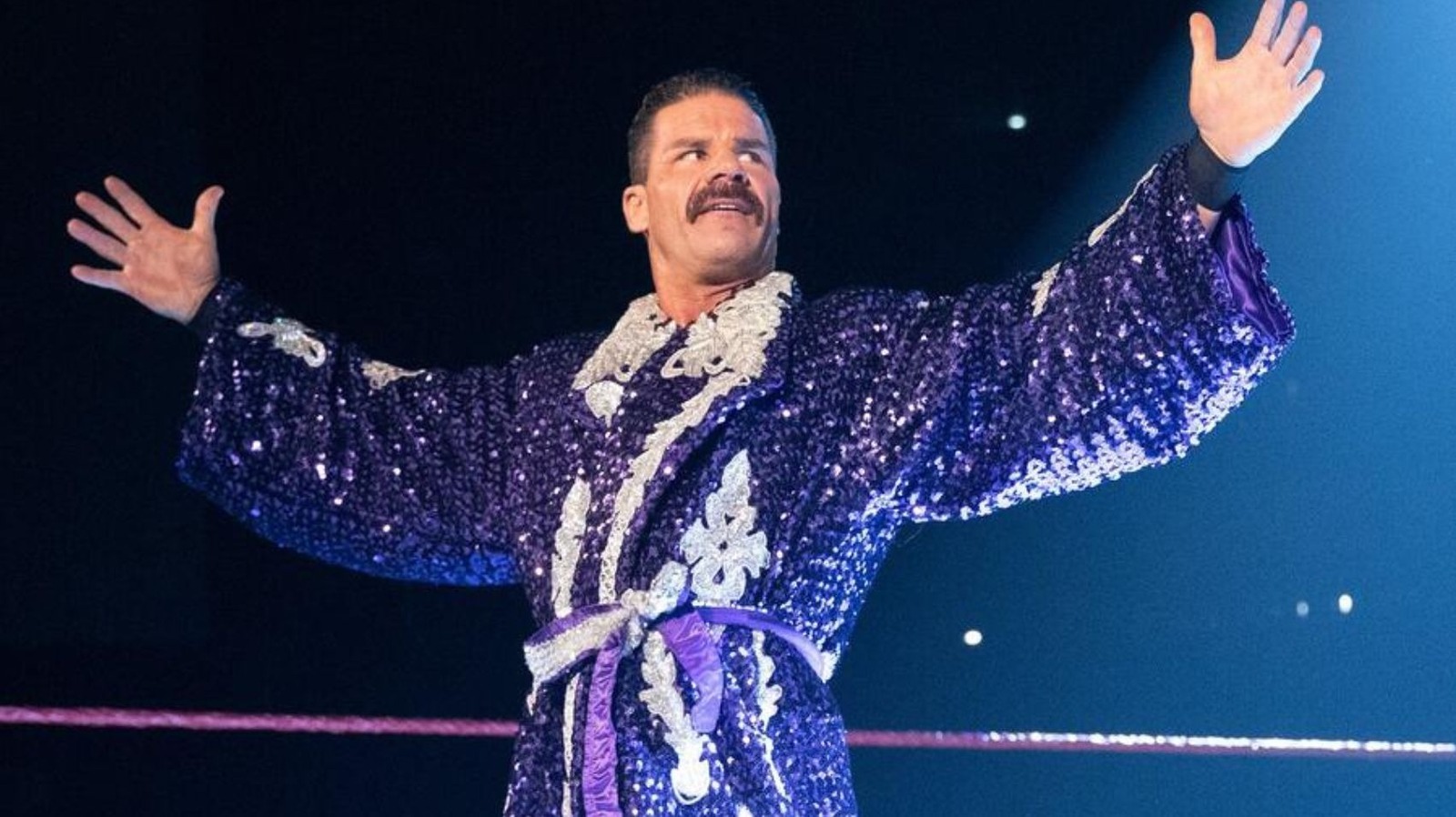
If the talent is struggling with identity, Triple H is leaning on the veterans to fix the plumbing. On a recent episode of 'What Do You Want to Talk About?', 'The Game' went out of his way to praise the men in the headsets. As Wrestling Inc detailed, Triple H is heaping credit on producers Bobby Roode and Michael Hayes.
Michael Hayes is the grizzled architect of the main event style. He understands the 'Bloodline' drama better than anyone, layering soap opera intensity over physical violence. He’s the one making sure Roman Reigns and Cody Rhodes feel like deities rather than just two guys in spandex. Without Hayes, the drama would likely collapse into a mess of missed cues and empty gestures.
Then there’s Bobby Roode. It wasn't long ago that Roode was the 'Glorious' centerpiece of NXT, a guy who understood the 'old school' psychology better than most of his peers. Now, he’s the bridge between the old guard and the new breed. He’s teaching the 'stupid' generation MJF hates how to actually tell a story between the ropes.
The problem is that this producer-heavy approach can sometimes feel like a factory line. When every match is 'produced' to perfection, the raw, jagged edges of professional wrestling get sanded down. You trade the chaotic energy of the 90s for a polished, corporate product that never misses a beat but rarely surprises you. It's a trade-off that has made WWE more profitable than ever, but it leaves some fans feeling like they’re watching a choreographed Broadway play.
Gunther and the Michael Cole endorsement
If you want to see the perfect fusion of MJF’s star power and Triple H’s produced excellence, look no further than 'The Ring General.' Michael Cole recently hailed Gunther as the 'best on the planet' right now. It’s a bold claim, but it’s hard to argue with the results. Gunther doesn't do flips. He doesn't chase applause. He just chops people until their skin looks like raw hamburger meat.
As Wrestling Inc noted, Cole’s praise highlights Gunther’s unique position. He is the antithesis of the modern indie-style wrestler. He understands that a single, well-timed lariat is worth more than ten standing moonsaults. He has reclaimed the dignity of the sport by treating it like a legitimate contest rather than a cooperative dance.
Gunther is the proof that you can have 'workrate' without being a 'stupid' wrestler. His matches are grueling, physical, and grounded in logic. He makes you believe that every move hurts. In a world of 'invisible' moves and 'no-selling' for the sake of a fast pace, Gunther is a 290-pound reminder that wrestling is supposed to look like a fight.
The WrestleMania 41 crossroads
As we head into Allegiant Stadium, the stakes are higher than just wins and losses. We are seeing the final stages of the 'Workrate Era' dying out in favor of the 'Story Era.' The fans aren't clamoring for a technical masterpiece between two nameless technicians. They want the Bloodline saga. They want Cena’s final stand. They want the drama that Hayes and Roode are cooking up in the back.
The critical flaw in the modern scene is the refusal to evolve. Too many wrestlers are still trying to be the next Will Ospreay when they should be trying to be the next Gunther. They are chasing the ghost of the 2010s indie boom, failing to realize that the world has moved on. If you aren't a character, you are just a prop.
There is a genuine danger that WWE becomes too reliant on this 'main event' formula. If every match follows the Michael Hayes blueprint—slow start, mid-match interference, dramatic kick-out at 2.9, emotional finish—the audience will eventually tune out. Even the best steak becomes boring if you eat it every single night for a year.
Final thoughts on a shifting industry
The next few days will define the narrative for the rest of 2026. If WrestleMania 41 delivers the kind of cinematic greatness that Triple H expects, MJF’s 'stupid' wrestlers will find themselves even further on the periphery of the business. The money is in the headsets and the heavy hitters, not the guys doing 'Canadian Destroyers' for a two-count in the opening match.
Wrestling is currently a battle between the curated and the chaotic. WWE has chosen curation. They have chosen to trust guys like Bobby Roode to guide the next generation away from the cliff of irrelevance. It’s a gamble that requires the talent to actually listen, to stop being 'stupid,' and to start being stars.
Allegiant Stadium will hold over 65,000 fans each night, and they won't be there to see a gymnastics meet. They are there to see the culmination of months of 'produced' storytelling. If the modern wrestler can't see the value in that, then they deserve the 'stupid' label MJF gave them. The industry is moving forward, and it’s leaving the flip-monkeys in the dust.
The reality is that Gunther is the gold standard because he respects the audience's intelligence. He doesn't ask you to suspend your disbelief; he forces you to believe. That is the essence of star power. That is why Michael Cole is right. And that is why the producers in the back are currently the most important people in the building.
Read Next
- WrestleMania 41 is the most high-stakes gamble in Triple H’s career
- Gunther's restrictive style is becoming a problem for WWE
- Brock Lesnar and Gunther lead a stacked final Raw before WrestleMania 41
- Gunther's title reign hangs by a thread after backstage medical clearance drama
- 🏆 WrestleMania 41 — Full Coverage Hub
- 💥 WWE Backlash 2026 — Full Coverage Hub