The Las Vegas hangover is real
It is currently April 24, exactly four days since the lights went down at Allegiant Stadium, and I am still finding gold glitter in places glitter has no business being. My bank account looks like it went twelve rounds with prime Mike Tyson, and my voice is roughly three octaves lower than it was last Friday. We survived WrestleMania 41 in Las Vegas, but barely. And now that the dust has settled, we have to talk about the elephant in the room that Eric Bischoff just pointed out on his podcast.
The WWE Hall of Famer went on record this week saying he would have kept WrestleMania as a one-night event. Naturally, the internet responded with the usual level of calm, measured discourse we expect from wrestling fans, which is to say they basically tried to set his Twitter mentions on fire. But here is the problem: the guy who launched Nitro and almost bankrupted Vince McMahon might actually be right about this one.
Look, I love wrestling. I love it enough to fly to a desert and pay three months' rent for a hotel room that smelled faintly of desperation and stale cigarettes. But two nights of this is starting to feel less like a celebration and more like a test of human endurance. It is the wrestling equivalent of a Thanksgiving dinner that lasts for forty-eight hours straight. Eventually, you just want to stop eating the turkey and go take a nap.
The trauma of WrestleMania 35
Whenever anyone argues for a return to the one-night format, the immediate counter-argument is always the same: WrestleMania 35. We all remember it. We all lived through it. That show started while the sun was high in the sky and ended sometime during the early stages of the next lunar eclipse. By the time Becky Lynch pinned Ronda Rousey, the crowd in New Jersey looked like extras from a low-budget zombie movie. People were literally sleeping in their seats.
That seven hour marathon in 2019 was a war of attrition. It was the moment WWE realized they had too much talent and not enough time, but their solution was just to keep the cameras rolling until everyone's phone died. It was miserable. So, the pivot to two nights during the pandemic made sense. It was a necessity born of weird times. But we are not in weird times anymore, and the "two-night" novelty is starting to wear thin.
The issue isn't that there isn't enough talent to fill two nights. The issue is that by splitting the show, you've essentially created two B+ events instead of one undisputed A+ show. When everything is a main event, nothing is a main event. We had Cody Rhodes defending the gold on Night 2, but we also had the big Bloodline drama on Night 1. It’s like trying to watch two different season finales of the same show in the same weekend. It’s exhausting.
The Vegas Tax and the fan experience
Let’s talk about the logistics of this thing, because that is where the one-night argument really wins. If you were in Vegas last weekend, you weren't just attending a wrestling show. You were participating in a logistical nightmare designed to extract every single cent from your pockets. Between the two nights of Mania, the Hall of Fame, NXT Stand & Deliver, and the RAW after Mania, you’re looking at five straight days of arena prices.
I saw a guy pay forty five dollars for two beers and a pretzel. He looked like he wanted to cry, but he couldn't because he was too dehydrated from the stadium air. When the show is one night, you peak. You build your energy, you lose your mind for four hours, and you go home. When it’s two nights, you have to pace yourself. You’re sitting there on Night 1 thinking, "I should probably save some energy for Cody tomorrow," which is exactly what you should never be thinking at WrestleMania.
The atmosphere at Allegiant was incredible for the big moments, sure. John Cena’s farewell match on Night 1 was a genuine tear-jerker, even if the result was a bit questionable. But there were massive lulls in the middle of both nights where the crowd just checked out. You could hear a pin drop during that six-man tag on Night 2. That wouldn't happen on a lean, mean, four-hour card where every second actually matters.
Booking bloat and the Cena factor
Speaking of John Cena, his farewell tour is the perfect example of why the two-night format is a double-edged sword. On one hand, it gave him the spotlight he deserved on Night 1 without overshadowing the title picture. On the other hand, it felt like the show was being padded out with matches that belonged on a B-level PLE just to make sure Night 1 felt "big" enough.
We need to be honest: there were at least four matches across the two nights that had no business being on the WrestleMania card. That mid-card filler could have easily been the main event of a solid RAW or a secondary PLE like Backlash. Instead, it’s taking up space at the Showcase of the Immortals because Triple H needs to fill four hours on a Saturday and another four on a Sunday. It dilutes the prestige. Being on the WrestleMania card used to mean you were the best of the best. Now, it just means you don't have a nagging injury and your flight was on time.
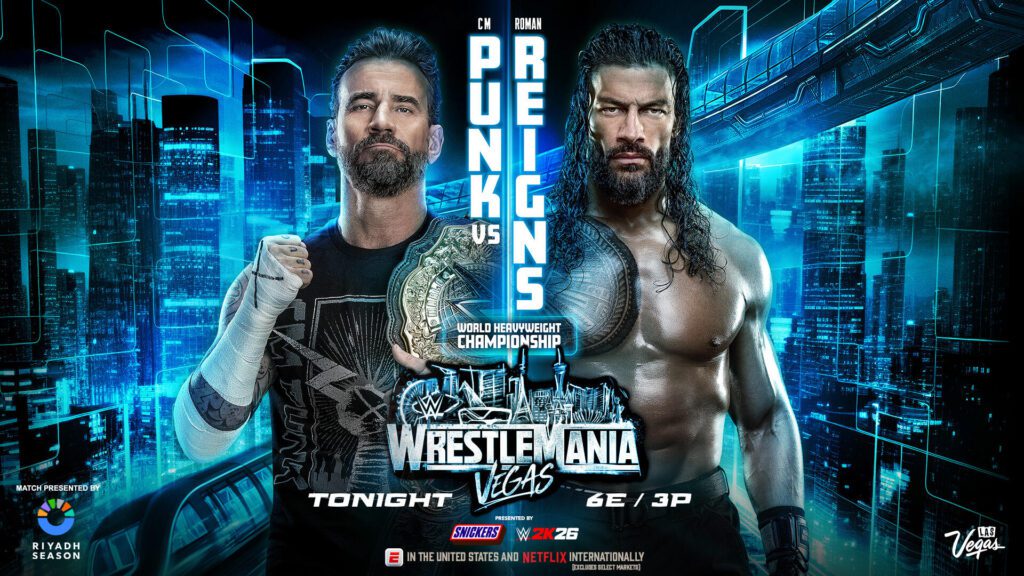
The CM Punk match was another one that suffered. Punk is a master of psychology, but he was working in front of a crowd that had already been sitting in their seats for three hours and was mentally prepping for the main event. The match was technically sound—the sequence where he hit the GTS into a two count near fall was brilliantly executed—but the energy in the building just wasn't there. It felt like a great match in the wrong place at the wrong time.
The critical failure of match order
The biggest crime of the two-night era is the death of the mid-card title. Remember when the Intercontinental Title match at WrestleMania used to be the thing that stole the show? Now, those matches are buried in the middle of a massive block of content where people are either getting up to pee or checking their bets on their phones. We saw it this weekend; the US Title match was a banger, but half the stadium was at the concession stands because they knew they had another three hours of wrestling to go.
And let’s talk about the Night 1 main event. It was a great spectacle, but it felt hollow knowing that the real story wasn't going to conclude until twenty-four hours later. It’s like watching the first half of a movie and then being told to come back tomorrow for the ending. It kills the momentum. The beauty of the old-school WrestleMania was the slow, agonizing build toward that one final crescendo. Now, we have two crescendos, and the first one usually just makes the second one feel redundant.
Why it will never change
Of course, Eric Bischoff knows as well as I do that WWE is never going back to one night. Why would they? They sold out Allegiant Stadium twice. They sold one hundred thousand tickets over the weekend. They sold enough merchandise to buy a small island. From a business perspective, the two-night WrestleMania is a grand slam. It’s more content for Netflix, more sponsorship opportunities for Prime, and more ways to charge people for "exclusive" experiences.
But since when did we start judging the quality of wrestling by the quarterly earnings report? If we’re talking about the art of the show, the one-night format wins every single time. It forces the writers to be disciplined. It forces the talent to fight for their spots. It creates a condensed, high-pressure environment where only the strongest stories survive. Right now, the stories are being stretched like a piece of chewing gum that’s lost its flavor.
I’m looking at the calendar for the next few weeks and I’m already exhausted thinking about the fallout. We have the UCL semi-finals in four days, which is great, but my brain is still stuck on the fact that we spent ten hours watching people fall onto mats last weekend. The fatigue is real, and it’s not just the fans feeling it. You could see it on the faces of some of the performers during the post-show press conference. They looked like they’d been through a war.
The final verdict on the Bischoff take
Is Bischoff just a bitter veteran complaining about the "new way" of doing things? Maybe a little bit. But even a stopped clock is right twice a day, and Eric is hitting the mark here. The current WrestleMania format is a bloated, expensive, and mentally taxing experience that prioritizes quantity over quality. It’s a five star gate with a three-star soul.
If WWE really wanted to innovate, they would go back to a single, five-hour night. Start it at 6 PM, end it at 11 PM. Cut the fat. Remove the matches that don't matter. Make the wrestlers earn their way onto the card again. Give us one night that we will never forget, instead of two nights that we’ll struggle to remember three months from now. But they won't. They’ll keep giving us the Vegas buffet, and we’ll keep eating until we’re sick.
Anyway, I need to go find some industrial-strength soap to get this glitter off my neck. Catch you at the UCL semis on Tuesday, assuming I’ve woken up from my WrestleMania-induced coma by then. If anyone needs me, I'll be staring at my bank statement and crying quietly into a pillow.