More Isn't Better: Why Two Nights Dilutes the WrestleMania Spectacle
The Marathon's Lost Mystique
A WWE Hall of Famer recently mused on the modern WrestleMania format, stating a preference for the bygone era of the single-night extravaganza. The comment reignites a debate that simmers among hardcore fans every spring: has WrestleMania’s evolution into a two-night event been a net positive, or has something essential been lost in the expansion?
The business logic is, of course, ironclad. Two nights mean two stadium gates, two distinct premium live events for streaming services, and a broader canvas to feature more of the roster. From a purely commercial standpoint, it’s an unassailable success. Yet, the argument against it isn't about revenue; it's about art, prestige, and the very soul of what made WrestleMania a singular institution in sports and entertainment.
The one-night WrestleMania was a marathon. It was a test of endurance for everyone involved: the wrestlers in the ring, the production team behind the scenes, and the fans in the stadium and at home. A seven-hour broadcast was a commitment, a pop-culture pilgrimage that demanded your full attention. That grueling length wasn't a bug; it was a feature. It separated WrestleMania from every other show, transforming it into an epic, all-encompassing experience. By the time the main event began, the audience and performers had shared a journey. The final match felt like the climax of not just a storyline, but of a long, shared day of professional wrestling at its grandest.
A Tale of Two Main Events
The current two-night structure fundamentally alters this dynamic. Instead of one singular peak, we now have two. While this provides two wrestlers with the accolade of 'headlining WrestleMania,' it undeniably dilutes the meaning of the term. The main event of Night 1 is, by definition, not the final match of the show. It’s an appetizer for the *real* conclusion 24 hours later.
This creates a clear hierarchy. The match that closes Night 2 is the true main event, the one that gets the final firework display and sends the fans home. The Night 1 headliner, as prestigious as WWE tries to make it, occupies a kind of booking purgatory. It’s bigger than the mid-card, but it isn’t the definitive final statement. This isn't a knock on the performers; it's a structural problem. The narrative crescendo is bisected, and the sense of a single, ultimate climax is lost.
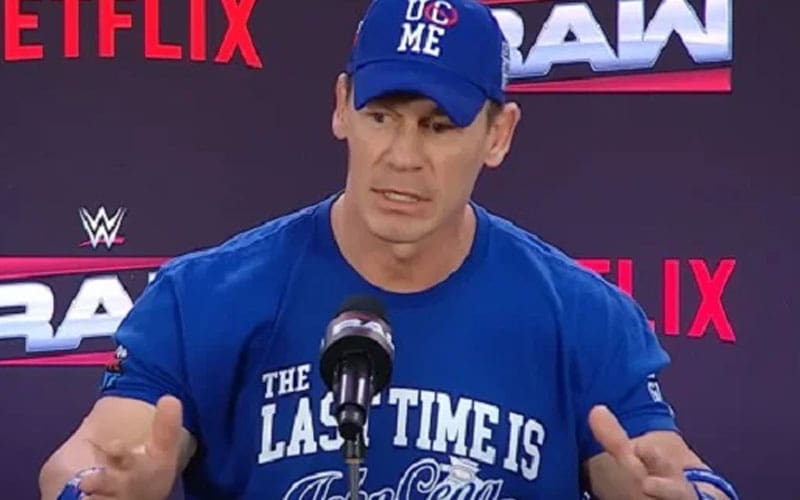
Look ahead to the planned structure for WrestleMania 41. Night 1 is slated to feature John Cena's farewell and a major match for CM Punk. Night 2 will see Cody Rhodes defend his WWE Championship, likely entangled with the ever-present Bloodline saga. In a one-night format, the booking calculus would be far more intense and fascinating. Would Cena's historic final bow take precedence over the company's primary championship narrative? The constraint would force a difficult, dramatic choice, adding another layer to the build-up. With two nights, there's no such tension. Everyone gets a spot, and the difficult creative decision is avoided, not solved.
The Inefficiency of an Expanded Canvas
Perhaps the most significant casualty of the two-night format is the quality of the undercard. The need to fill roughly seven hours of content across two shows invites bloat. A one-night WrestleMania demanded booking ruthlessness. With only so many spots available on a card that had to conclude by a certain hour, every match needed to feel significant. There was little room for filler.
The modern, two-night card often feels less like a curated collection of marquee matches and more like an obligation to get as many people on the show as possible. Multi-person ladder matches for secondary titles and obligatory battle royals feel less like high-stakes encounters and more like roster-management tools. The pressure to book 12 to 14 matches, instead of a tight 8 or 9, inevitably lowers the average quality and importance of each bout. The show becomes a festival, where participation is the prize, rather than a crucible where only the most important stories are settled.
This is the critical observation that often gets lost in the celebration of more content. More is not always better. The discipline imposed by the one-night structure created a more impactful, memorable show. When you knew that only a select few would get a WrestleMania match, it made each one feel more special. Now, the canvas is so broad that the individual brushstrokes carry less weight.
Weighing Commerce Against Canon
The move to two nights began with WrestleMania 36 in 2020, an emergency measure for the empty-arena reality of the pandemic. It was a practical solution to a unique problem. Its continuation, however, is a purely commercial decision. Doubling the live gate from a single stadium show is a financial lever too powerful for any publicly traded company to ignore. The model works, and it makes an enormous amount of money.
But the long-term cost is a subtle erosion of the brand's mystique. WrestleMania's identity was built on being the one night a year where everything was on the line. It was wrestling’s Super Bowl—a single, definitive event. Now, it’s more akin to the opening weekend of a summer blockbuster film series. It’s still a massive event, but it feels more like a corporate ‘activation’ than a singular, do-or-die sporting contest.
The old format created legends born from stamina. Surviving the political battles to get on the card, delivering a classic performance in the middle of a marathon show, and then, for a select two, headlining at the very end of that 420-minute broadcast—that was a monumental achievement. The two-night format, for all its fan-friendly digestibility and financial upside, simply cannot replicate that specific, grueling magic. It has traded the epic for the episodic, and while the business thrives, the story suffers.
Funko POP WWE: The American Nightmare - Cody Rhodes
Bring the 'American Nightmare' straight to your desk and finish your own story!
More Coverage
Andre Chase pulls back the curtain on the Shawn Michaels era at NXT
3 hours ago
The Andre Chase effect: Why Shawn Michaels is the ultimate NXT headmaster
3 hours ago
Drew McIntyre sidelined following brutal SmackDown encounter
7 hours agoWWE's New York gamble is a calculated risk ahead of WrestleMania 42
8 hours ago
WWE's Saturday Night's Main Event math doesn't add up
8 hours agoWWE's return to New York changes the math on stadium attendance
8 hours agoMore Analysis
WrestleMania should have stayed one night and we all know it
2 months, 3 weeks ago
WrestleMania 41 is missing the mark on match density
3 months, 2 weeks ago
WrestleMania 41 is a booking minefield WWE must navigate
3 months ago
WrestleMania 41 puts the Triple H era on the clock
2 months, 4 weeks ago
WrestleMania 41 highlights the shift in WWE booking momentum
3 months, 2 weeks ago