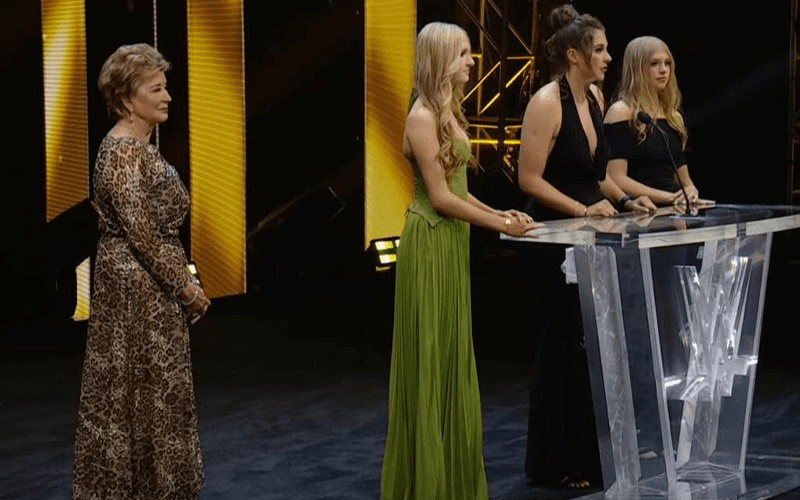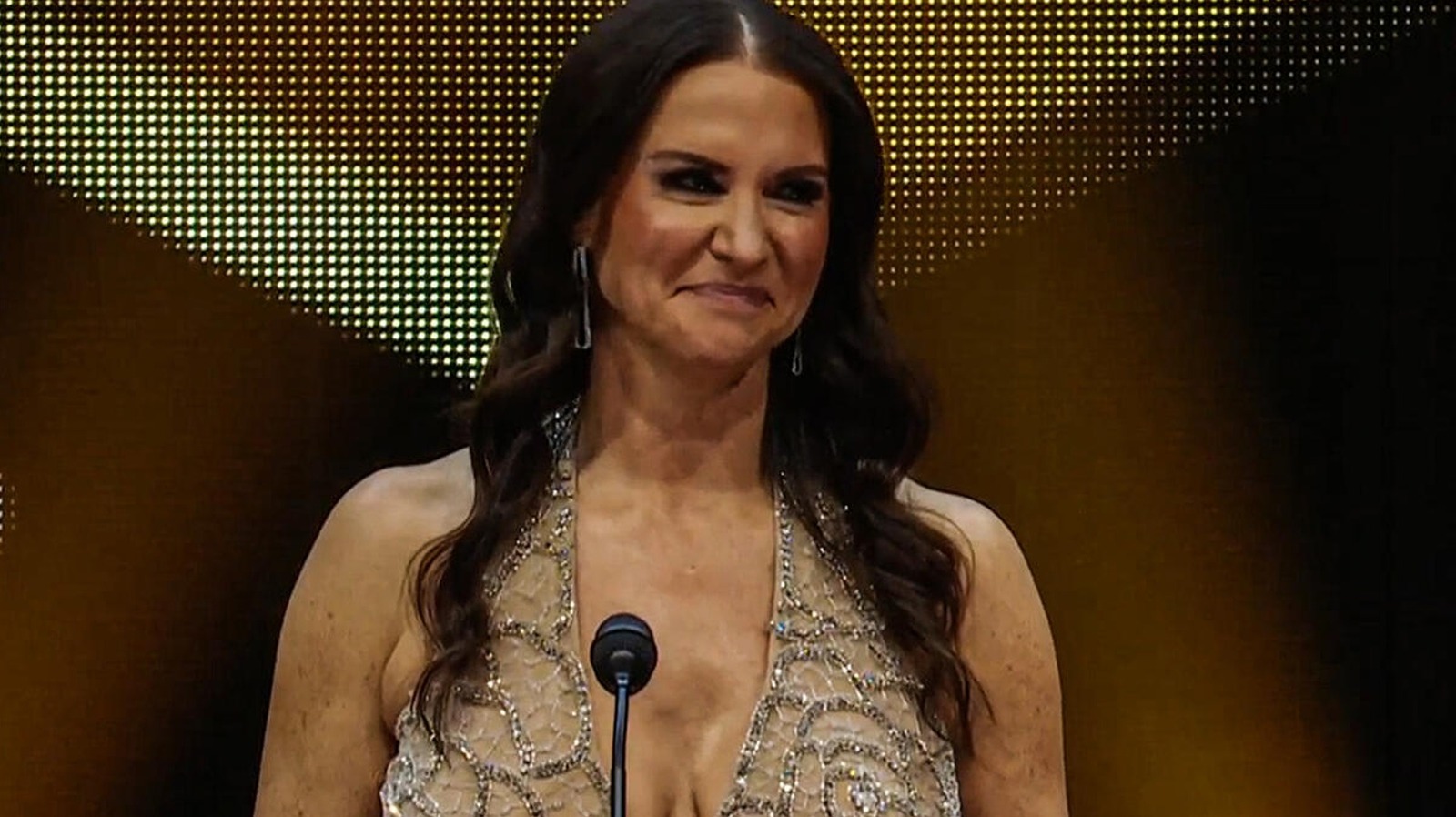
As reported by Wrestling Inc, Stephanie McMahon recently stated that her family was never meant to be inducted into the WWE Hall of Fame. The long-standing rule was that the promoters stayed firmly behind the scenes. They booked the matches, signed the checks, and kept their names off the plaques. That was the theory.
The medical reality tells a completely different story. The McMahon family medical charts read like those of full-time stunt workers. From bilateral tendon ruptures to severe blunt force trauma, the family has sacrificed their physical health on camera for decades. The original plan might have been to stay in the boardroom. The reality was a trail of torn muscles, concussions, and surgical interventions.
The Biomechanics of the Part-Timer
When evaluating the physical toll on this family, you have to start with the concept of physiological adaptation. Pro wrestlers who bump 200 days a year develop specific bodily adaptations. Under Wolff's Law, their bones adapt to the loads under which they are placed. Bone density increases in response to repeated impact. Connective tissues increase their stiffness and tensile strength.
When an executive steps out from behind a desk and attempts to perform high-impact maneuvers without that daily physical conditioning, the body inevitably breaks. Tendons that spend most of the year sitting in office chairs do not have the elasticity to suddenly handle explosive, eccentric loading under stadium lights.
No incident illustrates this better than the 2005 Royal Rumble. Vince McMahon stormed to the ring, slid under the bottom rope, and immediately tore both of his quadriceps tendons. This is an extraordinarily rare orthopedic injury. The quadriceps tendon acts as the primary extensor of the knee. Tearing one requires massive force. Tearing both simultaneously usually involves a high-speed car crash.
Vince tore his by simply trying to stand up aggressively with cold muscles. The biomechanics of the slide caused his knees to strike the ring apron. The sudden, un-warmed explosive contraction of the quad muscles ripped the tendons straight off the bone. It was a completely avoidable injury caused by a total lack of athletic warm-up.
The surgical repair for a bilateral tear is brutal. It requires drilling holes into both patellas, suturing the tendons, pulling them through the bone, and tying them off. The patient is then locked into leg braces in full extension for weeks. The joint stiffness that develops requires excruciating physical therapy to break through scar tissue. It takes six to nine months just to regain normal flexion. The timeline for resolution spanned nearly a year of agonizing rehab.
The King of Blunt Force Trauma
Then there is Shane McMahon. His entire on-screen career has been an exercise in blunt force trauma and gravity. His match against Kurt Angle at the 2001 King of the Ring remains a terrifying watch from a medical perspective. The script called for Angle to suplex Shane through a glass panel. The production crew used the wrong type of glass. It did not break on the first impact.
Shane's skull and spine absorbed the full force of an overhead suplex onto a surface with zero give. In the modern era, the match would be stopped immediately under concussion protocols. Instead, they did it again. The cumulative effect of these impacts on the cervical spine is severe. Discs compress. Nerves get pinched. Shane's insistence on taking these bumps without the protection of full-time ring conditioning was incredibly dangerous.
Consider his match against The Undertaker at WrestleMania 32. Shane leapt from the top of the Hell in a Cell structure, crashing through an announce table from twenty feet in the air. The human body is not designed to absorb a two-story free fall. The deceleration forces transfer directly through the pelvis, up the spine, and into the cranium. The fact that he walked away without a shattered pelvis is a minor medical miracle.
We saw the biological bill come due at WrestleMania 39. Shane attempted a simple leapfrog over The Miz. He planted his left leg, pushed off, and his quadriceps tendon ruptured instantly. It was the exact mechanism of injury you expect from an aging, part-time performer. The muscle was undergoing an eccentric contraction—lengthening while under tension—and the tendon simply failed.
The Toll of the In-Ring Business
Stephanie McMahon herself has taken significant physical punishment. At WrestleMania 34, she worked a grueling match against Ronda Rousey. She took an armbar, a move that hyper-extends the elbow joint by applying severe pressure against the fulcrum of the attacker's hips. At WrestleMania 32, she took a massive spear from Roman Reigns.
Taking a spear involves severe whiplash mechanics. The body is driven backward forcefully. If the neck muscles are not braced perfectly, the cervical spine snaps back like a whip. These are not fake injuries. The mat has give, but the sudden deceleration of the human skull still causes the brain to slosh against the inside of the cranium. The physical risks taken by a Chief Brand Officer to sell a storyline were entirely unnecessary, yet they happened repeatedly.
You cannot discuss the family's medical history without Triple H. While technically an in-law, his physical breakdown is intrinsically tied to the family business. His 2001 left quad tear was a masterclass in catastrophic tissue failure. He planted his foot to break up the Walls of Jericho, and the muscle rolled completely up his thigh. This was not due to a lack of warm-up. This was the result of chronic overuse, dehydration, and immense muscular fatigue.
He actually finished the match. Walking on a leg with no extensor mechanism means the knee collapses under any weight. He allowed himself to be placed in the submission hold, putting direct stress on a freshly torn tendon. It was agonizing to watch and medically horrifying.
The 2021 cardiac event was the final blow. Viral pneumonia led to severe heart failure. His ejection fraction—the percentage of blood leaving the heart each time it squeezes—plummeted. A normal ejection fraction is between 50 and 70 percent. Triple H's dropped to a reported 12 percent. He was operating on the absolute brink of terminal heart failure. The mandatory implantation of a defibrillator ended his physical career permanently. There is no timeline for resolution on a medical retirement of this magnitude; the condition requires lifelong monitoring.
The original philosophy might have been to keep the McMahon family out of the Hall of Fame. The idea was that the executives stayed in suits. But the actual history of the company features the executives bleeding, tearing tendons, and suffering concussions on pay-per-view.
The Hall of Fame is designed to recognize those who sacrificed for the business. When you look at the MRI scans, the surgical scars, and the sheer volume of orthopedic trauma accumulated by Vince, Shane, Stephanie, and Triple H, the argument against their induction falls apart completely. They didn't just write the shows. They put their own joints and connective tissues on the line.