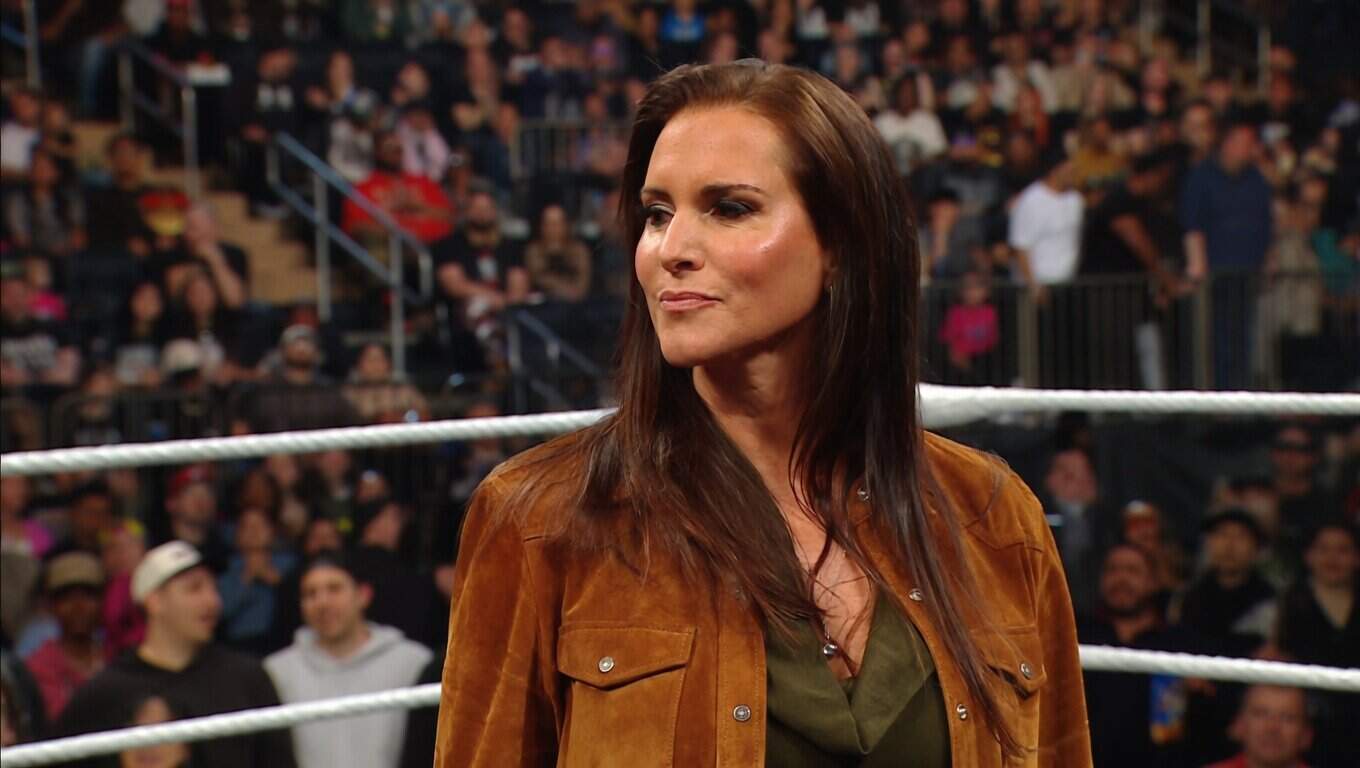
Stephanie McMahon enters the Hall of Fame as the architect of the modern WWE machine
The Coronation of the Billion Dollar Princess
The neon-soaked streets of Las Vegas are currently bracing for the arrival of WrestleMania 41, but the most significant move of the week has already taken place far from the ring at Allegiant Stadium. WWE confirmed this morning that Stephanie McMahon will finally take her place in the Hall of Fame Class of 2026. This isn't just another legacy induction for a family member; it is a tactical validation of the woman who bridged the gap between the chaotic car-crash television of the Attitude Era and the multi-billion-dollar global conglomerate TKO has become today.
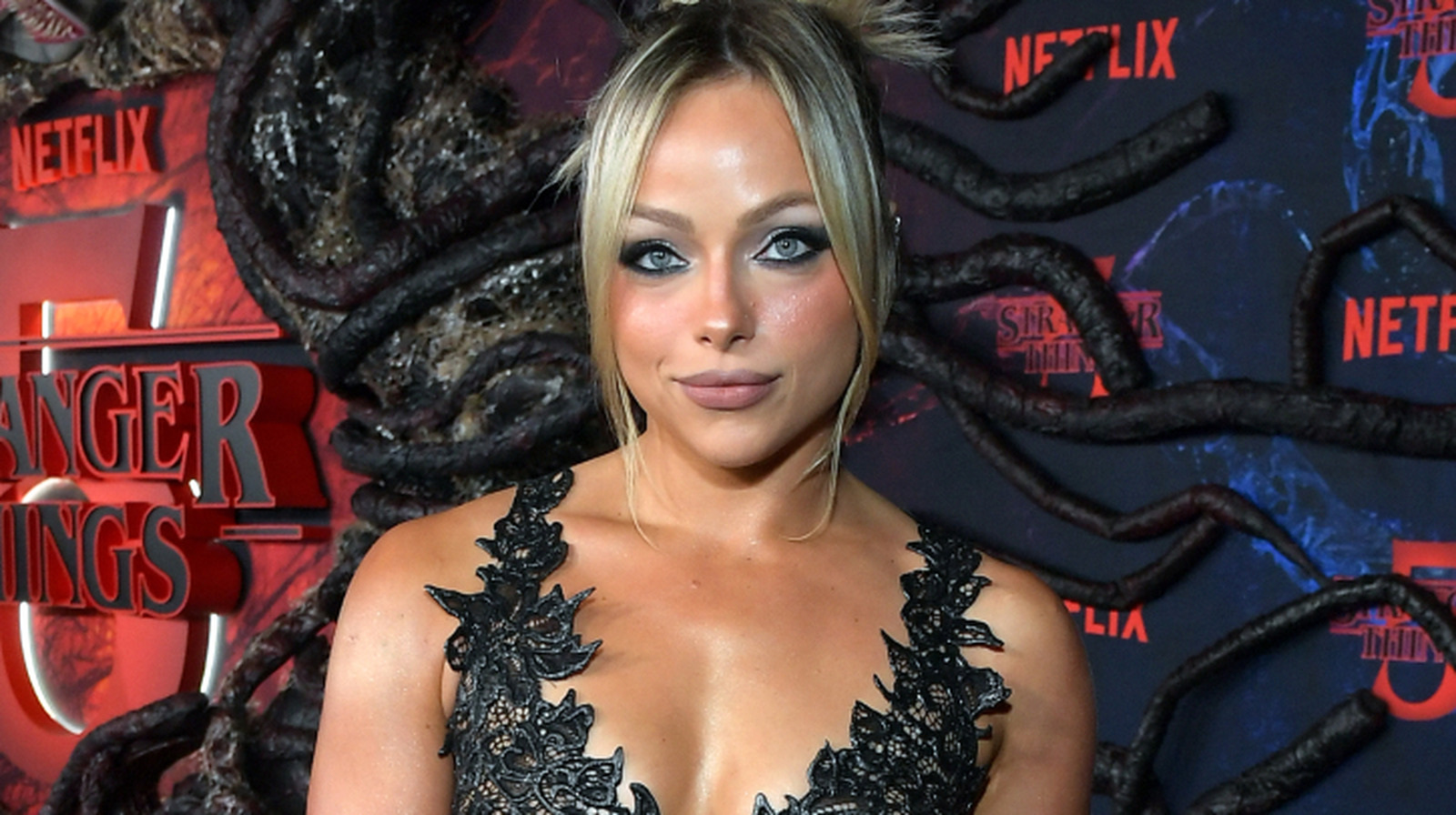
The timing is deliberate. As John Cena prepares for his farewell match on April 19 and Cody Rhodes looks to cement his era against the Bloodline on April 20, the company is using the Hall of Fame ceremony to close the book on its most turbulent transition. Stephanie’s induction serves as a public signal that the internal power struggles of 2023 are buried. She returns not as a conquering executive, but as a celebrated pioneer, a move that current stars like Liv Morgan have been quick to champion in the media.
Speaking to Wrestling Inc, Liv Morgan expressed a sentiment that seems to be echoing throughout the locker room. Morgan’s excitement isn't just corporate fluff; it reflects the reality of a roster that grew up under the 'Women’s Evolution' banner that Stephanie personally curated. For the current crop of talent, Stephanie represents the executive who stopped treating the women's division as a bathroom break and started treating it as a revenue driver.
The Branding of a Revolution
To understand Stephanie McMahon’s impact, you have to look past the character who spent years slapping superstars in the center of the ring. Her real work happened in the boardroom, specifically in the mid-2010s. Before the 'Four Horsewomen' of Becky Lynch, Charlotte Flair, Sasha Banks, and Bayley were household names, Stephanie was the primary advocate for the shift in terminology from 'Divas' to 'Superstars.' It was a rebranding exercise that succeeded because it was backed by a massive infrastructure change.
The numbers tell the story of this tactical shift. In 2014, the average length of a women's match on Raw was less than four minutes. By 2018, that number had tripled. Stephanie wasn't just a figurehead during this; she was the one selling the idea to advertisers who had previously been wary of the more salacious elements of the product. She realized earlier than most that the growth of the WWE brand required a shift toward inclusivity, not out of altruism, but because it was the only way to secure the massive TV deals that eventually followed.
However, the process was not without its friction. While the 'Women’s Revolution' is now remembered as a triumphant march toward the main event of WrestleMania 35, the early stages often felt forced and overly corporate. The 'three-team' structure introduced on Raw in July 2015—Team B.A.D., Team Bella, and PCB—was a mess of conflicting motivations that stifled the very wrestlers it was supposed to highlight. It took the company nearly a year to realize that the talent didn't need a corporate spokesperson; they just needed time on the clock.
The Shadow of the Authority
Stephanie’s career is defined by her ability to oscillate between the boardroom and the squared circle. Her run as part of 'The Authority' alongside Paul Levesque (Triple H) from 2013 to 2016 remains one of the most effective, if occasionally exhausting, heel runs in modern history. They were the perfect antagonists for the 'Yes! Movement' of Daniel Bryan, playing the roles of out-of-touch executives with a terrifying degree of precision. It worked because it felt uncomfortably close to the truth.
Critics often point to the fact that Stephanie rarely received 'comeuppance' in the way a traditional heel would. Unlike her father, who was frequently humiliated in the ring, Stephanie’s character often remained untouchable, which led to a sense of stagnation in several storylines. This was a tactical error that sometimes left her opponents looking weaker than when the feud began. The goal of a corporate heel is to eventually be toppled, but the 'Billion Dollar Princess' often seemed to survive every storm with her dignity intact, a luxury most wrestlers aren't afforded.
Philanthropy is the future of marketing, it’s the way brands will win.
That quote, tweeted by Stephanie in 2015, became a lightning rod for criticism. It revealed the cold, calculated nature of the WWE's charitable efforts and its push for 'diversity.' To many fans, it suggested that the 'Women’s Evolution' was merely a cynical marketing ploy. But looking at the state of the industry in April 2026, it’s hard to argue with the results. Whether the motivation was marketing or genuine progress, the outcome was the same: a more professional, more profitable, and more respected division.
The Executive Transition and the TKO Era
The road to this Hall of Fame induction was nearly derailed by the boardroom drama of 2022 and 2023. When Stephanie took a leave of absence in May 2022, the wrestling world was stunned. Her subsequent return as Co-CEO, followed by her resignation upon her father’s return in early 2023, felt like the end of the McMahon dynasty. Many assumed she would never return to the fold, especially after the TKO merger changed the DNA of the company's leadership.
Yet, here we are a week away from WrestleMania 41, and she is being brought back into the inner circle. This is a brilliant strategic move by Nick Khan and Paul Levesque. By inducting Stephanie now, they are reclaiming the 'McMahon' name for the positive aspects of the company’s history while distancing the product from the scandals that defined its previous era. It is a clean break that uses nostalgia to mask a total change in corporate governance.
The current roster, including veterans like Charlotte Flair and rising stars like Tiffany Stratton, owes a direct debt to the path Stephanie cleared. She was the one who pushed for the first-ever women's match in Abu Dhabi in 2017, an event that saw the crowd chant 'This is Hope.' It was a moment of genuine cultural impact that transcended the scripted nature of the sport. Those are the beats the Hall of Fame video package will emphasize, and they are entirely earned.
A Legacy Defined by Evolution
As we look toward the festivities in Las Vegas on April 19, the induction of Stephanie McMahon stands as a testament to her longevity. She has been on television since 1999, evolving from the innocent daughter in the Ministry of Darkness storyline to the most powerful woman in sports entertainment history. Her career spans the transition from VHS tapes and cable TV to five billion dollar streaming deals with Netflix.
Is there a level of nepotism involved? Of course. You cannot tell the story of Stephanie McMahon without acknowledging the platform she was born into. But plenty of children of legends have failed to maintain the family business, let alone expand it. Stephanie didn't just maintain the WWE; she modernized it. She took a business that was seen as a low-brow carnival and helped turn it into a blue-chip asset that major networks fight over.
The critical eye must also note the talent that was left behind during her tenure. The 'Diva' era she helped dismantle was filled with workers who were never given the chance to show what they could do, often fired as soon as they reached the age of thirty. The transition was brutal, and the revisionist history often forgets the women who paved the road in the early 2000s—Trish Stratus, Lita, and Molly Holly—who had to fight for every second of screen time in a much more hostile environment.
Ultimately, Stephanie McMahon’s induction is the right call for 2026. She is the final piece of the puzzle for a company that is currently firing on all cylinders. As WWE prepares to take over the Las Vegas Strip for WrestleMania 41, honoring the woman who built the modern stage is a necessary act of closure. She was the face of the company during its most difficult years, and her entry into the Hall of Fame confirms that her influence will be felt long after the McMahon name has left the masthead.
The ceremony on Friday night will likely be an emotional affair, but for the analysts watching from the side, it is a masterclass in corporate PR and legacy management. WWE is honoring its past to protect its future, and there was no one better at that particular game than Stephanie herself. As she stands on that stage in Vegas, she won't just be a Hall of Famer; she’ll be the architect who saw the future before anyone else did.
Read Next
- Stephanie McMahon joins the Hall of Fame as WWE's most influential outlier
- Dominik Mysterio is retiring John Cena and the heat is going to be nuclear
- Liv Morgan, John Cena, and the bizarre booking of a WrestleMania farewell
- Rhea Ripley's injury status ruins the WrestleMania 41 booking plan
- 🏆 WrestleMania 41 — Full Coverage Hub
Ringside Collectibles WWE Championship Replica Side Plate Box Set
Customizable side plates to make your replica belt feel truly yours.
Frequently Asked Questions
When is Stephanie McMahon being inducted into the Hall of Fame?
What role did Stephanie McMahon play in the Women’s Evolution?
Which WWE Superstars have commented on Stephanie McMahon’s induction?
How did Stephanie McMahon change the length of women's matches in WWE?
What were the original teams in the 2015 WWE Women’s Revolution?
More Coverage
Why the Broken Hardy act is a major gamble for Philadelphia
3 hours ago
WWE reshuffles NXT pipeline as Meghan Walker eyes main roster debut
4 hours ago
Andre Chase pulls back the curtain on the Shawn Michaels era at NXT
6 hours ago
The Andre Chase effect: Why Shawn Michaels is the ultimate NXT headmaster
6 hours ago
Drew McIntyre sidelined following brutal SmackDown encounter
9 hours agoWWE's New York gamble is a calculated risk ahead of WrestleMania 42
10 hours agoMore Analysis
Stephanie McMahon joins the Hall of Fame as WWE's most influential outlier
3 months, 1 week agoStephanie McMahon finally gets her Hall of Fame flowers in Vegas
3 months ago
Stephanie McMahon’s Hall of Fame induction is the final data point in the TKO pivot
3 months ago
Stephanie McMahon's HOF Induction: The Corporate Architect's Crowning Moment
3 months ago
Wrestling Twitter is tearing itself apart over Stephanie McMahon's HOF induction
3 months ago