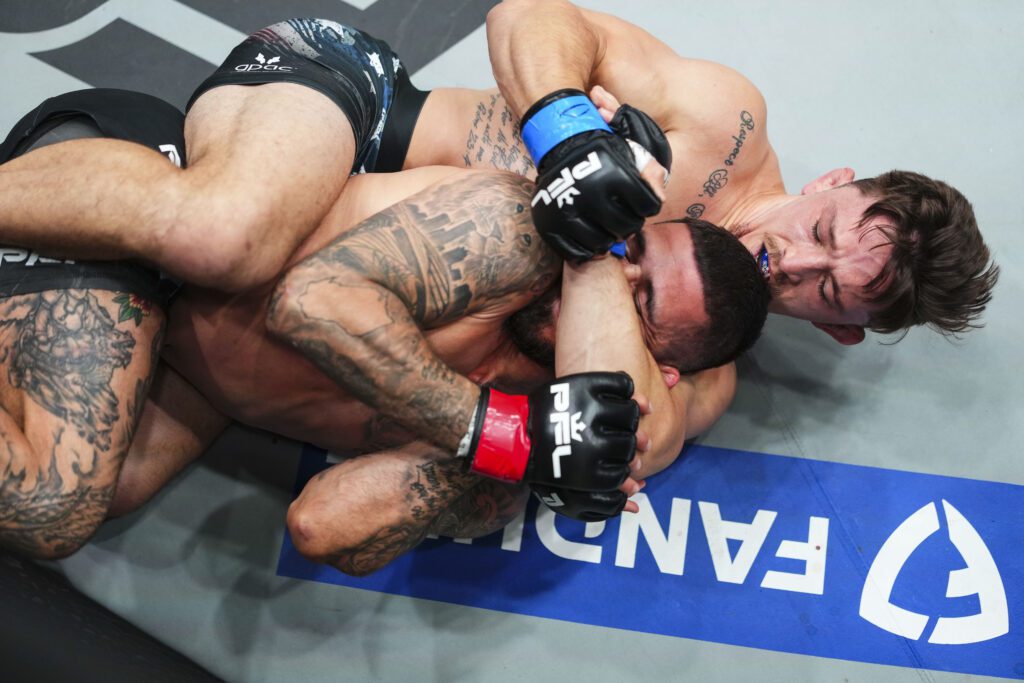
The Illusion of the Veteran Matchup
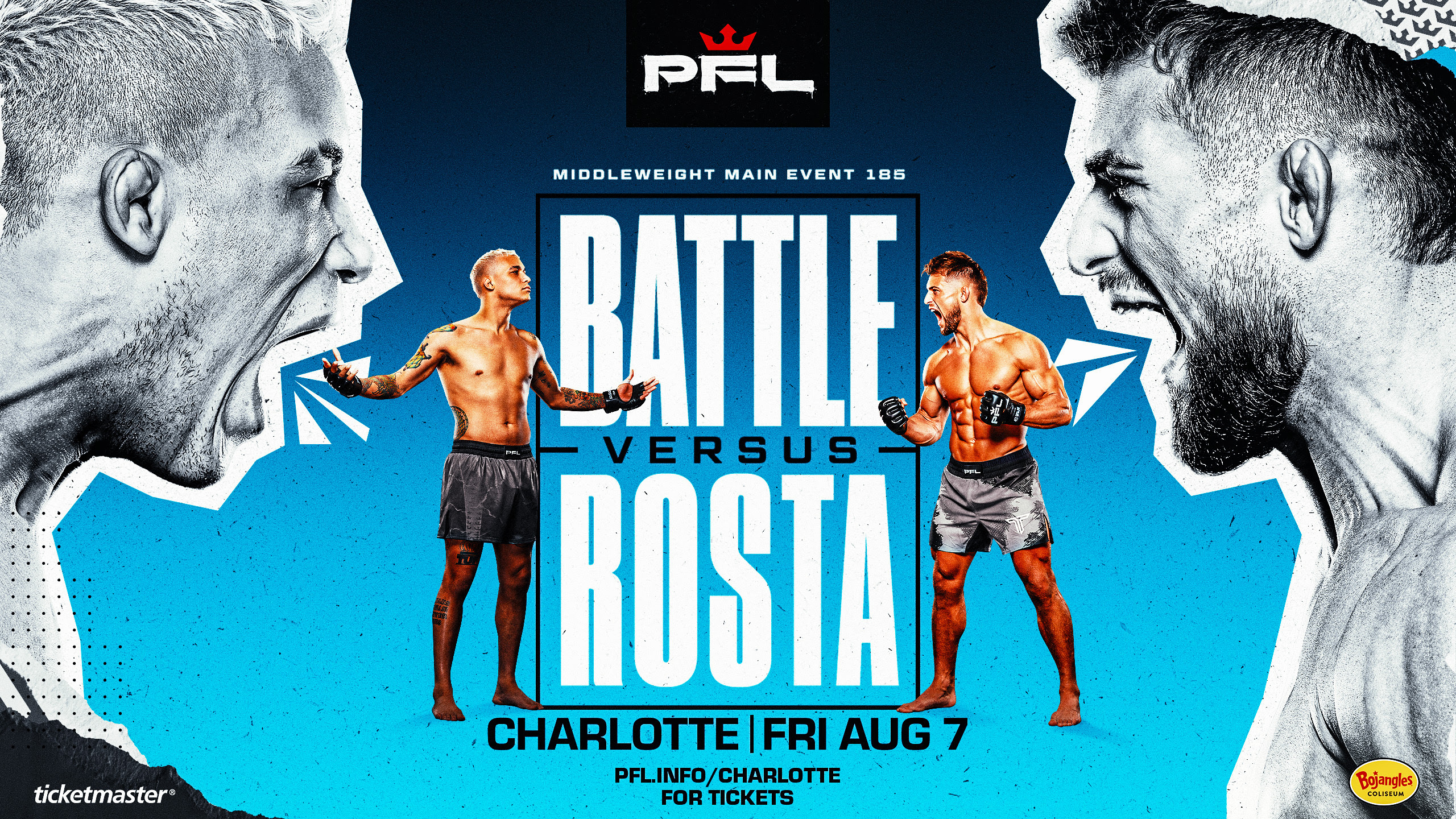
The promotion is selling this as a clash of eras. They always do. Tonight at Wintrust Arena in Chicago, the PFL puts former world champion Sergio Pettis in the cage against Mitch McKee. It looks like standard, competitive matchmaking on paper. You take a veteran with severe name value and pit him against an undefeated prospect.
But standard matchmaking rarely tells the whole story. This is a stylistic nightmare engineered to launch a new contender.
Pettis brings the championship pedigree. He brings the slick, outside-fighting style that has frustrated opponents for over a decade. He knows how to manage a crowd, how to pace himself, and how to read an opponent's rhythm. McKee brings zero name recognition to the casual fan. What he does bring is a suffocating grappling base and an unblemished professional record.
This is not a showcase fight for a former champion. This is a stylistic execution disguised as a main event.
The Striker's Dilemma
Sergio Pettis has always relied on elite distance management. His footwork is his primary line of defense. He slides out of the pocket, counter-punches with absolute precision, and uses stabbing leg kicks to disrupt his opponent's forward motion. It is a beautiful, highly technical style when it works.
But that style requires open space. It demands a level of striking respect from the opponent. If a fighter is willing to eat a stiff jab simply to secure a body lock, the geometry of the cage changes entirely.
This has always been the structural flaw in the pure striker's game plan. You can only circle the perimeter of the cage for so long before you hit chain-link fencing. Once your back touches the cage, elite footwork becomes completely irrelevant. You cannot pivot backward through a solid object.
McKee does not care about Sergio Pettis's highlight reel. He fights like a man trying to walk through a brick wall. His striking is purely functional. He uses it as a vehicle to close the distance.
He throws heavy hooks to force his opponent to cover up and raise their guard. The moment Pettis raises his hands to defend his chin, McKee will drop his levels. He does not shoot raw, space-covering double legs from the center of the cage. That would be too easy for a veteran to sprawl against.
Instead, he backs you into the fence. He initiates the clinch. He uses dirty boxing to break your posture. Then he violently drags you to the mat.
The Problem with PFL Matchmaking
The PFL needs to take a hard, honest look at how it builds its stars. The promotion loves to market its regular season as a pure, objective meritocracy. Win your fights, earn your points, and advance to the playoffs. It sounds perfectly fair to the audience.
But when the promotion controls the regular-season matchups, the meritocracy becomes an illusion. Throwing an established, distance-reliant striker to an undefeated, heavy-pressure wrestler is lazy booking. It is the oldest trick in the combat sports playbook.
You buy a veteran's name value and you feed it to your next big thing. The promotion gets to slap the words "former world champion" on the prospect's promo package. But the actual product inside the cage usually ends up looking sad and one-sided.
It strips the veteran of their dignity in exchange for building a prospect's highlight reel. It also robs the fans of a truly competitive main event. A true test for McKee would be another elite grappler. Someone who can stuff the takedown and force him to strike for three full rounds. Giving him a veteran who historically struggles with heavy chain wrestling feels like a setup.
The Mechanics of Cage Control
Let us look at the specific paths to victory. For Pettis, the objective is simple to understand but incredibly difficult to physically execute. He has to stay off the fence at all costs.
He needs to use aggressive lateral movement. Every time McKee pushes forward, Pettis needs to pivot and exit on a sharp angle. He cannot rely on his jab alone. A jab does not stop a committed wrestler driving through the hips.
He needs to time the uppercut perfectly as McKee changes levels. He needs to land hard, damaging calf kicks early to compromise McKee's explosive forward motion. If McKee's lead leg gets chewed up in the first three minutes, his ability to shoot power takedowns evaporates.
But McKee knows this. His corner knows this. His entire training camp was built around nullifying that exact strategy.
McKee's game plan will be singular and entirely focused on cage cutting. He will not follow Pettis in circles. He will take lateral steps to actively cut off the escape routes. He will throw high-volume, low-accuracy combinations purely to force Pettis to back up in a straight line.
Retreating in a straight line against a wrestler is a death sentence in modern mixed martial arts. Once Pettis is within two feet of the fence, McKee will shoot. He will bury his head under Pettis's chin, break his posture, and secure the double underhooks.
The Grueling Reality of Top Pressure
If this fight hits the mat early, the competitive portion of the evening is over. Not necessarily via a quick submission, but via exhausting, suffocating control time.
Pettis has a highly underrated guard. He is active off his back. He can throw up triangles and threaten with armbars. But modern MMA judging does not reward defensive activity off the back. It rewards top control and offensive posture.
McKee is not going to dive wildly into Pettis's guard and try to pass to mount immediately. He is far too disciplined for that. He will staple Pettis's hips to the canvas.
He will use short, grinding elbows. He will make Pettis carry his entire body weight for long stretches of time. This is the exhausting reality of facing an elite top-control grappler. Every time you try to build a base to stand up, they break your posture back down.
Your arms fill with lactic acid. Your breathing gets shallow. By the middle of the second round, the idea of throwing a knockout punch becomes a physical impossibility. Your legs simply will not generate the power anymore.
The Final Verdict
The Wintrust Arena crowd is going to be incredibly loud tonight. Chicago fans do not do quiet. They want violence. They want a striking battle. They want a knockout.
But they are not going to get one. They are going to get a grinding, systematic, and highly untelevised dismantling.
This is the ruthless economics of the PFL structure. You have to win decisively to earn points. Taking unnecessary risks on the feet against a counter-striker like Pettis is mathematically foolish. McKee is not here to entertain the crowd. He is here to secure his placement in the bracket.
I do not see a realistic path to victory for the former champion. Pettis is too smart and too tough to get blown out in the opening minutes. He will likely win the very first few exchanges on the feet. He might even land a clean counter right hand that makes the arena erupt.
But fights are not won in the first two minutes. They are won in the grueling, suffocating reality of the second and third rounds.
McKee will eat a few shots, close the distance, and push Pettis against the cage. He will drag the fight to the canvas repeatedly. Pettis will survive, because veterans know how to survive. He will not get finished.
But he will spend the vast majority of the fight staring up at the arena lights, carrying the physical weight of a younger, stronger opponent. The judges will not have a difficult job tonight.
My prediction is simple. Mitch McKee wins a grueling, ugly unanimous decision. He moves to 11-0. The PFL gets their shiny new undefeated contender, and Sergio Pettis is left wondering where he fits into the modern bantamweight picture.