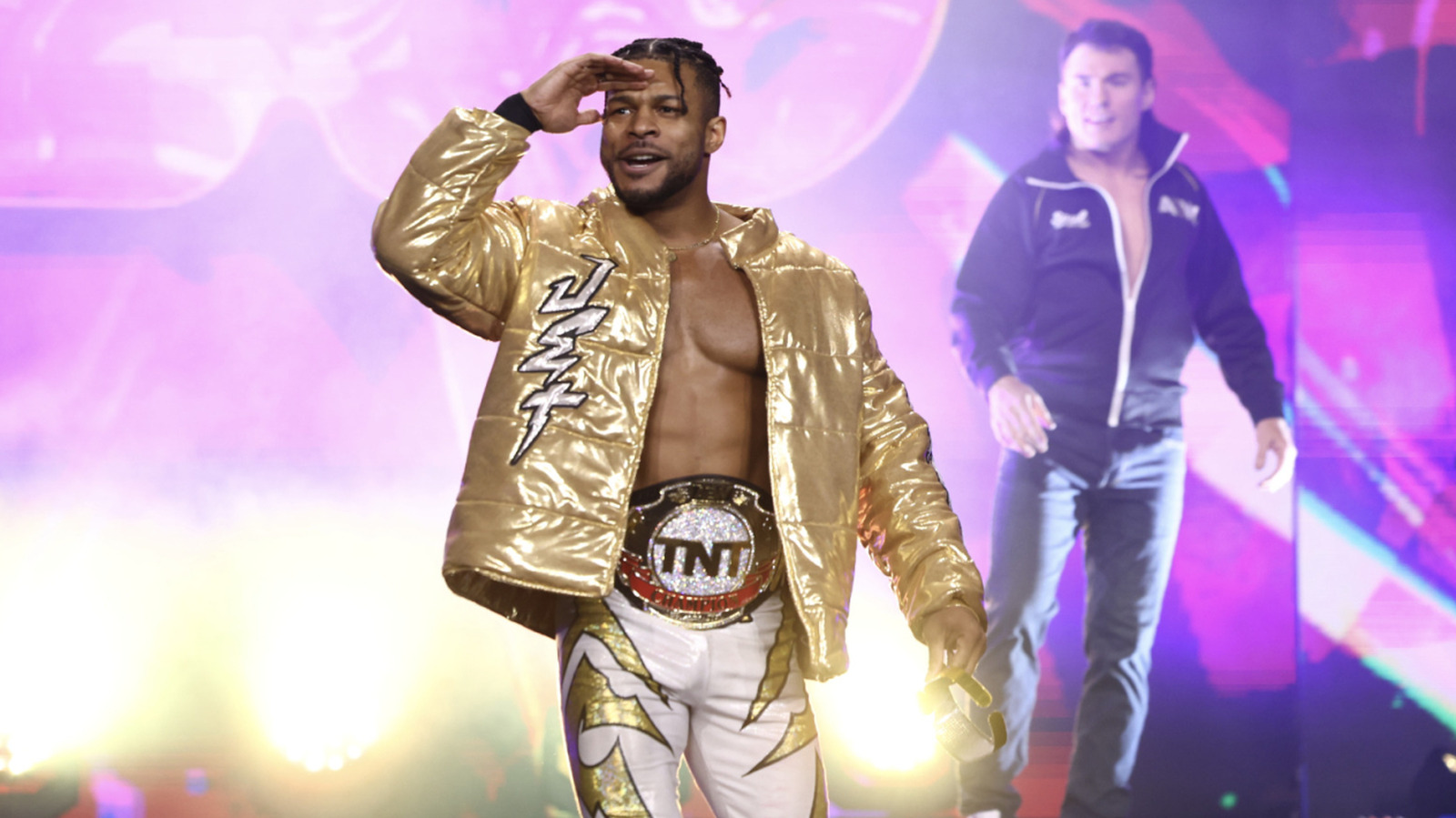
Why Rush and Darby Allin exposed AEW's biggest booking flaw
The burden of the go-home show
Booking the final television broadcast before a major pay-per-view is a historically miserable assignment. You are trapped between two competing goals. You have to sell the weekend's event to a hesitant audience without giving away the physical interactions people are actually paying to see. You have to protect your biggest stars while simultaneously making them look vulnerable enough to create genuine doubt.
It is a tightrope walk that most promoters fail. Tony Khan usually approaches this specific problem by throwing a violently chaotic main event at the wall. On Wednesday night, that meant putting Rush and Darby Allin in the ring together.
The March 25 edition of AEW Dynamite was the absolute final stop before Dynasty takes over Kansas City this Sunday. The card for Dynasty is already carved in stone. The promotional heavy lifting has been completed. The video packages are in the can.
What Khan needed on Wednesday was a localized car crash to keep the live audience awake and ensure the viewer at home didn't change the channel. Rush and Allin delivered exactly that. But the match also highlighted the glaring structural issues with AEW's weekly format.
The anomaly of Darby Allin
To understand why this main event worked visually, you have to understand the strange space Darby Allin occupies in the wrestling industry. He operates on an entirely different frequency than the rest of the AEW roster. He treats his own body as a blunt projectile.
When he throws a tope suicida to the outside, he doesn't politely catch himself on his opponent to break the fall. He crashes. He skids across the floor. He makes you wince.
Darby has somehow survived his own recklessness to become one of the most reliable television draws the company has. He is completely bulletproof. He can lose five matches in a row, vanish for a month, and the crowd will still erupt for the opening notes of his theme song.
He survived the pressure of carrying Sting's final run, and he emerged on the other side of Revolution 2024 as a fully formed solo act. His offensive output is frantic. He scrambles. He scratches. He wrestles like a man who is actively drowning and trying to find the surface.
This makes his defensive selling incredibly compelling. When Darby gets hit, he looks like he has been shot. Every chop caves his chest in. Every suplex looks like it broke his neck. He is the perfect victim for a heavy-hitting heel because he takes bumps that sensible, self-preserving human beings simply refuse to take.
The burden of the TNT Championship legacy
You cannot discuss Darby Allin's current position without looking back at his defining runs with the TNT Championship. During the pandemic era and immediately following it, Darby elevated that specific title to a level that occasionally overshadowed the actual World Championship. He defended it furiously.
He wrestled men twice his size and absorbed terrifying beatings to prove that the belt mattered. That history informs how the audience watches him today. When he is in the ring, the fans remember the wars with Miro and Cody Rhodes. They remember the sheer attrition of his title defenses.
But operating without a championship forces a wrestler to rely entirely on their personal aura. Darby has managed this transition better than almost anyone else in the company. He doesn't need a physical prop to validate his presence in the main event scene. However, this also makes him an incredibly convenient tool for the booking committee.
Because he doesn't need a title, and because a loss doesn't permanently damage his connection with the crowd, he is frequently used to plug holes in the card. Need a spectacular main event on three days' notice? Throw Darby in there. He will bleed for the ratings. But leaning on that crutch too often diminishes the special nature of his matches.
The calculated violence of Rush
Rush, conversely, is a master of the sudden, humiliating cutoff. He doesn't just want to hit you. He wants to embarrass you in front of your friends and family.
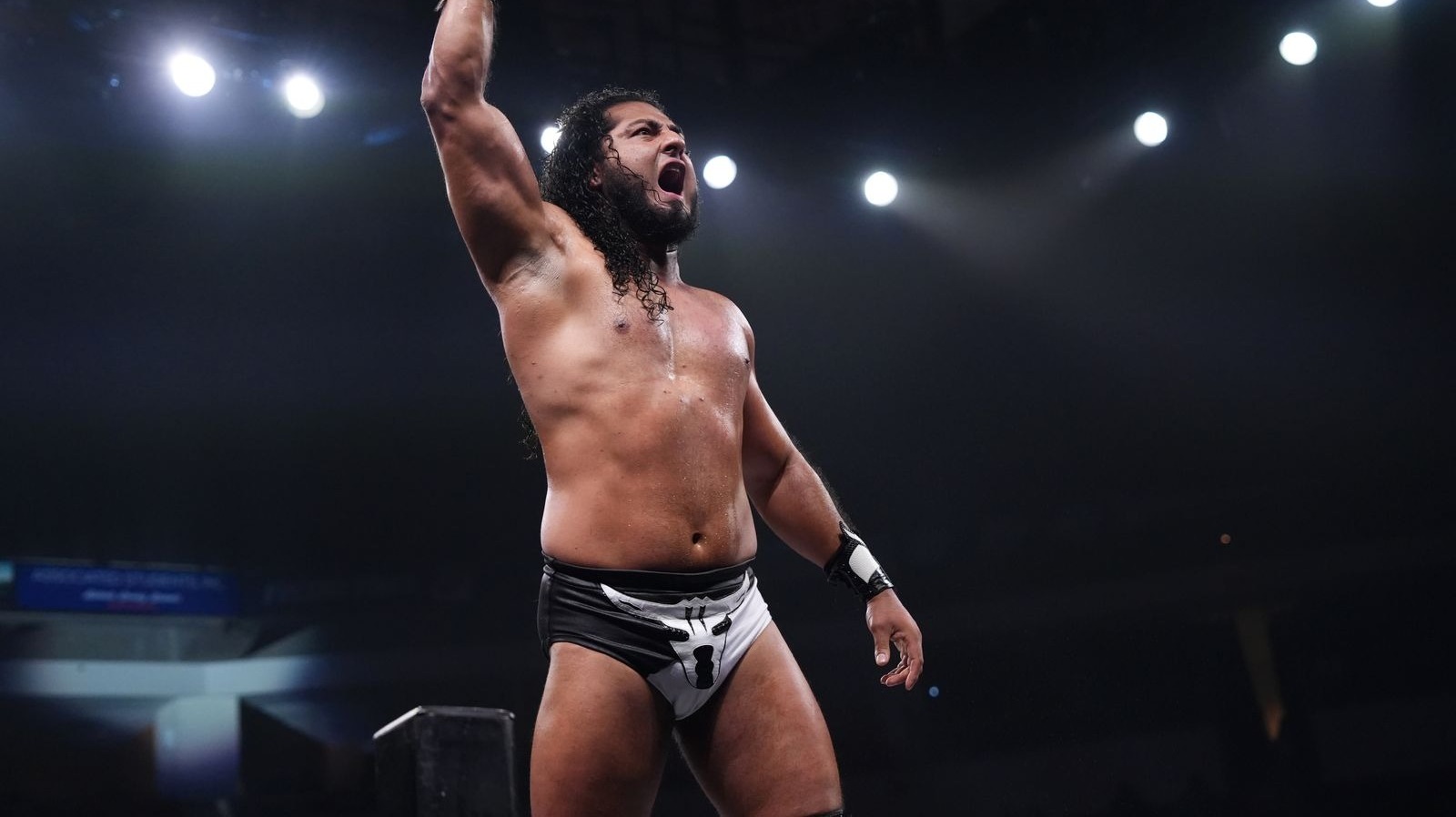
There are very few performers currently working on American television who understand physical charisma quite like El Toro Blanco. He controls the squared circle with a terrifying arrogance. Watch how he dictates the pacing. He deliberately slows the match down. He plays to the hard camera.
He kicks the bottom rope in frustration. He paces around the ring like a man who knows he can end the fight at any second, but chooses to drag it out for his own amusement. It is textbook, old-school heel work.
But unlike the classic villains of the 1980s, Rush's offense is wrapped in a modern, brutally hard-hitting package. He is a legitimate heavyweight who moves like a cruiserweight. Rush spent years cultivating his violent persona in Mexico with CMLL and later in Ring of Honor.
As the founding father of Los Ingobernables, he fundamentally changed how modern heels operate. He didn't cheat to win. He simply hit harder than the rules allowed.
The faction problem in modern wrestling
Rush's situation is further complicated by his association with La Faccion Ingobernable. Factions are the lifeblood of modern professional wrestling, providing built-in alliances and logical feuds. But AEW has historically struggled to balance individual momentum with group dynamics. LFI looks incredible on paper. They dress like stars, they wrestle like killers, and they possess a dangerous, unpredictable energy.
Yet, they are frequently booked as an afterthought. They disappear from television for weeks at a time, only to randomly resurface when a babyface needs a gang to fight. Rush is the undisputed centerpiece of the group, but he is dragged down by the start-and-stop nature of their television time. If you want Rush to be a terrifying final boss, you have to present his entire crew as a genuine threat.
Instead, the promotion relies on his individual brilliance to carry the segment, ignoring the fact that his faction's irrelevance undercuts his overall presentation. It is incredibly difficult to buy into a heel's dominance when you know his stablemates are sitting in the catering line.
Tactical spacing and the art of the cutoff
If you watch the tape of Wednesday's main event back, you will notice how Rush manipulates the geometry of the ring. He rarely chases his opponents. Chasing expends valuable energy and opens you up to counter-attacks.
Instead, he cuts off the angles. When Darby rolls to the outside to create separation, Rush doesn't immediately follow him. He steps to the center of the ring, forcing the referee to start the count, and waits for Darby to burn his own oxygen rushing back inside.
This is elite tactical wrestling. Darby is a momentum-based fighter. His offense requires a running start. He needs to bounce off the ropes to generate the force required to knock down heavier opponents.
Rush neutralizes this by maintaining a rigid, central position. Every time Darby tried to hit the ropes, Rush was already standing in his path with a stiff forearm. By denying Darby the ropes, Rush essentially stripped him of his entire offensive playbook.
You cannot hit a Coffin Drop if you cannot create the requisite distance to climb the turnbuckle safely. The match became a claustrophobic trap. Darby was forced to fight out of the corners, which is exactly where Rush is most dangerous. Right around the 14-minute mark, the physical toll became glaringly obvious.
The mechanics of a beating
His corner dropkick, the Bull's Horns, remains one of the most fiercely protected maneuvers in his arsenal. The entire main event was built around the lingering threat of that single strike. Every time Darby found himself slumped in the turnbuckle, the crowd inhaled.
They knew what was coming. Rush teases the move perfectly. He charges at full speed, hits the brakes, casually kicks his opponent in the face, and walks away laughing. It builds immense heat because it denies the audience the violence they were anticipating.
When Rush tossed Allin into the barricade, Darby didn't just hit the steel. He threw himself into it with violent abandon. He makes his opponents look like absolute murderers.
This dynamic has defined Darby's entire tenure in the promotion. He survived brutal wars against Samoa Joe and Jon Moxley using the exact same formula. He absorbs an ungodly amount of punishment, fires up for a fleeting, desperate moment of hope, and relies on his speed. But executing this specific type of brutal exhibition just 96 hours before a major premium live event is a deeply questionable choice.
Where the booking falls flat
Here is where the current AEW presentation frustrates me. The promotion has developed a terrible habit of putting on incredible television matches that exist entirely in a vacuum. Why exactly are Rush and Darby fighting four days before Dynasty?
The sheer work rate is excellent. The physical execution is flawless. But the connective tissue tying this violence to the broader narrative is completely missing. Tony Khan relies far too heavily on the standalone exhibition format to fill his weekly television time.
When you watch a show like Dynamite, especially a go-home episode, you want to feel the narrative pushing heavily toward Sunday. You want the angles to burn hot. You want the stakes to be clearly defined. Instead, the audience is frequently handed random matches that serve absolutely no broader purpose.
Rush deserves significantly better than being treated as a generic final boss for babyfaces to survive before a pay-per-view. He is a legitimate, main-event caliber talent. Yet, he is booked like an interchangeable obstacle.
He shows up on television, beats someone to a pulp, puts on a highly praised match, and then quietly disappears into the background for three weeks. The match ruled, but the reasoning behind its existence was entirely hollow.
The diminishing returns of work rate
There is a broader conversation happening behind the scenes in professional wrestling right now. For the past five years, the prevailing logic was that match quality would inevitably drive television viewership. If you put two elite athletes in the ring and gave them twenty minutes, the audience would naturally tune in.
Wednesday night proved that this theory is deeply flawed. Rush and Allin delivered a masterpiece of violence. If you rate matches on a star system, this was an easy home run. But the modern wrestling fan has been completely desensitized to great wrestling.
When every single episode of Dynamite features a pay-per-view quality exhibition, the baseline shifts. A great match is no longer a special attraction. It is merely the minimum requirement. This is why the lack of narrative stakes is so damaging to the product.
The audience knows that Darby and Rush will wrestle a great match. They do not need to watch it live to confirm that fact. They can simply catch the highlights on social media the following morning. To demand a live viewer's attention for two hours, you have to offer them something unpredictable.
Looking toward Dynasty
AEW Dynasty arrives this weekend. The Kansas City crowd will be loud, and the pay-per-view will undoubtedly deliver four hours of excellent professional wrestling. That is the baseline expectation for this company. Khan rarely misses on Sunday nights.
But standalone television main events like Rush versus Darby highlight the current creative ceiling of the weekly product. Darby will go into Dynasty battered, bruised, and heavily taped. That is his default state of being.
He will likely throw himself off a high place, and the fans will cheer wildly. But what exactly happens to Rush? He delivered a stellar main event performance on national television. He proved, once again, that he can anchor the final segment of Dynamite and keep the audience engaged.
If recent history is any indicator, Rush will be relegated to a meaningless backstage segment next week. Or worse, he simply won't be booked at all. AEW struggles immensely with following through on momentum.
The reality of the current product
When a wrestler gets organically hot outside of a predefined, long-term storyline, the company rarely pivots to capitalize on it. They stick rigidly to the spreadsheet. This inflexible approach to booking is exactly why the television ratings have plateaued.
You cannot condition your viewing audience to expect incredible matches with zero long-term consequences. If a violent, bloody main event doesn't alter the trajectory of either man's career, why should the viewer invest emotionally in the outcome?
Wednesday's Dynamite was exactly what we have come to expect from AEW in 2026. It featured exceptional in-ring action. It featured talented guys working incredibly hard to entertain the crowd. And it left you wondering if any of it actually matters in the grand scheme of things.
Darby Allin will always be fine. He has built a connection with the audience that supersedes wins, losses, and questionable booking decisions. He is a made man in the eyes of the fanbase.
Rush does not have that same luxury. He needs consistent, protected booking to maintain his dangerous aura. He needs to string together meaningful wins against established names on television. Wednesday night was a stark reminder of how brilliant he is as a violent, imposing heel. Now, the promotion has to actually do something substantial with him.
WWE 2K26 Standard Edition
The most complete wrestling simulation featuring a massive 400-star roster.
Frequently Asked Questions
What was the main event of the March 25 edition of AEW Dynamite?
When is the AEW Dynasty pay-per-view event taking place?
How does Tony Khan typically book AEW go-home shows?
Why is Darby Allin considered a reliable television draw for AEW?
What impact did Darby Allin have on the TNT Championship?
More Coverage
Is STEVEN BORDEN finally prepping for an AEW in-ring debut?
3 hours ago
Steven Borden's potential debut is AEW's next big developmental gamble
3 hours ago
Tony Khan is laying the groundwork for Sting's son to debut in AEW
3 hours ago
AEW's Redemption card is a mess of missing pieces and bad timing
21 hours ago
AEW medical department faces pressure as mid-card injury list expands
23 hours ago
AEW and TNA are fighting two very different data wars
23 hours agoMore Analysis
Why Darby Allin and Rush just stole the show before AEW Dynasty
3 months, 3 weeks ago
Why Darby Allin won't survive Rush at AEW Dynasty
3 months, 3 weeks ago
AEW is cramming 10lbs of matches into a 5lb bag for Dynamite
4 weeks ago
MJF vs Darby Allin on free TV is Tony Khan's latest booking mistake
3 months, 1 week ago