Why modern wrestling is actually just a series of last-minute audibles

The illusion of the master plan
Professional wrestling loves to sell the idea of a master plan. Promoters, executives, and fans alike are absolutely obsessed with the concept of long-term storytelling. We map out WrestleMania main events a full calendar year in advance on message boards. We assume every sideways glance in a backstage segment is a meticulously placed breadcrumb leading to a massive payoff down the road.
It feels good to believe someone is steering the ship with a steady, omniscient hand. The mythology of the business is built on these grand narratives. We revere the slow builds of the past, holding them up as the standard by which all modern booking should be judged.
But that romanticized view is rarely the reality of the wrestling business. The truth is far messier, heavily reliant on panicked audibles, sudden free-agent acquisitions, and spots called on the fly inside the ring. If you look at the news cycle from just the past few days, a glaring pattern emerges.
From main event storylines in WWE to viral moments in AEW, the industry is currently running on last-minute decisions. The curtain is constantly being pulled back to reveal that nobody really has it all figured out. Sometimes these frantic pivots result in a flash of unscripted magic.
Most of the time, they simply expose a glaring lack of foresight from the people running the shows. The contrast between the polished television product and the chaotic behind-the-scenes reality has never been sharper.
Burning the Bloodline dream match
There is no better example of this rushed approach than WWE’s handling of Roman Reigns and Jacob Fatu. For years, the Bloodline saga was held up as the gold standard of methodical booking. Reigns' historic 1,316-day run as champion was defined by its deliberate pacing.
Think back to the slow burn with Jey Uso, or the masterful integration of Sami Zayn that carried the company through an entire year of programming. Those stories worked precisely because they refused to be rushed. They lingered in the tension. Every raised eyebrow or ignored fist bump meant something.
Now, contrasting that careful plotting with the recent Fatu match is jarring. Fatu represents the most dangerous evolution of the Bloodline yet. He is raw, unhinged, and moves with a terrifying violence that Reigns has rarely encountered in his career. The fans instantly recognized him as a main event threat the second he walked through the curtain.
This was a match that easily could have anchored a major stadium show. It had money written all over it. Instead, we are coming out of Backlash on May 9, and WWE has already pulled the trigger. They threw the match onto a B-level premium live event with barely a few weeks of television build.
As Jim Ross noted on his podcast, the booking was rushed, stating bluntly,
"This can't be considered ideal creative."He is absolutely right to call it out. Fatu has been an absolute revelation since debuting, but burning that singles match at Backlash feels like a massive miscalculation.
It reeks of a booking committee that needed a quick ratings pop or a strong main event to anchor a post-WrestleMania card, rather than a natural narrative progression. When you build a character like the Tribal Chief, the downfall or the ultimate challenge needs to feel earned.
Throwing Fatu at him so quickly diminishes both men and shortchanges the paying audience. It exposes the fact that outside of WrestleMania season, WWE often struggles to construct meaningful, long-lasting conflicts without resorting to hot-shot booking.
The New Day's sudden availability
Over in AEW, the reactionary nature of the business is taking a different form. The shocking news of Kofi Kingston and Xavier Woods hitting the free-agent market has immediately shifted the conversation online. The New Day was synonymous with WWE for a decade.
Kingston and Woods are not just mid-card talent; they are institutional pillars. They completely redefined tag team wrestling in the 2010s, moving ridiculous merchandise numbers while consistently delivering classic matches against The Usos. The idea that the TKO regime would let them walk into free agency is staggering in itself.
It suggests a massive shift in how the current corporate structure values legacy talent versus younger, cheaper contracts. But now, they are the shiniest toys on the open market, and the AEW locker room is already making public pitches. When asked about the duo's availability, Will Ospreay admitted he would "love" to see them jump ship.
Ospreay floating the idea of facing them is exciting on paper. An Ospreay match against prime Kingston would be a ridiculous athletic spectacle. Kingston still has an incredible vertical leap, and pairing his timing with Ospreay's frantic pace would tear the house down.
But this entire situation also highlights AEW's chronic addiction to the new arrival. Tony Khan has a notorious habit of debuting stars with massive fanfare, only to let them cool off significantly a month later. If Kingston and Woods debut tomorrow, who loses television time?
Are they instantly slotted into the tag team title picture, bypassing teams that have been grinding on Collision for months? The temptation to hot-shot a debut to pop a television rating is always there. AEW has to resist the urge to just throw them into a random Dynamite main event without a concrete plan.
Furthermore, AEW's current roster bloat makes the idea of absorbing two massive free agents incredibly complicated. Tony Khan is already struggling to find consistent television time for recent high-profile additions. If you bring in Kingston and Woods, the expectation is that they will be featured prominently on television.
That immediately shuffles someone else down the card. It is a delicate balancing act that AEW has historically fumbled. Ospreay's enthusiasm is completely genuine, but the logistical reality of booking them effectively requires careful planning.
Calling it inside the ring
Sometimes the lack of planning happens literally inside the ropes. AEW Grand Slam Australia 2026 just wrapped up, and it was a massive undertaking for the company. It was a clear attempt to prove they can draw well internationally outside of their established market in London.
But a show of that magnitude needs meticulous planning. Instead, the match that generated the most online conversation did so because of a completely improvised moment. Andrade's match featured a bizarre but highly viral kissing spot with an Australian independent wrestler.
As Ringside News confirmed, this was a last-minute decision, thrown together as the match was actively happening. It is a stark reminder of how much trust is placed in the performers to just figure it out under live television pressure. Andrade is a generational talent between the ropes.
His ability to execute complex sequences is nearly unmatched in the current locker room. Yet, throughout his time in both major American companies, he has been constantly hampered by stop-and-start booking. When you don't give a wrestler of his caliber a compelling, heavily structured feud, they are forced to manufacture moments on the fly.
Relying on a spontaneous viral moment to generate buzz for his match in Australia is a symptom of a larger problem. The creative support around him is clearly lacking direction. If you don't give a talent a script they believe in, they will go into business for themselves to make sure people are talking.
The Australian crowd ate up the improvised moment, but it also raises questions about match production. In an era where agents and producers heavily script out television matches, seeing a performer deviate so wildly is surprising. It indicates a level of creative freedom that is refreshing, but it also highlights a breakdown in communication.
If the agented spots aren't working, the talent has to resort to desperate measures to keep the crowd engaged. Andrade is smart enough to know when a match needs a jolt of energy, but he shouldn't have to rely on an unscripted stunt to rescue a stadium-level bout.
The assembly line presentation
The reactionary environment extends beyond the matches and storylines right down to the basic presentation of the talent. Take the recent debut of Lizzy Rain's new WWE entrance theme. Rain recently detailed the process of getting her new music, noting how quickly the entire package had to be assembled before her television appearance.
It is easy to brush this off as a minor production detail, but entrance music is an essential component of a wrestler's identity. It dictates the crowd's initial reaction and sets the tone for the entire segment. Think of the glass shattering for Stone Cold, or the opening notes of Cody Rhodes' theme.
These audio cues are Pavlovian triggers for the live crowd. When a wrestler reveals that their theme came together at the absolute last minute, it strips away the illusion of careful character curation. It suggests a factory line approach to talent development.
When elements are slapped together simply to meet a television deadline, you often end up with generic, forgettable rock loops. Def Rebel has faced heavy criticism for this exact issue over the last few years. Everything in modern wrestling feels like it is moving at 1.5x speed.
There is no time to let things breathe, no patience to test an idea on the house show loop before putting it on national television. The relentless demand for content forces both major companies into a state of permanent scrambling. The aesthetic polish hides a frantic, disorganized core.
Finding the balance
This is the reality of producing five hours of live television every single week. The master plan rarely survives first contact with the audience. Injuries happen. Contract negotiations stall. A crowd stubbornly refuses to cheer the hand-picked babyface.
When the variables change, the script gets tossed out the window. But there is a difference between necessary adaptability and negligent booking. WWE deciding to give away Reigns versus Fatu at Backlash is the latter. It is burning a high-value asset for a short-term gain.
It exposes a fundamental flaw in how they map out the post-WrestleMania months. AEW suffers from a different variant of the same disease. They rely heavily on the element of surprise, whether it is an unexpected free-agent signing or a wild, unscripted spot in the middle of a stadium show.
It is sugar-rush booking that pops the crowd in the building but leaves the television viewer feeling empty. There has to be a middle ground. You cannot script out every single punch and kick two years in advance.
The business requires a degree of flexibility to capitalize on organic momentum. But you also cannot book premium live events like you are playing a video game on Thursday night. There needs to be a core foundation that remains steady despite the weekly chaos.
Right now, both WWE and AEW are showing their seams. The rushed storylines, the spontaneous viral spots, and the sudden free-agent pitches all point to an industry that is struggling to look past the next television taping. Until promoters regain the confidence to actually let a story breathe, we are going to keep seeing dream matches thrown away on B-shows.
WWE Elite Collection Series 109 The Rock Action Figure
Highly articulated action figure for fans who want to recreate iconic spots.
More Coverage
Smackdown's booking is becoming a repetitive struggle
5 hours agoWhen Ozzy wasn't looking: The weirdest wrestling crossover of the year
9 hours ago
AJ Styles is reflecting on his legacy while others look elsewhere
9 hours ago
Ethan Page is playing a dangerous game with his ego in NXT
9 hours ago
Ethan Page says his custom NXT title was the real top prize and fans are split
9 hours agoGear Check: Sorting the Must-Haves from the Merch Table Filler
10 hours agoMore Analysis
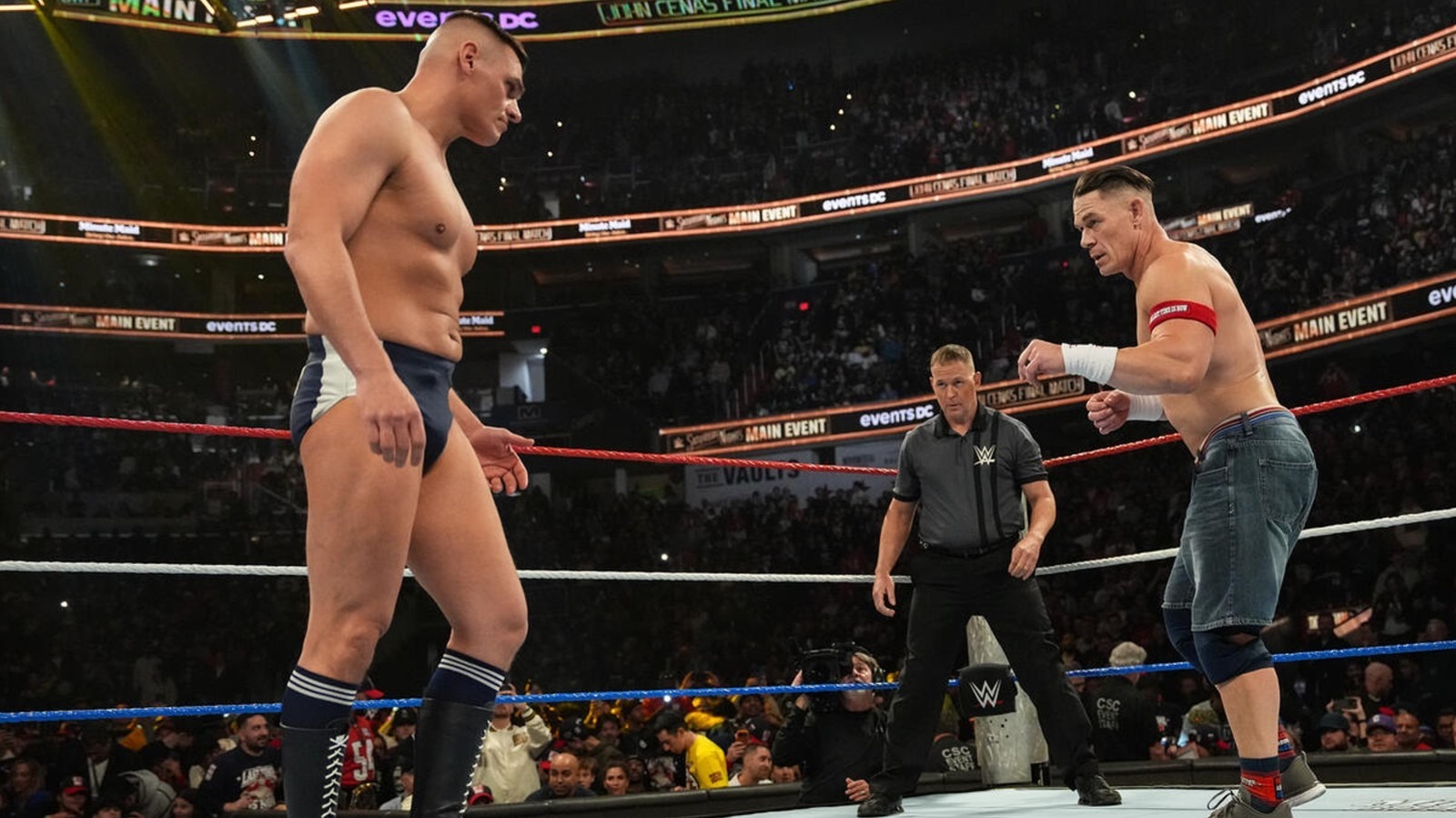
The generational shift in professional wrestling is finally here
1 month, 1 week agoAEW is playing Russian roulette with its midcard gems
4 days, 13 hours ago
The Undertaker is right about the lost art of in-ring storytelling
1 month ago
NXT and AEW are still stuck in the shadow of the Wednesday Night Wars
3 months, 3 weeks ago
WWE is quietly killing the year-long championship reign
3 weeks ago