The Breaking Point at WrestleMania 27
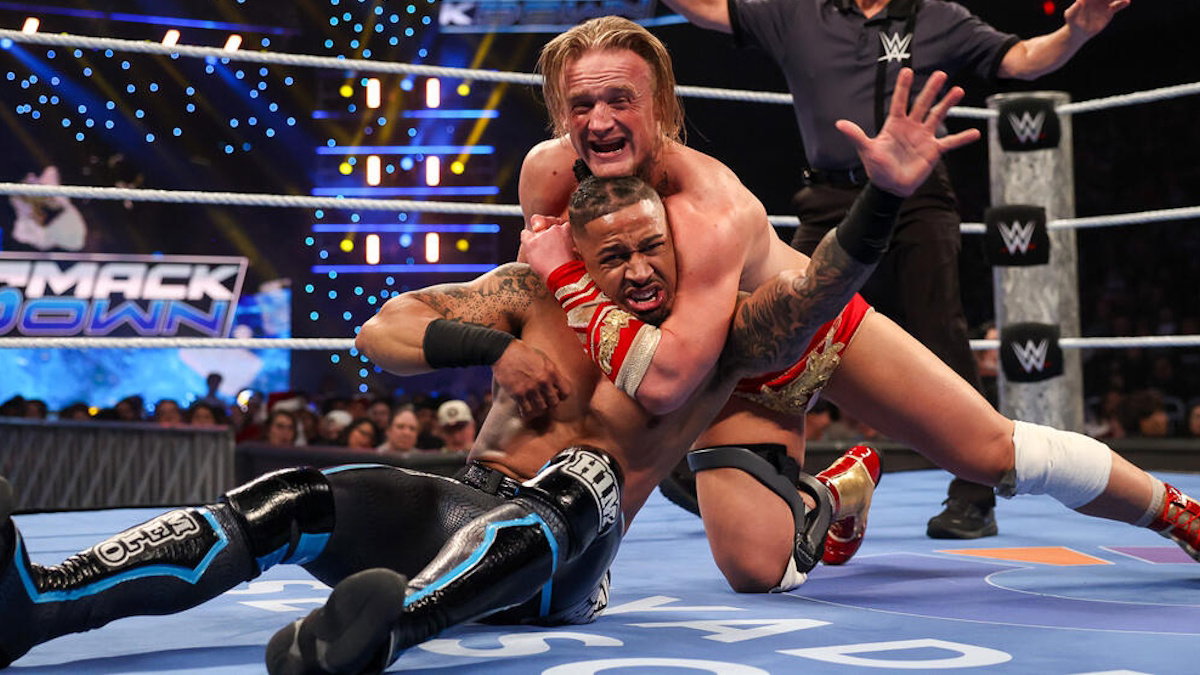
The main event of WrestleMania 27 looked like a standard title defense. Edge retained the World Heavyweight Championship against Alberto Del Rio in the opening bout of the show. Fans left the Georgia Dome assuming the champion would march into the summer schedule. The reality behind the curtain was entirely different.
Edge was undergoing severe neurological degradation. The champion was experiencing profound numbness down both arms. His grip strength was failing. The physical toll of a 15-year career had caught up to his cervical spine. While modern fans speculate on IShowSpeed's involvement at future WrestleManias, the physical damage taken at these massive events remains a harsh, permanent reality for the talent involved.
On the April 11, 2011 episode of Monday Night Raw, the diagnosis became public. Edge announced his immediate retirement due to cervical spinal stenosis. He vacated the championship on the spot. The medical directive was absolute. One hard fall could result in permanent paralysis. He was ruled out of competition indefinitely. The short-term timeline was a forced retirement. The long-term timeline was a lifelong battle with spinal health and neurological preservation.
The Anatomy of Cervical Spinal Stenosis
To understand the severity of the diagnosis, you have to look at the anatomy of the cervical spine. The spinal cord runs through a central canal protected by seven vertebrae, labeled C1 through C7. Cervical spinal stenosis is the abnormal narrowing of that canal, usually occurring in the lower cervical segments.
When the canal shrinks, it compresses the spinal cord and the branching nerve roots. This is not a sudden fracture caused by a single bad landing. It is a progressive, degenerative condition. For wrestlers, taking flat back bumps repeatedly accelerates this narrowing. The impact shock travels up the spine, causing the body to grow bone spurs, known as osteophytes, to stabilize the stressed joints. The ligaments surrounding the canal also thicken over time, further crowding the nerves.
Edge previously underwent a cervical fusion in 2003 with Dr. Lloyd Youngblood. Surgeons fused his C5 and C6 vertebrae to repair a ruptured disc and relieve nerve compression. This procedure uses bone grafts and titanium hardware to lock two bones together. While it solves the immediate disc herniation, it creates a new mechanical problem. The vertebrae above and below the fusion site have to absorb extra stress to compensate for the lost mobility.
This is known medically as adjacent segment disease. Over eight years, the joints above Edge's fusion degraded rapidly. The spinal canal narrowed to a dangerous diameter. The protective fluid around the cord was nearly gone.
Medical Oversight and the Final MRI
The symptoms reached a critical threshold in early 2011. Neuropraxia is the medical term for a temporary loss of motor and sensory function due to nerve blockage. Edge was experiencing this frequently. He would take a standard bump and lose feeling in his extremities.
WWE's medical protocol required him to undergo a detailed MRI following WrestleMania 27. Dr. Joseph Maroon, WWE's medical director, reviewed the imaging. The results showed severe stenosis. The narrowing was so acute that the spinal cord was being pinched without any external impact.
If Edge took a high-angle suplex, the cord could easily be severed. Maroon delivered the verdict. Edge was medically disqualified from ever wrestling again. There was no rehabilitation plan. There was no timeline for a return. The only prescribed treatment was immediate cessation of all in-ring activity to prevent catastrophic injury.
This decision highlighted a significant failure in injury monitoring. Edge had been reporting numbness and tingling for months prior to the event. The fact that he was allowed to compete at WrestleMania 27 while exhibiting classic signs of severe neuropraxia is a glaring oversight by the medical staff. The promotion gambled with his spinal cord to get through the biggest show of the year.
Roster Depth and the Shift in Booking
The immediate impact on the SmackDown roster was devastating. Edge was the premier babyface on the blue brand. He anchored the live event loops, drove merchandise sales, and stabilized the television ratings. His sudden departure left a massive vacuum at the top of the card. The brand lacked a proven, secondary ticket-seller who could shoulder the main event workload.
The creative team had to adjust their tactical booking overnight. The World Heavyweight Championship was vacant. The planned spring program with Alberto Del Rio needed a new protagonist. This directly shifted the trajectory of Christian's future in the main event.
Christian was instantly elevated from a supporting tag-team role to the main event picture. He was booked to face Del Rio at Extreme Rules for the vacant title in a ladder match. Christian won the championship, fulfilling a lifelong narrative arc. However, this reactionary booking exposed SmackDown's lack of true roster depth.
The brand was forced to draft Randy Orton from Monday Night Raw and turn him babyface just to maintain main event stability. The team selection for the summer pay-per-views was completely rewritten. Without Edge's reliable main event work rate, SmackDown leaned heavily on a rotating cast of mid-card talent trying to punch above their weight class. The structural damage to the roster took years to repair, fundamentally changing the draft strategy for the next five years.
Historical Context and Tactical Adjustments
Edge's situation is not an isolated incident in professional wrestling. The industry has a long history of cervical spine trauma ending careers prematurely. Steve Austin dealt with severe neurological issues following a botched piledriver in 1997. Austin eventually underwent a fusion and retired in 2003 due to similar nerve degeneration.
Tyson Kidd suffered a catastrophic C1 and C2 spinal injury in 2015. While Kidd avoided paralysis, his in-ring career was permanently ended. The common denominator is the axial loading of the spine. Professional wrestling demands that the neck absorb forces it was never biologically designed to handle.
Unlike an ACL tear or a torn rotator cuff, severe spinal stenosis offers no surgical quick fix that allows for a return to athletic competition. An ACL can be reconstructed. A narrowed spinal canal requires decompression surgery, which weakens the surrounding bone structure. For almost a decade, this was considered an unbreakable medical barrier.
The Evolution of Medical Protocols
The long-term timeline for Edge eventually rewrote medical history. After nine years of rest, his spine stabilized. The inflammation surrounding the cord subsided. In 2019, subsequent MRIs revealed that the canal had widened enough to safely clear the cord. Today's talent can discuss injuries openly on shows before platforms like AEW Unrestricted end, but Edge suffered in silence for months just to protect his television spot.
He underwent a secondary surgery to relieve pressure. Following extensive independent medical evaluations, he was cleared to return in 2020. This return, however, was unprecedented. It does not change the initial prognosis or the medical reality of the 2011 diagnosis.
For teams and bookers managing talent today, the lesson is clear. Nerve symptoms cannot be ignored. Numbness is a red flag that requires immediate imaging, not a taped-up joint to push through until the pay-per-view. The medical standards have tightened specifically because of cases like this. Bookers can no longer afford to push a top star through neurological symptoms just to pop a WrestleMania rating.