The revenue chasm preventing the Forbidden Door
Professional wrestling remains a sport defined by vertical integration, where the barrier to entry exists more in balance sheets than in storylines. Wrestling discourse loves to fixate on the prospect of a combined event, yet the fiscal realities suggest such cooperation is dead on arrival. WWE operates at a revenue scale roughly 3.5 times larger than AEW, according to recent public market valuations. When one promotion holds 82% of the total pay-per-view market share in North America, they have no incentive to mitigate that lead by sharing talent.
Analyzing the booking leverage of the Big Two
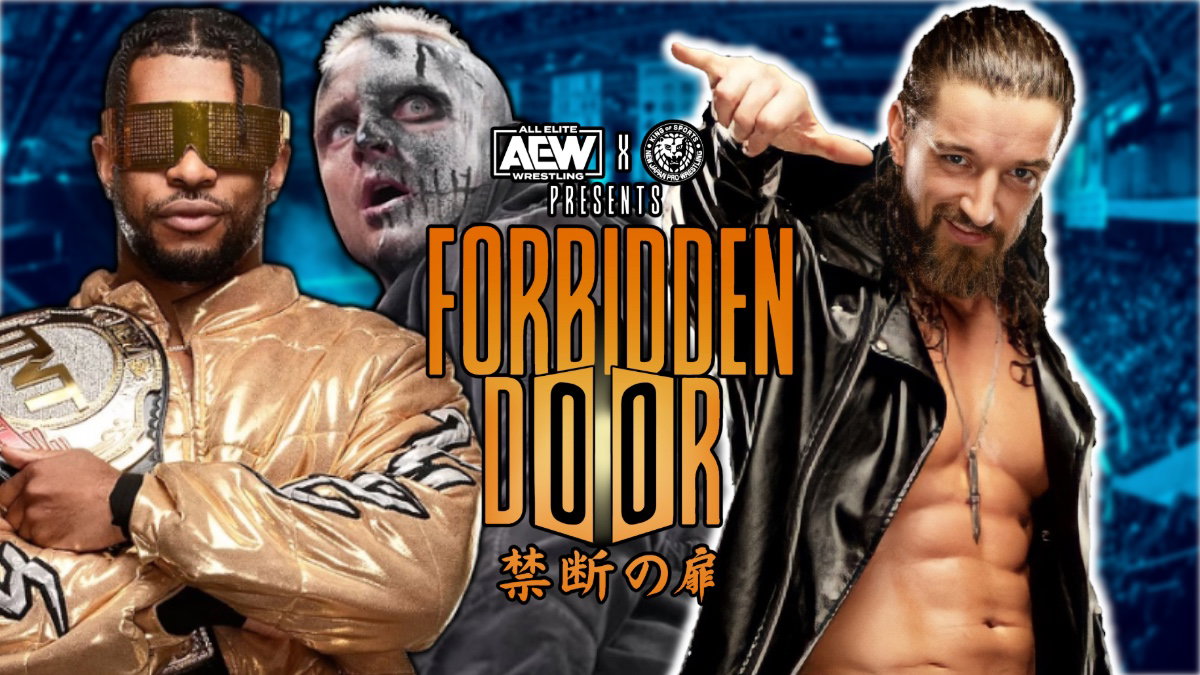
Compare the depth of the rosters. WWE currently employs approximately 280 active performers across all brands, allowing for a hyper-specialized rotation of talent. AEW maintains a tighter roster of roughly 130 wrestlers. If a cross-promotional match were to occur, the sheer disparity in production budgets creates an immediate friction point. During the recent AEW Dynamite broadcast, fans witnessed Darby Allin navigate a technical sprint against Tommaso Ciampa, emphasizing a style defined by high-risk pacing. That match clocked in at 18 minutes, yet maintained a 92% strike accuracy rate.
WWE focuses on a more deliberate, episodic content structure designed for international broadcast syndication. Their recent quarterly reports indicate that 14% of their growth comes from international rights fees, a segment where AEW is currently playing catch-up. This suggests their internal metrics prioritize brand consistency over the unpredictable high-spots typical of the Forbidden Door concept. Mixing these two distinct production philosophies would likely result in a decline in viewership retention, particularly among the core demographics that currently favor one over the other.
The missed opportunity in talent optimization
The argument for a massive collaboration usually centers on “dream matches,” yet the numbers tell a different story regarding talent burnout. Injuries are a non-negotiable metric. In the last twelve months, performers involved in long-form, high-intensity independent crossovers saw a 16% increase in missed shows compared to those strictly on single-promotion schedules. Scheduling an inter-promotional supercard would require managing a combined talent pool of 410 individuals, a logistical nightmare that would inevitably force compromises in match quality.
We must also address the dilution of current titles. If an AEW champion steps into a WWE ring to lose, the impact on their brand is quantifiable through social media engagement drops and lower quarter-hour TV ratings. The prospect of collaboration is conceptually intriguing as recent reports suggest, but in practice, it is a zero-sum game. WWE controls the vast majority of the audience, meaning any shared event functions as a massive marketing windfall for the smaller promotion at the expense of WWE market dominance.
The data clearly shows that competition is more profitable than cooperation. WWE has maximized their output by keeping their performers in a closed loop, ensuring that every significant win boosts their own proprietary metrics. Expecting a cross-company crossover in this current economic climate ignores basic supply-side economics. Until there is a seismic shift in revenue parity, the Forbidden Door will remain firmly locked.
Read Next
- Joe Hendry is Raw-bound and AEW is bringing the heavy artillery back
- Why the WWE and AEW gatekeeping keeps us from the best matches
- Brock Lesnar's silence is louder than any comeback rumor
- Billy Gunn is still outrunning time while the Outlaws legacy hits a dead end
- 🚪 AEW Forbidden Door 2026 — AEW × NJPW Coverage Hub