Wade Barrett's retirement talk exposes WWE's current talent ceiling

The diminishing returns of the broadcast booth
Wade Barrett has spent years cementing his role as a staple of the WWE commentary team, providing a sharp contrast to the more hyper-produced voices of the previous decade. His recent public musings regarding a potential retirement match against GUNTHER should be read as more than just a passing comment on a podcast. It serves as a stark acknowledgment that the current roster requires specific, veteran-led gravitational pulls to elevate the mid-card and upper-mid-card segments.
The current management shift under Triple H has undoubtedly stabilized the locker room, as Wade Barrett has noted in recent interviews. He describes the environment as significantly better than the previous iteration under Vince McMahon. Yet, stability in the front office does not automatically equate to technical proficiency in the ring. When a veteran commentator like Barrett identifies a single, specific opponent for a potential return, it highlights a narrowing bottleneck of talent who can deliver the authentic, smash-mouth style that fans actually want to see.
The carpenter crisis in the modern ring
Booker T recently addressed the ongoing discourse regarding the perceived decline in talent development, noting that the absence of frequent house shows has fundamentally changed how wrestlers learn their craft. He argued that the promotion has lost a significant number of 'carpenters'—those reliable workers who can structure a match, manage crowd heat for 15 minutes, and elevate an opponent without needing a complex gimmick to survive. As reported by WrestlingNews.co, this missing layer of experience is a structural issue that cannot be solved by main-event booking alone.
Look at the reliance on GUNTHER to be the corrective force for so many creative droughts. If a performer as seasoned as Barrett feels the need to step back into the chaos merely to challenge the Ring General, it suggests the current pipeline for heavyweight competitors is shallower than the booking team would like to admit. Relying on a singular anchor like GUNTHER to host every potential 'dream match' is a precarious strategy. It risks burning through his credibility before a new generation of technicians can effectively step into those shoes.
A flawed developmental philosophy
The critique here isn't about physical ability, which is at an all-time high, but about the transition from developmental to the main stage. In the 1990s, the road circuit acted as a live-fire exercise for pacing. A wrestler might perform the same sequence of spots in cities like Des Moines or Evansville for months, refining their timing until it became instinctual. Today, that growth must happen on camera, where the audience is less forgiving and the pressure is magnified.
Management has successfully pivoted to a more coherent, serial storytelling model, but the matches themselves often feel disjointed in the middle of a 3-hour broadcast. When the narrative between segments is the only thing driving interest, the athletic product suffers. If a wrestler cannot build tension through simple chain wrestling, no amount of backstage monologue will make their match more vital. Barrett understands this dynamic better than most, which makes his hypothetical retirement match against GUNTHER feel like a commentary on what is currently missing: intentional, disciplined, old-school physicality.
The cost of high-stakes nostalgia
WrestleMania 41 is just over a week away, and the industry is already feeling the fatigue of managing top-tier talent. Whether it is a commentator flirting with a final match or the constant need to pull past performers into modern angles, the reliance on nostalgia remains a crutch. It masks a fundamental, internal issue: the failure to cultivate enough individuals who can carry a marquee show on their own merit. If Barrett vs. GUNTHER is what it takes to stir the pot, then the booking team must be worried about what happens when the legacy performers finally stop answering the phone.
The reality is that WWE has built a machine that is excellent at production but increasingly fragile in its technical foundation. We are looking at a future where even the most talented performers will struggle to find meaningful partners who can hold their own in a 20-minute main event. Unless the promotion aggressively prioritizes the return of 'carpenter' experience, we will continue to see these desperate, late-career returns and speculative retirement bouts designed to paper over the cracks in the roster. It is a win for the immediate ratings, but a long-term drain on the health of the division.
Read Next
- Wade Barrett's potential return highlights a deeper WWE talent crisis
- Wade Barrett vs GUNTHER is the retirement match we actually deserve
- Rhea Ripley's injury status ruins the WrestleMania 41 booking plan
- Austin Theory is testing patience ahead of WrestleMania 41
- 🏆 WrestleMania 41 — Full Coverage Hub
Becky Lynch: The Man: Not Your Average Average Girl by Becky Lynch
An unfiltered, raw, and incredibly inspiring look inside the life of WWE's 'The
Frequently Asked Questions
Who does Wade Barrett want to face in a potential retirement match?
What is the 'carpenter' crisis in WWE?
How has the WWE environment changed under Triple H?
Why did the loss of frequent house shows affect wrestler development?
What is the primary risk of relying on GUNTHER for dream matches?
More Coverage

Drew McIntyre sidelined following brutal SmackDown encounter
59 minutes agoWWE's New York gamble is a calculated risk ahead of WrestleMania 42
an hour ago
WWE's Saturday Night's Main Event math doesn't add up
an hour agoWWE's return to New York changes the math on stadium attendance
an hour ago
Top 10: Top Moments from MSG
2 hours ago
SmackDown is drifting into mid-summer malaise
2 hours agoMore Analysis
Wade Barrett's potential return highlights a deeper WWE talent crisis
3 months, 1 week ago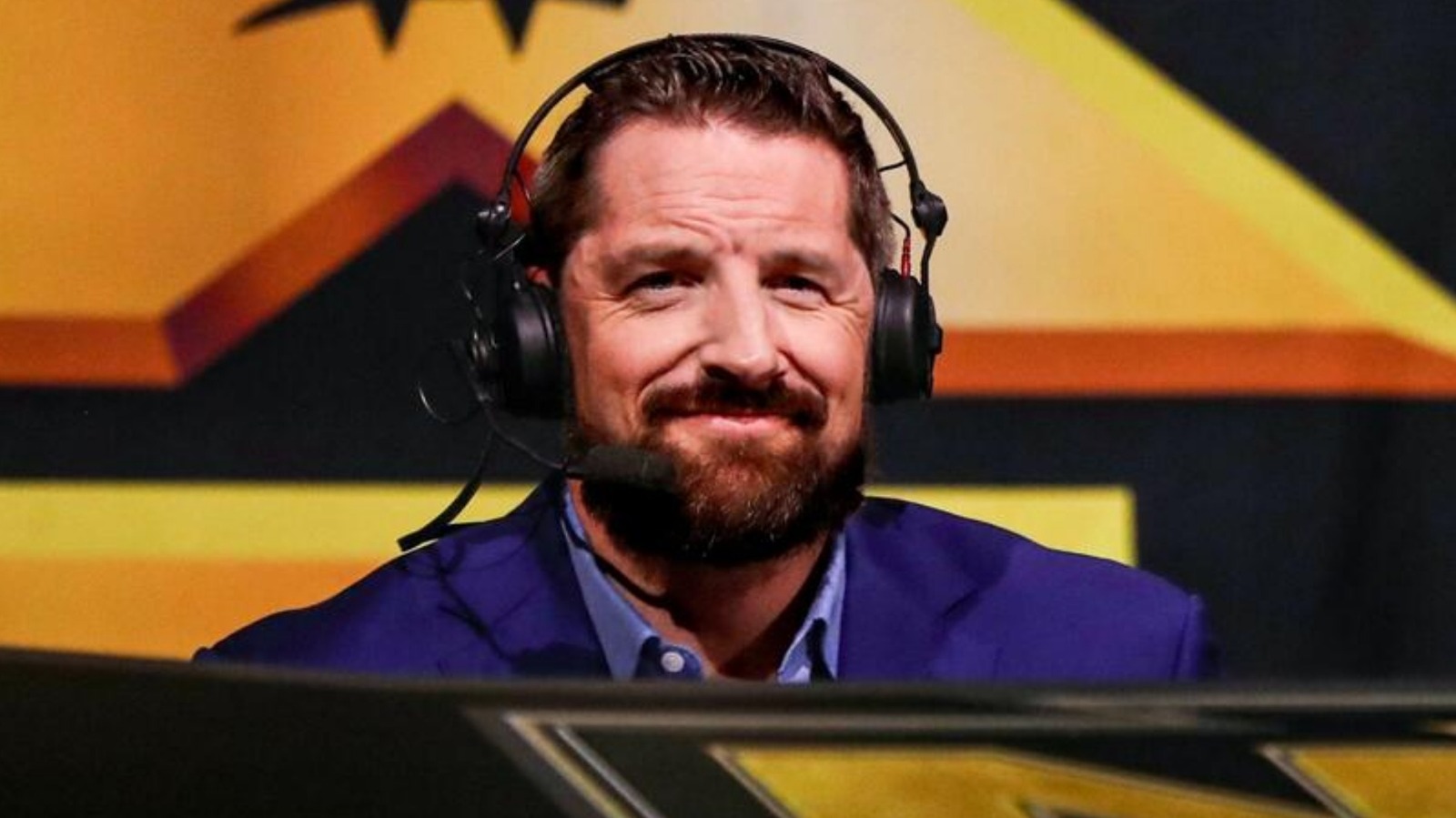
Wade Barrett vs GUNTHER is the retirement match we actually deserve
3 months, 1 week ago
Gunther is carrying WWE's main roster, but the formula is getting predictable
3 months, 3 weeks ago
WWE WrestleMania 41 booking shows a shift away from 2010 management traps
3 months, 2 weeks ago
Gunther's restrictive style is becoming a problem for WWE
3 months ago