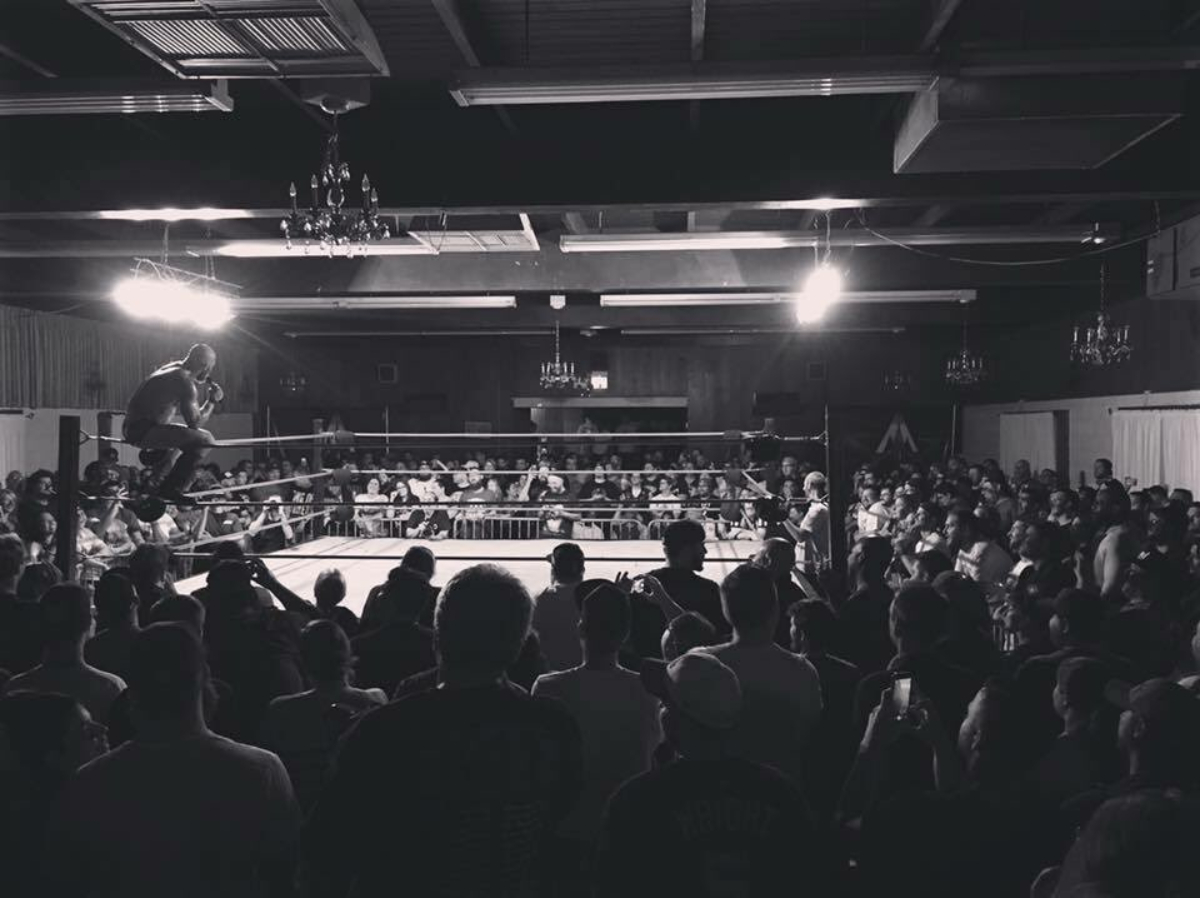
The Big Picture: Pro wrestling history is rarely written in glitzy arenas. It is carved out in VFW halls and community centers like the Berwyn Eagles Club. This venue functioned as the undisputed laboratory for the modern era of the sport.
The Legacy of 26th Street
For over two decades, Berwyn, Illinois was the center of the wrestling universe for anyone who valued substance over style. The Eagles Club served as a home base for AAW and SHIMMER, two promotions that redefined what a local indie could achieve. It wasn't just a building; it was a character that demanded excellence from everyone who stepped through the curtain.
10. The Looming Silence of the Hall
The current state of the Berwyn Eagles Club is a grim reminder of how fragile indie wrestling hubs really are. With the launch of a GoFundMe, the community is facing the reality that this venue might never host another super-show. The loss of consistent wrestling dates has gutted the local economy for the staff who relied on those monthly AAW and SHIMMER crowds. It is a blow to a town that became synonymous with workrate for over two decades. We often take these small, sweaty rooms for granted until the doors finally lock for good.
9. The "Flight School" for High Flyers
The physical limitations of the Eagles Club actually forced a higher level of creativity from the talent. Because the ceiling was so low, high-flyers like Ricochet or Jack Evans couldn't just throw standard moonsaults without risking a head injury from a ceiling fan. This forced wrestlers to adopt a tighter, more grounded style that emphasized technical transitions over flashy gymnastics. It turned Berwyn into a school for logic and psychology. You learned how to tell a story in a 20-foot ring, or you didn't get booked back.
8. The Brutal Mid-Summer Temperatures
Summer shows in Berwyn were an endurance test for both the fans and the performers. The venue's cooling system was notoriously unreliable, often leaving the room at temperatures that felt like a sauna by the third match. You would see wrestlers coming back to the curtain looking like they had just climbed out of a swimming pool. This heat added a layer of realism to the matches, making every near-fall feel like a desperate struggle for survival. It was miserable for the front row, but it created an intensity you can't replicate in a climate-controlled stadium.
7. The AAW Heavyweight Championship Legacy
AAW: Professional Wrestling Redefined turned the Eagles Club into the premier destination for the best in the world. During the mid-2010s, if you wanted to see the best match in North America, you didn't go to Orlando or Stamford; you went to Berwyn. The promotion booked talent like Prince Devitt and Zack Sabre Jr. before they were household names. The AAW Heritage Championship became a symbol of mid-card excellence that often outshone the main events. It was the promotion that proved a Chicago-area indie could draw international eyes without a massive television deal.
6. The "No-Frills" Production Aesthetic
The production aesthetic of the Berwyn shows was intentionally gritty and raw. There were no giant LED screens or pyrotechnics; there was just a ring, some folding chairs, and the sound of bodies hitting the mat. This approach allowed the wrestling to be the sole focus of the night. It appealed to the tape trader mentality of the early 2000s, where the quality of the action mattered more than the polish of the broadcast. Many wrestlers, as PWInsider recently noted, have credited this environment for making them the stars they are today. It was the ultimate stripped-down version of the sport.
5. The Gatekeeper Crowd
The Berwyn crowd was a unique beast that could make or break a career in a single segment. They were notoriously knowledgeable, often calling out obscure references or spotting botched transitions before the wrestler even hit the ground. If they liked you, they were the loudest 300 fans on the planet. If they hated you, they would sit in stony silence or heckle you with surgical precision. This mentality forced talent to bring their absolute best or face a long, quiet drive home. It was the ultimate litmus test for any aspiring professional.
4. The Wars of Future Legends
Before they were headlining WrestleMania, guys like Tyler Black and Kevin Steen were tearing the house down in Berwyn. Their matches in the Eagles Club were legendary for their brutality and innovation. You could stand three feet away from a Steen Package Piledriver and feel the ring boards shake under your boots. The venue allowed for a level of intimacy where you could hear every gasp and every word of trash talk. It wasn't just about the moves; it was about the raw emotion of two guys fighting for their lives in front of a few hundred people. The history of the modern main event was written in this suburb.
3. The International Pipeline
The international pipeline that ran through Berwyn was an essential part of its legacy. Thanks to partnerships with promotions like Dragongate Japan, fans in a Chicago suburb got to see stars like Akira Tozawa and Shingo Takagi in their prime. These matches happened on a monthly basis, often with zero build-up other than the promise of high-level competition. It turned Berwyn into a global hub for the sport. You never knew who might walk through those doors on a Saturday night. It made the world of wrestling feel much smaller and more connected.
2. The Cradle of the Women's Revolution
SHIMMER Women Athletes is the greatest contribution this venue ever made to the industry. Starting in 2005, Dave Prazak and Allison Danger used the Eagles Club to build a platform that treated women as serious athletes. They filmed massive blocks of content that became the blueprint for the current standard of female wrestling. Legends like Sara Del Rey, Mercedes Martinez, and Cheerleader Melissa proved that women could draw a dedicated audience based on wrestling ability alone. The Eagles Club was the sanctuary where female talent could escape the toxic tropes of the mainstream era. Over 100 volumes of SHIMMER were filmed here, cementing it as a historical landmark.
1. The Most Important Address in the Game
The Berwyn Eagles Club is the most important address in indie wrestling because it represents the soul of the business. It wasn't about the money or the fame; it was about the work. Every major star of the last 20 years likely has a story about getting changed in the cramped locker rooms or sharing a beer with fans after the show. It was a community center in the truest sense of the word. While the building may be facing an uncertain future, the matches that happened there are permanent. Berwyn proved that you don't need a billion dollars to change the world; you just need a ring and a room full of people who believe in it.
Honorable Mentions
- The "Berwyn" chant that became a recurring theme during international tape-trading circles.
- The infamous locker room heat that supposedly bonded wrestlers through shared misery.
- The local staff and referees who kept the shows running despite the mounting costs of indie production.