The WrestleMania loop is officially closing in Las Vegas
We are exactly seven days away from Allegiant Stadium hosting the most expensive retirement party in human history. John Cena is checking his watch, the Bloodline is still acting like a high-stakes soap opera, and the internet is currently a toxic waste dump of booking theories. But if you want to understand why WrestleMania 41 feels so heavy, you have to look at the scars left by the last decade and a half of this circus.
Every year, the same arguments resurface like a bad case of shingles. We complain about part-timers stealing spots, celebrities jumping the line, and the hand-picked 'chosen ones' being shoved down our throats. It is a tradition unlike any other, mostly because wrestling fans have the memory of a goldfish but the grudge-holding capacity of an Irish grandmother. We have been here before, and we have the receipts to prove it.
The fifteen-year itch and the Rock-Cena shadow
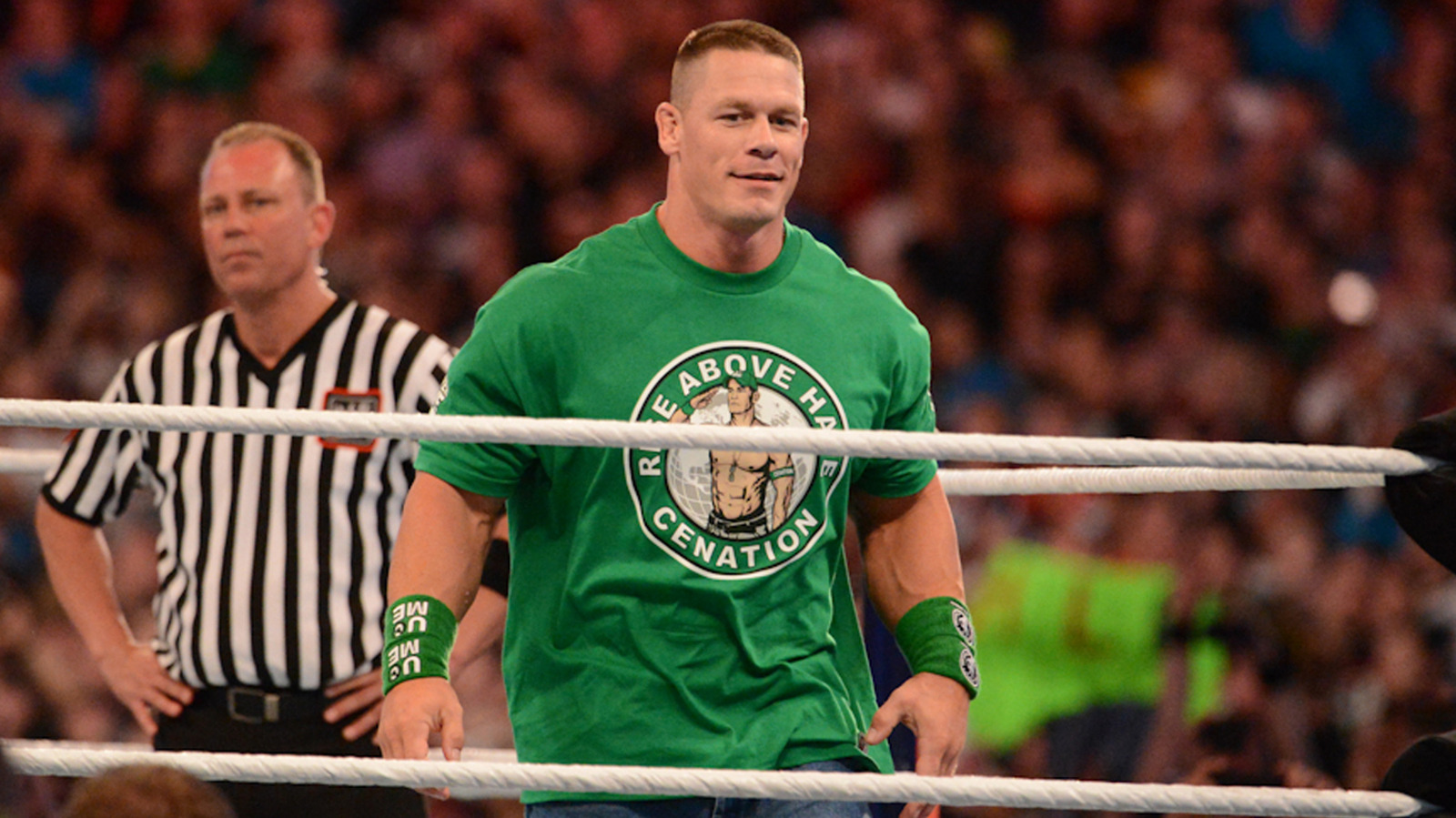
Take a trip back to April 2011. WrestleMania 27 had just wrapped up, and it was, by almost every metric, a creative car crash. As PWTorch recently revisited, the fallout was dominated by one question: Was The Rock sabotaging John Cena? The Great One had returned to host the show, cost Cena the title against The Miz, and basically spent the entire month making Cena look like a Make-A-Wish kid who got lost on his way to the ring.
The fans were livid. We were entering 'phase two' of a feud that felt like it was being booked by two egos fighting over a single mirror. Back then, the idea of a part-timer coming in and big-footing the full-time locker room was the ultimate sin. We watched Cena, the corporate titan, get dismantled by a guy who had one foot in Hollywood. Sound familiar? It should, because we just spent the last two years watching Cody Rhodes try to navigate the exact same ego-driven minefield with The Final Boss.
But 2011 wasn't just about the top of the card. It was the era of Sin Cara debuting with those hideous blue-and-orange lights and immediately botching a springboard. It was the moment Jon Moxley—then a buzzworthy indie name—was finally being talked about in a WWE context. We were on the cusp of a revolution, but we were too busy arguing about whether Rock was being a professional or a politician. Fifteen years later, Cena is the one handing over the keys, and the irony is thick enough to choke a horse.
The Roman Reigns babyface disaster of 2016
If 2011 was about the part-timer problem, 2016 was about the 'The Guy' problem. Ten years ago this week, the wrestling world was reeling from WrestleMania 32. That was the show where 100,000 people (give or take a few thousand according to Vince's math) sat in AT&T Stadium for seven hours just to boo Roman Reigns out of the building. It was the peak of the 'Suffering Succotash' era, a time when WWE's creative team decided that if they just kept playing Roman's music louder, we would eventually start cheering.
Former WWE star Matt Morgan sat down with Wade Keller ten years ago to evaluate Roman as a babyface. Even then, the consensus was clear: it wasn't working. We were obsessed with weird details—remember the discourse about AJ Styles' hair?—because the actual main event scene was so painfully predictable. Roman was being booked as a scrappy underdog despite looking like he was built in a laboratory to play a defensive end.
The failure of the 2016 babyface push is exactly why the current Bloodline saga is so fascinating. We had to endure five years of 'Big Dog' Roman so that we could appreciate 'Tribal Chief' Roman. It was a long-term investment that nearly bankrupted the fan's patience. As we head into Night 2 of WrestleMania 41, where the Bloodline is expected to finally implode, don't forget that we spent an entire decade watching this man try to find his soul in front of a crowd that wanted to delete him from existence.
Bad Bunny and the death of the 'celebrity' stigma
Then we hit the five-year mark. April 2021. WrestleMania 37. The world was still shaking off the cobwebs of the pandemic, and WWE was back in front of a live crowd at Raymond James Stadium. This was the night Bad Bunny changed everything. Before that match, celebrities in wrestling were a punchline. They were either there to shill a movie or get knocked out by a mid-carder who needed the paycheck. They didn't hit Canadian Destroyers. They didn't take legitimate bumps.
Bad Bunny's performance was a middle finger to every 'purist' who thought you needed ten years in the indies before you could step onto the grandest stage. It paved the way for Logan Paul to become one of the most natural heels of the modern era. But while the celebrity experiment worked, the rest of the 2021 landscape was still messy. We were still speculating about where Brock Lesnar and Ronda Rousey would fit in, proving that even when we find new stars, we can't stop checking the graveyard for the old ones.
The critical failure of the mid-card momentum
Here is the hard truth that nobody wants to hear as we gear up for Vegas: for all the talk of a 'new era' under Triple H, the mid-card is currently stuck in a holding pattern that would make 2011 feel fast-paced. We have an Intercontinental title scene that feels like it’s being booked by a random number generator. We have talent like Bron Breakker who should be destroying worlds, but instead, they’re trapped in three-minute TV segments that go nowhere.
WWE is so focused on the 'Big Three'—Cody, Roman, and Cena—that the rest of the roster feels like window dressing. It’s the same mistake they made in 2016 when everything was sacrificed at the altar of Roman’s babyface push. If you aren't in a Bloodline-adjacent segment, you might as well be wrestling on the kickoff show. The star power at the top is undeniable, but the depth is starting to look a little thin when you realize we’re still relying on the same tropes we were dissecting 15 years ago.
Why Cena's goodbye actually matters
John Cena’s retirement isn’t just about a guy leaving. It’s about the final death of the PG Era’s blueprint. Cena was the last guy who could truly carry a show on his back while half the crowd wanted to see him set on fire. He survived the sabotage of 2011, he survived the rise of the indies, and he survived the transition to the streamer era. Seeing him go is a reminder that the safety net is being pulled away.
When he stands in the ring in Las Vegas, it won't be about the number of titles or the merch sales. It will be about the fact that he was the bridge between the chaos of the Attitude Era and the polished, corporate machine we have today. He is the guy who took the 32 minutes of a main event and made it feel like a life-or-death struggle even when we knew he was going to win. That is a skill that hasn't been replicated by the 'workrate' generation.
Final thoughts before the Vegas lights turn on
WrestleMania 41 is going to be a spectacle. The pyro will be louder, the stage will be bigger, and the social media engagement will be off the charts. But beneath the surface, the same tensions remain. We are still worried about part-timers. We are still wondering if the 'chosen one' is actually the right one. We are still waiting for a celebrity to surprise us.
The history of the last fifteen years tells us one thing: WWE never actually solves these problems, they just find more expensive ways to distract us from them. Whether it’s Cena’s last AA or Roman’s next spear, the cycle continues. We have 7 days left to pretend we aren't just watching the same movie with better special effects. Enjoy the ride, but don't say you weren't warned when the ghost of WM27 shows up to ruin your night.
Read Next
- WrestleMania 41 is the ultimate test of Cody Rhodes' staying power
- Randy Orton is the only predator Cody Rhodes hasn't learned to outrun
- Vegas Stakes: Ranking the 10 Wildest Moments on the Road to WrestleMania 41
- Punk's knee scare exposes WWE's reckless Road to WrestleMania
- 🏆 WrestleMania 41 — Full Coverage Hub
- 👴 John Cena Retirement Tour 2026