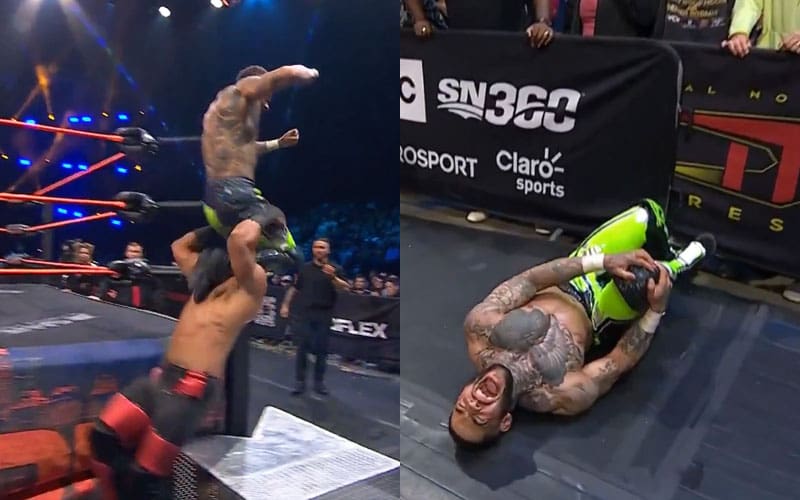
The illusion of safety shatters
It happens in a fraction of a second. The rotation is off by an inch. The catch is mistimed.
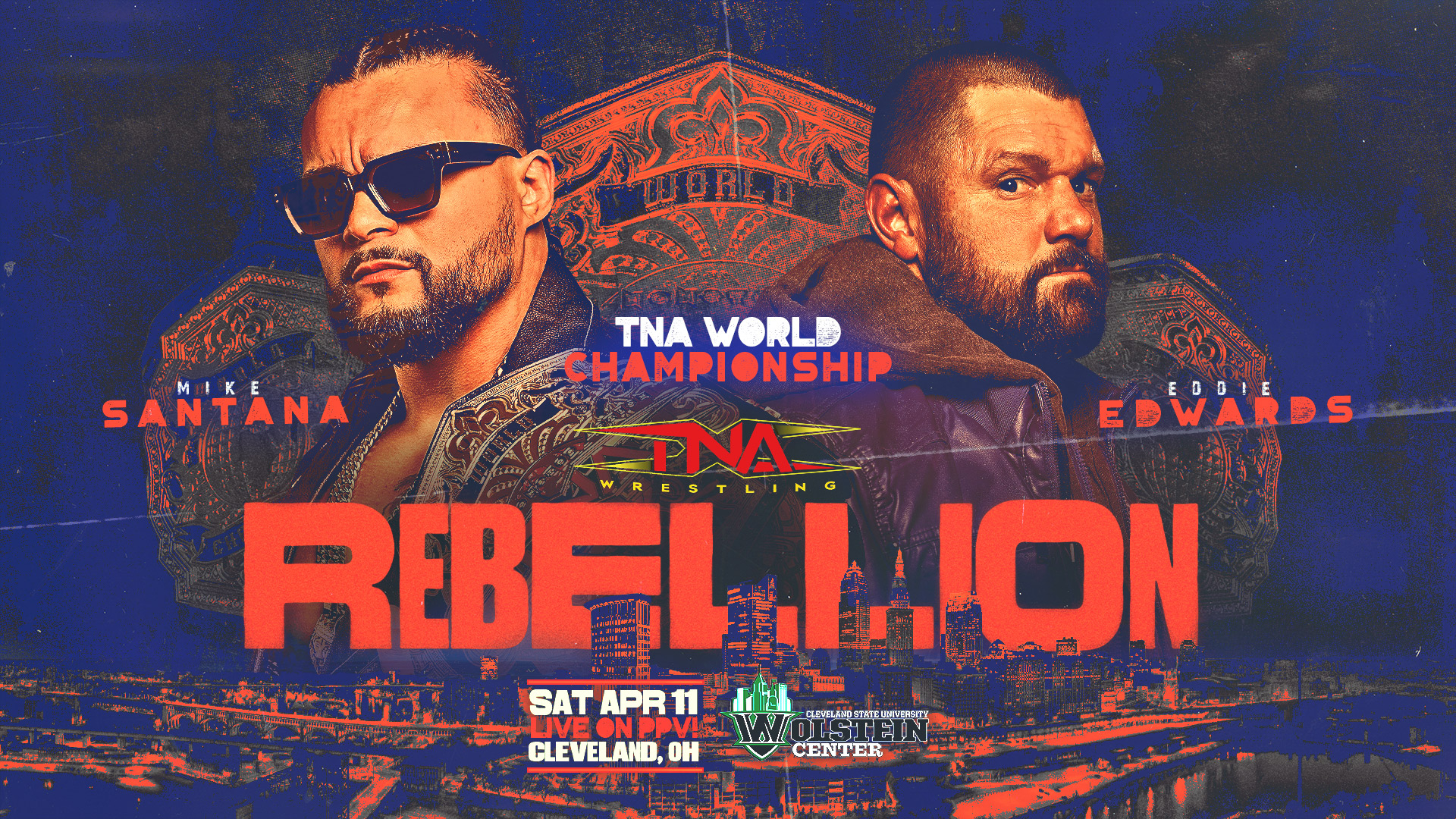
Suddenly, the landing surface is a lot less forgiving than the canvas. We watch professional wrestling for the spectacle, but every so often, the curtain drops violently. That is exactly what happened this weekend at TNA Rebellion.
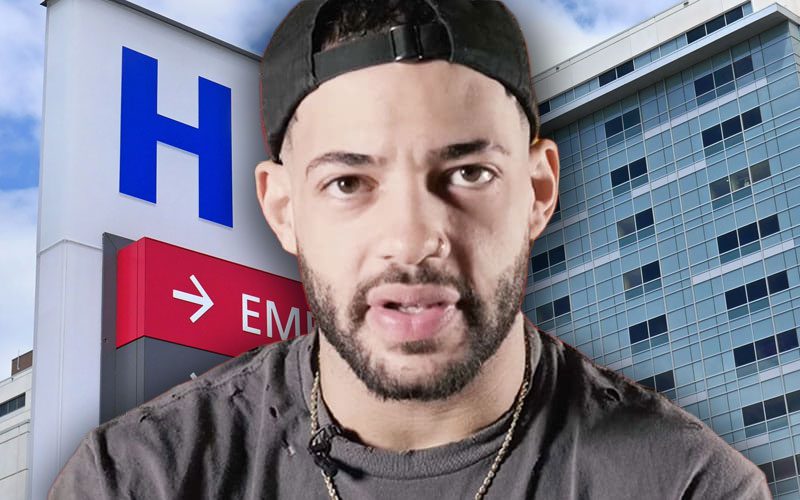
Trey Miguel didn't just lose the TNA International Championship. He left the arena in an ambulance. The breaking news confirming he ended up in the hospital isn't a carefully crafted storyline update to garner sympathy. It is a grim, unavoidable reminder of the physical tax levied on the modern high-flyer.
Miguel is a seasoned veteran of the aerial game. He knows exactly where his body is in the air at all times. For a performer of his caliber to miscalculate, or for a sequence to go this catastrophically wrong, speaks volumes about the immense pressure these athletes are under.
They aren't just wrestling the opponent in front of them anymore. They are wrestling the internet.
The escalating cost of attention
Look at the reality of the wrestling business right now. We are exactly seven days away from WrestleMania 41 in Las Vegas. The noise in the industry is absolutely deafening.
Next weekend, WWE will run Allegiant Stadium for two nights. They will draw over a hundred thousand people without asking a single performer to risk their life on a meaningless undercard match. WWE has mastered the art of doing more with less. They rely on character equity, video packages, and long-term emotional investment.
TNA doesn't have the marketing machine of WWE. They feel forced to compensate with sheer physical output. Getting noticed on a TNA pay-per-view in mid-April requires doing something nobody else is doing.
Or, more accurately, it requires doing something nobody else is crazy enough to try.
This brings us to a glaring failure in the booking philosophy at Rebellion. TNA has quietly built a highly competent alternative product over the last year. They have carved out a loyal niche. Yet, there is an underlying, destructive desperation to generate a viral clip that can dominate Twitter timelines.
That desperation inevitably gets passed down to the talent. When you hold the International Championship, you are burdened with the expectation to deliver the match of the night. You are expected to be the GIF that everyone shares on Monday morning.
Miguel tried to deliver that exact moment. Now he is lying in a hospital bed.
This criticism needs to be pointed squarely at TNA management and the match agents. You cannot condition your audience to expect literal car crashes and then act surprised when the driver goes through the windshield. The escalation is unsustainable.
The mechanics of a disaster
If you analyze the pacing of typical modern title matches, you can see exactly where the train goes off the tracks. The opening minutes usually feature brilliant chain wrestling. Miguel excels at showing off his technical prowess.
He works over a limb, using smart, grounded submissions. It is compelling. More importantly, it is safe.
But then the tempo inevitably shifts. You can feel the invisible clock ticking down in the arena. The agent in the back likely gave them a strict fifteen-minute window to bring it home. Suddenly, ring psychology goes completely out the window.
The bout devolves into a sequence of rapidly traded high-impact maneuvers. No selling. Just an exhausting sprint. This is exactly where critical mistakes happen.
When you are deep into a match, your lungs are burning, and your legs feel like lead. That is the absolute worst time to attempt a high-risk dive with a microscopic margin for error. Fatigue makes cowards of us all, but in a wrestling ring, fatigue makes you dangerously clumsy.
Miguel's timing was likely off by a fraction of a second. That was all it took to end his night.
The responsibility of the catch
We also have to address the mechanics of the catch. The base in these high-flying spots holds the most important job in the building. Their singular purpose is to protect the performer coming out of the sky.
If the base is out of position by half a step, or if they flinch at the point of impact, the flyer is doomed. It usually takes two people to botch a spot this badly.
However, the culture of the locker room often pushes talent to agree to spots they aren't fully comfortable catching. There is immense peer pressure to just nod and say yes to whatever the champion wants to execute.
If someone had stepped in earlier in the day during the walk-through and vetoed the idea, Trey Miguel would be boarding a flight right now instead of looking at hospital ceiling tiles.
The limits of the human body
The X-Division, and by extension the International title picture, was founded on breaking boundaries. Samoa Joe, AJ Styles, and Christopher Daniels built the initial foundation on calculated risks.
They took wild bumps. But there was always a strict baseline of safety. The geometry of the ring was respected.
Today's athletes are treating the ring like a trampoline park lined with concrete edges. Miguel has been pushing his luck for years on the independent circuit and on television. You can only flip over the top rope into a crowd of barely-braced opponents so many times.
Every professional wrestler is issued a bump card at the start of their career. Eventually, you punch the last hole.
The spot at Rebellion crossed the line from professional wrestling into a mindless stunt. When stunts go wrong, the illusion of the sport vanishes instantly.
You sit there watching a referee desperately throw up the dreaded 'X' symbol. You watch the ringside medical team rush the barricade. The crowd goes dead quiet. It is the most sickening feeling in this industry.
There is absolutely no entertainment value in watching a performer legitimately suffer.
Where does the division go from here?
The International Championship has changed hands, but the reign feels immediately cursed. Whoever holds that belt now has a heavy shadow hanging over their run.
How do you cut a promo celebrating a championship victory when the man you defeated is getting his neck stabilized by paramedics? You simply don't. You take the belt, you walk quietly to the back, and you pray for good news.
TNA now faces a massive logistical nightmare on top of a human tragedy. They have to radically pivot their booking strategy. Miguel was a reliable cornerstone of that mid-card division.
Removing him from the board changes the entire math of their summer plans. They are heading toward Slammiversary in a few months, and the roster is already feeling thin. Losing a top-tier worker like Miguel is a massive blow to the match quality of the undercard.
You cannot simply plug another wrestler into Trey Miguel's spot. He wrestles at a specific velocity that very few people on the independent scene or mainstream television can match. When you lose that gear, the entire card feels slower by comparison.
This forces the creative team to rewrite weeks of television on the fly. Feuds that were supposed to culminate next month are now scrapped. Opponents who were booked to work with him have to find new dancing partners.
But the booking sheets are completely irrelevant right now. The only concern is Miguel's quality of life.
A forced evolution for Trey Miguel
When he recovers—and we all hope it is a full, complication-free recovery—Miguel needs to have a brutally honest conversation with himself.
He is incredibly talented. He possesses undeniable natural charisma. He does not need to drop himself on his head or launch himself onto the floor to get a reaction from the crowd.
Look at the late-career runs of the smartest high-flyers. They intentionally slow down. They ground their offensive arsenal. They start relying heavily on psychology, timing, and heel or face character work.
Miguel has all of those fundamental tools in his bag. He just rarely uses them because the spectacular flip is always an easier route to a cheap pop.
This injury has to be the catalyst for a permanent style change. If he comes back and immediately climbs to the top turnbuckle to try the exact same dive, he is a fool. And TNA would be grossly negligent to let him.
The industry refuses to learn
This isn't an isolated TNA problem. It is an industry-wide epidemic.
Wrestlers are taking brutal apron bumps on random television tapings. They are executing Canadian Destroyers on the floor for a routine two-count. The rapid escalation of violence has completely numbed the modern audience.
If a performer hitting a spectacular dive off the barricade only gets a polite round of applause, the solution isn't to climb higher. The solution is to retrain the audience to care about a simple clothesline.
TNA had a golden opportunity to set a different, safer standard. Instead, they leaned hard into the athletic arms race. Rebellion 2026 will certainly be remembered, but for all the wrong reasons.
My prediction for the immediate fallout? TNA will issue a standard, sanitized public relations statement. They will wish Miguel well. They will vaguely promise updates.
But behind the closed doors of the production meeting, there will be no serious reckoning about how matches are agented. The very next pay-per-view will feature another spot just as dangerous, if not worse. The wheel just keeps turning.
It is a highly cynical view, but the wrestling business rarely learns its lessons until it is absolutely forced to. Trey Miguel paid a massive price this weekend. Let's hope he is the last one for a very long time.