A pragmatic retreat in the Sunday wars
Professional wrestling used to thrive on direct conflict. The entire mythology of the late nineties was built on two billionaire-backed promotions trying to drive each other out of business on Monday nights. But the modern industry — at least outside of the WWE juggernaut — operates on a completely different set of economic realities. TNA Wrestling has just provided the starkest example of this yet.
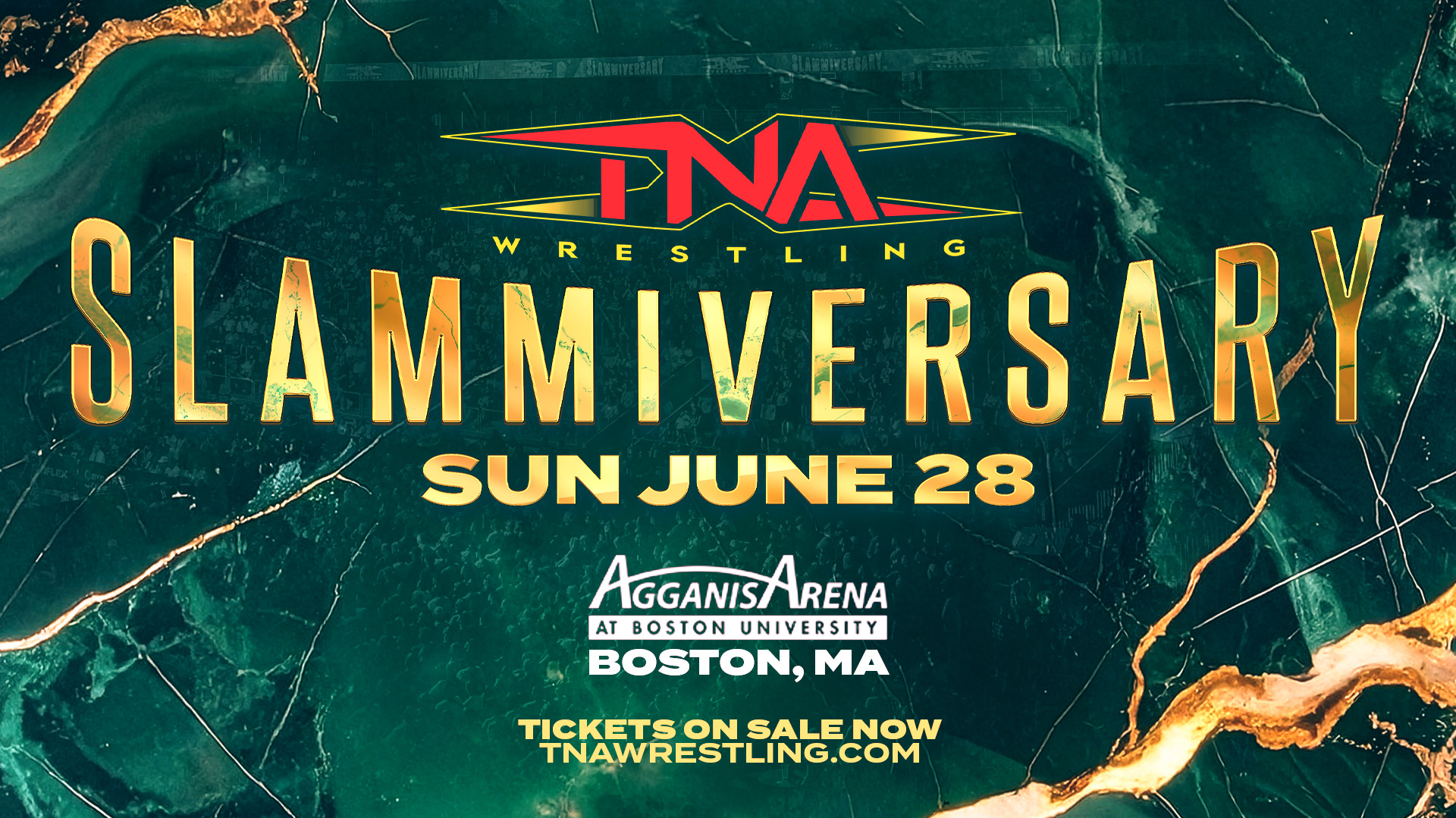
In a move that is both entirely sensible and slightly bruising to the ego of a legacy brand, TNA has officially shifted the start time for Slammiversary 2026 to the afternoon. The reason, as confirmed across multiple outlets including PWInsider and F4WOnline, is to avoid running head-to-head against All Elite Wrestling and New Japan Pro Wrestling's Forbidden Door pay-per-view.
You can call it an audible, a strategic pivot, or a concession. Whatever the terminology, it is an acknowledgment of where TNA currently sits in the North American pecking order. They simply cannot afford to ask the hardcore wrestling audience to choose between their anniversary show and a crossover event featuring the top stars from Tony Khan's roster and the Tokyo Dome.
The crossover audience dilemma
To understand why this move was absolutely necessary, you have to look at the demographics. TNA does not have a massive casual television fanbase. Their viewership is built on a loyal, dedicated subset of the wrestling community who appreciate their in-ring product, their knockout division, and their creative stability. The problem is that this exact same demographic is the core target audience for Forbidden Door.
When AEW and NJPW get together, the card is specifically designed to cater to the super-fan. It is a show built around dream matches, star ratings, and internet buzz. If TNA had stubbornly stuck to a traditional 8:00 PM evening slot, they would have been asking their most reliable paying customers to make a financial and temporal sacrifice.
In 2026, pay-per-view buys are no longer the exclusive revenue driver they once were. But for a company of TNA's size, streaming revenue and digital buys for a major event like Slammiversary are non-negotiable. Splitting the audience is not just bad for business; it is financially irresponsible.
The atmosphere problem
While the business logic is sound, we have to talk about the aesthetic cost of this decision. This is where the reality of being a smaller promotion really bites. Slammiversary is supposed to be TNA's summer equivalent to WrestleMania or Bound For Glory. It is a celebration of the company's survival and history.
Running a major pay-per-view in the middle of a Sunday afternoon fundamentally changes the presentation. Professional wrestling relies heavily on theatrical lighting, crowd energy, and a specific prime-time atmosphere. An afternoon show often feels like a house show or a pre-show rather than a monumental event.
TNA management has struggled with production values in recent years, often running out of dimly lit soundstages or mid-sized theaters. By moving to the afternoon, they risk further diminishing the visual impact of their second-biggest show of the calendar. It is a bitter pill to swallow. They are protecting their buyrate at the expense of their big-fight feel. It is a necessary evil, but it is a negative consequence nonetheless.
Looking back at counter-programming failures
History is littered with promotions that overestimated their own drawing power. You only have to look back at the Wednesday Night Wars, where WWE explicitly positioned NXT to blunt the launch of AEW Dynamite. Even with the backing of the biggest wrestling conglomerate on earth, NXT eventually had to wave the white flag and move to Tuesdays to stop bleeding viewers.
TNA themselves have made this mistake before. The infamous decision to move Impact to Monday nights in early 2010 to directly oppose Monday Night Raw remains one of the most disastrous miscalculations in the company's tumultuous history. They were slaughtered in the ratings, lost momentum, and quietly retreated back to their usual time slot with their tail between their legs.
Current management seems to have learned from the hubris of the Dixie Carter and Hulk Hogan era. They are choosing survival over ego. As WrestlingNews.co highlighted, adjusting the start time is a proactive measure to protect the event rather than a reactive scramble after a poor buyrate. They saw the collision course early and steered the ship out of the way.
The locker room reality
If you are a performer sitting in the TNA locker room today, this news is a double-edged sword. On one hand, you want the maximum number of eyeballs on your work. Moving away from direct competition ensures that wrestling media and hardcore fans will actually watch your match live, rather than catching highlights on social media the next morning while they debate whatever happened in the main event of Forbidden Door.
On the other hand, professional wrestlers are inherently driven by ego. The top stars in TNA — guys who put their bodies on the line 300 days a year — want to believe they can draw a house against anyone. Telling your world champion that they cannot compete with a co-branded AEW event is a sobering conversation. It forces the roster to confront the ceiling of their current platform.
But this is where TNA has historically thrived. When their back is against the wall, the talent usually delivers. They are used to being counted out. They are used to the internet writing obituaries for the company. Stepping into an afternoon slot with something to prove might just be the exact catalyst the locker room needs to put on a career-defining performance.
The burden of the rebrand
This situation is particularly frustrating given the recent trajectory of the company. The return to the TNA Wrestling branding was supposed to signal a renewed confidence. For years, operating under the Impact Wrestling banner, they felt like a promotion apologizing for its past. The TNA name, with all its chaotic baggage, at least brought a sense of identity and aggression back to the product.
But branding only goes so far when you hit the logistical realities of the modern pay-per-view calendar. When you rebrand to project strength, dodging a competitor's show completely contradicts that messaging. The decision-makers in Anthem Sports and Entertainment were left with a brutal choice: protect the brand image and take a massive financial hit, or protect the revenue and look subservient to AEW.
They chose the money. Any sane business would. But it strips away a little bit of the mystique they have spent the last few years trying to rebuild.
The ultimate double-header
What does this mean for the fan at home? Surprisingly, it is a massive win. For those willing to spend an entire Sunday glued to their screens, TNA has inadvertently created the ultimate professional wrestling double-header.
Fans can now watch Slammiversary in the afternoon, grab dinner, and immediately roll into Forbidden Door in the evening. It turns a frustrating scheduling conflict into a festival-like experience. For a hardcore fan, watching Josh Alexander or Jordynne Grace tear it up in the afternoon before watching Jon Moxley or Shingo Takagi in the evening is an appealing proposition.
The onus is now entirely on TNA's talent roster. If you are going on first, you have to deliver a show so good that people are still talking about it when Forbidden Door goes off the air six hours later. TNA cannot rely on the usual pay-per-view gravitas; they have to wrestle with a chip on their shoulder. They have to prove that being bumped to the afternoon does not mean they are a secondary product.
A predictable outcome
Ultimately, this scheduling conflict highlights a broader issue in the industry. As Tony Khan continues to expand his pay-per-view schedule, finding clear weekends is becoming increasingly difficult for everyone else. TNA will not be the last promotion forced to maneuver around the big two.
Slammiversary will likely be an excellent in-ring product. The current roster is working hard, and the booking is generally logical. But the optics of stepping aside for another promotion are impossible to ignore. TNA has admitted they are not in the same weight class. It is the smart move. It is the necessary move. But for a company that once fancied itself a genuine alternative, it is a quiet reminder of exactly where they stand in 2026.